What Happens During Deportation in Orlando in 2026?
Facing deportation in Orlando? Learn the deportation process, grounds, timeline, and how to protect your rights. Contact Vasquez Law for a free consultation.
Published on June 4, 2026
Talk to an immigration attorney
Free call. A clear plan for your case.
Free & confidential · Se habla espanol · 24/7
Have questions? Talk to an attorney - free evaluation.
Call 1-844-967-3536Check your case status now
Look up your immigration case below, then talk to an attorney about what it means — free.
Questions about your result?
Talk to an attorney about your case — free, no obligation.
What Happens During Deportation in Orlando in 2026?
Deportation is a serious legal process that affects many immigrants in Orlando, FL, and across the U.S. As of 2026, understanding the deportation process, grounds for removal, and your legal rights can make a crucial difference. This guide explains how deportation works in the USA, common reasons for removal, key steps to take if you receive a deportation letter, and what timelines to expect. At Vasquez Law Firm, our immigration attorneys in Orlando and Raleigh, NC, provide compassionate and knowledgeable support to help you protect your rights throughout removal proceedings.
If you are facing removal, an experienced deportation defense attorney can review your options before your first hearing.
Need help with your case? Our experienced attorneys are ready to fight for you. Se Habla Español.
Or call us now: 1-844-967-3536
Quick Answer
Deportation is the legal removal of a non-citizen from the United States due to immigration violations or criminal grounds. It involves a formal hearing before an immigration judge. Key steps include receiving a deportation letter, attending court hearings, and possibly appealing decisions. The process timeline typically spans several months to over a year.
- Usually starts with a Notice to Appear from ICE
- Grounds vary from visa violations to serious crimes
- Individuals have the right to legal counsel and to present defenses
- Appeals can extend the timeline significantly
- Legal help improves chances of relief or cancellation
Understanding Deportation and Its Grounds
In 2026, deportation remains one of the primary enforcement mechanisms used by the Department of Homeland Security and Immigration and Customs Enforcement (ICE). According to 8 U.S.C. § 1227, deportation occurs when a non-citizen violates immigration laws or commits certain offenses. Common grounds include unlawful presence, visa overstays, criminal convictions, fraud, and security-related concerns.
For example, a person with a criminal conviction involving moral turpitude or an aggravated felony may be placed in removal proceedings. Visa violations such as working without authorization or failing to maintain status also trigger deportation. Receiving a deportation letter is the first official notice you may get, informing you that a Notice to Appear (NTA) has been issued. This letter outlines the alleged grounds and next steps.
Our immigration legal services in Orlando help explain the specifics of these grounds and how they apply to individual cases. Knowing the exact reason for your deportation is essential to mount an effective defense.
It’s important to understand that the grounds for deportation are not always straightforward. For instance, certain minor offenses may not lead to removal, while others, even if seemingly minor, like multiple DUI offenses, can have serious immigration consequences. Additionally, laws often change, so what might not have been deportable in past years could be grounds for removal today. For example, under recent policy updates, unauthorized employment has been more strictly enforced, increasing the risk for those working without proper authorization.
Practical scenarios further illustrate how these grounds apply: A student on an F-1 visa who overstays their authorized period by even a few days risks triggering deportation proceedings. Similarly, an immigrant who entered the country without inspection and later commits a crime can face expedited removal without the opportunity for a hearing. Each case varies based on individual circumstances, which is why legal counsel is critical.
Understanding the specific grounds for deportation is crucial for identifying potential defenses, such as eligibility for asylum, cancellation of removal, or adjustment of status. For instance, someone who entered without inspection but qualifies for asylum due to persecution in their home country may avoid deportation if they apply timely and meet legal criteria.
What Are the Main Grounds for Deportation?
- Criminal Convictions: Serious crimes like drug trafficking or violent offenses.
- Immigration Violations: Overstaying a visa or entering without inspection.
- Fraud or Misrepresentation: Providing false information on immigration forms.
- Security Threats: Involvement with terrorist activities or espionage.
To illustrate, an individual convicted of a drug-related offense, such as possession with intent to distribute, may face automatic deportation without the possibility of relief. On the other hand, visa overstays are one of the most common grounds, where individuals who remain in the U.S. beyond their authorized period become deportable. Immigration officers may also scrutinize applicants who submitted fraudulent documents during visa applications or green card petitions.
Security threats are taken very seriously. For example, individuals suspected of ties to terrorist organizations or espionage are often detained and expedited for removal under enhanced security protocols. This makes it essential for immigrants to maintain lawful conduct and be forthcoming with immigration authorities.
Employers and family members should be aware of these grounds as well, given that hiring unauthorized workers or sponsoring someone with a criminal history can complicate immigration petitions and potentially trigger removal actions.
Brief History of Deportation in the U.S.
Deportation laws have evolved since the late 19th century, with statutes growing more complex in recent decades. Enforcement practices have fluctuated based on administration policies. As of 2026, the legal framework is governed by the Immigration and Nationality Act and related federal regulations, making understanding current grounds and processes critical for those at risk.
Historically, deportation focused largely on exclusion of certain ethnic groups and political dissidents. The Chinese Exclusion Act of 1882 and subsequent laws set early precedents for deportation based on nationality or political beliefs. Over time, the focus shifted to controlling illegal immigration and criminal conduct.
In the 1980s and 1990s, the Immigration Reform and Control Act and the Illegal Immigration Reform and Immigrant Responsibility Act introduced stricter grounds for removal, including expanded categories of criminal offenses. More recently, policy shifts under different administrations have influenced how aggressively ICE enforces deportation, with some periods seeing mass raids and others focusing on prioritized cases like serious criminals.
Understanding this history is important because it shapes how current laws are interpreted and enforced. For example, the rise in family-based deportations in recent years has led to increased advocacy and legal reforms aimed at protecting vulnerable populations. Furthermore, local policies in cities like Orlando may vary in cooperation with ICE, affecting detention rates and bond eligibility.
How Deportation Works in the USA
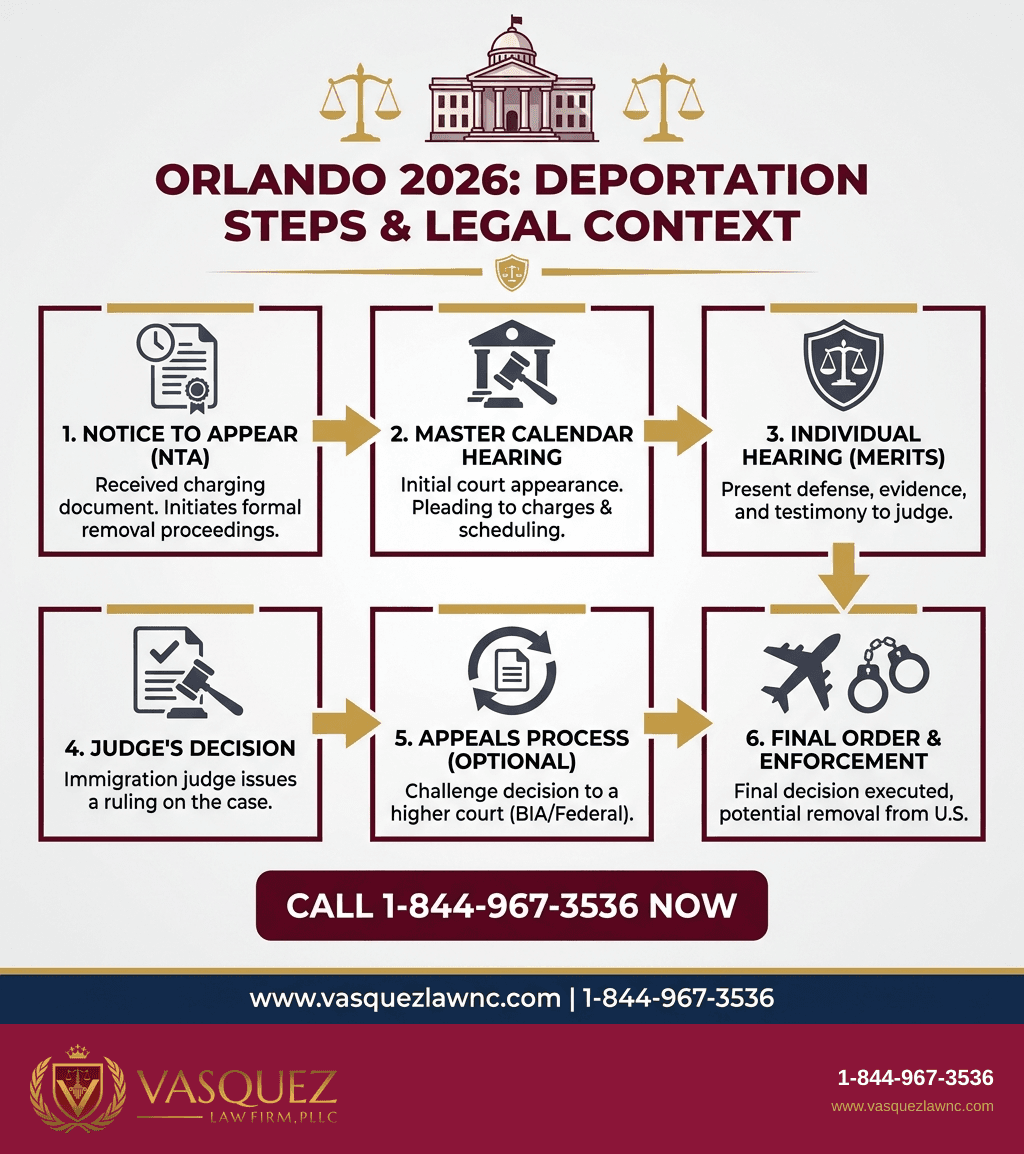
When ICE initiates removal, they serve a Notice to Appear in immigration court. The individual can contest deportation by raising defenses such as asylum claims, cancellation of removal, or adjustment of status (8 U.S.C. § 1255). Immigration judges decide cases, but appeals may be filed with the Board of Immigration Appeals or the federal courts. Every step has strict legal requirements and deadlines.
Typically, after receiving a Notice to Appear, the individual must attend an initial master calendar hearing where they enter a plea and may apply for relief. Failure to appear can result in an in absentia removal order. Throughout the process, individuals have the right to remain silent and to be represented by an attorney, though at their own expense.
Practical examples include cases where immigrants apply for asylum due to fear of persecution in their home countries. In such cases, they must present credible evidence and testimony to convince the judge. Another scenario is cancellation of removal for lawful permanent residents who have resided continuously in the U.S. and meet specific hardship criteria. Adjustment of status may be available for certain immigrants with approved family petitions, allowing them to remain legally while their applications process.
Due to the complexity of immigration law, many individuals benefit from legal representation, as judges and ICE officers have significant discretion. Appeals can take months or years, requiring persistence and careful case management. For instance, if a removal order is issued, an appeal to the Board of Immigration Appeals can delay deportation, providing additional time to seek relief or prepare documentation.
Step-by-Step Deportation Process
A deportation case begins when the Department of Homeland Security files an NTA, which triggers removal proceedings in immigration court. In Orlando, local ICE offices coordinate these processes, often detaining individuals or releasing them on bond.
The first step is typically the service of the Notice to Appear, which informs the individual of the charges and court dates. Once removal proceedings begin, the person must attend a master calendar hearing where procedural matters are addressed, including the filing of applications for relief.
Subsequent steps include merits hearings where the individual can present evidence and testimony to contest deportation. If relief is denied, the immigration judge issues a removal order. Following this, the individual may appeal to the Board of Immigration Appeals within 30 days. If appeals fail, ICE schedules the physical removal from the country.
For detainees, bond hearings may occur early in the process to determine if release is possible pending the outcome. In some cases, individuals may be released under supervision or electronic monitoring programs. For example, a mother with young children may request bond on humanitarian grounds, while a person with a serious criminal record may be deemed ineligible.
Practical scenarios highlight challenges: An immigrant detained shortly after a visa overstay may experience expedited removal without a full hearing, while another with a lengthy criminal record may face prolonged detention and multiple appeals. Timelines vary widely based on case complexity, court backlog, and legal strategy.
Throughout the process, staying informed and seeking timely legal advice is crucial. Missing deadlines or failing to appear in court can result in automatic deportation, while proactive filing of relief applications can improve outcomes significantly. Our firm assists clients every step of the way to ensure no critical opportunity is missed during proceedings.


William Vasquez
Founder & CEO, Vasquez Law Firm, PLLC
William Vasquez is the founder and CEO of Vasquez Law Firm, PLLC, a results-driven firm specializing in immigration, criminal defense, personal injury, and workers' compensation. A U.S. Air Force veteran and recipient of the Joint Service Achievement Medal, William is dedicated to fiercely fighting for his clients' rights.
Related Legal Services
Need legal help? Learn more about experienced immigration attorneys in Charlotte, or contact us for a free evaluation.
You can also visit immigration attorneys across North Carolina for more information.