Iranian Asylum Seekers: What You Should Know in 2026
Wondering about Iranian asylum seekers in the USA? Learn 2026 rules, steps to claim asylum, and how to protect your rights. Contact us for a free consult.
Published on July 7, 2026
Talk to an immigration attorney
Free call. A clear plan for your case.
Free & confidential · Se habla espanol · 24/7
Have questions? Talk to an attorney - free evaluation.
Call 1-844-967-3536Worried how the latest immigration news affects you?
Schedule a confidential case review with an immigration attorney - know exactly where you stand.
Iranian Asylum Seekers: What You Should Know in 2026
In 2026, Iranian asylum seekers face a complex immigration process shaped by current U.S. policies and global events. Many flee persecution based on political, religious, or social grounds. This article explains what Iranian asylum seekers in USA should know about claiming protection, necessary evidence, common challenges, and how legal counsel in Raleigh, NC and Orlando, FL can assist them throughout the process. Understanding your rights and obligations is vital for success.
Need help with your case? Our experienced attorneys are ready to fight for you. Se Habla Español.
Or call us now: 1-844-967-3536
Quick Answer
Iranian asylum seekers in the USA must file Form I-589 within one year of arrival, proving a credible fear of persecution based on specific grounds. The process involves USCIS interviews and possible immigration court hearings. Legal assistance in Raleigh, NC and Orlando, FL is critical to navigating complex steps, submitting strong evidence, and protecting your rights.
- File Form I-589 within 1 year of entry
- Provide affidavits and country condition reports
- Prepare for USCIS interview and hearings
- Consult knowledgeable immigration attorneys
- Understand pitfalls to avoid in claims
Understanding Iranian Asylum Seekers
Each year, thousands of Iranians seek asylum in the United States fleeing threats from political oppression, religious persecution, and social discrimination. Groups such as girls facing mandatory dress codes (like banning jeans), LGBTQ individuals, political activists, and religious minorities flee due to real risks of harm. In 2026, Iranian asylum seekers face additional challenges, including concerns about the U.S. government sharing biometric data with Iran, which may increase deportation risks.
The United Nations High Commissioner for Refugees (UNHCR) reports Iran hosts significant Afghan refugees as well, affecting regional dynamics that influence asylum decisions. Understanding these complex backgrounds is crucial when preparing asylum applications.
Our immigration attorneys in Raleigh offer expert guidance for Iranian asylum seekers, helping them understand eligibility, required evidence, and legal protections available under INA § 208.
What Grounds Qualify for Asylum?
Under U.S. immigration law, asylum may be granted if the applicant proves persecution or a well-founded fear based on race, religion, nationality, membership in a particular social group, or political opinion. This legal framework is established under INA § 208 (8 U.S.C. § 1158). Typical claims for Iranian asylum seekers include:
- Political activism or dissent against the Iranian government
- LGBTQ identity subject to social and legal penalties
- Religious minority persecution, such as Baháʼí or Christian converts
- Gender-based persecution—girls forced to wear hijabs and denied rights
Each asylum claim requires credible, documented evidence supporting these conditions.
Recent Policy Concerns in 2026
The news of the U.S. allegedly sharing biometric asylum seeker data with Tehran has heightened fear among Iranian applicants. This development calls for close attention to procedural protections. Those seeking asylum in Raleigh or Orlando should promptly consult experienced attorneys to safeguard their cases.
Step-by-Step: How to Claim Asylum
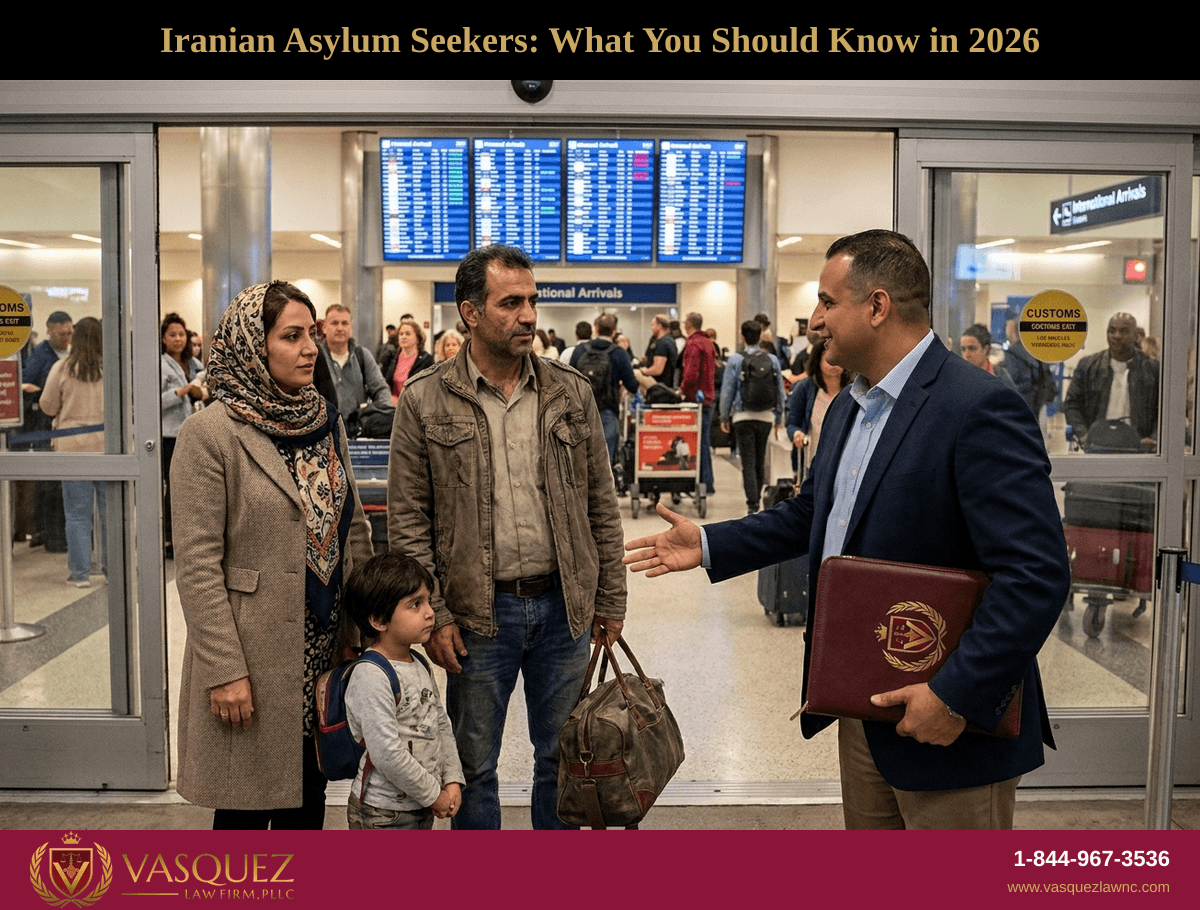
Claiming asylum begins with filing Form I-589, Application for Asylum and for Withholding of Removal, with USCIS within one year of arrival in the USA. Missing this deadline can cause immediate denial. After filing, applicants must prepare for a biometric appointment and an interview with an asylum officer.
Step 1: File Form I-589 On Time
Applicants must carefully complete Form I-589 and file it with supporting evidence. The form requires personal details and descriptions of persecution. Filing within one year is critical unless exceptions apply.
Step 2: Attend Biometric and Interview Appointments
USCIS schedules biometric data collection and interviews to assess credibility and eligibility. Being truthful and consistent is vital. Legal representation helps prepare for tough questions.
Step 3: USCIS Decision or Referral to Court
If USCIS denies asylum, the case can be referred to an Immigration Judge for a hearing. The hearing may involve witness testimony, expert reports, and legal arguments. Preparing thoroughly with your attorney improves chances of success.
Documents and Evidence Checklist
Strong evidence usually includes:
- Personal affidavits describing your experiences and fears
- Country condition reports from UNHCR, Department of State, or credible NGOs
- Medical or police reports documenting injuries or threats
- Proof of identity such as passport and entry documents
- Evidence of social group membership or political activities
Your immigration attorney in Raleigh or Orlando can help gather and organize these documents effectively.
Timeline: What To Expect in 2026
- File Form I-589: within 1 year of arrival
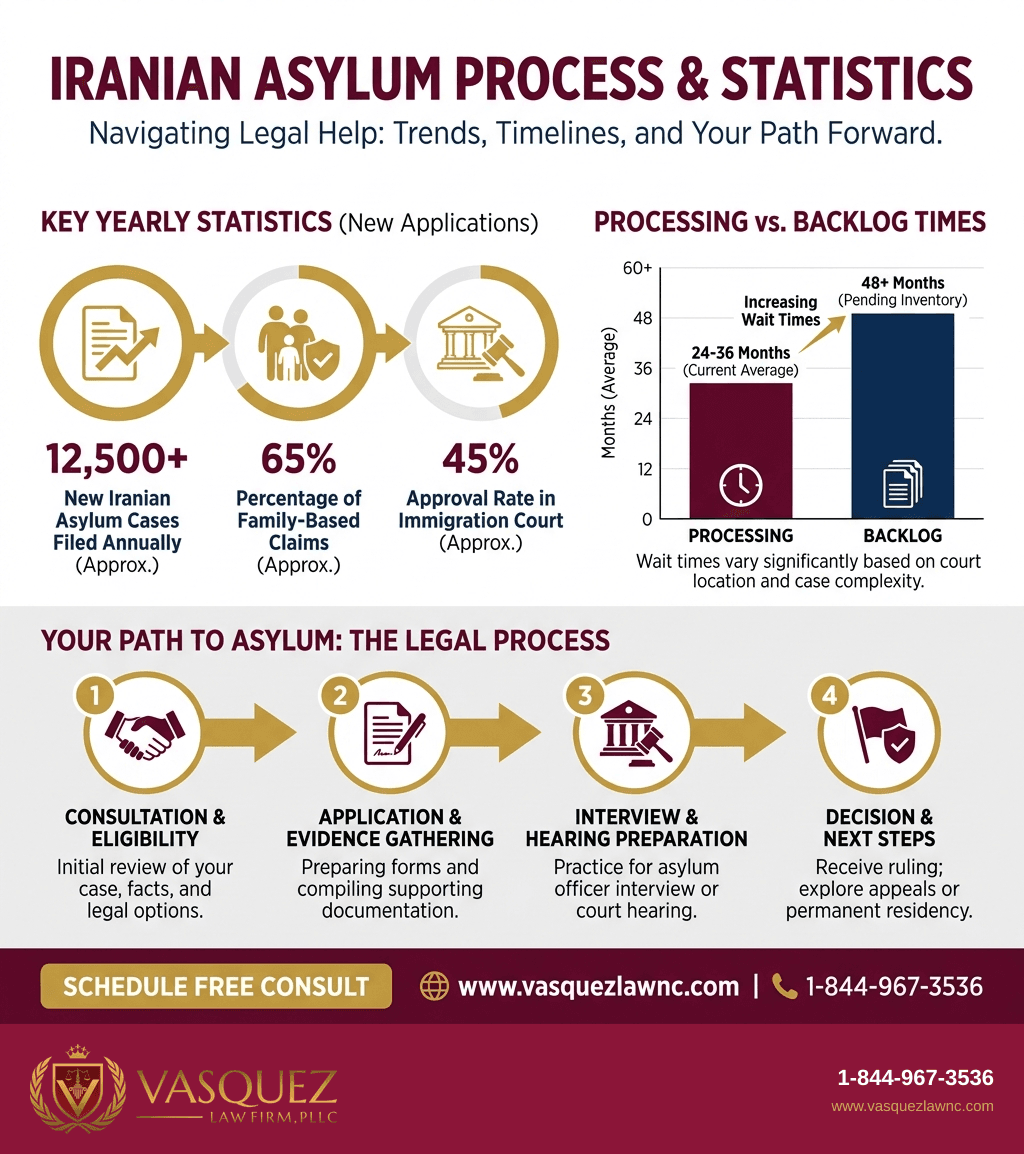
- USCIS interview: usually within 12 to 18 months (source: USCIS Processing Times)
- If referred, immigration court hearing: may take 1 to 3 years depending on backlog
- Final decision: granted asylum or removal order
Delays are common due to high demand. Early legal consultation is essential to prepare documentation and anticipate challenges.
Common Mistakes to Avoid in Asylum Cases
- Missing the one-year filing deadline — Always file Form I-589 within one year of arrival
- Failure to provide detailed affidavits — Your story must be clear, consistent, and thorough
- Not submitting country condition reports — These help prove conditions in Iran that justify asylum
- Lack of legal representation — Navigating complex immigration procedures alone risks costly errors
- Inconsistencies in interviews — Ensure all statements match across applications and hearings
- Ignoring changes in personal circumstances — Update USCIS and your attorney on any new threats or arrests
- Overlooking risks of deportation based on recent U.S. policies sharing data with Iran
If you only remember one thing: Timely filing with strong, consistent evidence and legal support maximizes your chance of success.
NC, FL, and Nationwide Notes on Asylum
North Carolina Notes
Raleigh houses immigration courts and USCIS offices where many Iranian asylum seekers attend required hearings and interviews. Local counsel familiar with NC-specific immigration procedures can assist you more effectively.
Florida Notes
Orlando also hosts USCIS and immigration courts serving the Iranian community. Florida immigration strategy may differ slightly in application timelines or court schedules.
Nationwide Concepts
Asylum law is federally governed under INA § 208 and implemented by USCIS and the Executive Office for Immigration Review. All applicants nationwide follow the same statutory process, though processing times vary by jurisdiction.
When to Call a Lawyer for Your Case
- You face a deadline to file Form I-589 approaching
- Your asylum application was denied by USCIS
- You received a Notice to Appear in immigration court
- You fear deportation to Iran due to new policies
- You need help collecting or translating critical evidence
- You have prior arrests, convictions, or immigration violations
- You want a legal review before attending USCIS interviews
- Language barriers or disabilities complicate your case
About Vasquez Law Firm
At Vasquez Law Firm, we combine compassion with aggressive representation. Our motto "Yo Peleo®" (I Fight) reflects our commitment to standing up for your rights.
- Bilingual Support: Se Habla Español — Spanish-speaking attorneys and staff available
- Service Areas: North Carolina, Florida, and nationwide immigration services
- Experience: Over 30 years helping clients navigate complex legal matters
- Results: Thousands of successful cases across multiple practice areas
Attorney Trust and Experience
William J. Vásquez is admitted to the North Carolina State Bar (2011) and to the U.S. Courts of Appeals for the 4th, 5th, and 11th Circuits. Florida-jurisdiction matters at the firm are handled by Florida Bar attorney Harold Estrada-Rodriguez (FL Bar No. 1041171). The firm has provided dedicated legal representation since 2011, with personalized attention to each client's case.
Don't wait to get the help you deserve. Call us now for immediate assistance. Se Habla Español.
Frequently Asked Questions
Who qualifies as an Iranian asylum seeker?
An Iranian asylum seeker is a person fleeing Iran due to past or feared persecution based on protected grounds like race or political opinion. Girls and LGBTQ individuals facing specific social harms often qualify under these criteria.
What is the basic process for claiming asylum in the USA?
Filing Form I-589 within one year of arrival is crucial. The process includes USCIS interviews and possible court hearings to evaluate your fear of persecution.
How long does the asylum process usually take in 2026?
On average, USCIS processes initial applications in 12 to 18 months, but court delays may extend this. Check current times at USCIS processing times website.
What evidence is important for Iranian asylum seekers to provide?
Personal affidavits, country condition reports, medical or police reports, and identity documents are essential to prove your claim.
Can girls in Iran claim asylum based on gender discrimination?
Yes. Gender-based persecution such as mandatory dress codes can qualify. These claims are recognized given the risks Iranian girls face.
Is the US sharing information on Iranian asylum seekers with Iran?
Reports suggest some biometric data was shared with Tehran. This increases risks, so legal counsel is recommended to protect your case.
Where do most Iranian refugees go if they cannot stay in the USA?
Canada, the UK, and European countries with Iranian communities are common destinations for refugees unable to remain in the USA.
What popular cultural factors might affect Iranian asylum seekers?
Restrictions on girls' clothing and other social customs impact claims by highlighting daily hardships and persecution faced under Iranian laws.
Sources and References
- U.S. Citizenship and Immigration Services
- Executive Office for Immigration Review
- Legal Information Institute
Take the first step toward justice today. Our team is standing by to help. Se Habla Español.
Start Your Free Evaluation Now
Call us: 1-844-967-3536
Se Habla Español - Estamos aquí para ayudarle.

William Vasquez
Founder & CEO, Vasquez Law Firm, PLLC
William Vasquez is the founder and CEO of Vasquez Law Firm, PLLC, a results-driven firm specializing in immigration, criminal defense, personal injury, and workers' compensation. A U.S. Air Force veteran and recipient of the Joint Service Achievement Medal, William is dedicated to fiercely fighting for his clients' rights.
Related Legal Services
Need legal help? Learn more about NC immigration legal team, or contact us for a free evaluation.
You can also visit statewide immigration attorneys for more information.