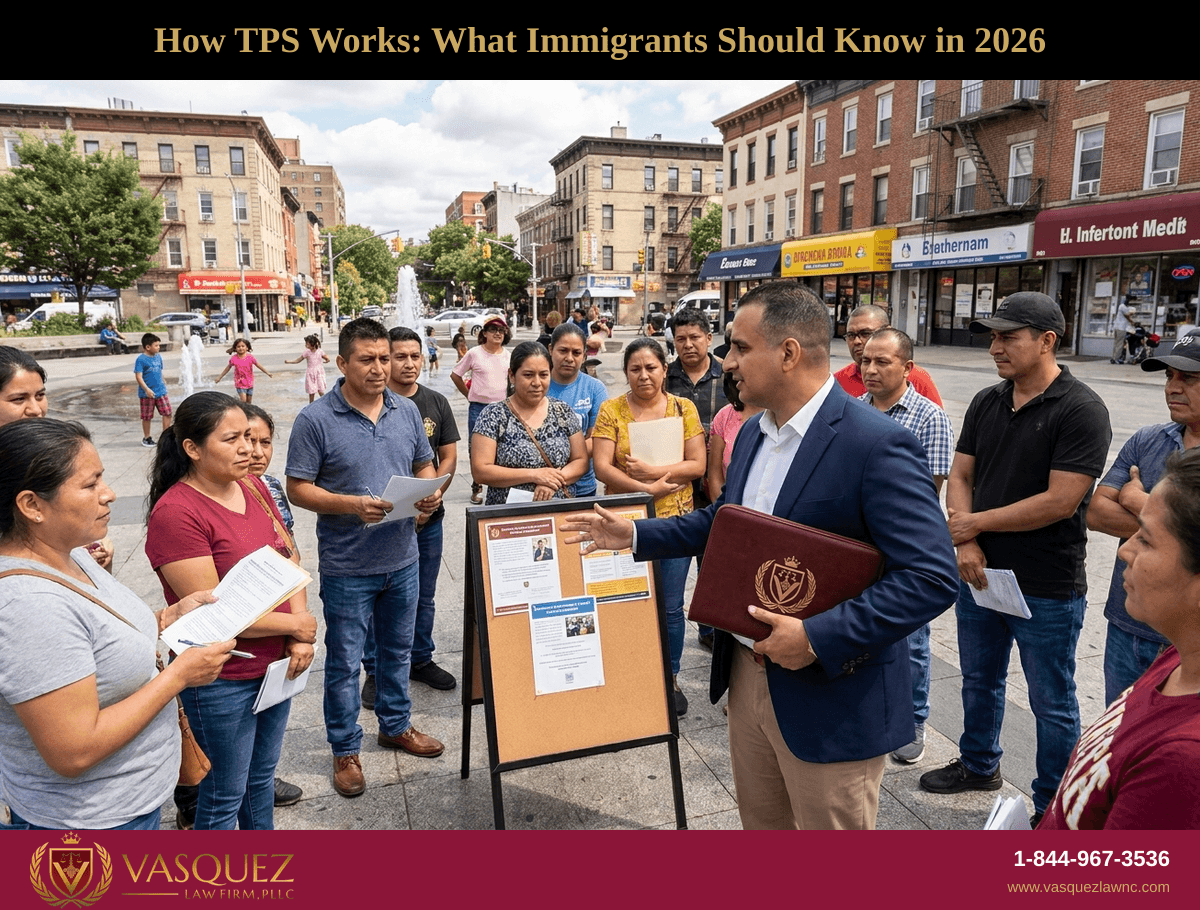
CBP Biometric Exit Controls Explained for Travelers in 2026
Understand how CBP biometric exit controls work in 2026. Learn your rights and steps here. Contact Vasquez Law for a free consultation.
Published on July 7, 2026
Talk to an immigration attorney
Free call. A clear plan for your case.
Free & confidential · Se habla espanol · 24/7
Have questions? Talk to an attorney - free evaluation.
Call 1-844-967-3536Worried how the latest immigration news affects you?
Schedule a confidential case review with an immigration attorney - know exactly where you stand.
CBP Biometric Exit Controls Explained for Travelers in 2026
By 2026, CBP biometric exit controls have become an important part of U.S. border security. This system collects biometric data, which means unique physical information like fingerprints and face images, from travelers. It helps track when people enter and leave the country. For immigrants, workers, and visitors, knowing how CBP biometrics work can help avoid problems with visa status and keep you following immigration rules. This article explains what CBP biometric exit controls are, how the program works at borders, options for opting out, and what travelers and employers in Raleigh, NC and Orlando, FL should expect under current federal rules.
Need help with your case? Our experienced attorneys are ready to fight for you. Se Habla Español.
Or call us now: 1-844-967-3536
Quick Answer
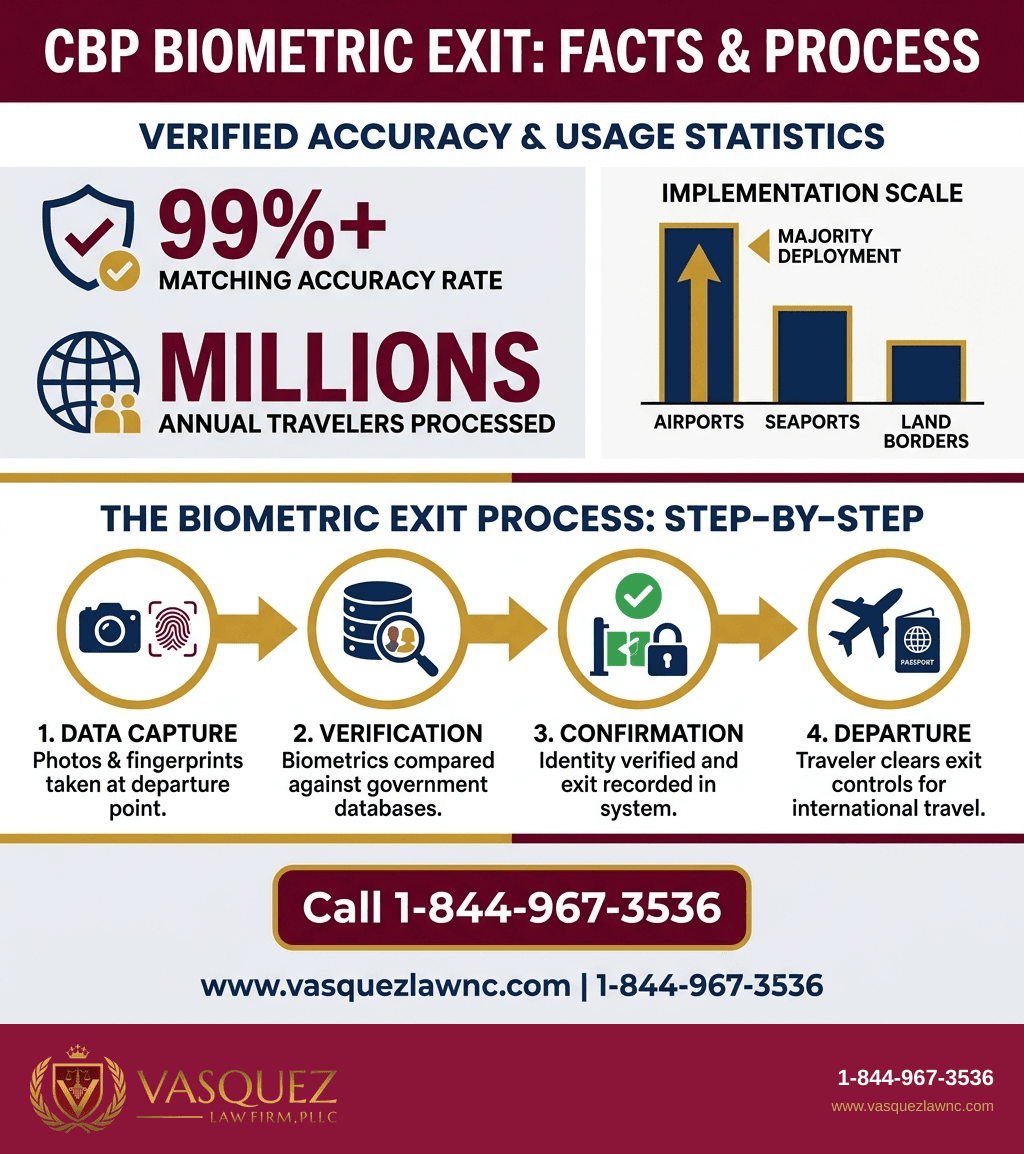
The Customs and Border Protection (CBP) biometric exit controls program collects fingerprints and face recognition data from travelers when they leave the U.S. This helps make sure people follow immigration rules by checking that departures match entry records.
- Required for most noncitizens leaving the country
- Helps reduce visa overstays
- Collects fingerprints and photos
- Used at airports, land borders, and seaports
- No official way to opt out now
Understanding CBP Biometric Exit Controls
Every year, more than 35 million travelers leave the United States through airports, seaports, and land borders. Since 2020, CBP has expanded biometric exit controls as part of a nationwide program. This program collects biometric data — that is, fingerprints and face photos — from foreign nationals leaving the country. This new system helps the government check if people follow visa rules and prevents unauthorized stays.
The biometric entry-exit program is required by the U.S. Immigration and Nationality Act (INA) and related federal rules. Under INA § 235(c), CBP must collect biometric information when people enter and leave the U.S. This keeps accurate records and confirms traveler identity. The data collection happens at specific departure points in Raleigh, NC, Orlando, FL, and across the country.
CBP collects biometrics using electronic scanners and cameras that capture fingerprints and face images. Then, CBP compares this data with databases to verify identities and travel histories. The biometric entry-exit visa tracking system helps immigration officers find visa overstays. It also improves border security and makes travel records more accurate.
Our immigration legal services help clients understand how these biometric controls affect their cases. We also help clients follow the rules to avoid immigration problems.
How Biometric Exit Tracking Works
- When you arrive, CBP collects your biometric data and links it to your passport and visa records.
- When you leave, CBP checks your biometric data again to confirm you are exiting.
- If there are differences, CBP may do extra checks or investigations.
Recent Updates to CBP Biometric Rules
In 2026, CBP expanded biometric exit controls to more ports nationwide. This includes more coverage at Raleigh-Durham International Airport and Orlando International Airport. This expansion improves tracking accuracy and supports new federal security rules.
Options to Opt Out?
Right now, there is no legal way to opt out of CBP biometrics when entering or leaving. The collection is required under 8 C.F.R. § 217.4 to protect national borders. If you refuse, you may be denied entry or face delays when leaving.
Step-by-step Guide for Travelers
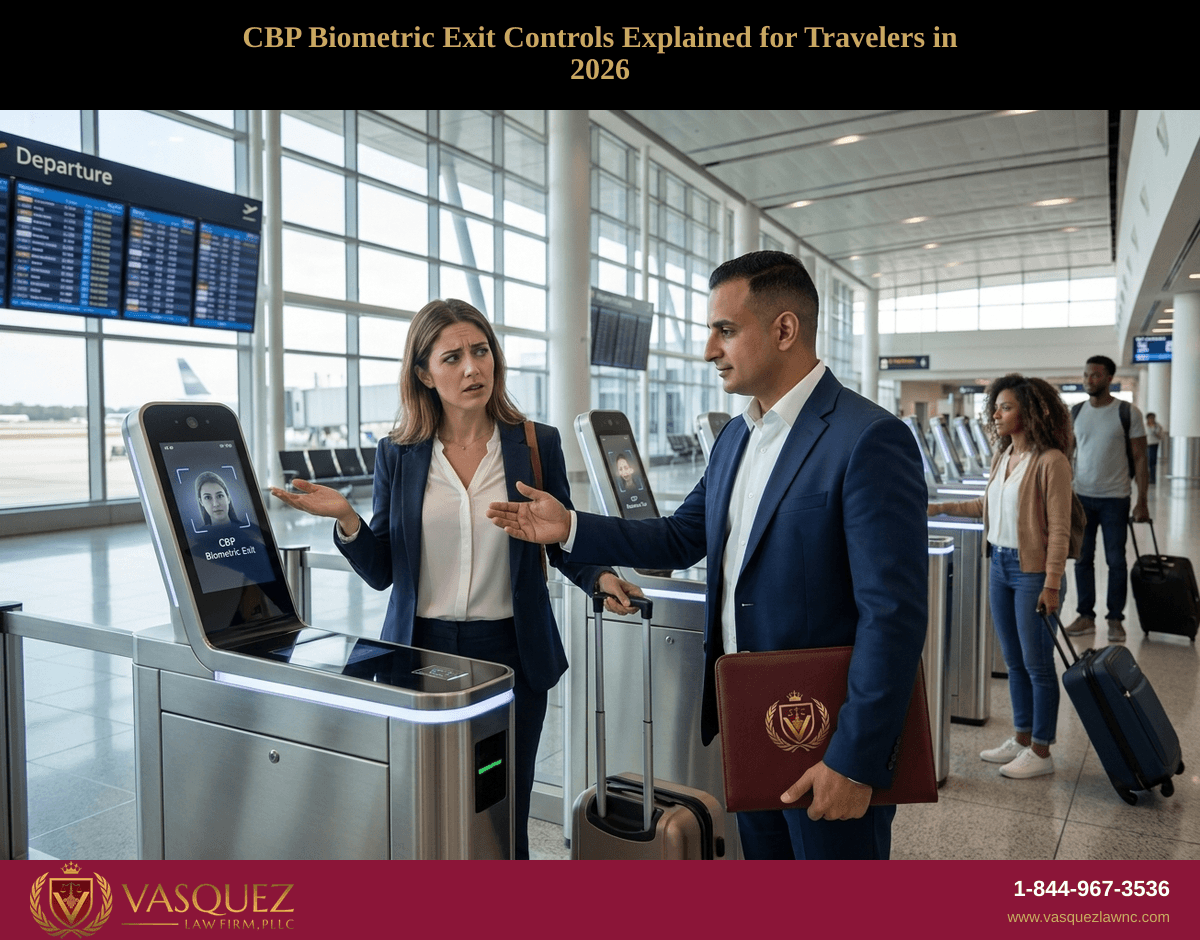
Knowing the biometric process when traveling in and out of the U.S. can help reduce stress and delays. Here is what to expect when leaving from Raleigh or Orlando airports or land borders.
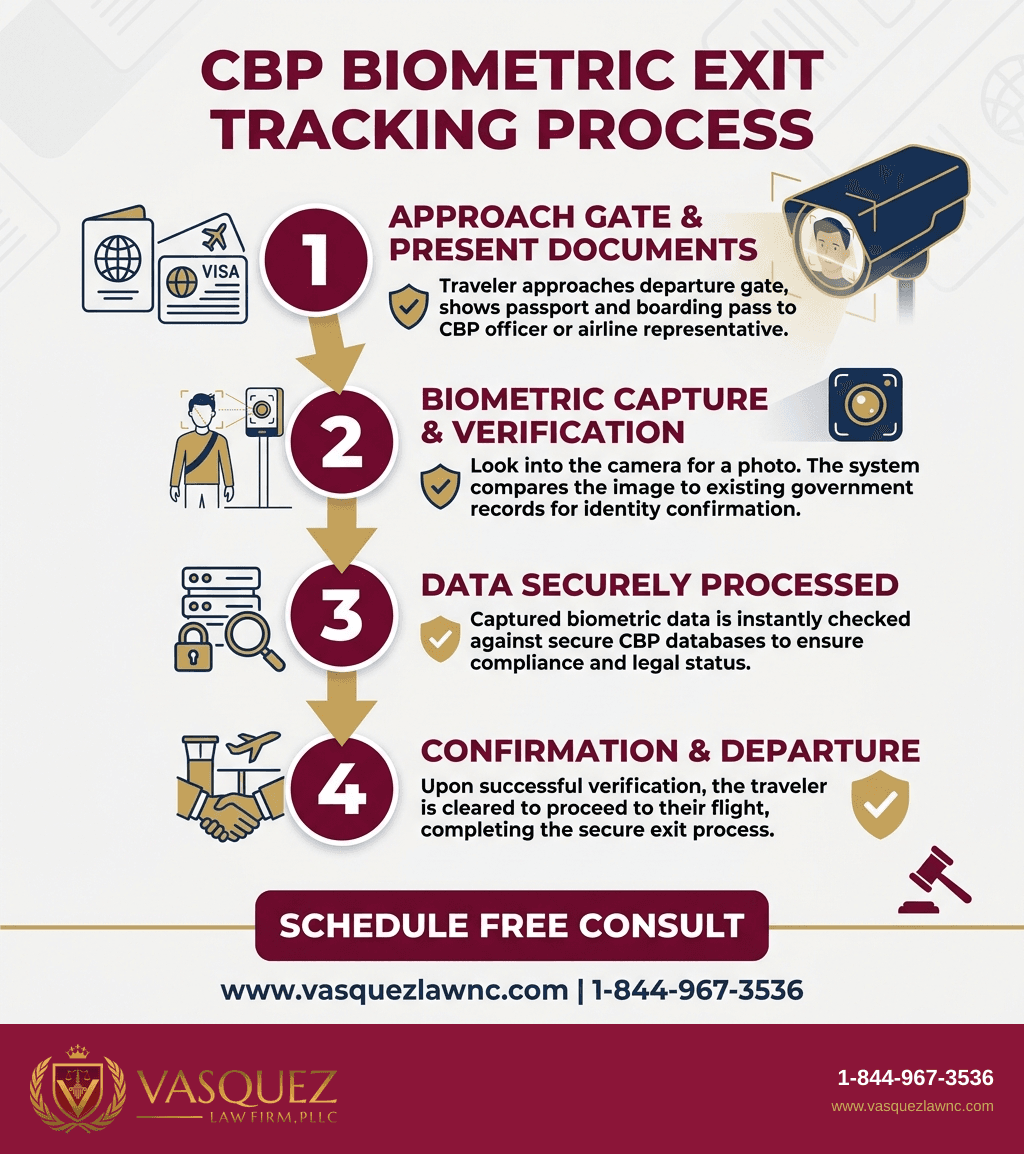
- Arrival at port of departure: Show your passport and visa to CBP officers.
- Biometric enrollment: CBP will take your fingerprints and face photo using kiosks or devices operated by officers.
- Verification process: CBP compares your biometric data with entry records to confirm your identity and travel history.
- Processing decision: If everything matches, you continue as normal. If not, you may have extra screening.
- Final exit confirmation: Your departure is recorded in the biometric entry-exit program.
Travelers should carry all travel documents and visas. Also, allow extra time for biometric processing when leaving.
Tips for Smooth Processing
- Arrive early at the airport or border crossing.
- Make sure all travel documents are valid and easy to access.
- Follow CBP officers' instructions carefully during biometric scanning.
Documents and Evidence Checklist
Having the right documents can prevent delays with CBP biometric exit controls. Bring these items with you:
- Valid passport with U.S. visa or ESTA authorization.
- Travel itinerary and boarding passes.
- Any CBP forms or notices you got when entering or staying.
- Visa or immigration petitions, if you have them.
- Proof that you have legal status or work permission in the U.S.
Keeping your travel documents organized is very important. It helps avoid problems during biometric exit checks and later immigration steps.
Timeline: What to Expect
CBP biometric exit processing usually happens in real time when you leave. But it helps to know the overall timeline:
- Entry biometric collection: Happens when you arrive in the U.S., linked to your visa or visa waiver.
- Exit biometric collection: Happens when you leave, usually at boarding gates or land border checkpoints.
- Data processing and matching: CBP systems match entry and exit biometrics within hours to days after travel.
- Follow-up actions: If data does not match, CBP may notify immigration authorities or start investigations within weeks.
- Impact on immigration cases: If overstays are found through biometric data, it affects cases within months. This is important for visa renewals or status changes.
USCIS processing times show that biometric checks also affect how long immigration benefit applications take. See USCIS processing times for details.
Costs and Fees: What Affects Your Case
CBP does not charge a direct fee for biometric exit controls. This is part of federally funded border security. But you may face indirect costs like:
- Delays from biometric mismatches that cause missed flights or appointments.
- Legal fees for immigration lawyers to fix biometric problems or removal cases.
- Costs to get more documents proving legal presence.
- Possible fines if biometric data shows overstays or unauthorized activity.
Employers and immigrants in Raleigh and Orlando should plan for legal help costs related to biometric entry-exit rules.
Common Mistakes to Avoid
- Refusing biometric collection: This can cause you to be denied boarding or entry. Always cooperate with CBP.
- Not carrying valid documents: This leads to delays or extra inspections.
- Not knowing opt-out limits: There is no legal way to opt out of biometric collection at exit.
- Ignoring biometric exit rules at land borders: Many travelers only expect airport checks.
- Misreporting departure: Some try to leave through unmonitored routes, risking removal actions.
- Delaying legal advice: Getting help early can solve biometric mismatches faster.
- Ignoring employer responsibilities: Employers hiring foreign workers must track compliance.
If you remember one thing: Cooperate fully with CBP biometrics and keep proper documents to avoid immigration problems.
Legal Jurisdictions: NC, FL, and Nationwide
North Carolina Notes
In Raleigh, NC and nearby areas, CBP offices at Raleigh-Durham International Airport handle biometric exit controls for many immigrants and travelers. Immigration lawyers here know federal rules about biometric data under 8 U.S.C. § 1225(c).
Local legal help for biometric exit issues is available at firms like Vasquez Law Firm. They offer bilingual services and virtual meetings. Raleigh immigrants should stay informed about biometric exit rules, especially if traveling internationally.
Florida Notes
Orlando International Airport and Florida’s land and seaports are part of the expanded biometric exit program in 2026. Travelers in Florida should expect fingerprint and face scans when leaving. Legal issues from biometric mismatches or refusals can be complicated.
Vasquez Law Firm’s Orlando office helps clients with immigration compliance related to biometrics, visa renewals, and defense against removal.
Nationwide Concepts
CBP’s biometric exit program is a federal plan used nationwide to track noncitizens leaving the country by electronic biometric checks. Rules come from INA § 235(c) and 8 C.F.R. § 217. Biometric data is collected at all major U.S. airports, land borders, and seaports following federal rules.
Knowing nationwide rules and local details helps noncitizens handle entry and exit smoothly.
When to Call a Lawyer Now
- If CBP found a biometric difference during your exit.
- If immigration authorities sent you notices about overstays found through biometric data.
- If you were denied boarding or entry because of biometric problems.
- If you don’t understand your rights about CBP biometrics.
- If you are unsure how biometric data affects your immigration case or status.
- If you plan to travel internationally and want to follow the rules.
- If your employer worries about biometric compliance for workers.
- If you face removal cases related to biometric evidence.
About Vasquez Law Firm
At Vasquez Law Firm, we combine care with strong representation. Our motto "Yo Peleo®" (I Fight) shows our promise to protect your rights.
- Bilingual Support: Se Habla Español — Spanish-speaking lawyers and staff available
- Service Areas: North Carolina, Florida, and nationwide immigration services
- Experience: Over 30 years helping clients with complex legal issues
- Results: Thousands of successful cases in many practice areas
Attorney Trust and Experience
William J. Vásquez is licensed by the North Carolina State Bar (2011) and the U.S. Courts of Appeals for the 4th, 5th, and 11th Circuits. Florida cases at the firm are handled by Florida Bar lawyer Harold Estrada-Rodriguez (FL Bar No. 1041171). The firm has offered focused legal help since 2011, giving personal attention to every client.
Don't wait to get the help you need. Call us now for quick assistance. Se Habla Español.
Frequently Asked Questions
What is the CBP biometric exit control program?
CBP biometric exit controls are part of a government program that collects fingerprint and facial recognition data from travelers leaving the U.S. This system helps enforce immigration laws by making sure travelers leave before their visas expire.
How do I opt out of CBP biometrics?
Right now, there is no legal way to opt out of CBP biometric data collection when entering or leaving. The program is required for most travelers under INA § 235(c).
What biometrics are collected at the border?
CBP collects fingerprints and face images to identify travelers and check their visa status when entering and leaving the U.S.
Why is CBP expanding biometric exit controls?
The expansion aims to improve border security and stop visa overstays by confirming that noncitizens admitted by CBP have left as required.
What happens if I refuse to provide biometrics at a border?
Refusing to give biometrics can cause denial of entry or exit. It may cause delays and legal problems under immigration law.
How can biometric exit data affect my immigration case?
If biometric exit records show you did not leave on time, you could face visa cancellation or removal proceedings.
Are there privacy concerns with CBP biometrics?
Yes, biometric data is sensitive personal information. But agency rules require protecting the data and using it only for immigration enforcement.
Where can I get help with CBP biometric exit issues in Raleigh or Orlando?
Vasquez Law Firm offers experienced legal help with CBP biometric exit controls at our Raleigh, NC and Orlando, FL offices. Contact us for a free case evaluation.
Sources and References
- U.S. Citizenship and Immigration Services
- Executive Office for Immigration Review
- Legal Information Institute
Take the first step toward justice today. Our team is ready to help.
Start Your Free Evaluation Now
Call us: 1-844-967-3536
Se Habla Español - Estamos aquí para ayudarle.


William Vasquez
Founder & CEO, Vasquez Law Firm, PLLC
William Vasquez is the founder and CEO of Vasquez Law Firm, PLLC, a results-driven firm specializing in immigration, criminal defense, personal injury, and workers' compensation. A U.S. Air Force veteran and recipient of the Joint Service Achievement Medal, William is dedicated to fiercely fighting for his clients' rights.
Related Legal Services
Need legal help? Learn more about how our immigration attorneys can help, or contact us for a free evaluation.
You can also visit our NC immigration team for more information.