What Is an Immigration Violation and What Happens in 2026?
What is an immigration violation? Learn about penalties, reporting, and green card rules in 2026. Contact Vasquez Law for a free consultation today.
Published on June 6, 2026
Talk to an immigration attorney
Free call. A clear plan for your case.
Free & confidential · Se habla espanol · 24/7
Have questions? Talk to an attorney - free evaluation.
Call 1-844-967-3536Worried how the latest immigration news affects you?
Schedule a confidential case review with an immigration attorney - know exactly where you stand.
What Is an Immigration Violation and What Happens in 2026?
An immigration violation occurs when a person breaks federal immigration laws that govern entry, stay, or conduct in the U.S. These violations can lead to penalties like deportation, fines, or even criminal charges. In 2026, understanding these rules is critical for immigrants and families in Raleigh, NC, and Orlando, FL. Whether it's unauthorized entry, overstaying a visa, or other infractions, knowing your rights and the legal process can protect your future. This article breaks down common immigration violations, penalties, and the steps you can take to respond effectively.
Need help with your case? Our experienced attorneys are ready to fight for you. Se Habla Español.
Or call us now: 1-844-967-3536
Quick Answer
An immigration violation is breaking U.S. immigration laws like entering illegally or overstaying a visa. Penalties can include deportation, fines, or criminal charges. Reporting can be done via ICE tip forms, and new green card rules in 2026 affect eligibility. Legal help is vital to protect your rights in Raleigh, NC, or Orlando, FL.
- Common violations: illegal entry, visa overstays, unauthorized work
- Penalties: deportation, detention, fines, criminal charges
- Report violations anonymously using ICE tip form
- Green card rules updated in 2026 affect applications
- Legal consultation recommended to navigate consequences
What Is an Immigration Violation?
Imagine someone crossing the border without permission or staying in the U.S. longer than their visa allows. These are examples of immigration violations, which mean breaking the rules set by federal immigration laws. Immigration violations include unauthorized entry, overstaying visas, working without permission, or failing to comply with deportation orders.
Federal law, primarily the Immigration and Nationality Act (INA), governs these rules. For example, 8 U.S.C. § 1325 criminalizes unauthorized entry, while civil violations involve administrative penalties under USCIS and immigration courts.
Understanding what counts as an immigration violation can help you avoid legal trouble. Many people mistakenly think minor infractions won't have major consequences, but even small violations can lead to detention or removal from the country.
At Vasquez Law Firm, our immigration attorneys in Raleigh and Orlando help clients understand the complexities of federal immigration law and what protections may apply, ensuring they can respond appropriately if faced with violations.
Common Immigration Violations in 2026
In 2026, the most common immigration violations continue to be unauthorized entry without inspection, visa overstays, unauthorized employment, and failure to appear for immigration hearings.
Unauthorized entry means crossing the border without being inspected or admitted by immigration officers. Overstaying a visa occurs when someone stays beyond the authorized period on their visa, a frequent issue for many temporary visitors.
Unauthorized work happens when immigrants work without authorization or hold jobs outside the terms of their visas. This is often a violation of USCIS regulations and can lead to removal proceedings.
Failing to comply with immigration court hearings or orders can also cause serious problems. Missing a hearing may result in deportation orders in absentia without the chance to argue your case.
For Raleigh and Orlando residents, it is key to recognize these common violations early. The violation's nature and circumstances influence the penalties and available defenses.
Learn more about how our immigration legal services can help if you face any of these situations.
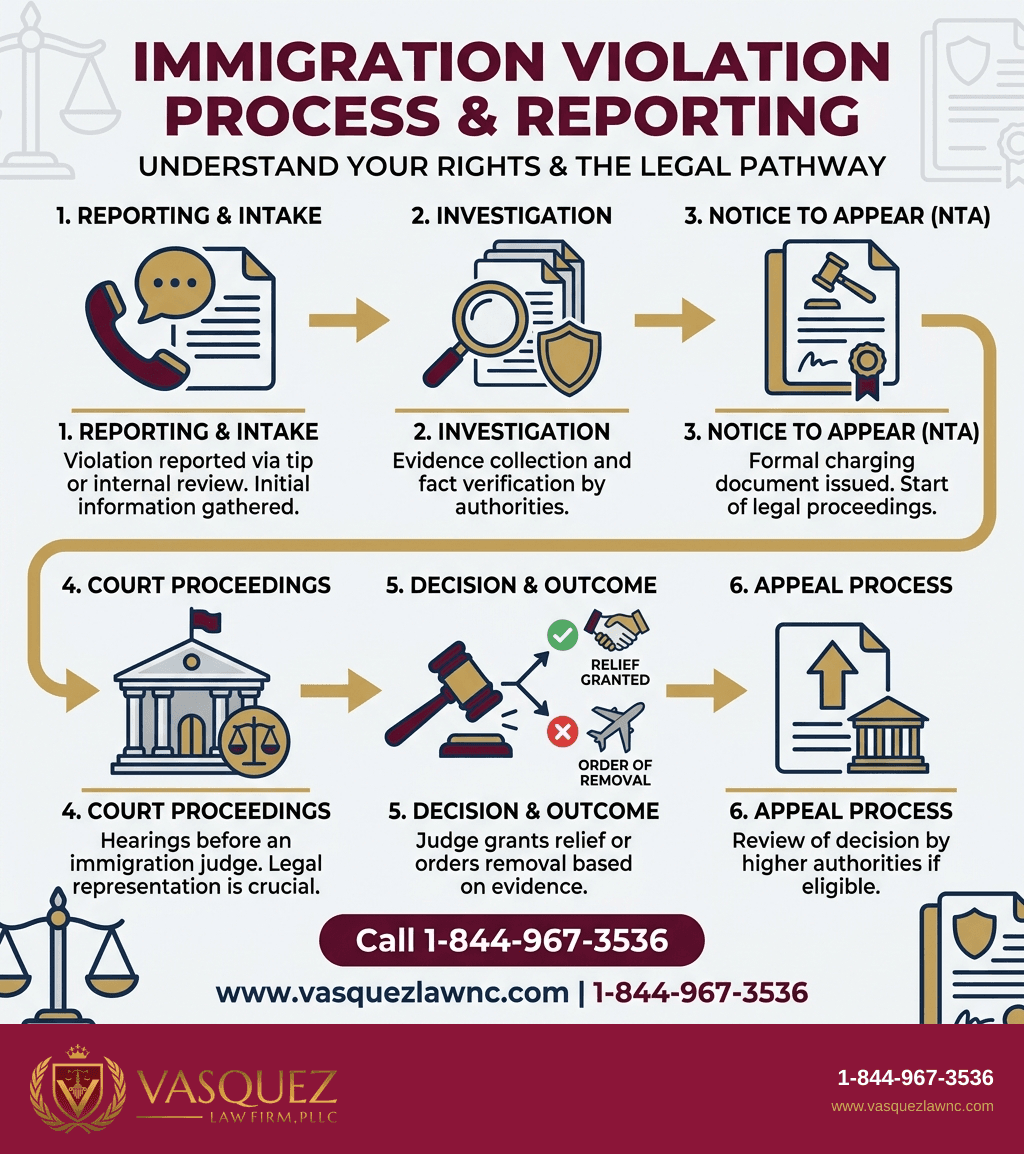
How to Report Immigration Violations
If you believe someone is violating immigration laws, you can report it using official channels. The federal agency responsible for enforcement is Immigration and Customs Enforcement (ICE).
ICE provides an ICE tip form online where people can submit tips about immigration violations anonymously. You can also call the ICE hotline at 1-866-DHS-2-ICE.
While you can report violations, it is important to understand the impact of doing so. False or malicious reports can harm innocent people. Also, ICE prioritizes some types of violations over others. Reports lead to investigations and may trigger detention or removal proceedings.
Contact Vasquez Law Firm if you need advice on your rights or concerns about being reported or investigating others.
Penalties for Immigration Violations
Penalties depend on the violation’s severity and type. Civil violations generally lead to removal proceedings but not criminal prosecution. Criminal violations, like illegal re-entry after deportation (under 8 U.S.C. § 1326), may result in jail sentences and fines.
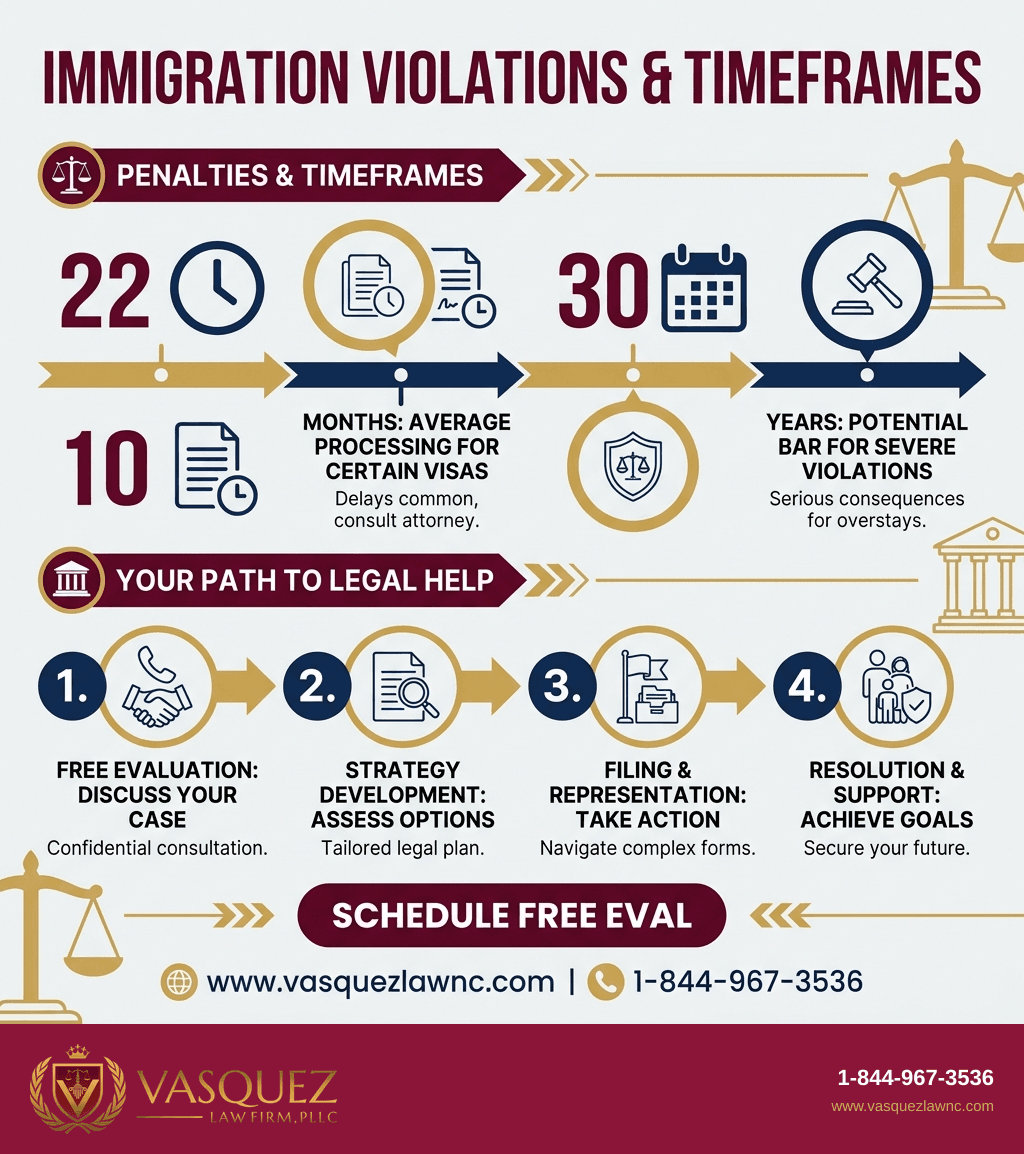
Penalties include detention, deportation, bans on re-entry ranging from 3 to 10 years, and fines. For example, overstaying a visa by more than 180 days can result in a 3-year ban; overstaying over 1 year can lead to a 10-year ban under INA § 212(a)(9)(B).
Repeat violations increase consequences. Additionally, criminal convictions related to immigration can affect eligibility for future immigration benefits.
Legal representation is critical to understand and potentially challenge penalties or seek relief from removal under INA § 240A(b), which allows certain cancellation of removal after 10 years’ presence.
Understanding Green Card Rules in 2026
Green card holders must stay informed about updated rules that affect their status. In 2026, USCIS adjusted policies on admissibility, public charge grounds, and medical requirements.
Applicants must demonstrate financial self-sufficiency and pass updated health screenings. Green card renewals and adjustment of status applications will reflect these stricter requirements.
Maintaining continuous residency and avoiding immigration violations is crucial. Violations can jeopardize green card eligibility or renewal prospects.
The USCIS processing times for green card applications in 2026 average between 8 to 22 months, according to the USCIS processing times data, depending on the form and service center.
Consulting a knowledgeable attorney helps ensure compliance with these evolving rules and avoid violations that could affect your permanent residency.
North Carolina and Florida Immigration Notes
North Carolina Notes
Raleigh, NC is not an immigration enforcement hub but residents face the full federal immigration enforcement regime. Local authorities typically do not enforce immigration laws except in cooperation with federal agents.
Access to immigration legal services like those at Vasquez Law Firm’s Raleigh office is critical to defend against violations or removal actions.
Florida Notes
Orlando, FL experiences significant immigration activity with more immigration arrests and detentions. Florida residents must be prepared for stricter enforcement and quick action if accused of immigration violations.
Legal protections, including bond hearings and administrative relief, vary widely and expert legal help is important to avoid permanent penalties.
Nationwide Concepts
Immigration law is federal, but enforcement priorities and resources vary by region. Violations are prosecuted according to federal statutes such as 8 U.S.C. § 1325 and immigration court practices differ by EOIR jurisdiction.
Nationwide, having knowledgeable counsel and understanding your rights now is the best way to avoid adverse immigration outcomes.
When to Call a Lawyer Now
- If you have been detained or arrested by ICE for immigration violations
- If you receive a notice to appear in immigration court
- If you suspect someone reported you or you want to report immigration violations properly
- If you are applying for or renewing a green card and have concerns about rules in 2026
- If you have criminal charges related to immigration or visa status
- If you want to explore relief options from removal or adjustment of status
- If you face possible deportation based on prior visa overstays or entry violations
- If you are undocumented and worried about your legal status
About Vasquez Law Firm
At Vasquez Law Firm, we combine compassion with aggressive representation. Our motto "Yo Peleo®" (I Fight) reflects our commitment to standing up for your rights.
- Bilingual Support: Se Habla Español — Spanish-speaking attorneys and staff available
- Service Areas: North Carolina, Florida, and nationwide immigration services
- Experience: Over 30 years helping clients navigate complex legal matters
- Results: Thousands of successful cases across multiple practice areas
Attorney Trust and Experience
William J. Vásquez is admitted to the North Carolina State Bar (2011) and to the U.S. Courts of Appeals for the 4th, 5th, and 11th Circuits. Florida-jurisdiction matters at the firm are handled by Florida Bar attorney Harold Estrada-Rodriguez (FL Bar No. 1041171). The firm has provided dedicated legal representation since 2011, giving personalized attention to each client.
Don't wait to get the help you deserve. Call us now for immediate assistance.
Se Habla Español
Frequently Asked Questions
What is an immigration violation?
An immigration violation is breaking U.S. immigration laws, such as unauthorized entry, overstaying a visa, or working without permission. Violations can lead to civil penalties, removal, or criminal charges. Knowing which actions count helps avoid legal problems and protect your rights.
What are the most common immigration violations?
Common violations include illegal border crossing, visa overstays, unauthorized employment, and failure to comply with immigration hearings. These violations vary in severity and impact based on federal laws and individual circumstances.
How can I report an immigration violation?
You can report by submitting an ICE tip form online or calling their hotline. Reports can be anonymous, but be cautious about accuracy and potential consequences. Legal advice is recommended before making reports.
What penalties apply to immigration violations?
Penalties include deportation, detention, fines, and criminal charges for serious offenses. Repeat or aggravated violations bring harsher consequences. Legal help is vital to understand and challenge penalties.
What are the new green card rules for 2026?
Stricter rules include updated admissibility tests and financial requirements. Applicants must meet new health and income thresholds. These impact eligibility for green card renewals and adjustments.
What should I do if I am an illegal immigrant?
Seek legal counsel immediately to explore options such as deferred action, asylum, or family-based petitions. Each case is unique, and prompt action can improve outcomes.
Are immigration violations civil or criminal offenses?
Mostly civil, handled by immigration courts, but some violations like re-entry after deportation are criminal offenses under federal statute 8 U.S.C. § 1326.
Can I protect myself from deportation after a violation?
Certain defenses, including cancellation of removal and asylum, may prevent deportation. Eligibility depends on factors like length of residence and family ties. Attorney advice is essential to explore relief.
Sources and References
- U.S. Citizenship and Immigration Services
- Executive Office for Immigration Review
- Legal Information Institute
Take the first step toward justice today. Our team is standing by to help.
Start Your Free Evaluation Now
Call us: 1-844-967-3536
Se Habla Español - Estamos aquí para ayudarle.


William Vasquez
Founder & CEO, Vasquez Law Firm, PLLC
William Vasquez is the founder and CEO of Vasquez Law Firm, PLLC, a results-driven firm specializing in immigration, criminal defense, personal injury, and workers' compensation. A U.S. Air Force veteran and recipient of the Joint Service Achievement Medal, William is dedicated to fiercely fighting for his clients' rights.
Related Legal Services
Need legal help? Learn more about get immigration legal help today, or contact us for a free evaluation.
You can also visit our North Carolina immigration practice for more information.