What Happens in Immigration Prosecutions in 2026?
Learn what immigration prosecutions mean in 2026, including penalties under 8 U.S.C. 1325. Get expert help. Contact Vasquez Law for a free evaluation.
Published on August 10, 2026· Updated September 9, 2026
Talk to an immigration attorney
Free call. A clear plan for your case.
Free & confidential · Se habla espanol · 24/7

Have questions? Talk to an attorney - free evaluation.
Call 1-844-967-3536Worried how the latest immigration news affects you?
Schedule a confidential case review with an immigration attorney - know exactly where you stand.
USCIS Case Status
Check your USCIS case status
Enter your receipt number and get the official status. Free, no registration.
What Happens in Immigration Prosecutions in 2026?
Immigration prosecutions are federal criminal cases started when someone breaks certain immigration laws. In 2026, people living in North Carolina and Florida should know how these cases work. This includes laws like 8 U.S.C. 1325 and what to expect if you face charges. This article explains important steps, timelines, costs, and common mistakes. It helps you understand your legal rights and choices. Whether you are in Orlando, FL or Raleigh, NC, this guide helps you handle immigration prosecutions with confidence.
Need help with your case? Our experienced attorneys are ready to fight for you. Se Habla Español.
Or call us now: 1-844-967-3536
Quick Answer
Immigration prosecutions are federal criminal charges for breaking laws like illegal entry under 8 U.S.C. 1325. These cases can lead to fines, jail time, and affect your immigration status. If you are arrested or charged, talk to a skilled immigration lawyer right away to protect your rights.
- Charges often involve illegal entry or coming back after deportation
- Federal courts handle these criminal cases
- Penalties range from minor crimes (misdemeanors) to serious crimes (felonies)
- Defending yourself needs quick legal action
- The process is different in North Carolina and Orlando, Florida
Understanding Immigration Prosecutions
Imagine you are arrested at the U.S. border or inside the country for entering illegally. In 2026, federal immigration prosecutions are criminal cases started under laws like 8 U.S.C. 1325. This law makes unauthorized entry a minor crime called a misdemeanor. First-time offenders can get fines and up to six months in jail. Repeat offenses and illegal reentry after deportation can be serious crimes called felonies. These have harsher punishments.
These prosecutions are different from civil removal proceedings. Civil removal proceedings focus on deportation without criminal charges. Federal prosecutors decide if they will file criminal charges. They consider factors like past history and the offense details.
In Orlando, FL and Raleigh, NC, federal courts have authority. Immigration and Customs Enforcement (ICE) investigates and makes arrests. Law enforcement follows strict rules during arrests to protect legal rights. But the consequences can be serious.
Knowing the legal rules is very important. Chapter 4 of the Immigration and Nationality Act (INA) covers immigration-related crimes. The USCIS Policy Manual explains enforcement priorities and when prosecutors choose to act. For example, enforcement focus can change with government policies. This affects how many and what kinds of prosecutions happen in 2026.
People in North Carolina face these prosecutions in their federal courts. Orlando has special immigration enforcement resources. Knowing local rules and how they work with federal law is key to a good defense.
It is also important to clear up common questions. Some ask, "Is illegal immigration a federal crime?" Yes, it is under laws like 8 U.S.C. 1325. But "Is it a felony or misdemeanor?" depends on the facts of each case.
For more information on immigration legal help, visit our page on our immigration legal services.
Key Federal Crimes in Immigration Prosecutions
- Illegal entry (8 U.S.C. § 1325)
- Reentry after deportation (8 U.S.C. § 1326)
- Fraud or lying to get entry
- Helping undocumented immigrants hide
Who Handles Immigration Prosecutions?
The U.S. Attorneys Office prosecutes these cases. ICE investigates. Immigration courts run by the Executive Office for Immigration Review (EOIR) handle deportation but not criminal cases. These groups work together but have different jobs.
Importance of Legal Representation
Federal immigration prosecutions have serious results. Hiring experienced lawyers helps protect your right to a fair process and guides you through complex steps. Attorney Vasquez and the team know federal law well in Raleigh, NC and Orlando, FL.
Step-by-Step: What to Do If Prosecuted
- Get Legal Help Right Away: If arrested or charged, contact an immigration lawyer who knows federal prosecutions.
- Learn About Your Charges: Charges under 8 U.S.C. 1325 or others have different punishments. It is important to understand them.
- Do Not Say Anything Without a Lawyer: Use your right to stay silent until you talk to your lawyer.
- Gather Documents: Collect any proof of legal status or immigration papers.
- Go to All Court Hearings: Federal criminal courts schedule hearings quickly. Missing them can hurt your case.
- Look Into Possible Defenses: Defenses may include no bad intent, mistakes in procedure, or qualifying for relief from prosecution.
- Ask About Immigration Effects: Criminal convictions affect immigration status. Your lawyer can explain this important issue.
To start your defense, Attorney Vasquez and legal team are ready to help.
What to Expect After Arrest
After arrest, you will have a first court appearance called an arraignment. The court will explain the charges and your rights. Bail may be set. The case then moves through pretrial steps, plea talks, or trial if needed.
Role of Immigration Court
Immigration court handles removal (deportation) but does not handle criminal charges. But criminal cases can lead to removal proceedings.
Impact of Criminal Convictions
Convictions can lead to jail, fines, and immigration problems like being barred from the U.S. or deported. Legal advice is very important to handle these risks.
Common Mistakes to Avoid in Immigration Cases
- Waiting Too Long to Hire a Lawyer: Waiting or trying to represent yourself can cause missed defenses and harsh penalties.
- Talking Without a Lawyer Present: Statements you make can be used against you in court.
- Missing Court Dates: Not showing up can lead to arrest warrants and deportation orders.
- Not Telling Your Lawyer About Criminal History: Being honest helps lawyers build the best defense.
- Signing Papers Without Review: Some documents may give up your rights or admit guilt.
- Thinking Prosecution Always Means Deportation: Each case is different. Some allow relief or other solutions.
- Not Knowing Local U.S. Attorney Policies: Prosecutors choices vary by place and affect case results.
If you remember only one thing: Never face immigration prosecutions alone. Get legal help right away.
Timeline and What to Expect During Prosecution
- Arrest and First Hearing: Usually within 48-72 hours after arrest.
- Pretrial Steps: Can last several weeks with evidence sharing and plea talks.
- Trial or Plea: If no plea, trial happens and can last days or weeks.
- Sentencing: After conviction, sentencing usually happens within weeks.
- Appeal: Appeals can take months or longer.
This timeline can change by federal district, like Orlando, FL or Raleigh, NC.
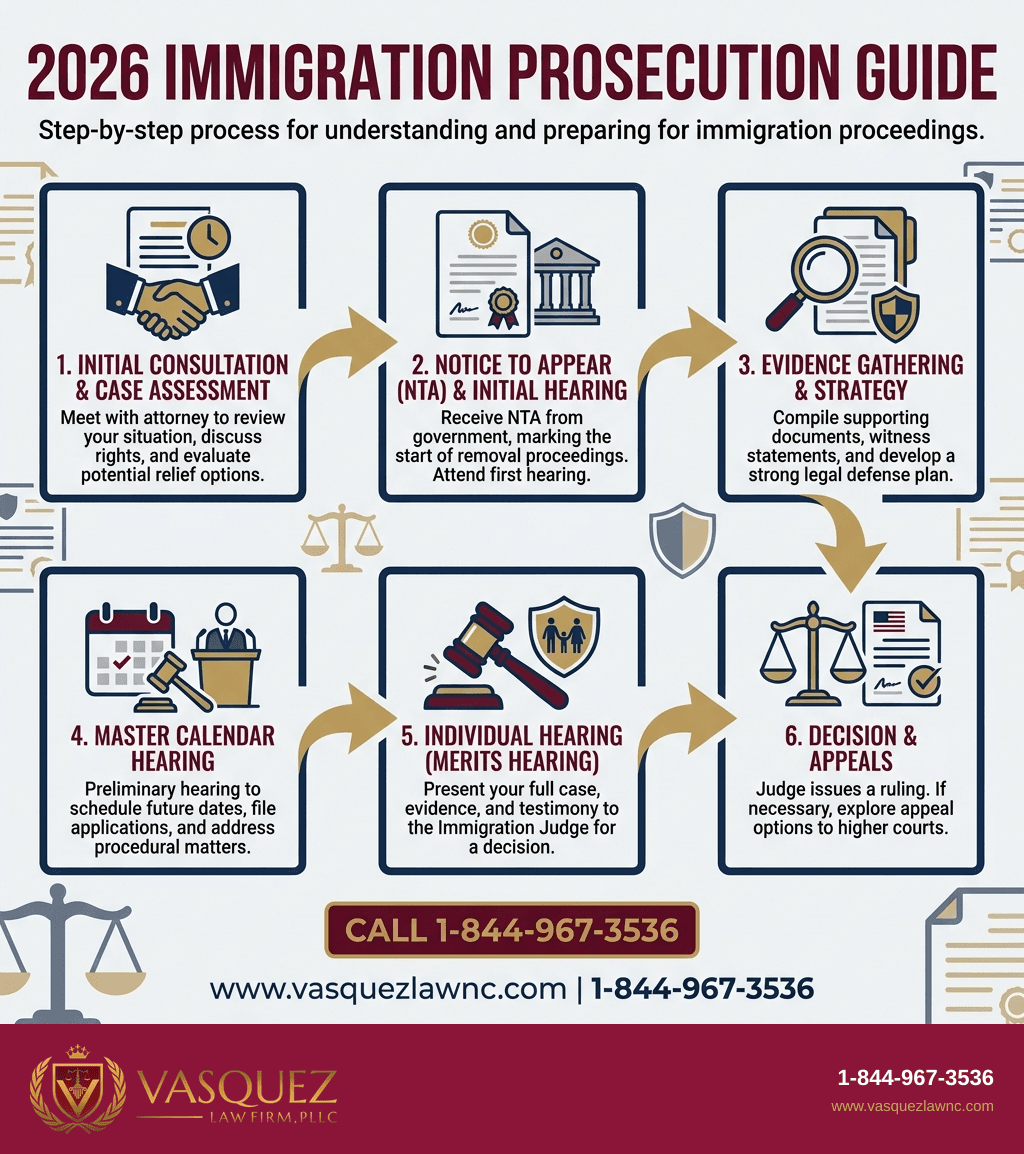
Infographic: Federal Immigration Prosecution Process
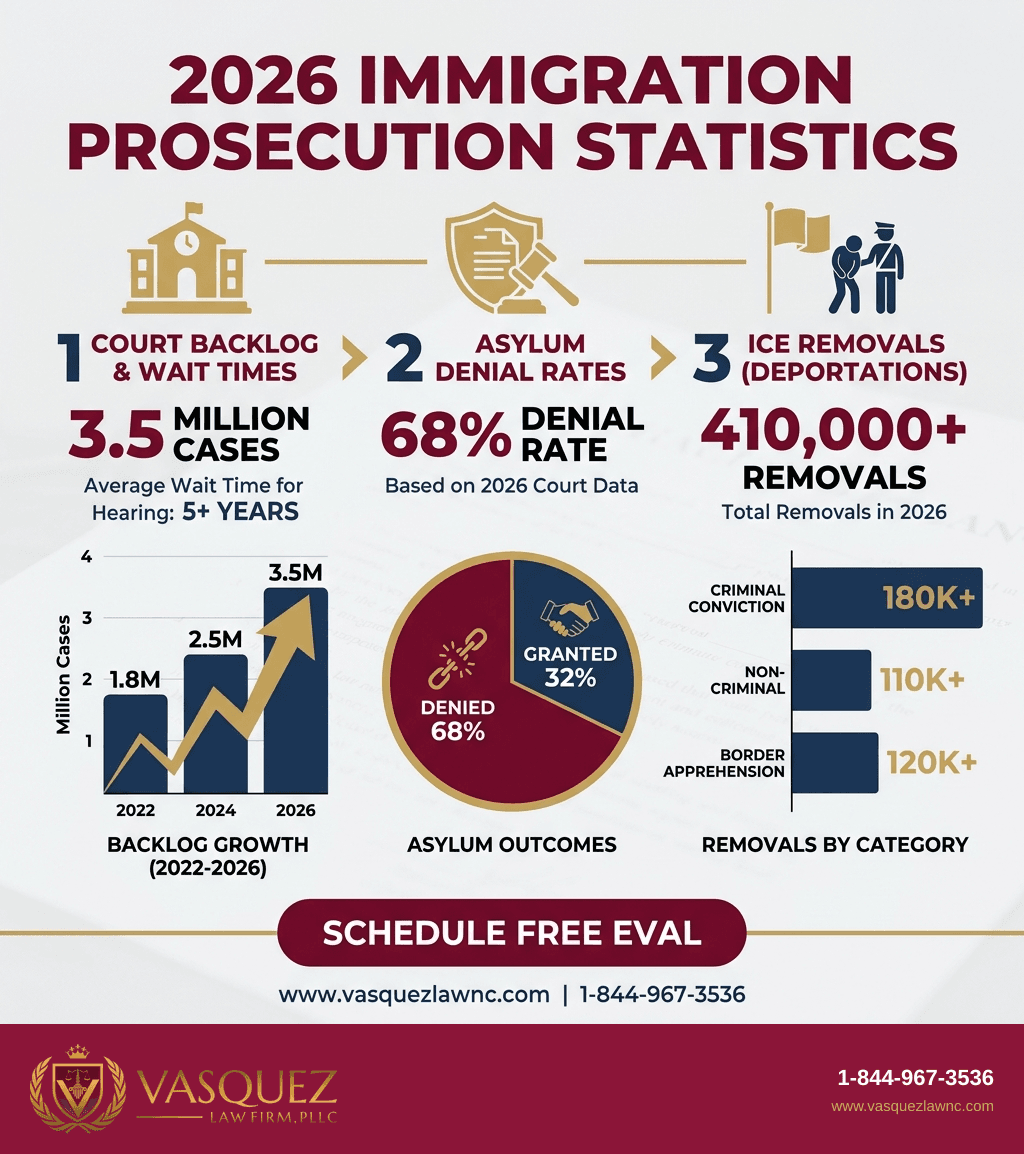
Infographic: Penalties Under 8 U.S.C. 1325
Frequently Asked Questions
What exactly are immigration prosecutions?
Immigration prosecutions are federal criminal cases against those charged with unlawful entries or reentries. They are separate from civil deportation matters and carry potential fines, imprisonment, and immigration consequences. Prompt legal help is critical.
Is illegal immigration a felony or misdemeanor?
Illegal immigration may be a misdemeanor (first entry under 8 U.S.C. 1325) or a felony (illegal reentry after removal under 8 U.S.C. 1326). Penalties vary based on charges and prior record.
Can ICE arrest legal U.S. citizens during immigration prosecutions?
ICE should not arrest confirmed citizens, but errors can occur. Always provide proof of citizenship and consult an attorney if detained.
What penalties apply for entering the U.S. illegally?
Penalties include fines and imprisonment, typically up to six months for first offenses, with harsher terms for repeated offenses or reentry after deportation.
Is illegal immigration a federal crime?
Yes. Federal statutes criminalize illegal entry and reentry, enforced by federal agencies and prosecuted in federal court.
Does immigration law forgive certain crimes?
Generally no. Many criminal convictions impact immigration status negatively, possibly causing removal or ineligibility for benefits.
Is ICE deporting green card holders with a criminal record?
Lawful permanent residents can be deported for certain convictions, especially aggravated felonies or crimes of moral turpitude. Legal counsel is vital.
What should I do if arrested for an immigration offense in Orlando?
Remain silent, request an attorney, do not sign documents without legal advice, and contact an experienced attorney immediately to protect your rights.
Jurisdiction Notes
North Carolina Notes
People in North Carolina face federal immigration prosecutions in the states federal courts. Local ICE offices make arrests and investigate. Federal law applies the same everywhere, but local enforcement choices and resources can change how cases are handled.
Florida (Orlando) Notes
In Orlando, FL, ICE actively enforces immigration laws with a dedicated federal court. Residents should expect strong prosecution but also have access to local immigration legal help and lawyers who know federal rules.
Nationwide Notes
Immigration prosecutions follow federal law in all states. But U.S. Attorneys priorities can change with new administrations. This affects enforcement levels in different areas.
When to Call a Lawyer Now
- You have been arrested or questioned by ICE or law enforcement
- You received a criminal complaint for illegal entry or reentry
- You face removal proceedings linked to criminal charges
- You want to understand how a criminal conviction affects your immigration status
- You have prior deportations and are worried about reentry charges
- You were wrongly identified as undocumented or detained unlawfully
- You need to prepare for court appearances or hearings
- You received a notice of hearing from EOIR or a federal court
- You want to explore relief or alternatives to prosecution
- You need help with paperwork, bail, or bond issues
About Vasquez Law Firm
At Vasquez Law Firm, we mix care with strong representation. Our motto "Yo Peleo" (I Fight) shows our promise to stand up for your rights.
- Bilingual Support: Se Habla Español Spanish-speaking lawyers and staff available
- Service Areas: North Carolina, plus Florida and nationwide for immigration
- Experience: Over 30 years helping clients with tough legal issues
- Results: Thousands of successful cases in many practice areas
Attorney Trust and Experience
William J. Vásquez joined the North Carolina State Bar in 2011. He is also admitted to the U.S. Courts of Appeals for the 4th, 5th, 6th, and 11th Circuits. The firm has offered focused legal help since 2011. We give personal attention to each clients case. To meet the team, see our Attorney Profiles.
Don't wait to get the help you deserve. Call us now for immediate assistance. Se Habla Español.
Sources and References
- U.S. Citizenship and Immigration Services
- Executive Office for Immigration Review
- Legal Information Institute
Take the first step toward justice today. Our team is ready to help. Se Habla Español.
Start Your Free Evaluation Now
Call us: 1-844-967-3536
Se Habla Español - Estamos aqu para ayudarle.


William Vasquez
Founder & CEO, Vasquez Law Firm, PLLC
William Vasquez is the founder and CEO of Vasquez Law Firm, PLLC, a results-driven firm specializing in immigration, criminal defense, personal injury, and workers' compensation. A U.S. Air Force veteran and recipient of the Joint Service Achievement Medal, William is dedicated to fiercely fighting for his clients' rights.
Related Legal Services
Need legal help? Learn more about immigration case consultation, or contact us for a free evaluation.
You can also visit NC immigration legal help for more information.