What ICE Means for Immigrants in Orlando in 2026
Learn what ICE means for immigrants in Orlando in 2026. Discover your rights and how to protect your status. Contact Vasquez Law for a free consultation.
Published on August 9, 2026
Talk to an immigration attorney
Free call. A clear plan for your case.
Free & confidential · Se habla espanol · 24/7

Have questions? Talk to an attorney - free evaluation.
Call 1-844-967-3536Worried how the latest immigration news affects you?
Schedule a confidential case review with an immigration attorney - know exactly where you stand.
USCIS Case Status
Check your USCIS case status
Enter your receipt number and get the official status. Free, no registration.
What ICE Means for Immigrants in Orlando in 2026
ICE stands for U.S. Immigration and Customs Enforcement. It is a government agency that enforces immigration laws across the United States, including Orlando, FL. In 2026, many people have questions about ICE's role, their immigration status, and what to do if they meet ICE agents. This guide explains what ICE does, how it affects immigrants, and what steps you can take to protect yourself under the law. Whether you face detention, deportation risks, or need help with immigration paperwork, understanding ICE is important for your safety and rights in North Carolina and Florida.
Need help with your case? Our experienced attorneys are ready to fight for you. Se Habla Español.
Or call us now: 1-844-967-3536
Quick Answer
ICE, or U.S. Immigration and Customs Enforcement, is the federal agency that enforces immigration laws. This includes detaining and deporting people in Orlando and Raleigh. Knowing your rights and what to do if ICE contacts you can protect your immigration status and legal interests.
- ICE enforces immigration laws across the country, including Orlando and North Carolina
- They detain people without legal permission to stay and start removal (deportation) cases
- You have the right to stay silent and ask for a lawyer
- ICE usually needs a warrant signed by a judge to enter your home but can arrest you in public places
- Understanding ICE's process can help you avoid common mistakes
Understanding ICE and Its Role
In 2026, ICE is still the main agency in charge of enforcing immigration laws in the U.S. ICE was created in 2003 under the Department of Homeland Security. ICE investigates illegal immigration, detains people suspected of immigration violations, and manages deportations. For immigrants in Orlando and Raleigh, meeting ICE can cause fear and confusion. But knowing exactly what ICE does helps clear up many misunderstandings.
What ICE Does
ICE enforces federal immigration laws by investigating cases, finding people without legal permission to stay, and carrying out detention and deportation orders. ICE has two main parts: Homeland Security Investigations (HSI), which handles criminal investigations, and Enforcement and Removal Operations (ERO), which finds and detains people who may be deported.
ICE Immigration Enforcement in Orlando and Raleigh
ICE works across the country, but its local offices in Orlando and Raleigh handle enforcement and detention in those areas. How much ICE works with local police depends on local rules. In some places, local police limit their cooperation with ICE. Knowing how ICE works locally can affect how you respond and your legal options.
ICE Meaning in Deportation Context
When people say "ICE" in immigration talks, they often mean deportation actions by the agency. Deportation means the official removal of a person from the U.S. under immigration law. Not every contact with ICE leads to deportation. But ICE may start removal cases or detain people who might be deported.
Steps to Take if ICE Contacts You
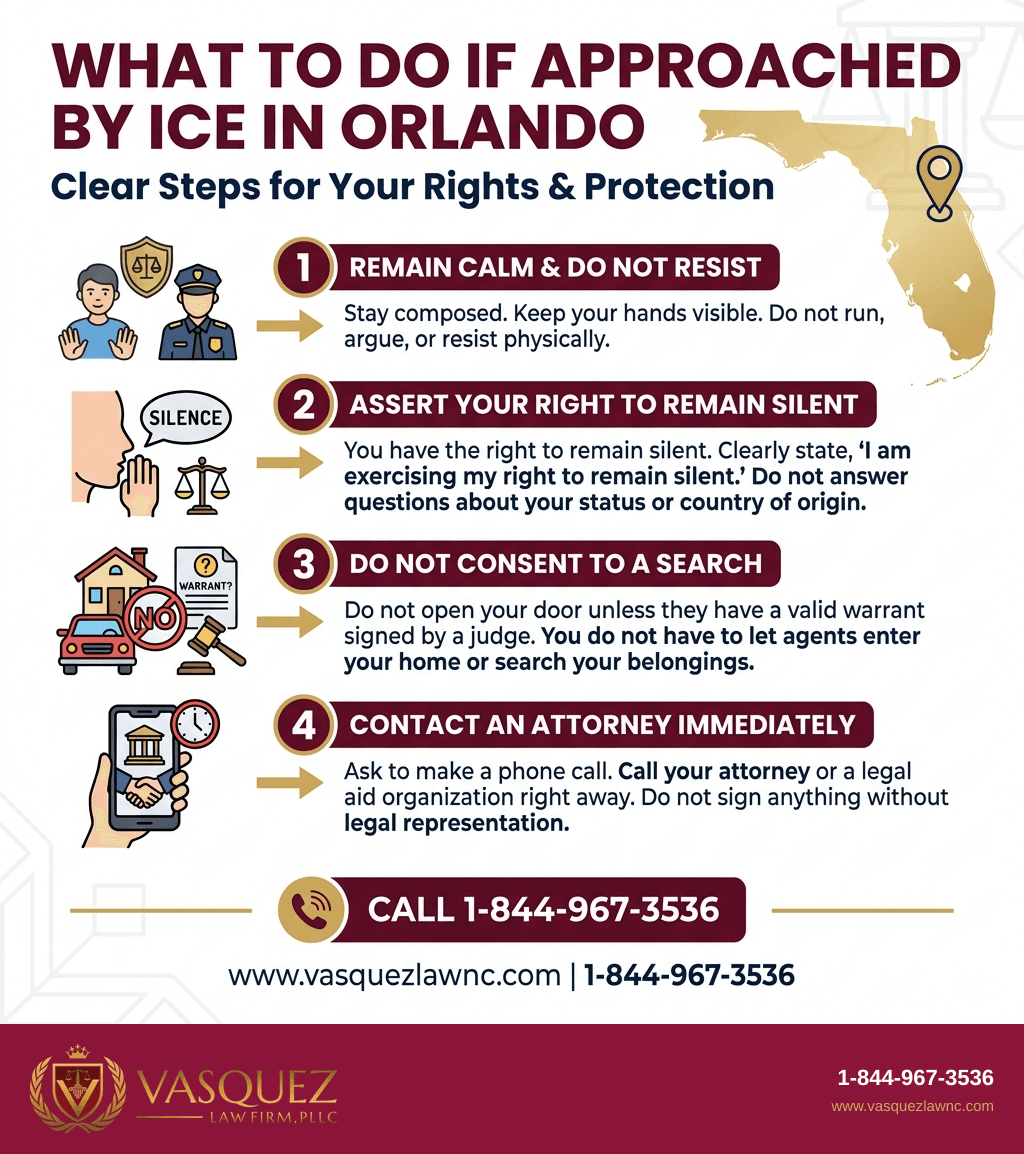
Being contacted or detained by ICE is serious. Acting quickly and wisely can protect your rights and possibly your immigration status. Here are important steps to follow if ICE approaches you in Orlando, Raleigh, or anywhere else.
Stay Calm and Do Not Consent to Searches
Do not run or fight. Politely ask the officers to show their identification. If they come to your home, ask if they have a warrant signed by a judge that allows them to enter. If they do not have a warrant, you can refuse entry but stay calm and peaceful. Staying calm helps avoid problems.
Know Your Rights
You have the right to stay silent. You do not have to answer questions about your immigration status without a lawyer present. Ask to speak to a lawyer before you say anything. Do not sign any papers without reviewing them with a lawyer.
Collect Important Information
If you can, write down the names and badge numbers of the officers. Note the date and time of the contact. If you are detained, ask for your ICE number or alien registration number from the officials. This number is very important for your lawyer to help you.
Common Mistakes to Avoid with ICE
People face many challenges when dealing with ICE. Some mistakes can make their situation worse. Here are common errors and how to avoid them.
- Talking to ICE without a Lawyer: Do not answer detailed questions without legal advice. This helps avoid saying something that can hurt your case.
- Agreeing to Searches or Entry Without a Warrant: You can say no if ICE does not have a judge-signed warrant to enter your home.
- Ignoring ICE Notices or Summons: Always respond to ICE letters or orders. Ignoring them can lead to arrest orders.
- Not Keeping Copies of Legal Documents: Keep your immigration papers and any letters from ICE in a safe place.
- Delaying Contact with an Attorney: The sooner you get legal help, the better your chances to defend yourself.
- Providing False Information: Giving wrong information can seriously harm your case and chances to stay.
- Missing Immigration Court Dates: Not showing up to court can lead to removal orders without your side being heard.
If you remember only one thing: Do not deal with ICE without an experienced immigration lawyer with you.
Timeline of ICE Proceedings
Knowing the usual timeline helps immigrants prepare for what happens after ICE contact. Timelines differ by case, but common steps include:
- Initial Detention: ICE may detain you right after arrest or give you a notice to appear in court.
- Notice to Appear (NTA): This is a formal document that charges you and sets a date for immigration court.
- First Master Calendar Hearing: Usually within weeks of the NTA, this hearing starts to check if you can get relief from removal.
- Individual Hearing: A full hearing where evidence is shown and legal arguments are made.
- Decision: The immigration judge decides to grant relief or order removal.
- Appeals: If removal is ordered, you can appeal to the Board of Immigration Appeals or federal courts.
Each step has strict deadlines and rules. Missing any step can cause serious problems.
Frequently Asked Questions
What does ICE stand for in immigration?
ICE stands for U.S. Immigration and Customs Enforcement. It is a federal agency responsible for enforcing immigration laws, including detaining and deporting unauthorized immigrants and investigating immigration violations. ICE operates nationwide, including in Orlando and Raleigh, and works with other agencies to manage border and interior immigration enforcement.
Who does ICE deport?
ICE focuses on deporting people who are in the U.S. without legal permission, those with final removal orders, and people charged with certain crimes. But not everyone detained by ICE is deported right away. Deportation usually requires a formal hearing in immigration court where detained immigrants can present their case.
Was ICE a federal agency before Trump?
Yes. ICE was created in 2003 under the Department of Homeland Security after 9/11. Its purpose was to combine immigration enforcement under one agency. Policies and enforcement priorities have changed under different administrations, but ICE has always been the main federal enforcement agency.
How does ICE know who is unauthorized?
ICE uses many sources, including information from other law enforcement agencies, border entries, workplace checks, and public tips. They also check immigration status through databases. At workplaces, ICE may do raids or audits to check if workers have legal permission to work. Knowing your rights before dealing with ICE is very important.
What should I do if ICE approaches me?
If ICE approaches you, stay calm and do not agree to searches without a warrant. Ask to see their ID and if they have a judge-signed warrant. You have the right to stay silent and to talk to a lawyer before answering questions. Contact an experienced immigration lawyer right away.
Can ICE arrest someone with a warrant only?
Usually, ICE needs a warrant signed by a judge to enter a home or arrest someone there. But ICE can arrest people in public places without a warrant if they have good reason to believe the person can be removed under immigration laws. Knowing this difference helps protect your rights.
What is an ICE number or alien registration number?
An ICE number, also called an alien registration number or A-number, is a unique ID given to noncitizens by immigration authorities. It is used in official cases, detention records, and immigration court. If you deal with ICE, knowing this number helps your lawyer manage your case well.
Does ICE operate differently in Orlando and Raleigh?
ICE follows federal law everywhere but may have different local offices and priorities depending on the area. In Orlando and Raleigh, ICE enforces immigration laws the same way but works with local police differently. Knowing local ICE practices can affect your legal strategy and community protections.
Jurisdiction notes
ICE enforcement follows federal immigration laws that apply nationwide. But how ICE works with local authorities can differ between North Carolina and Florida.
North Carolina Notes
In North Carolina, ICE mainly works through its regional office in Charlotte, with some coordination in Raleigh. Local rules may affect how ICE works with county sheriffs. Community trust programs sometimes limit local police cooperation. Immigrants should understand these local details, especially in Raleigh and nearby counties.
Florida Notes
In Orlando, ICE enforces immigration laws under the same federal rules but has a local office for Florida. How much ICE works with local police can change and has varied under different governments. Community groups can help immigrants facing ICE in Orlando and other Florida cities.
When to call a lawyer now
- If ICE comes to your home or workplace
- After you get a Notice to Appear (NTA) for immigration court
- If ICE detains you while waiting for deportation
- If local police arrest you and ICE is involved
- If authorities ask about your immigration status
- If you think ICE will raid your community
- When immigration laws or enforcement rules change and affect you
- Before signing any immigration or legal papers about your case
- If you want to seek relief or legal defenses against deportation
About Vasquez Law Firm
At Vasquez Law Firm, we mix care with strong legal help. Our motto "Yo Peleo" (I Fight) shows our promise to stand up for your rights.
- Bilingual Support: Se Habla Español Spanish-speaking lawyers and staff are available
- Service Areas: North Carolina, plus Florida and nationwide for immigration
- Experience: Over 30 years helping clients with complex legal issues
- Results: Thousands of successful cases in many legal areas
Attorney Trust and Experience
William J. Vásquez joined the North Carolina State Bar in 2011. He is also admitted to the U.S. Courts of Appeals for the 4th, 5th, 6th, and 11th Circuits. The firm has given focused legal help since 2011, giving personal attention to each client's case.
Don't wait to get the help you need. Call us now for quick assistance.
Se Habla Español
Sources and References
- U.S. Citizenship and Immigration Services
- Executive Office for Immigration Review
- Legal Information Institute
Take the first step toward justice today. Our team is ready to help.
Start Your Free Evaluation Now
Call us: 1-844-967-3536
Se Habla Español - We are here to help you.
If you need legal assistance, learn more about our immigration legal services, or call us at 1-844-967-3536 for a free evaluation.


William Vasquez
Founder & CEO, Vasquez Law Firm, PLLC
William Vasquez is the founder and CEO of Vasquez Law Firm, PLLC, a results-driven firm specializing in immigration, criminal defense, personal injury, and workers' compensation. A U.S. Air Force veteran and recipient of the Joint Service Achievement Medal, William is dedicated to fiercely fighting for his clients' rights.
Related Legal Services
Need legal help? Learn more about get immigration legal help today, or contact us for a free evaluation.
You can also visit our NC immigration team for more information.