How Green Card Process Works: Steps and Timeline in 2026
Understand the green card process steps and timeline in 2026. Learn what impacts approval and how to protect your rights. Free consultation available.
Published on June 3, 2026
Talk to an immigration attorney
Free call. A clear plan for your case.
Free & confidential · Se habla espanol · 24/7
Have questions? Talk to an attorney - free evaluation.
Call 1-844-967-3536Free Tool
Check Your USCIS Case Status Now
Enter your receipt number - get the official USCIS status in English or Spanish. No registration.
How Green Card Process Works: Steps and Timeline in 2026
The green card process in 2026 involves multiple stages, including petitions, applications, and interviews. Whether you are applying through family, employment, or marriage, understanding these steps can help you navigate the system more effectively. This guide explains key stages and timelines relevant for immigrants in Raleigh, NC and Orlando, FL, helping you prepare your documentation correctly and avoid common errors.
Ready to start? See how our attorneys handle the green card application process from petition to approval.
Need help with your case? Our experienced attorneys are ready to fight for you. Se Habla Español.
Or call us now: 1-844-967-3536
Quick Answer
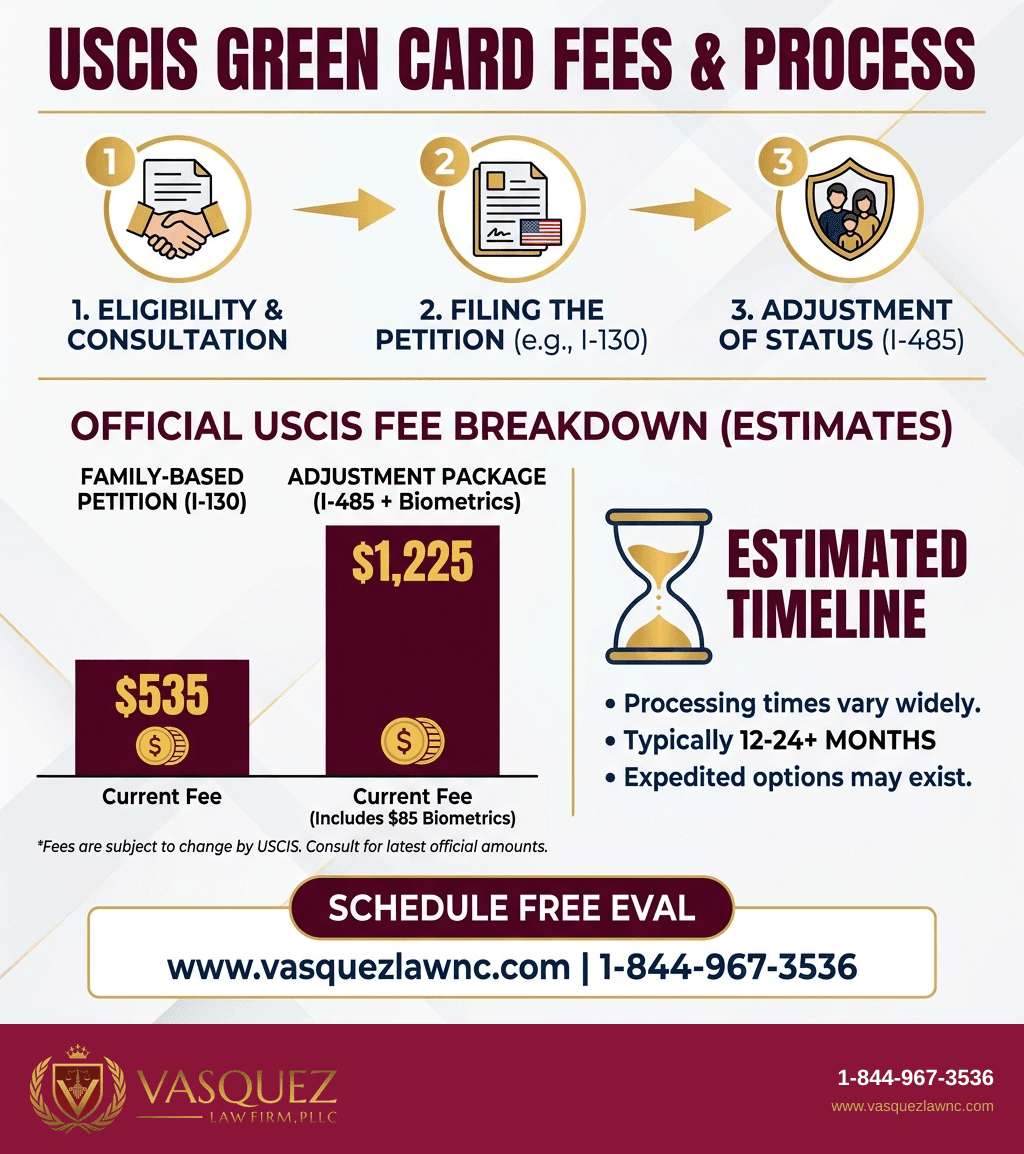
The green card process involves specific steps: filing a petition like Form I-130 or I-140, waiting for visa availability, applying for adjustment of status or consular processing, attending an interview, and receiving approval. Timelines vary by case and category with USCIS processing times between 10 and 22 months in 2026.
- Employers file PERM and I-140 for work green cards
- Family-based cases start with I-130 petition
- Adjustment of status requires Form I-485
- USCIS offices in Raleigh and Orlando manage local cases
- Interview and biometrics are final mandatory steps
- Legal counsel helps avoid common errors
Understanding the Green Card Process Stages
Imagine you are in Raleigh applying for a green card through employment in 2026. Your employer must first complete the PERM labor certification to prove no qualified U.S. workers can fill the job. Once PERM is certified, Form I-140 Petition for Alien Worker is submitted to USCIS. The green card process I-140 is a key stage because USCIS approval allows you to move to the next phase.
After I-140 approval, immigrants from countries with visa backlogs, like India and China, must wait for their priority date to become current. The priority date is assigned based on the filing date of the PERM or I-140 and determines when you may apply for adjustment of status (Form I-485) if in the U.S., or consular processing if abroad. This waiting period can last several years, depending on the category.
For family-based cases, the process begins with the U.S. citizen or permanent resident relative filing Form I-130 Petition for Alien Relative. Once approved and when a visa number is available, the applicant follows a similar adjustment or consular process.
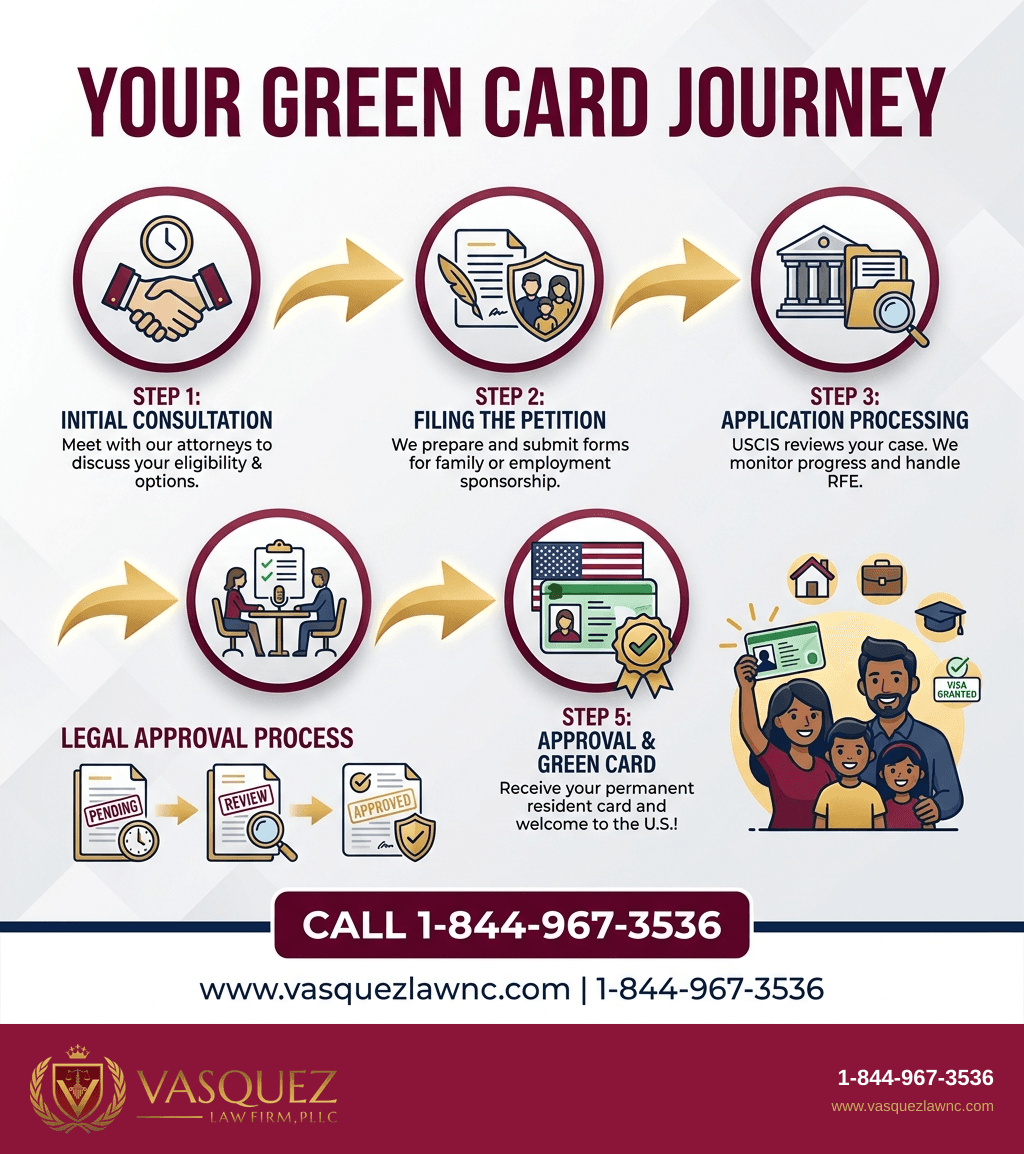
Typical stages include:
- Filing Petition (I-130 or I-140)
- Waiting for Priority Date/Visa Availability
- Adjustment of Status Application (I-485) or Consular Processing
- Biometrics appointment (fingerprints and photos)
- Interview with USCIS or consular officer
- Final green card approval
Each stage requires proper documentation, careful timing, and responsiveness to USCIS requests. Mistakes at any stage cause delays or denials.
Key Steps to Take in 2026
Suppose you are an immigrant living in Orlando, FL applying for a green card through marriage. Here are the key steps to prepare:
- Collect necessary documents: Birth certificates, marriage certificate, proof of lawful presence, police clearances, and financial evidence.
- File the appropriate petition: Form I-130 if family-based, or I-140 if employment-based.
- Wait for petition approval: USCIS processing can take 6 to 12 months depending on the petition.
- Monitor visa bulletin and priority date: Check monthly updates from the Department of State and USCIS.
- Apply for Adjustment of Status: Submit Form I-485 when the priority date is current to remain in the U.S. during processing.
- Attend biometrics appointment: USCIS in Raleigh or Orlando will notify a date for fingerprinting.
- Prepare and attend interview: Bring originals and be ready to answer questions about your eligibility.
- Receive decision and green card: USCIS will mail your permanent resident card if approved.
At every step, you can consult our immigration attorneys in Raleigh and Orlando to ensure you meet requirements and deadlines.
Key forms include:
- Form I-130 (family petitions)
- Form I-140 (employment petitions)
- Form I-485 (adjustment of status)
- Form I-765 (work permit application, if eligible)
- Form I-131 (travel document application, if needed)
Common Mistakes to Avoid When Applying
- Incomplete or inaccurate forms: Double-check all entries and attach all supporting documents. Mistakes lead to Requests for Evidence or denials.
- Missing deadlines: USCIS sets strict filing windows and appointment schedules. Missing these can restart your process.
- Ignoring USCIS notices: Always respond promptly to Requests for Evidence or interview notices.
- Failing to monitor priority dates: Applicants from high-demand countries must track the visa bulletin monthly to apply timely.
- Not preparing for the interview: Bring original documents and be honest and clear in your responses.
- Using outdated forms: Use the latest USCIS forms published on their official site.
- Not seeking legal help: Green card laws and policies change frequently. Consulting experienced attorneys at Vasquez Law Firm prevents errors.
If you only remember one thing: Take the process seriously and follow instructions closely to avoid costly delays or denials.
Timeline and What to Expect During Processing
Understanding the average timeline in 2026 helps you plan expectations. Here is a typical timeline for an employment-based green card starting with PERM labor certification:
- Months 0-6: Employer files PERM application with Department of Labor; certification pending.
- Months 7-12: File Form I-140 with USCIS after PERM approval; typical processing time about 6 months.
- Months 13-22: Wait for priority date to become current in the visa bulletin (varies by country and category).
- Months 23-30: File Form I-485 adjustment of status; USCIS schedules biometrics appointment within 2 months.
- Months 31-34: Attend USCIS interview; USCIS decision follows within weeks to months.
- Months 35+: Receive green card or Notice of Approval.
Family-based cases often follow a similar but less predictable timeline depending on visa availability. Check USCIS processing times regularly for updates specific to Raleigh and Orlando Field Offices.
Costs and Fees: What Impacts the Price
Filing fees vary by form and category but typically include:
- $700 for Form I-130 family petition
- $700 for Form I-140 employment petition
- $1,225 for Form I-485 adjustment of status, including biometrics
- $410 for Form I-765 work permit application (if applicable)
- $575 for Form I-131 travel document application (if applicable)
Additional costs may include medical examinations, translation services, attorney fees, and application assistance. Changes in USCIS fee schedules can occur, so staying current is advisable.
Vasquez Law Firm offers transparent consultation about fees and can help you budget throughout the process. Contact us for a free case evaluation about your case.
NC, FL, and Nationwide Notes
North Carolina Notes
Raleigh USCIS Field Office processes adjustment of status applications for residents and has experience with all immigrant categories. Local USCIS scheduling and interview appointments are managed here. North Carolina applicants may also attend interviews at the Charlotte field office for certain immigration benefits.
Florida Notes
Orlando USCIS Field Office serves applicants residing in central Florida. Processing times may differ slightly compared to Raleigh. Florida applicants should prepare for in-person biometrics and interviews locally. Vasquez Law Firm’s bilingual attorneys in Orlando provide personalized guidance for green card applicants.
Nationwide Concepts
The green card process is federally regulated by USCIS and governed by statutes including INA and CFR. National visa bulletin updates affect availability based on country caps. While local offices process applications, federal law applies across states. Understanding both nationwide policies and local USCIS operations is key.
When to Call a Lawyer Now
- If you received an RFE (Request for Evidence) or NOID (Notice of Intent to Deny) from USCIS
- If you missed a biometrics or interview appointment
- If your priority date is about to become current and you want to plan the adjustment
- If you face criminal charges or ICE enforcement while your green card case is pending
- If you are unsure of eligibility or have complex immigration history
- If USCIS denies your petition or application
- If you need help preparing for your USCIS interview
- If you want to file employment-based petitions with compliance for labor certifications
About Vasquez Law Firm
At Vasquez Law Firm, we combine compassion with aggressive representation. Our motto "Yo Peleo®" (I Fight) reflects our commitment to standing up for your rights.
- Bilingual Support: Se Habla Español — Spanish-speaking attorneys and staff available
- Service Areas: North Carolina, Florida, and nationwide immigration services
- Experience: Over 30 years helping clients navigate complex legal matters
- Results: Thousands of successful cases across multiple practice areas
Attorney Trust and Experience
William J. Vásquez is admitted to the North Carolina State Bar (2011) and to the U.S. Courts of Appeals for the 4th, 5th, and 11th Circuits. Florida-jurisdiction matters at the firm are handled by Florida Bar attorney Harold Estrada-Rodriguez (FL Bar No. 1041171). The firm has provided dedicated legal representation since 2011, with personalized attention to each client's case.
Don't wait to get the help you deserve. Call us now for immediate assistance.
Se Habla Español.
Frequently Asked Questions
What are the stages of the green card process?
The process starts with filing a petition (family or employment), followed by waiting for visa availability, filing adjustment of status or consular processing applications, attending biometrics and interview, and finally receiving the green card. Each stage can require months or years depending on your category and USCIS workload.
How long is the green card process taking now?
It varies widely by category and location. Employment-based applicants in Raleigh or Orlando can expect 10 to 22 months after filing Form I-485. Family-based applicants, especially from oversubscribed countries, may wait much longer due to visa caps and priority date backlogs.
What is the new rule for green cards?
Recent USCIS proposals in 2026 include stricter document reviews, biometric requirements, and potential delays in interviews causing longer processing times. These could affect work permit issuance and final adjudications for some applicants.
Is ICE arresting green card holders in 2026?
ICE may detain green card holders with serious criminal offenses or immigration violations. However, lawful permanent residents have due process protections and can contest removal legally under INA provisions.
What documents are needed for the green card process?
Important documents include birth and marriage certificates, proof of lawful status, financial support evidence, police clearance certificates, and completed USCIS forms. Biometrics and an interview verify identity and eligibility.
Can I work during my green card process?
If you apply for and receive an Employment Authorization Document (EAD) while your adjustment of status is pending, you can lawfully work. Processing takes approximately 4 to 8 months from the I-765 filing date as per USCIS data.
What is PERM in the green card process?
PERM is the labor certification process proving no qualified U.S. worker is available for the job offered. The employer files with the Department of Labor before submitting an I-140 petition to USCIS. It takes 4 to 6 months to process.
How does marriage affect the green card process?
Marrying a U.S. citizen or permanent resident allows filing Form I-130 family petitions. Applicants must prove the marriage is genuine to pass an interview. Joint evidence such as bank accounts, lease agreements, and photos help USCIS assess legitimacy.
Sources and References
- U.S. Citizenship and Immigration Services (USCIS)
- Executive Office for Immigration Review
- Legal Information Institute
Take the first step toward justice today. Our team is standing by to help. Se Habla Español.
Start Your Free Evaluation Now
Call us: 1-844-967-3536
Se Habla Español - Estamos aquí para ayudarle.

William Vasquez
Founder & CEO, Vasquez Law Firm, PLLC
William Vasquez is the founder and CEO of Vasquez Law Firm, PLLC, a results-driven firm specializing in immigration, criminal defense, personal injury, and workers' compensation. A U.S. Air Force veteran and recipient of the Joint Service Achievement Medal, William is dedicated to fiercely fighting for his clients' rights.
Related Legal Services
Need legal help? Learn more about our immigration law practice, or contact us for a free evaluation.
You can also visit North Carolina immigration law firm for more information.