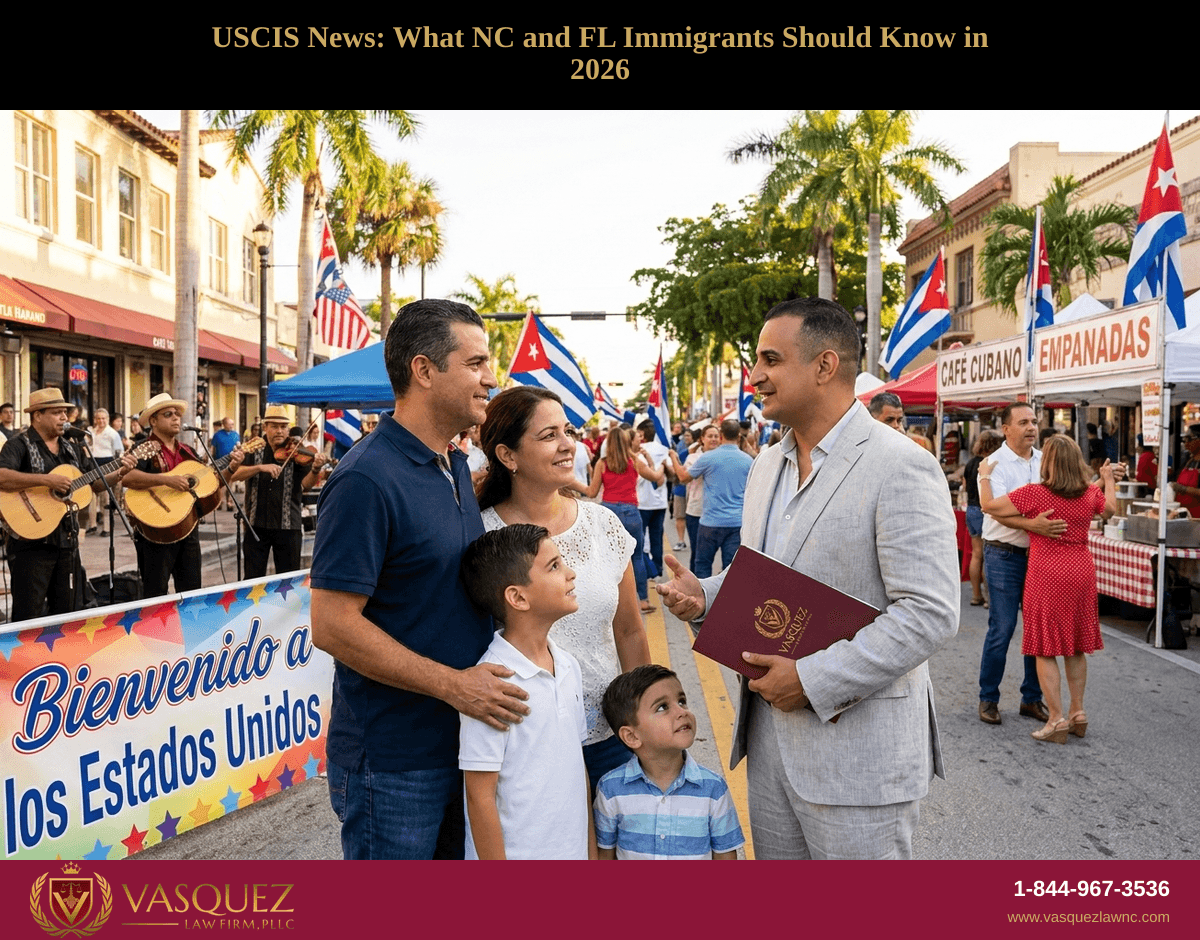
What Happens At an Immigration Detention Center in 2026
Discover what an immigration detention center is, how long detainees stay, and your rights in 2026. Contact Vasquez Law for a free consultation today.
Published on May 30, 2026
Talk to an immigration attorney
Free call. A clear plan for your case.
Free & confidential · Se habla espanol · 24/7
Have questions? Talk to an attorney - free evaluation.
Call 1-844-967-3536Worried how the latest immigration news affects you?
Schedule a confidential case review with an immigration attorney - know exactly where you stand.
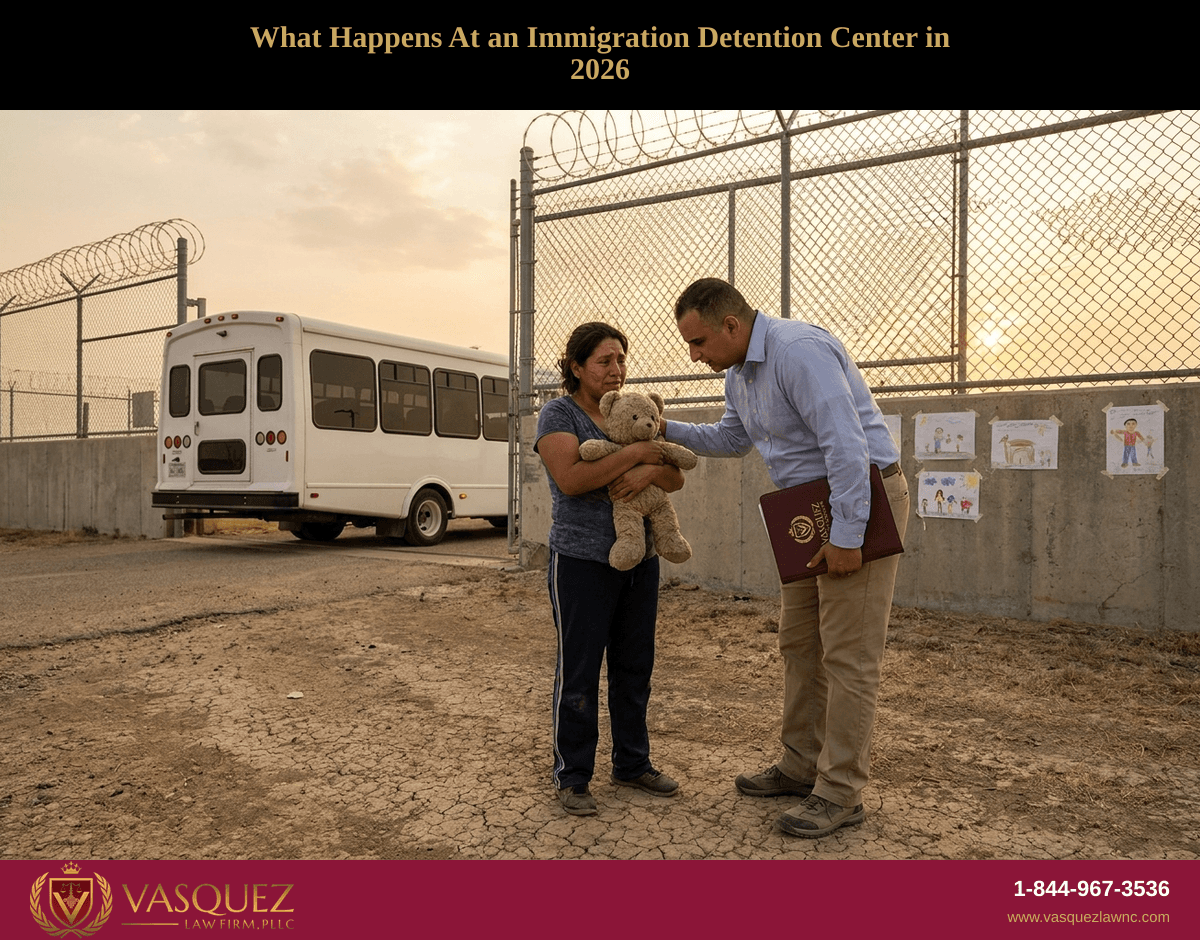
What Happens At an Immigration Detention Center in 2026
An immigration detention center holds individuals suspected of immigration violations while their cases proceed. In 2026, facilities near Raleigh, NC and Orlando, FL provide federally regulated detention. This article explains how these centers operate, the legal rights of detainees, recent lawsuits affecting conditions, and how to find assistance from experienced immigration attorneys. If you or a loved one is detained, understanding the system can help protect your rights and plan the next steps effectively.
Need help with your case? Our experienced attorneys are ready to fight for you. Se Habla Español.
Or call us now: 1-844-967-3536
Quick Answer
An immigration detention center is where individuals suspected of immigration violations are held while immigration courts process their cases. Detainees have legal rights but face complex procedures that can result in months of detention. It is important to use tools like the ICE Detainee Locator to find detainees and seek timely legal assistance to protect your rights.
- Detention centers are federal, civil facilities, not criminal jails
- Detentions can last from days to years depending on cases and courts
- ICE Detainee Locator helps families find detained individuals
- Detainees have rights to bond hearings and legal representation
- Experienced immigration lawyers provide vital case support
Understanding Immigration Detention Centers
Imagine being detained and confined to a facility because an immigration officer suspects you violated immigration law. Immigration detention centers are designed to hold these individuals temporarily. Unlike jails for criminal offenders, these centers are civil detention sites overseen by Immigration and Customs Enforcement (ICE), a branch of the Department of Homeland Security established in 2003 during President George W. Bush's administration.
In 2026, Raleigh, NC, and Orlando, FL are near multiple detention centers that house immigrants awaiting hearings or removal decisions. These centers vary in size and conditions but operate under federal mandates. As of 2026, immigration detention is not meant as punishment but as a way to ensure presence at legal proceedings. However, some detainees may be held for extended periods due to case delays and court backlogs.
ICE detention centers rely on federal standards outlined in statutes like 8 U.S.C. § 1226. These laws govern arrest, detention, and release procedures to balance enforcement with detainee rights. Still, advocates and lawsuits, such as the 2026 case against the country’s largest detention center, highlight issues with overcrowding and poor conditions impacting detainees’ health and legal outcomes.
Being detained in an immigration center triggers complex legal processes. Many detainees face removal proceedings in immigration courts administered by the Executive Office for Immigration Review (EOIR), which holds hearings to decide whether a detainee can remain in the U.S. or must be deported.
If you or a family member is detained, it is crucial to understand these centers' nature and invoke your rights promptly. Our immigration legal services in Raleigh and Orlando can guide you through this challenging time.
How to Use ICE Detainee Locator and Search Tools
Locating a family member or client in an immigration detention center can be confusing. The ICE Detainee Locator tool is the official online resource to find detained individuals by name or ID number. This free federal tool is updated regularly and covers detention centers nationwide, including those near Raleigh, NC, and Orlando, FL.
To use the locator, enter the detainee’s first and last names or Alien Registration Number. The system returns the current detention facility and contact information. This helps families maintain communication and begin legal representation. It can also clarify whether a loved one was transferred to another center, as transfers occur frequently.
Aside from ICE, some local and state agencies may hold immigrants temporarily. However, federal ICE centers are the main detention facilities linked to deportation proceedings. The locator tool covers these centers, making it indispensable for families and attorneys.
In addition, some private organizations provide support and legal referrals for detainees. Knowing how to quickly find your detained family member reduces anxiety and helps start the process for bond hearings or immigration relief.
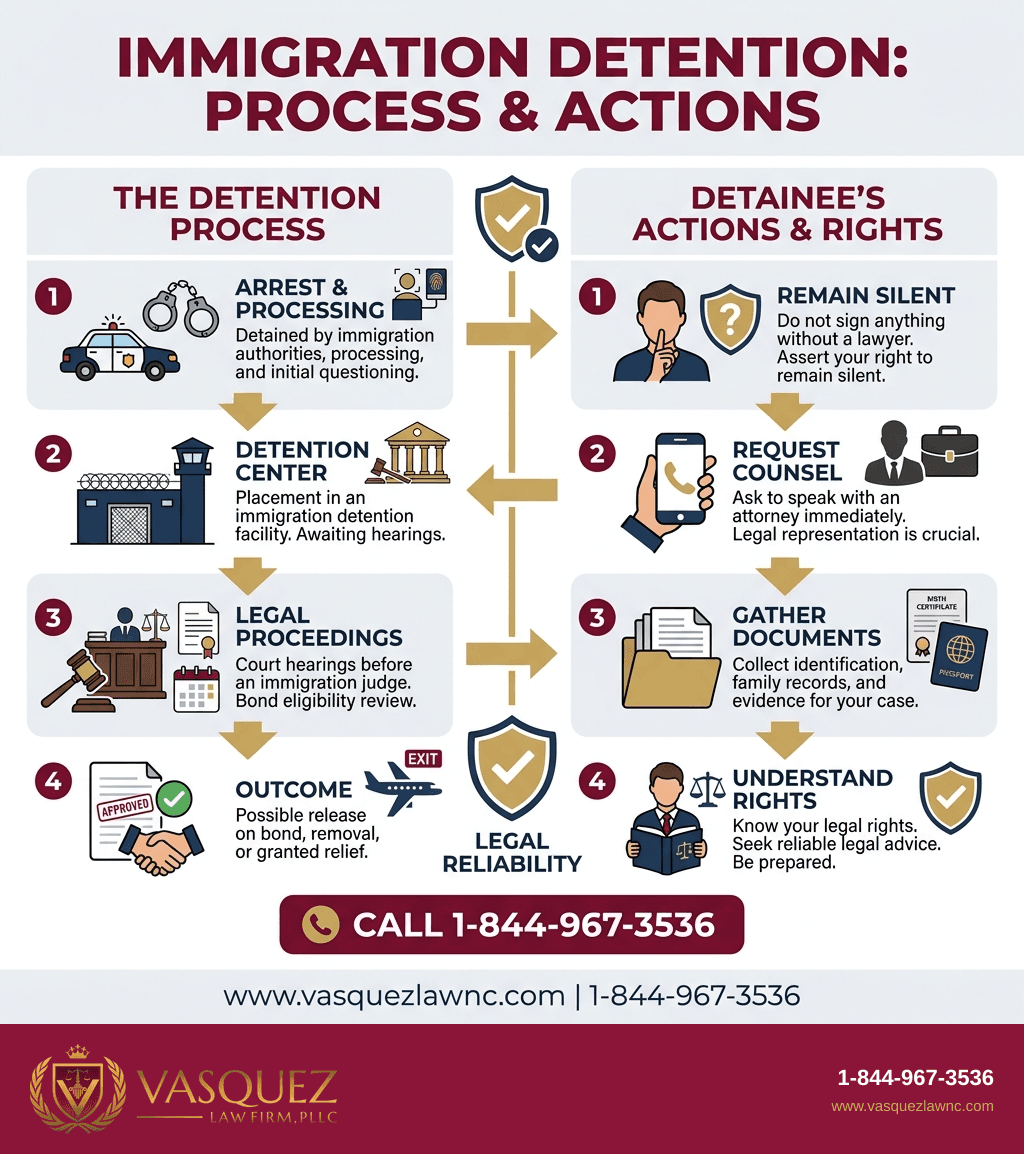
Step-by-Step: What to Do if Detained
- Stay Calm and Cooperate: If stopped by ICE or Border Patrol, be respectful and avoid giving false information. You have the right to remain silent about your immigration status.
- Request an Attorney: Ask to speak with a qualified immigration lawyer — having legal representation is critical. Contact our Attorney Vasquez or team for help in Raleigh or Orlando.
- Gather Basic Information: Record your detention location, ICE case number, and officer details. Use this to track your status on the ICE Detainee Locator.
- Contact Family or Trusted Persons: Inform family or friends about your detention so they can prepare affidavits or bond if applicable.
- Attend All Hearings: Attend every court hearing and meet deadlines to avoid removal orders in absentia.
- Prepare Evidence: Compile documents that prove eligibility for relief such as asylum, cancellation of removal, or adjustment of status.
- File for Bond Hearing: A judge may grant bond to release you while your case proceeds. Having professional legal counsel increases chances.
Following these steps promptly can improve outcomes and reduce detention length. Our free case evaluation is the best way to start your defense with knowledgeable help.
Common Mistakes When Facing Detention
- Not Requesting an Attorney Early: Delay in legal help leads to missed hearings and lost relief options. Contact an immigration expert immediately.
- Ignoring Hearings: Failure to appear results in deportation orders without review.
- Providing False Information: Lying to ICE can lead to criminal charges and removal denial.
- Not Using the ICE Detainee Locator: Lack of knowledge about detention facility obstructs communication and bond possibilities.
- Missing Deadlines: Immigration law imposes strict filing deadlines. Missing these can cause case dismissal.
- Assuming Detention is a Criminal Jail: This misconception about rights and procedures can affect behavior and decisions.
- Failing to Document Evidence: Not demonstrating ties to the community or relief eligibility weakens the case.
If you only remember one thing: Engage a qualified immigration lawyer early to navigate detention and removal proceedings properly.
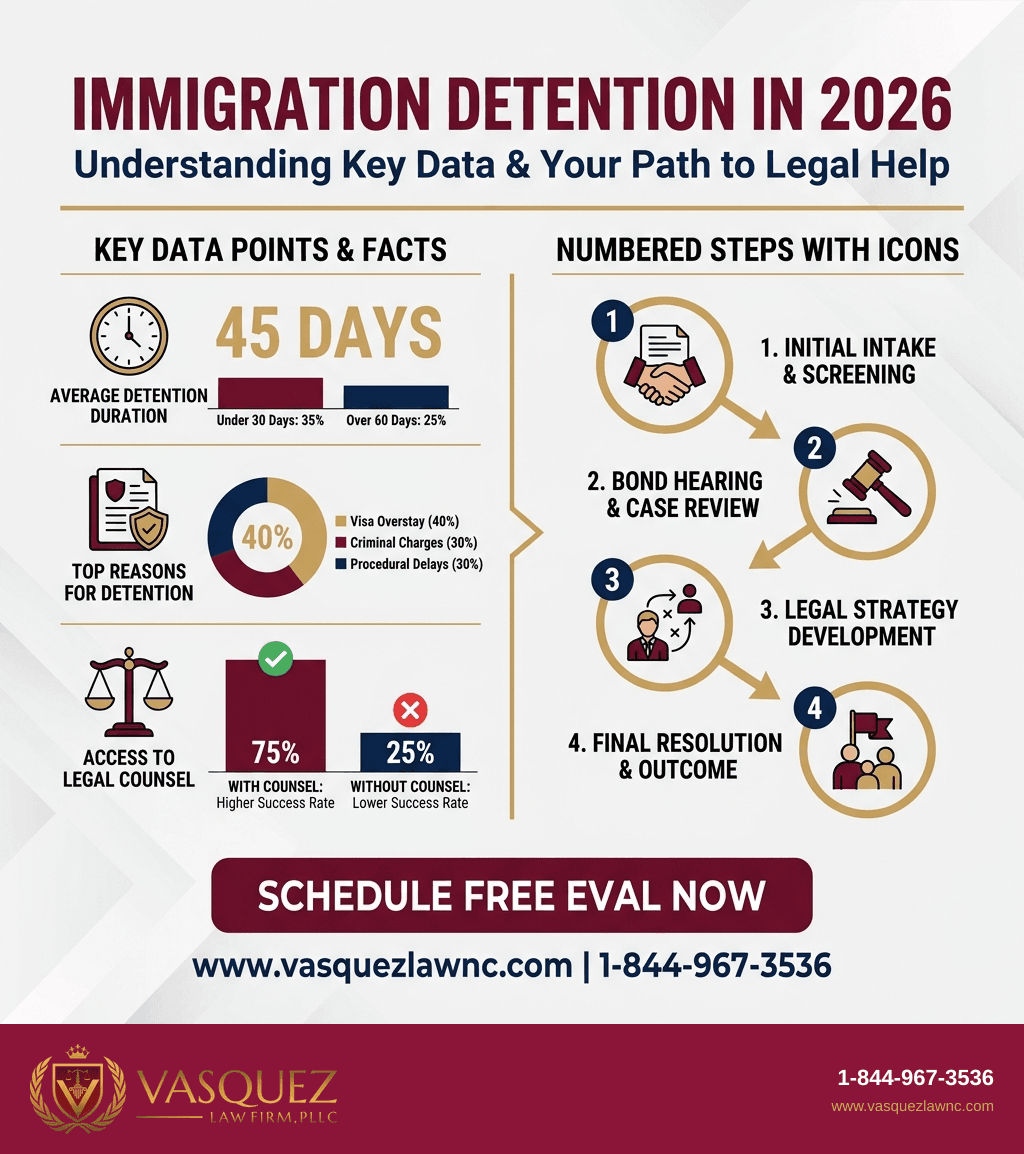
Timeline: What to Expect During Detention
- Day 1–3: Initial apprehension, background checks, and placement in a detention center.
- Week 1–4: Preliminary ICE interview and bond determination if eligible.
- Month 1–6: Immigration court hearings begin; hearings may be delayed due to backlog.
- Month 6–12: Continuation of case with possibility of bond review, release, or orders of removal.
- Beyond 12 months: Lengthy detention possible if cases are complex or appeals are pending.
This timeline varies significantly between individuals and jurisdictions. Raleigh, NC courts and Orlando, FL courts each have specific procedural speeds. Check current USCIS processing times (USCIS Processing Times) regularly to anticipate delays in immigration benefit adjudications.
Costs and Resources for Legal Help
- Legal Fees: Representation costs vary based on case complexity. Some services offer pro bono or sliding scale fees for low-income detainees.
- Bond Amounts: Immigration bond can range from 1,500 to 25,000 dollars depending on the case and judge's decision.
- Travel and Communication: Families may incur expenses traveling to detention centers or paying phone fees as many centers restrict communication means.
- Community Resources: Nonprofits and advocacy groups near Raleigh and Orlando often provide legal clinics and support for detainees.
- Vasquez Law Firm Assistance: Our firm offers bilingual support, flexible payment plans, and free case evaluations to help detained immigrants.
NC and FL Jurisdiction Notes
North Carolina Notes
North Carolina hosts detention centers near Raleigh, such as the Stewart Detention Center in nearby Georgia often housing NC detainees. Immigration court hearings for NC detainees are held in Raleigh or Charlotte. Local nonprofits in North Carolina advocate for detainee rights and bond assistance. Vasquez Law Firm supports immigrants detained in NC with dedicated legal representation and access to local resources.
Florida Notes
Florida has several large immigration detention centers, including those near Orlando. Orlando legal services and community groups work to support detained immigrants with bail, legal counsel, and family reunification. Vasquez Law’s Orlando office specializes in assisting detainees in Florida’s immigration system using bilingual staff to alleviate language barriers.
Nationwide Concepts
Immigration detention is federally regulated through ICE and EOIR, with centers scattered across the country. Detention policies are consistent but local conditions and court speeds vary. Individuals detained anywhere in the US share similar rights to counsel, bond, and hearings under INA §§ 236 and 240. Knowing federal laws helps detainees anywhere understand their options.
When to Call an Immigration Lawyer
- If you or a loved one is apprehended by ICE or Border Patrol.
- After receiving a Notice to Appear (NTA) for immigration court.
- If denied bond or facing prolonged detention.
- When deportation orders are issued or imminent.
- To file for relief such as asylum or cancellation of removal.
- If you encounter difficulty locating a detained family member using ICE tools.
- To prepare for bond hearings or immigration benefits applications.
- When conditions at the detention center pose health or safety risks.
- If facing criminal charges that complicate immigration status.
About Vasquez Law Firm
At Vasquez Law Firm, we combine compassion with aggressive representation. Our motto "Yo Peleo®" (I Fight) reflects our commitment to standing up for your rights. Serving clients in Raleigh, NC and Orlando, FL, we focus on immigration law with personalized attention and bilingual support.
- Bilingual Support: Se Habla Español — Spanish-speaking attorneys and staff available
- Service Areas: North Carolina, Florida, and nationwide immigration services
- Experience: Over 30 years helping clients navigate complex legal matters
- Results: Thousands of successful cases across multiple practice areas
Attorney Trust and Experience
William J. Vásquez is admitted to the North Carolina State Bar (2011) and to the U.S. Courts of Appeals for the 4th, 5th, and 11th Circuits. Florida-jurisdiction matters at the firm are handled by Florida Bar attorney Harold Estrada-Rodriguez (FL Bar No. 1041171). The firm has provided dedicated legal representation since 2011, with personalized attention to each client's case.
Don't wait to get the help you deserve. Call us now for immediate assistance. Se Habla Español.
Frequently Asked Questions
What is an immigration detention center?
An immigration detention center is a federally operated civil facility where individuals suspected of immigration violations are held during legal processing. These facilities ensure detainees appear for hearings and may be detained for varying lengths of time depending on case progress and court schedules.
How long do people stay in immigration detention?
The length of detention varies widely. Some detainees stay a few days, others remain for months or years due to legal delays. Average detention periods in 2026 often exceed several months, influenced by immigration court backlogs and case complexity.
How can I find someone in an immigration detention center?
You can use the official ICE Detainee Locator online tool by entering the detainee’s name or ID number. This provides current location and contact details, helping families and attorneys stay informed and maintain communication.
Who pays if you are deported?
The U.S. government covers transportation costs for deportations. However, detained individuals or families may bear legal and other expenses related to appeals or re-entry efforts. Understanding these aspects helps plan finances during immigration proceedings.
Which president started ICE and immigration detention policies?
ICE was created in 2003 under President George W. Bush as part of DHS. It manages immigration detention centers nationally. Policies governing detention have since evolved through multiple administrations.
What rights do detainees have at immigration detention centers?
Detainees have the right to legal counsel, bond hearings, communication with family, and fair treatment. These rights stem from federal regulations and court rulings but are not equivalent to criminal defendants’ rights.
Are immigration detention centers like jails?
Immigration detention centers are civil, not criminal, facilities. They detain individuals for immigration reasons rather than criminal punishment, although some security measures resemble jail environments. Conditions vary by center.
How can I apply for bond or release from immigration detention?
Detainees or attorneys may file for bond hearings to seek release pending case decisions. A judge evaluates flight risk and danger before setting bond. Early legal intervention improves bond chances significantly.
Sources and References
- U.S. Citizenship and Immigration Services
- Executive Office for Immigration Review
- Legal Information Institute
Take the first step toward justice today. Our team is standing by to help. Se Habla Español.
Start Your Free Evaluation Now
Call us: 1-844-967-3536
Se Habla Español - Estamos aquí para ayudarle.


William Vasquez
Founder & CEO, Vasquez Law Firm, PLLC
William Vasquez is the founder and CEO of Vasquez Law Firm, PLLC, a results-driven firm specializing in immigration, criminal defense, personal injury, and workers' compensation. A U.S. Air Force veteran and recipient of the Joint Service Achievement Medal, William is dedicated to fiercely fighting for his clients' rights.
Related Legal Services
Need legal help? Learn more about immigration case consultation, or contact us for a free evaluation.
You can also visit statewide immigration legal services for more information.