What Is ICE Operation Safe Community in 2026 and How It Works
Learn how ICE Operation Safe Community affects immigrants in 2026. Understand arrests, your rights, and get trusted help. Contact Vasquez Law for a free consult.
Published on August 7, 2026
Talk to an immigration attorney
Free call. A clear plan for your case.
Free & confidential · Se habla espanol · 24/7

Have questions? Talk to an attorney - free evaluation.
Call 1-844-967-3536Worried how the latest immigration news affects you?
Schedule a confidential case review with an immigration attorney - know exactly where you stand.
USCIS Case Status
Check your USCIS case status
Enter your receipt number and get the official status. Free, no registration.
What Is ICE Operation Safe Community in 2026 and How It Works
ICE Operation Safe Community is a federal program that looks for non-citizens who have criminal records or immigration problems across the U.S. In 2026, this program is more active in states like North Carolina and Florida. This article explains what ICE Operation Safe Community is, what immigrants in Raleigh, NC and Orlando, FL should know about how ICE works, your rights during ICE encounters, and how to protect yourself legally. Stay informed so you can respond well if ICE agents come to you or your family.
Need help with your case? Our experienced attorneys are ready to fight for you. Se Habla Español.
Or call us now: 1-844-967-3536
Quick Answer
ICE Operation Safe Community is a focused federal program. It looks for and arrests noncitizens with criminal convictions or immigration problems. ICE Enforcement and Removal Operations (ERO) works with local police. If you live in Raleigh, NC, or Orlando, FL, you must know your rights and how to act legally if ICE contacts you.
- The program targets immigrants involved in crimes or immigration violations
- ICE works together with local police
- More arrests happen in important states like North Carolina and Florida
- Your rights include refusing entry without a warrant and having a lawyer
- Get legal help right away after any ICE contact
Understanding ICE Operation Safe Community
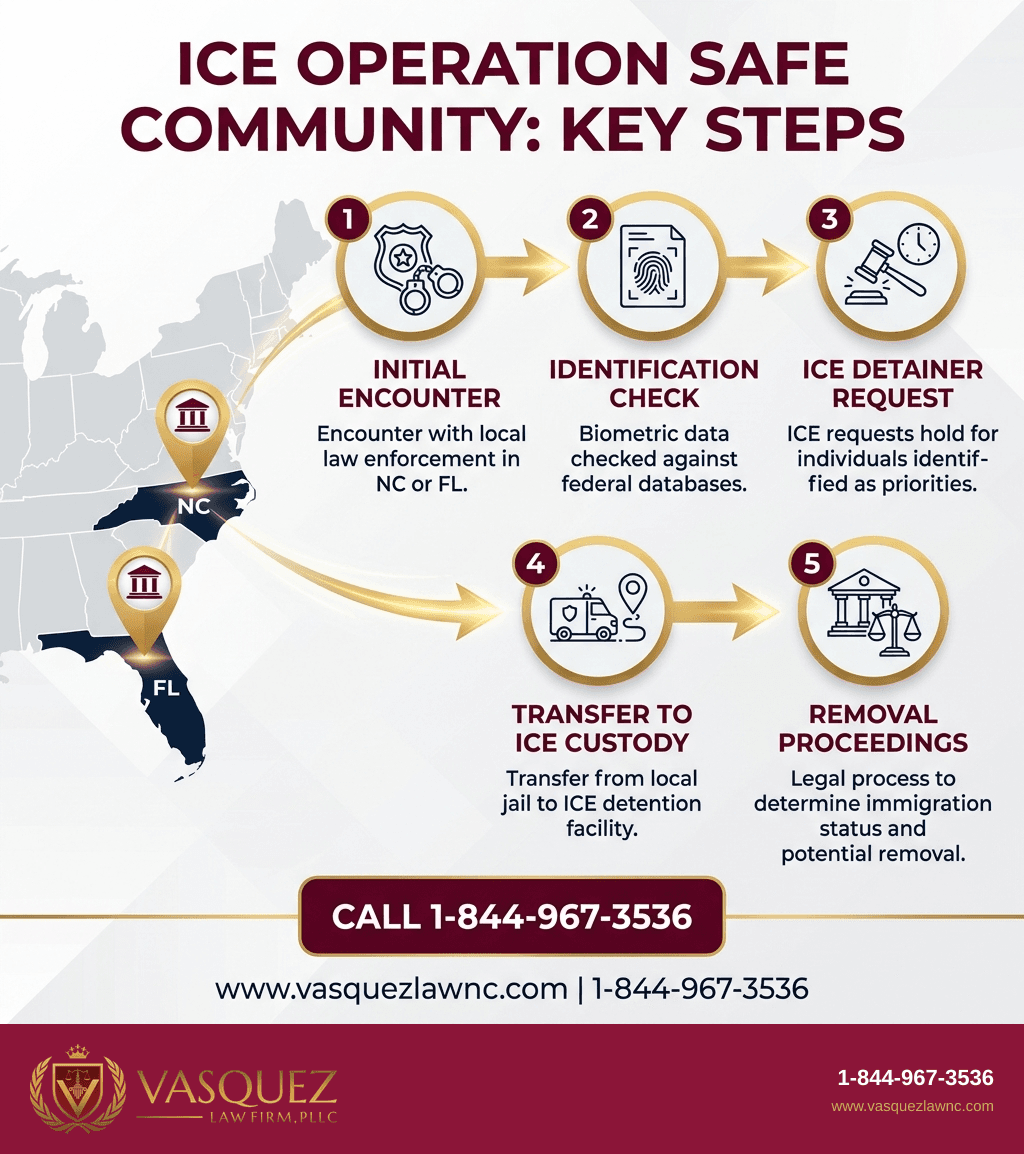
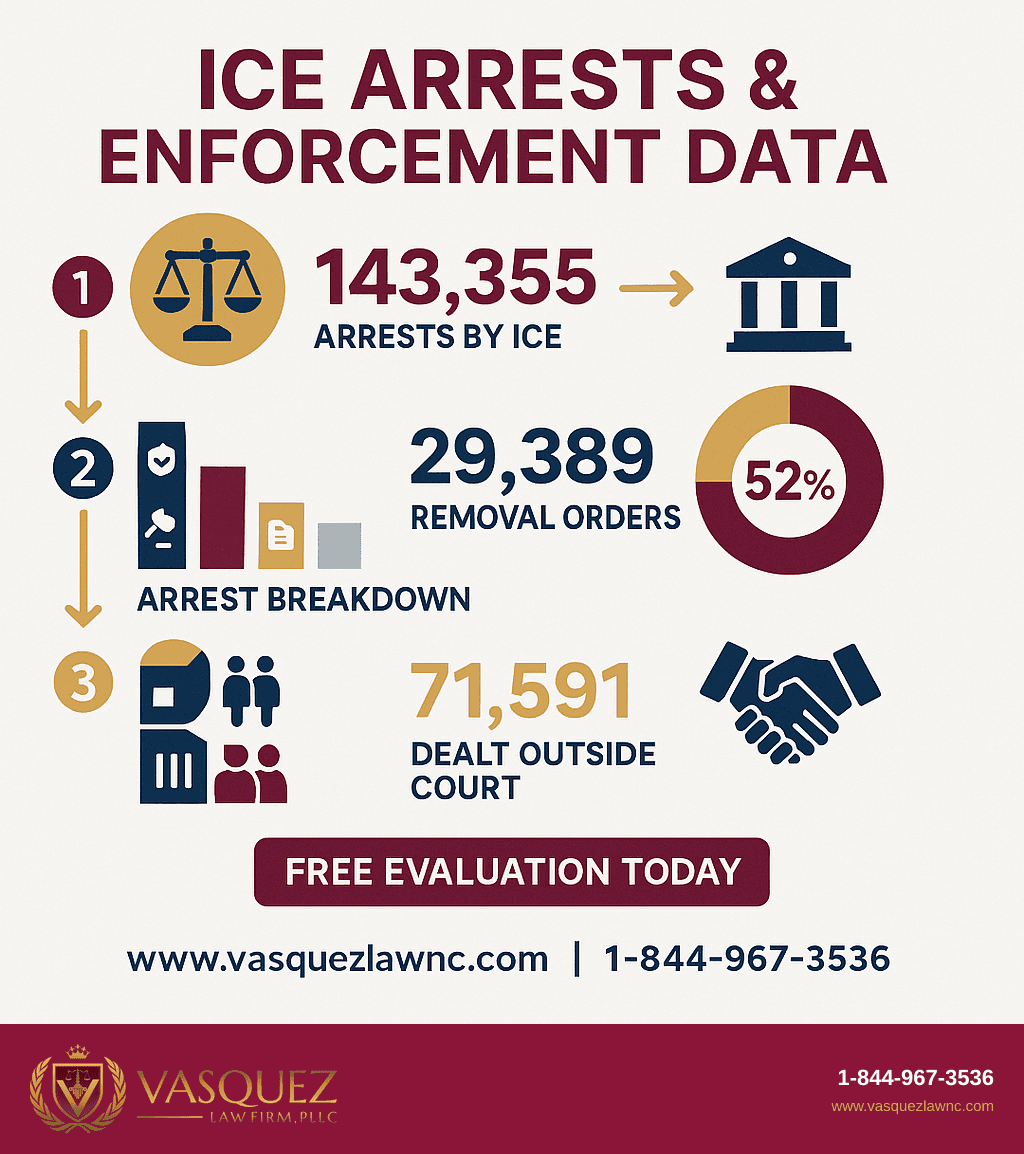
In 2026, ICE Operation Safe Community is one of the U.S. Immigration and Customs Enforcement (ICE) programs. It aims to find, arrest, and remove unauthorized immigrants who have committed crimes or broken immigration laws. The program focuses on people who may be a danger to public safety or have removal orders. According to U.S. Immigration and Customs Enforcement (2026), this program works in places with many immigrants, including North Carolina and Florida. It tries to make arrests more efficient by working with local partners.
Origins and Purpose of Operation Safe Community
Operation Safe Community is based on earlier ICE programs like Secure Communities ICE, which began in 2008. That program aimed to better identify and remove illegal immigrants arrested by state or local police. In 2026, Operation Safe Community focuses on teamwork between ICE's Enforcement and Removal Operations (ERO) division and local police. They work together to track and arrest people with immigration problems or criminal records. This is explained in 8 U.S.C. § 1226, which covers arrest and detention.
Key Agencies Involved: ERO vs ICE
It is important to know the difference between ICE and its Enforcement and Removal Operations (ERO) division. ICE is the main agency that handles many immigration enforcement tasks. These include investigations, detention, and removal. The ERO division does field work like Operation Safe Community. It makes arrests, detains people, and carries out deportations. ERO works closely with local police to find immigrants who can be removed. This teamwork makes enforcement more effective across areas.
Secure Communities ICE and Its Relation to Operation Safe Community
Secure Communities ICE was a program that connected local police databases with ICE. It flagged people for immigration problems during arrests. Although Secure Communities ended, its methods still influence Operation Safe Community. The program still uses partnerships to reduce the number of unauthorized immigrants with criminal records who are free. This helps keep communities safer. This is supported by federal immigration laws like 8 U.S.C. § 1229a, which covers removal court cases.
How ICE Enforcement Works in NC and FL
ICE enforcement through Operation Safe Community continues in North Carolina and Florida. Local offices in Raleigh, NC and Orlando, FL lead these efforts. These places focus on people with criminal records or removal orders. This section explains how ICE works in these states and what communities should expect.
Enforcement Activities in Raleigh, NC
Raleigh, NC, has steady ICE enforcement under Operation Safe Community. ICE officers work with local police, detention centers, and courts to arrest people who break immigration laws. They make arrests, do interviews, and sometimes visit without warning. These visits can happen at gated communities or workplaces but must respect constitutional rules. Immigrants in Raleigh must know their legal rights in these situations.
ICE Operation in Orlando, FL
Orlando, FL, is a key area for ICE enforcement because many immigrants live there. In 2026, Operation Safe Community arrests in Orlando focus on immigrants with past convictions or who overstayed visas. The community sees more ICE activity, including raids and detentions. Local groups and lawyers work to teach immigrants about their rights, legal steps, and how to act during ICE encounters.
Role of Secure Communities and Cooperation with Local Law Enforcement
Even though Secure Communities ICE officially ended, many parts of its data sharing continue through Operation Safe Community partnerships. Local police in NC and FL give ICE fingerprint and arrest data. ERO uses this to decide who to remove first. This teamwork increases enforcement but also causes worries about immigrant safety and trust in local police.
Learn more about our immigration services that can help you if ICE targets you.
Step-by-Step: What to Do if ICE Approaches You
When ICE agents come to you, it can be scary and confusing. Knowing what to do can protect your rights and help you avoid mistakes.
Step 1: Stay Calm and Do Not Let Them In Without a Warrant
If ICE agents come to your home or work, calmly ask to see their ID and a deportation warrant if they want to enter. The Fourth Amendment and 8 U.S.C. § 1357 say ICE must have a judge's warrant to enter a private home without your permission. Do not open the door unless they show a warrant signed by a judge.
Step 2: Know Your Right to Stay Silent
You have the right to stay silent and not answer questions about your immigration status or where you were born unless a lawyer is with you. Politely say you want to use this right. Giving more information than needed can hurt you in removal court.
Step 3: Call an Immigration Lawyer Right Away
If you are detained or questioned, call an experienced immigration lawyer quickly. Vasquez Law Firm's lawyers in Raleigh, NC and Orlando, FL can help you. Getting legal help early improves your chances to fight detention or removal.
Step 4: Prepare Important Papers and Contact Info
Make a list of important papers like your immigration documents, ID, and any court orders. Also, keep phone numbers of trusted family, friends, and your lawyer ready in case you are arrested or detained.
Schedule a free case evaluation with Attorney Vasquez if ICE agents come to you or your family in NC or FL.
Common Mistakes to Avoid in ICE Encounters
- Signing papers without legal advice: Never sign removal orders or voluntary departure papers without talking to a lawyer. It can limit your rights.
- Letting ICE in without a warrant: Do not let ICE agents into your home or gated community unless they have a valid judge's warrant.
- Talking too much to ICE: Using your right to stay silent can protect you from saying things that hurt your case.
- Not carrying ID: You do not have to carry papers, but having ID and immigration documents can help prove who you are if needed.
- Ignoring court notices: Always go to immigration court hearings. Missing them can lead to automatic removal orders.
- Believing ICE salary rumors: Rumors that ICE agents make $200,000 a year are false. Knowing their real role helps avoid wrong information.
- Not knowing about Secure Communities ICE checks: Know that local police can give fingerprints that alert ICE.
If you remember only one thing: always get legal help before making decisions during or after an ICE encounter.
Frequently Asked Questions About ICE Enforcement
What is the ICE Secure Communities program?
Secure Communities was a federal program that linked local police fingerprints to ICE databases to find immigration problems. Even though newer programs like Operation Safe Community replaced it, its data-sharing still affects enforcement in 2026.
Can ICE go into a gated community without a warrant?
ICE cannot legally enter your home or gated community without a judge's warrant or your permission. But agents may be in common areas. Always ask to see a warrant before letting them into your home.
Does ICE have the right to stop and ask for ID on the street?
ICE agents may stop and ask questions, but you can refuse to answer and not show ID. Calmly say you want to stay silent and ask if you can leave.
Do ICE agents really make $200,000 a year?
No. The $200,000 salary claim is wrong. ICE agents' pay depends on experience and position and is usually lower, based on federal pay scales.
How does ICE decide whom to arrest in Operation Safe Community?
ICE targets noncitizens with past criminal convictions, removal orders, or who are safety risks. Working with local police helps find and prioritize these people.
What happens after an arrest under Operation Safe Community?
After arrest, people may be held in ICE centers while going through removal court. Having a lawyer is very important during this time.
What legal options are available if ICE issues a removal order?
You can challenge removal orders by appeals, asking to reopen your case, or seeking relief like cancellation of removal. This depends on your case facts and immigration history.
How can I protect my family if ICE conducts a raid?
Having a legal plan, trusted contacts, and knowing your rights about searches helps protect your family during ICE actions. Lawyers can help you prepare and respond properly.
Sources and References
- U.S. Citizenship and Immigration Services
- Executive Office for Immigration Review
- Legal Information Institute
About Vasquez Law Firm
At Vasquez Law Firm, we mix care with strong legal help. Our motto "Yo Peleo®" (I Fight) shows our promise to stand up for your rights.
- Bilingual Support: Se Habla Español - Spanish-speaking lawyers and staff are available
- Service Areas: North Carolina, plus Florida and nationwide for immigration
- Experience: Over 30 years helping clients with tough legal issues
- Results: Thousands of successful cases in many practice areas
Attorney Trust and Experience
William J. Vásquez joined the North Carolina State Bar in 2011. He is also admitted to the U.S. Courts of Appeals for the 4th, 5th, 6th, and 11th Circuits. The firm has offered focused legal help since 2011. We give personal attention to each client's case.
Don't wait to get the help you need. Call us now for quick assistance. Se Habla Español.
Take the first step toward justice today. Our team is ready to help. Se Habla Español.
Start Your Free Evaluation Now
Call us: 1-844-967-3536
Se Habla Español - Estamos aquí para ayudarle.


William Vasquez
Founder & CEO, Vasquez Law Firm, PLLC
William Vasquez is the founder and CEO of Vasquez Law Firm, PLLC, a results-driven firm specializing in immigration, criminal defense, personal injury, and workers' compensation. A U.S. Air Force veteran and recipient of the Joint Service Achievement Medal, William is dedicated to fiercely fighting for his clients' rights.
Related Legal Services
Need legal help? Learn more about experienced immigration attorneys in Charlotte, or contact us for a free evaluation.
You can also visit immigration legal services throughout NC for more information.