How ICE Centers Operate Across the U.S. in 2026
Wondering how ICE centers work in 2026? Learn about ICE detention center locations, processes, and your rights. Contact Vasquez Law for a free evaluation.
Published on August 4, 2026
Talk to an immigration attorney
Free call. A clear plan for your case.
Free & confidential · Se habla espanol · 24/7

Have questions? Talk to an attorney - free evaluation.
Call 1-844-967-3536Worried how the latest immigration news affects you?
Schedule a confidential case review with an immigration attorney - know exactly where you stand.
USCIS Case Status
Check your USCIS case status
Enter your receipt number and get the official status. Free, no registration.
How ICE Centers Operate Across the U.S. in 2026
ICE centers, officially called Immigration and Customs Enforcement detention facilities, play an important role in U.S. immigration enforcement. As of 2026, it is important to understand how these centers work, where they are located, and what to expect if you are detained. This is especially true for immigrants in Orlando, FL and Raleigh, NC. This article explains the different ICE detention center locations, how long people may stay, and important legal points. Whether you or a loved one faces detention, knowing your rights and options can make a big difference. Vasquez Law Firm helps clients across the country, with offices in Orlando, FL and Raleigh, NC, offering trusted advice on immigration detention issues.
Need help with your case? Our experienced attorneys are ready to fight for you. Se Habla Español.
Or call us now: 1-844-967-3536
Quick Answer
ICE centers are places where people are held during immigration enforcement cases. As of 2026, there are more than 120 ICE detention centers across the country, including near Orlando, FL and Raleigh, NC. The time people stay varies but is about 38 days on average. Knowing your rights while detained can affect your case results.
- ICE runs over 129 detention centers in the U.S.
- These include government-run and private centers.
- Detention times range from weeks to months.
- Detainees have rights to a lawyer and fair treatment.
- Orlando and Raleigh have nearby ICE detention centers.
Understanding ICE Centers and Their Role
Imagine being held far from home in a place run by Immigration and Customs Enforcement (ICE). ICE centers, also called immigration detention facilities, hold immigrants while their cases move through the legal system. These centers have several jobs: holding people waiting for removal hearings, housing asylum seekers waiting for court dates, or holding people who broke immigration rules.
ICE detention centers are different from prisons or jails, even if they look alike. They follow federal immigration laws and are checked by agencies like the Department of Homeland Security. Under 8 U.S.C. § 1226, ICE can hold certain non-citizens while their case is decided by immigration courts.
Knowing what ICE centers are and how they work is very important for immigrants near Raleigh, NC, and Orlando, FL. These places have detention centers that serve local immigrant communities. Vasquez Law Firm’s immigration lawyers in Raleigh and Orlando can help you understand this system and protect your rights.
ICE centers operate under strict federal guidelines to ensure detainees receive basic care and due process. However, conditions and quality of services can vary widely depending on the facility type—whether government-run, county jails contracted by ICE, or private detention centers. For example, some private centers have been criticized for overcrowding, which can affect detainees' access to medical care and legal resources.
In practical terms, detainees in Orlando might find themselves at the Orange County Transitional Center, which contracts with ICE, while those in Raleigh could be held at nearby county jails participating in ICE contracts. Understanding this helps families and attorneys navigate visitation rules, legal access, and communication methods specific to each center.
Further, ICE centers often coordinate with local legal aid organizations to facilitate access to counsel, especially important given the complex nature of immigration law. For instance, a detainee seeking asylum in Raleigh may be connected with advocacy groups that provide legal clinics within or near the detention facility, improving chances for a fair hearing.
Locations of ICE Detention Centers in 2026
ICE runs about 129 detention centers across the U.S. These include federal facilities, county jails that ICE contracts with, and private detention centers. The map of ICE detention center locations shows many in southern states like Georgia (ICE detention center GA), Texas, and Florida. North Carolina and Florida have several centers near big cities like Raleigh and Orlando.
New ICE detention centers are still being built or expanded in important states. For example, Georgia has added new facilities to hold more people. Florida has updated some centers near Orlando to better serve immigration detainees. These changes affect how immigrants experience detention, travel for lawyers, and access to legal help.
If you want to find an ICE detention center near you, the official ICE detention locator online is the best tool. It shows current detainees and their locations, so families and lawyers can stay informed.
Regional Concentration and Impact
Many ICE detention centers are strategically located near major transportation hubs or border states to facilitate efficient processing and transfer of detainees. For example, centers in Texas and Arizona serve as entry points for many detained individuals crossing the U.S.-Mexico border. Meanwhile, northern states generally have fewer ICE centers, but these often serve as transfer points for detainees awaiting hearings.
Specific to Raleigh and Orlando, the proximity to ICE centers influences the availability of legal resources and family visitation. In Orlando, facilities such as the Krome Detention Center, although located further south, play a major role in Florida’s detention network, while the local centers provide more immediate access for detainees' families and attorneys. In Raleigh, detention centers in nearby counties can affect travel logistics for legal visits, making local legal representation critical.
Private vs. Public ICE Facilities
ICE detention centers may be operated directly by the federal government or through contracts with private companies. Private detention centers have been subject to increased scrutiny for their management practices and cost-effectiveness. For example, the use of private centers in Texas has sparked debates about transparency and detainee welfare. These distinctions also affect detainees’ experiences, with some private centers providing different levels of services compared to government-run ones.
Step-by-Step: What to Expect in ICE Detention
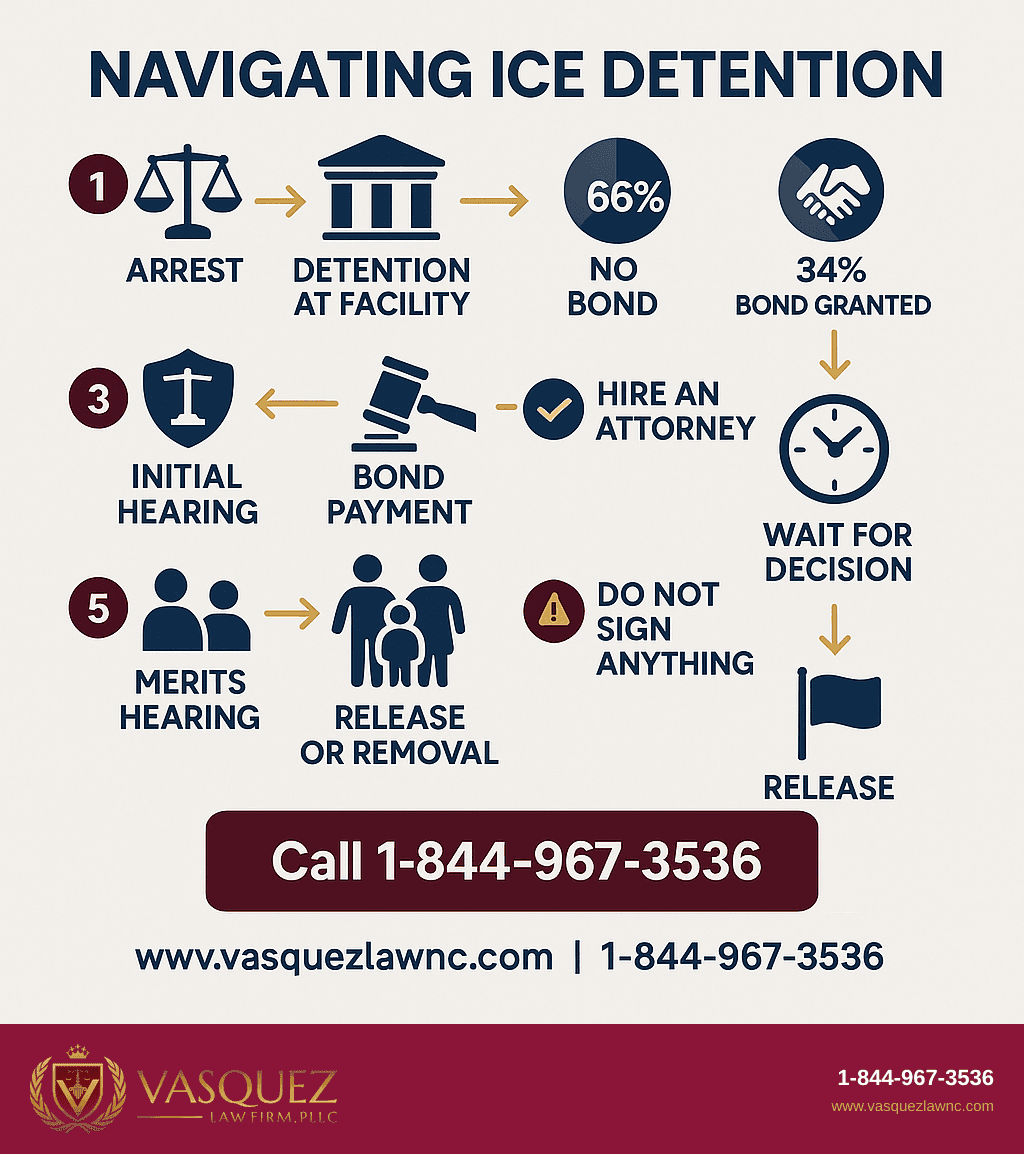
Being detained can be very stressful. Here is a step-by-step guide to what happens after ICE agents arrest someone:
- Arrest and Booking: After arrest, people are taken to an ICE center. There, they go through processing, which includes fingerprinting, background checks, and medical exams.
- Detention Facility Assignment: People are sent to a specific detention center based on space and where they live. This could be near Orlando, FL, or Raleigh, NC.
- Initial Interview and Rights Notification: ICE tells detainees their rights. This includes the right to a lawyer and to contact family.
- Bond Hearing: Detainees can ask for a bond hearing under 8 C.F.R. § 241.4 to try to get released. Whether they qualify and the bond amount depend on the case.
- Immigration Court Proceedings: Removal hearings start in immigration court, run by the Executive Office for Immigration Review (EOIR).
- Outcome: Depending on the case, detainees may be released, get relief like asylum, or be ordered to leave the U.S.
This process needs legal knowledge and support. Finding an immigration lawyer with detention experience is very important in Orlando, Raleigh, or anywhere else.
Additional Details on Each Step
Arrest and Booking: During arrest, ICE agents may detain individuals based on various reasons such as visa overstays, criminal convictions, or failed deportation orders. After transport to the facility, detainees undergo health screenings to identify any urgent medical needs. For example, a detainee with diabetes might receive special attention to ensure medication availability.
Detention Facility Assignment: The assignment is not random; it considers factors like detainee’s family location, legal representation availability, and medical needs. For example, a detainee arrested in Orlando might be held at the Orange County jail or a nearby ICE facility to facilitate easier attorney visits and family contact.
Initial Interview and Rights Notification: ICE officers provide a "Know Your Rights" pamphlet, often in multiple languages. Detainees are informed about their right to representation, but ICE does not provide lawyers; detainees must find or hire their own. This can be challenging due to language barriers or lack of funds.
Bond Hearing: Bond hearings provide an opportunity for detainees to be released while their case is pending. However, not everyone qualifies for bond, especially those with serious criminal records. The hearing is before an immigration judge, where evidence about flight risk and danger to the community are evaluated.
Immigration Court Proceedings: These hearings determine whether the detainee can stay in the U.S. or must be removed. The process includes filing applications for asylum, withholding removal, or other relief. Delays and backlogs are common, which can extend detention.
Outcome: Outcomes vary widely — some detainees are released on bond or parole, others granted relief, and some ordered removed. For example, a detainee who proves a well-founded fear of persecution may be granted asylum and released.
Common Mistakes to Avoid During ICE Detention
- Not asking for bond: Many detainees miss the chance to ask for bond and be released.
- Not contacting a lawyer quickly: Having a lawyer is key to handle hearings and paperwork.
- Missing court dates: Not going to immigration court can lead to deportation orders without a hearing.
- Signing papers without legal advice: Detainees might give up rights or agree to removal by mistake.
- Thinking detention lasts forever: Time held varies; knowing legal options can shorten detention.
- Not knowing detention center rules: Each ICE center may have different rules about communication and visits.
- Believing wrong information from others: Always check facts with a qualified lawyer.
If you remember only one thing: Get experienced legal help early to protect your rights and explore bond or release options.
Additional Pitfalls to Avoid
Another common mistake detainees make is failing to maintain communication with their legal representatives or family members. ICE detention centers may have strict phone or visitation rules, but staying in touch is crucial for case updates and emotional support. For example, missing a scheduled call with a lawyer can delay case preparation.
Some detainees also inadvertently waive their rights by signing documents without fully understanding them. This might include agreeing to voluntary departure or giving up appeals. Always request legal advice before signing any paperwork, as decisions made in detention can have lasting effects.
Finally, detainees sometimes rely on misinformation from other detainees or unverified sources. For instance, false rumors about automatic release programs or changes in immigration policy can lead to missed court dates or failed applications. Consulting a trusted attorney prevents costly errors.
Frequently Asked Questions About ICE Centers
How many ICE centers are there in the United States?
As of 2026, there are about 129 ICE detention centers. These include government-run, county jail contracts, and private detention centers across the country, including near Raleigh, NC, and Orlando, FL. The number fluctuates slightly due to facility openings, closures, and contract changes. It's important to check the latest ICE detention locator for up-to-date information on where detainees are held.
Where are the new ICE detention center locations being built?
New ICE detention centers have recently been built or expanded mainly in southern states like Georgia and Texas. Florida and North Carolina have also updated facilities, especially near Orlando and Raleigh. These expansions aim to manage increased detainee populations and improve detention conditions. However, they often raise concerns among communities and advocacy groups relating to human rights and local impact.
How long are people kept in ICE detention centers?
The average ICE detention is about 38 days, but some stay longer depending on hearings, appeals, or case details. Detention time varies case by case and can be influenced by factors such as case complexity, backlog in immigration courts, and availability of bond. In some instances, detainees may remain for months or even years, especially if relief applications are pending.
What rights do detainees have in ICE centers?
Detainees have rights under federal law. These include access to a lawyer, medical care, and fair treatment. They can contact family and have lawyers during hearings. Additionally, detainees have the right to humane conditions, including adequate food, shelter, and medical attention. However, enforcement of these rights can vary, making legal representation and advocacy critical to ensure fair treatment.
Do ICE agents make $200,000 a year in salary?
No. ICE agent salaries in 2026 usually range from $50,000 to $90,000. Overtime pay can increase income, but salaries rarely reach $200,000. The misconception about high salaries may stem from misunderstandings about federal pay scales or bonuses, but actual base pay aligns with other federal law enforcement agents. Benefits and retirement packages add value but do not equate to the rumored figures.
How can I find out if someone is in an ICE detention center?
Use the ICE Online Detainee Locator to find where a detainee is held and their status. Lawyers can help find detainees near Orlando or Raleigh. This tool requires basic information like the detainee’s name and birthdate. It’s updated regularly to assist family members and attorneys in locating loved ones quickly and planning visits or legal support.
What happens after someone is detained by ICE?
Detainees go through processing and hearings. They learn their rights and may be released on bond, held until removal, or granted relief, depending on their case. The process includes interviews with ICE officers, bond hearings before judges, and immigration court proceedings. Legal representation significantly affects case outcomes and detention duration. For example, a detainee with strong legal counsel may secure bond faster or win asylum.
Are there alternatives to detention for immigrants?
Alternatives include bond, supervised release, or electronic monitoring. Eligibility depends on each person’s situation. Lawyers can advise on options in North Carolina and Florida. These alternatives help reduce detention populations and allow detainees to live in the community under certain conditions, improving access to legal counsel and family support. For example, electronic monitoring may involve wearing an ankle bracelet while awaiting court dates.
About Vasquez Law Firm
At Vasquez Law Firm, we combine care with strong representation. Our motto "Yo Peleo®" (I Fight) shows our promise to stand up for your rights.
- Bilingual Support: Se Habla Español - Spanish-speaking lawyers and staff available
- Service Areas: North Carolina, plus Florida and nationwide for immigration
- Experience: Over 30 years helping clients with complex legal issues
- Results: Thousands of successful cases in many practice areas
Attorney Trust and Experience
William J. Vásquez is licensed to practice law in North Carolina (2011) and in the U.S. Courts of Appeals for the 4th, 5th, 6th, and 11th Circuits. The firm has offered dedicated legal help since 2011, giving personal attention to each client’s case.
Our attorneys understand the nuances of ICE detention and immigration law, providing tailored strategies to protect your rights. Whether negotiating bond, preparing for court hearings, or appealing decisions, Vasquez Law Firm prioritizes client communication and compassionate advocacy. For example, we assist detained immigrants in Orlando and Raleigh with virtual consultations when in-person meetings are difficult.
We also work closely with community organizations to stay informed about changes in immigration policies and detention center conditions, ensuring our clients receive timely and accurate advice. Our bilingual staff ensures language barriers do not hinder access to justice.
Don't wait to get the help you need. Call us now for quick assistance. Se Habla Español.
Sources and References
- U.S. Citizenship and Immigration Services
- Executive Office for Immigration Review
- Legal Information Institute
Take the first step toward justice today. Our team is ready to help. Se Habla Español.
Start Your Free Evaluation Now
Call us: 1-844-967-3536
Se Habla Español - Estamos aquí para ayudarle.
If you need legal assistance, learn more about our immigration legal services, or call us at 1-844-967-3536 for a free evaluation.

William Vasquez
Founder & CEO, Vasquez Law Firm, PLLC
William Vasquez is the founder and CEO of Vasquez Law Firm, PLLC, a results-driven firm specializing in immigration, criminal defense, personal injury, and workers' compensation. A U.S. Air Force veteran and recipient of the Joint Service Achievement Medal, William is dedicated to fiercely fighting for his clients' rights.
Related Legal Services
Need legal help? Learn more about our immigration legal services, or contact us for a free evaluation.
You can also visit our North Carolina immigration practice for more information.