What Is Felony Reentry and How Does It Work in 2026
Wondering what felony reentry means and its penalties in 2026? Learn how this impacts your immigration case. Contact Vasquez Law for help.
Published on August 6, 2026
Talk to an immigration attorney
Free call. A clear plan for your case.
Free & confidential · Se habla espanol · 24/7
Have questions? Talk to an attorney - free evaluation.
Call 1-844-967-3536Worried how the latest immigration news affects you?
Schedule a confidential case review with an immigration attorney - know exactly where you stand.
USCIS Case Status
Check your USCIS case status
Enter your receipt number and get the official status. Free, no registration.
What Is Felony Reentry and How Does It Work in 2026
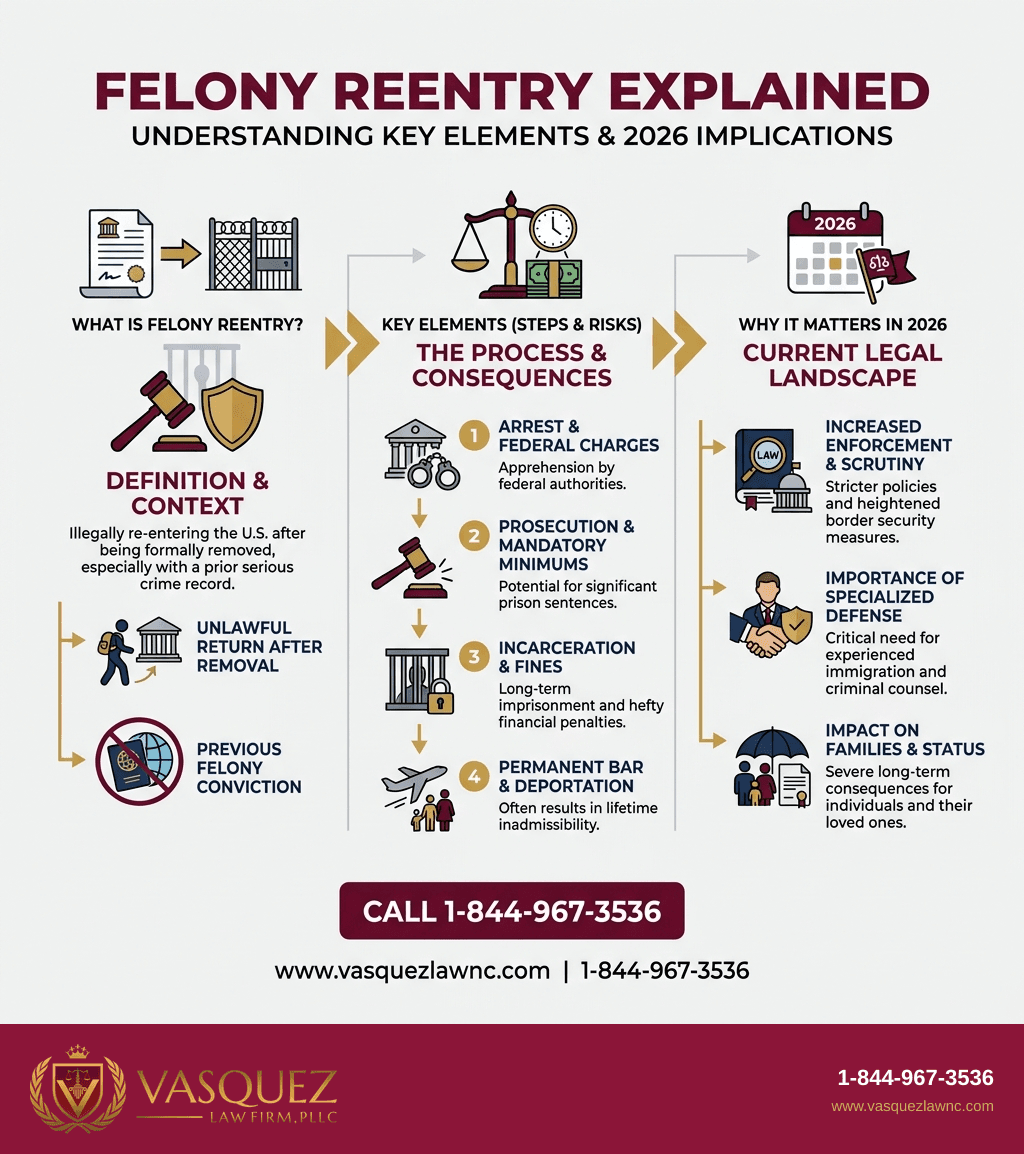
Felony reentry happens when a person who was deported or removed from the United States comes back without permission. This is a serious crime under federal law 8 U.S.C. § 1326. People charged with felony reentry in Raleigh, NC and Orlando, FL need good immigration lawyers to understand their rights and options. This guide explains what felony reentry is, common situations, legal penalties, and what you can do to protect yourself in 2026.
Need help with your case? Our experienced attorneys are ready to fight for you. Se Habla Español.
Or call us now: 1-844-967-3536
Quick Answer
Felony reentry is a federal crime. It happens when a deported person comes back to the United States without permission. It is charged under 8 U.S.C. § 1326. Punishments include jail time and fines.
- It applies after deportation or removal
- It can lead to up to 20 years in prison for serious cases
- Legal defenses and waivers (legal excuses) might be available
- It is very important to talk to an immigration lawyer in Raleigh or Orlando
Understanding Felony Reentry
Think about Juan. He is from Mexico and was deported for breaking immigration rules. He came back to Raleigh without permission. Juan faces charges under federal law for felony reentry. Felony reentry is the crime of entering or trying to enter the U.S. after removal without the government’s permission. This is written in law 8 U.S.C. § 1326.
The law separates simple illegal reentries from more serious cases. If the deportation was because of a felony (a serious crime), the punishments are much harsher.
The law says anyone who knowingly enters or tries to enter the U.S. after removal is guilty of felony reentry. Having a past criminal record or immigration problems can make the punishment worse.
Knowing about these charges in Raleigh, NC and Orlando, FL is very important. The punishments and legal steps can affect your life and freedom.
Key Elements of Felony Reentry
- Being deported or removed from the U.S. before
- Coming back or trying to come back without permission
- Knowing you were removed before
- Possibly having a more serious charge if you had a felony before
Why Felony Reentry Matters
Felony reentry charges have serious criminal punishments. They can also affect your chances to get immigration benefits or relief in the future. Immigration officers and federal prosecutors enforce these laws strictly, especially in Raleigh and Orlando.
Legal Framework
Under 8 U.S.C. § 1326, punishments depend on past crimes. A first felony reentry can lead to up to 2 years in prison. If the deportation was linked to a serious felony, the punishment can be up to 20 years.
Step-by-Step: How to Handle a Felony Reentry Case
Imagine Maria. She was charged with felony reentry in Orlando. Her lawyers guide her through these steps to protect her rights.
- Talk to an Immigration Lawyer: Find a lawyer who knows immigration and criminal law in Raleigh or Orlando.
- Gather Your Papers: Collect all your immigration documents, removal orders, and criminal records.
- Check Your Defenses: Look into defenses like not knowing about removal, trying to enter legally, or mistakes in the process.
- Apply for Waivers if You Can: File for waivers that allow reentry or cancel removal.
- Get Ready for Court: Go to immigration and criminal court with your lawyer.
- Follow Your Lawyer’s Advice: Avoid actions that could hurt your defense.
Because the law is complex, acting early is very important. Schedule a free meeting with our immigration lawyers in Raleigh and Orlando as soon as you can.
Defenses Available in Felony Reentry
- Questioning if the removal was legal
- Saying you did not know about the removal
- Claiming asylum or refugee status
- Having waivers that apply to your case
Documents and Evidence Checklist
To build a strong defense, get these papers quickly in Raleigh or Orlando:
- Removal or deportation orders
- Copies of all entry and exit records
- Criminal convictions and sentences
- Proof of family ties or hardship in the U.S.
- Evidence of rehabilitation or community work
- Records of past immigration petitions
Tips for Document Gathering
- Ask USCIS for immigration records
- Get certified court documents showing case results
- Organize papers by date
- Keep original papers safe and give copies to your lawyer
Timeline: What to Expect in Your Case
Felony reentry cases can be different, but here is a usual timeline for someone in Raleigh or Orlando:
- Weeks 1-2: Arrest and getting a lawyer
- Weeks 3-6: Early hearings and filing charges
- Months 2-6: Gathering evidence and legal motions
- Months 6-12: Immigration court hearings or criminal trials
- Month 12+: Appeals or other legal steps if needed
How long immigration forms take to process can affect your case. For example, USCIS processing times for Form I-601A (Provisional Waiver) may take 6 to 9 months in 2026, according to USCIS processing times.
Costs and Fees: What Affects Your Case
- Lawyer fees depending on case difficulty and court hearings
- Filing fees for waivers or petitions (from $575 to over $1,200)
- Costs for getting documents and expert witnesses
- Travel and other expenses for court
- Possible fines if convicted
Many clients ask for a free evaluation to understand costs and make a payment plan. Vasquez Law Firm offers clear pricing and bilingual help.
Common Mistakes and How to Avoid Them
- Waiting too long to get legal help - Start early to keep your defenses strong
- Not gathering all important papers - Missing papers can weaken your case
- Confusing felony and misdemeanor reentry - Know your charges and punishments
- Missing deadlines for waivers - Late filings can lose your chance for relief
- Trying to represent yourself without legal knowledge - Always get a lawyer
- Not telling the truth about your criminal history - Hiding facts can cause big problems
- Thinking all reentry crimes can be waived - Waiver eligibility depends on many things
- Missing court hearings - This can lead to deportation orders without you
- Using old legal information - Immigration laws change; stay updated
- Not looking into local programs and relief options - Raleigh and Orlando have special resources
If you remember only one thing: Talk to an immigration lawyer who knows felony reentry in Raleigh or Orlando as soon as you can.
Jurisdiction Notes for Raleigh and Orlando
North Carolina (Raleigh) Notes
Felony reentry cases in Raleigh follow federal immigration law. Local detention centers and federal courts nearby handle enforcement. Local immigration lawyers work with federal defenders on criminal and removal cases. State laws may not affect deportation but can affect related criminal charges or other consequences.
Florida (Orlando) Notes
Orlando has strong immigration enforcement. Felony reentry charges can lead to quick removal or long detention. Local legal aid offers some help, but federal defenses are key. Some reentry waiver programs help felons in Florida apply to return legally.
Federal Immigration Law Framework
Felony reentry is controlled by 8 U.S.C. § 1326 and related federal laws. Results depend on why you were removed, your criminal record, and if you qualify for relief under immigration laws like INA § 240A and § 212. The Executive Office for Immigration Review (EOIR) handles removal hearings. U.S. District Courts handle criminal charges.
When to Call a Lawyer Now
- If you were arrested or charged with felony reentry
- If you have a previous removal or deportation order
- If you want to apply for a reentry waiver or relief
- If you have a felony criminal record linked to removal
- If you fear detention or quick deportation
- If you need help collecting papers or evidence
- If court dates or deadlines are coming
- If you don’t know your legal status or options
- If you want to avoid mistakes that hurt your defense
- If you live in Raleigh, NC or Orlando, FL and have immigration issues
About Vasquez Law Firm
At Vasquez Law Firm, we mix care with strong representation. Our motto "Yo Peleo" (I Fight) shows our promise to defend your rights.
- Bilingual Support: Spanish-speaking lawyers and staff available
- Service Areas: North Carolina, Florida, and nationwide for immigration
- Experience: Over 30 years helping clients with complex legal issues
- Results: Thousands of successful cases in many practice areas
Attorney Trust and Experience
William J. Vasquez is licensed to practice law in North Carolina and Florida. He has over 15 years of experience. Attorney Vasquez offers strong help for felony reentry and immigration cases in Raleigh and Orlando.
Don’t wait to get the help you need. Call us now for fast assistance.
Se Habla Español
Frequently Asked Questions
What is a felony reentry?
Felony reentry means illegally coming back to the U.S. after deportation or removal under 8 U.S.C. § 1326. It has criminal punishments like jail and fines. It is important to understand the charges to build a strong defense.
How is felony reentry different from misdemeanor reentry?
Felony reentry usually involves past deportation and serious crimes, leading to harsher punishments. Misdemeanor reentry often covers less serious offenses or being in the U.S. without permission but without past deportation.
Can illegal reentry be an aggravated felony?
Illegal reentry itself is not called an aggravated felony. But if your past deportation was linked to an aggravated felony, the punishments for reentry increase under federal law.
What penalties does felony reentry carry in 2026?
Penalties include up to two years in prison for a first offense. If the past removal involved certain serious crimes, penalties can be up to 20 years. There can also be fines and supervised release conditions.
Are there reentry programs for felons in Florida or North Carolina?
Yes. Both Orlando, FL and Raleigh, NC have legal programs that help felons apply for waivers or cancel removal. These can reduce the harsh effects of felony reentry charges.
How do I apply for reentry after deportation?
To apply for reentry, you usually submit a waiver under INA § 212(d)(3). You must show hardship or other reasons. This is a detailed process that needs legal help for best results.
Can felony reentry charges be appealed or waived?
Yes. Appeals and waivers may be possible under certain rules, like cancellation of removal or reentry waivers. Each case is different and needs expert review.
What can an immigration attorney do for me in Raleigh or Orlando?
Lawyers help by reviewing your case, filing waivers, representing you in immigration and criminal court, and making plans to reduce felony reentry penalties.
Sources and References
- U.S. Citizenship and Immigration Services
- Executive Office for Immigration Review
- Legal Information Institute
Take the first step toward justice today. Our team is ready to help.
Start Your Free Evaluation Now
Call us: 1-844-967-3536
Se Habla Español - Estamos aqu para ayudarle.


William Vasquez
Founder & CEO, Vasquez Law Firm, PLLC
William Vasquez is the founder and CEO of Vasquez Law Firm, PLLC, a results-driven firm specializing in immigration, criminal defense, personal injury, and workers' compensation. A U.S. Air Force veteran and recipient of the Joint Service Achievement Medal, William is dedicated to fiercely fighting for his clients' rights.
Related Legal Services
Need legal help? Learn more about immigration lawyers in North Carolina, or contact us for a free evaluation.
You can also visit immigration legal services throughout NC for more information.