How Does USCIS Use Video and Image Galleries in Immigration Data Reporting?
USCIS uses video and image galleries to visually present immigration data, including application volumes and processing times. Applicants and attorneys in Raleigh, NC can use these tools to better understand immigration trends and agency performance. This article explains how these galleries function, who they affect, and what users should do with this information.
Published on June 20, 2026
Talk to an immigration attorney
Free call. A clear plan for your case.
Free & confidential · Se habla espanol · 24/7
Have questions? Talk to an attorney - free evaluation.
Call 1-844-967-3536Free Tool
Check Your USCIS Case Status Now
Enter your receipt number - get the official USCIS status in English or Spanish. No registration.
This article provides general legal information, not individualized legal advice. Reading does not create an attorney-client relationship. For advice specific to your situation, contact Vasquez Law Firm.
What is the role of video and image galleries in USCIS immigration data reporting?
Need legal help?
Immigration in NC and FL. Personal injury and workers compensation across NC. Criminal defense in Johnston and Harnett counties, and traffic tickets in 10 NC counties. Tell us your county and we will tell you exactly what we can do.
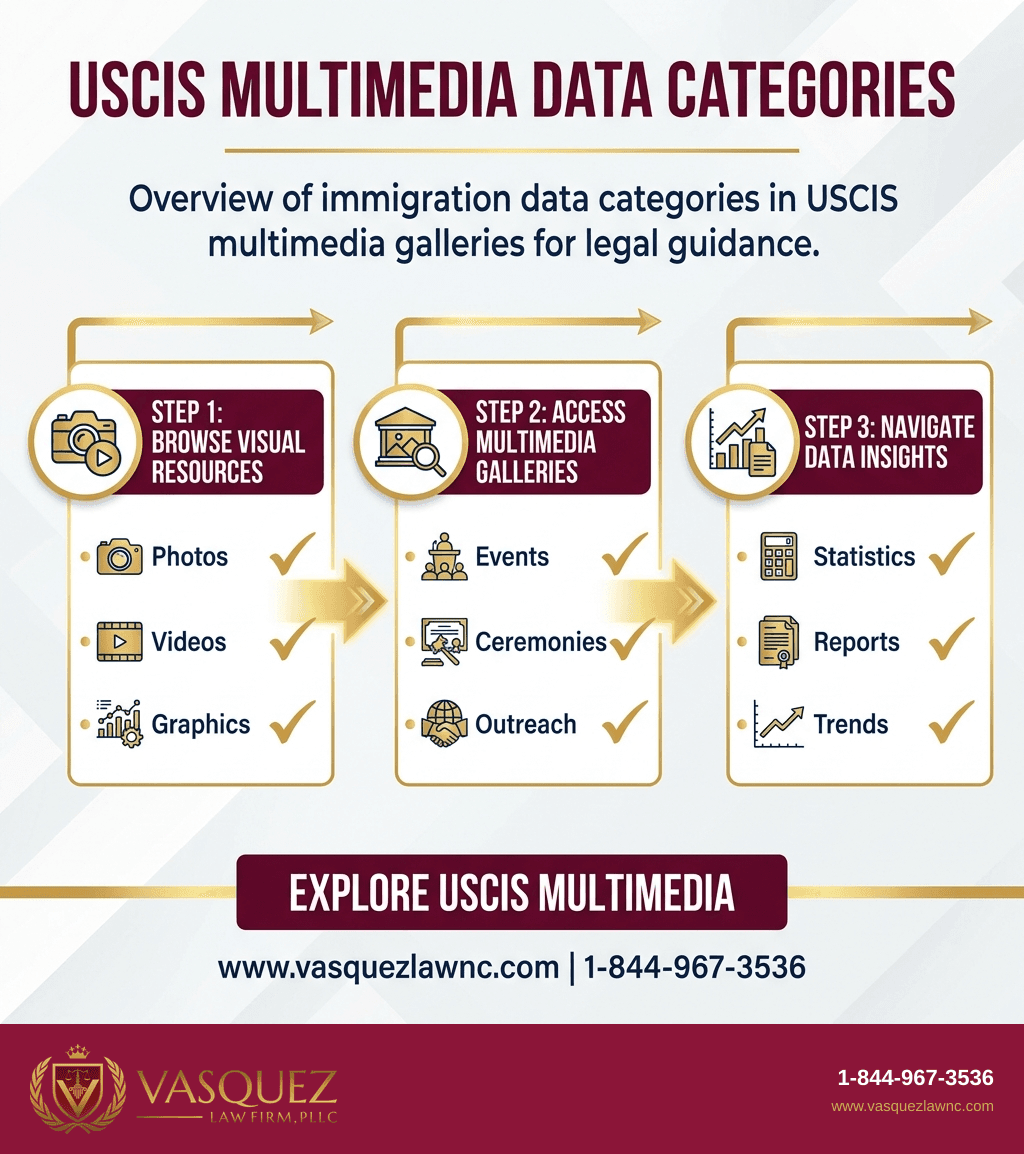
USCIS uses video and image galleries as part of its immigration and citizenship data reporting to provide visual and interactive access to its operational data. These galleries help users, stakeholders, and the public better understand complex immigration statistics through charts, graphs, and multimedia presentations.
The video and image galleries serve as tools to enhance transparency and accessibility of USCIS data. They include visualizations of application volumes, processing times, approval rates, and other key metrics across various immigration benefit categories. This multimedia approach complements traditional data tables and reports, making the information more engaging and easier to interpret.
By integrating videos and images, USCIS aims to facilitate broader public understanding of immigration trends and agency performance. These galleries are regularly updated to reflect the latest quarterly and fiscal year data, including detailed breakdowns by form type, eligibility category, and USCIS office location.
For example, the Fiscal Year 2026 Quarter 1 data release includes galleries that visually represent the number of applications received, approved, denied, and pending for forms such as I-765 (Employment Authorization Document), I-130 (Petition for Alien Relative), and N-400 (Naturalization Application). This visual data presentation supports stakeholders in tracking immigration system performance and identifying areas of backlog or improvement.
The USCIS video and image galleries are accessible through the agency's official data library online, providing a centralized resource for immigration data visualization. These galleries are part of USCIS's commitment to transparency and public engagement in immigration administration.
Who is affected by USCIS's use of video and image galleries in immigration data reporting?
USCIS's video and image galleries impact a wide range of stakeholders including applicants, attorneys, policymakers, researchers, and the general public. For residents of Raleigh, NC, and other communities, these galleries provide valuable insights into immigration processing trends that may affect their cases or local immigration services.
Applicants and their legal representatives benefit from the visual data by gaining clearer expectations about processing times and approval rates for specific immigration benefits. For example, individuals applying for adjustment of status under 8 U.S.C. § 1255 or employment authorization under 8 CFR § 274a.12 can review visual trends that may inform their planning and case strategy.
Policymakers and immigration advocates use the galleries to assess USCIS performance and identify systemic issues, such as backlogs or disparities in adjudication times across regions. For instance, data segmented by USCIS field offices, including those serving Raleigh, NC, helps highlight regional differences in application processing.
Researchers and journalists rely on these multimedia resources to analyze immigration patterns and report on agency operations with up-to-date and visually supported data. The galleries facilitate data-driven discussions on immigration policy and practice.
In North Carolina, where immigrant populations are growing, the availability of clear, visual immigration data supports community organizations and local government in addressing immigrant needs and planning outreach or legal aid services.
Overall, the use of video and image galleries democratizes access to immigration data, making it more understandable and actionable for diverse audiences across the immigration ecosystem.
What does the USCIS source document say about video and image galleries?
The USCIS official data page describes video and image galleries as part of its immigration and citizenship data resources, providing visual access to reports and statistics. The source states:
"These reports provide data on various aspects of USCIS operations. In addition, certain tables list the USCIS office responsible for the adjudication." (Source: USCIS, USCIS Immigration and Citizenship Data)
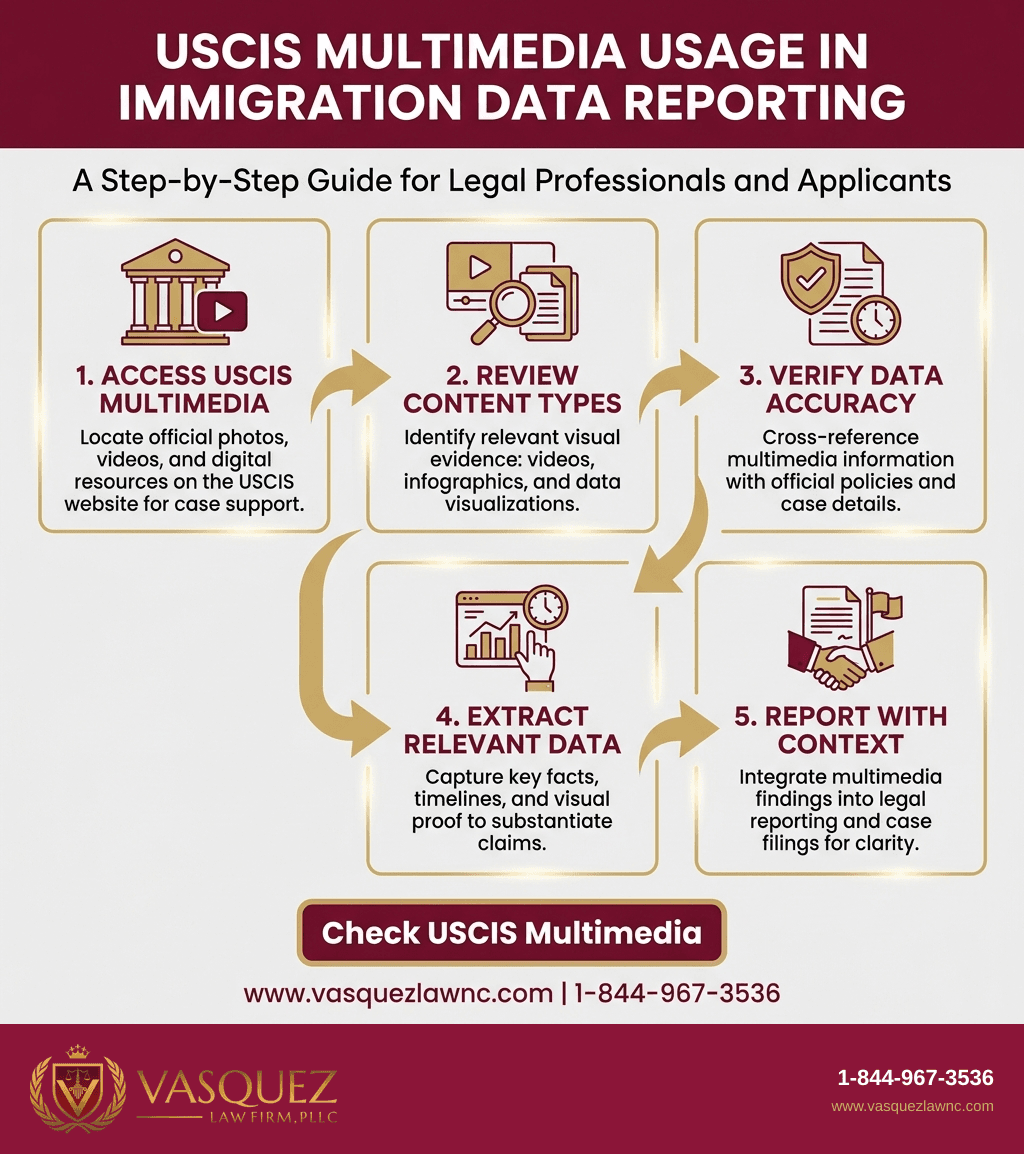
The document further explains that the galleries include dashboards and data hubs for specific visa categories such as H-1B, H-2A, and H-2B, as well as quarterly reports on forms like I-765, I-130, and N-400. These multimedia presentations are updated regularly to reflect the latest fiscal year and quarter data.
USCIS emphasizes the availability of visual data representations to complement downloadable spreadsheets and detailed tables, enhancing user engagement and comprehension.
The source does not specify technical details about the galleries' formats or user interface but highlights their role in making complex immigration data more accessible.
Additionally, the document notes the inclusion of video and image galleries alongside other tools such as the USCIS Electronic Reading Room and E-Verify Program Reports, underscoring the agency's multifaceted approach to transparency.
The source document does not address how applicants should interact with these galleries or any legal implications of the visual data but focuses on their informational and reporting function.
What should applicants or attorneys do with USCIS video and image galleries?
Applicants and attorneys should use USCIS video and image galleries as supplementary resources to stay informed about immigration processing trends and agency performance. These galleries provide a visual overview of application volumes, processing times, and approval rates that can help manage expectations and guide case planning.
At our Raleigh, NC office, we typically see clients benefit from reviewing these visual data tools to understand current backlogs or processing delays specific to their immigration benefit category. For example, applicants seeking adjustment of status under 8 U.S.C. § 1255 can monitor average processing times and pending application counts to anticipate wait periods.
Legal professionals can incorporate insights from the galleries into client consultations, explaining how USCIS operational trends may impact case timelines. This data-driven approach supports informed decision-making, such as whether to file premium processing requests or prepare for Requests for Evidence (RFEs).
Below are recommended steps for using USCIS video and image galleries effectively:
- Access the official USCIS data library: Visit USCIS Immigration and Citizenship Data to find the latest video and image galleries.
- Identify relevant data: Select galleries related to your immigration benefit category, such as I-485 adjustment applications or I-765 employment authorization.
- Review processing trends: Analyze charts showing receipt volumes, approvals, denials, and pending cases by quarter and USCIS office location.
- Monitor updates: Check for quarterly data releases to stay current on USCIS operational changes affecting your case.
- Consult with an immigration attorney: Use the data to discuss strategy and next steps tailored to your specific situation.
It is important to remember that the galleries provide aggregate data and do not replace individualized legal advice or case-specific information. For personalized guidance, contact experienced immigration counsel in Raleigh, NC.
What happens next with USCIS immigration data video and image galleries?
USCIS will continue to update its video and image galleries regularly to reflect the latest immigration data, supporting transparency and public access to agency operations. These updates typically occur quarterly, aligned with fiscal year reporting schedules.
The agency's commitment to multimedia data presentation suggests ongoing enhancements to the galleries' content and usability. Future developments may include expanded interactive features or additional data categories to meet stakeholder needs.
USCIS states:
"This is a curated list by Fiscal Year and Quarter that is linked to resources available below in the data library where teasers and publication date are available for review." (Source: USCIS, USCIS Immigration and Citizenship Data)
What's Your Immigration Situation?
Answer 3 questions - we'll tell you your options
Question 1 / 3
What best describes your situation?
Keep Reading
This ongoing curation ensures that users have access to the most relevant and timely immigration data visualizations.
Applicants and attorneys should watch for announcements of new data releases and updates to the galleries. Staying informed about these changes helps anticipate shifts in processing times or policy impacts.
In Raleigh, NC, where immigration services demand is growing, these updated visual tools will remain valuable for community organizations, legal professionals, and applicants seeking clarity on immigration system performance.
| Data Type | Update Frequency | Relevant USCIS Forms | Use Case |
|---|---|---|---|
| Video Galleries | Quarterly | I-765, I-130, N-400 | Visualize application volumes and trends |
| Image Galleries | Quarterly | I-485, I-360, I-140 | Track processing times and backlogs |
| Dashboards/Data Hubs | Ongoing | H-1B, H-2A, H-2B petitions | Analyze employer petition data |
This article provides general legal information, not individualized legal advice. Reading does not create an attorney-client relationship. For advice specific to your situation, contact Vasquez Law Firm.
Frequently Asked Questions about USCIS Video and Image Galleries
What types of immigration data are included in USCIS video and image galleries?
USCIS video and image galleries include data on application receipts, approvals, denials, pending cases, and processing times for forms such as I-765 (Employment Authorization), I-130 (Petition for Alien Relative), N-400 (Naturalization), and others. They also feature data on visa petitions like H-1B and H-2 categories.
How often are USCIS video and image galleries updated?
The galleries are updated quarterly, aligned with fiscal year reporting periods. This schedule ensures that users have access to recent and relevant immigration data reflecting current agency operations.
Can applicants use the galleries to check the status of their individual cases?
No, the galleries provide aggregate data and trends but do not display individual case statuses. Applicants should use official USCIS case status tools or consult with an attorney for personalized information.
Where can I access USCIS video and image galleries?
The galleries are available on the USCIS website within the Immigration and Citizenship Data section at USCIS Immigration and Citizenship Data.
Do USCIS video and image galleries affect immigration law or policy?
The galleries are informational tools and do not directly affect immigration law or policy. However, they provide transparency and data that may inform policy discussions and advocacy efforts.
For more detailed guidance on immigration processes and how data trends may impact your case, visit our immigration practice area or consult with an attorney listed on our attorneys page. Learn more about how we research this content to maintain accuracy and reliability.
Reviewed by William Vasquez, Founder & CEO, Vasquez Law Firm, PLLC.
Related Topics

William Vasquez
Founder & CEO, Vasquez Law Firm, PLLC
William Vasquez is the founder and CEO of Vasquez Law Firm, PLLC, a results-driven firm specializing in immigration, criminal defense, personal injury, and workers' compensation. A U.S. Air Force veteran and recipient of the Joint Service Achievement Medal, William is dedicated to fiercely fighting for his clients' rights.
Related Legal Services
Need legal help? Learn more about our immigration legal services, or contact us for a free evaluation.
You can also visit immigration lawyers serving all of North Carolina for more information.