How the New H-1B Fee Proposal Affects Applicants in 2026
The Department of Homeland Security proposes a $103,265 fee for H-1B cap-subject petitions in 2026, affecting many employers and applicants in Raleigh, NC. This fee aims to recover government costs and could reshape H-1B sponsorship. Learn who is impacted, legal details, and what steps to take.
Published on August 26, 2026
Talk to an immigration attorney
Free call. A clear plan for your case.
Free & confidential · Se habla espanol · 24/7
Have questions? Talk to an attorney - free evaluation.
Call 1-844-967-3536Worried how the latest immigration news affects you?
Schedule a confidential case review with an immigration attorney - know exactly where you stand.
This article gives general legal information. It is not legal advice for your specific case. Reading it does not create a lawyer-client relationship. For advice about your situation, contact Vasquez Law Firm.
What is the new H-1B fee proposed by DHS in 2026?
Need a Work Visa or Permit?
H-1B, TN, L-1, and more. We help workers and employers navigate the visa process.
The Department of Homeland Security (DHS) has suggested a new fee of $103,265 for all H-1B cap-subject petitions. A petition is a formal request to get permission for something, here to get an H-1B visa. This includes petitions that qualify for the advanced degree exemption. Employers must pay this fee when they file the petition. It is in addition to all other fees they already pay. The fee is meant to cover government costs for handling immigration benefits and enforcement.
This new fee is much higher than current fees. It only applies to H-1B petitions that are subject to the yearly cap. It does not apply to petitions from some nonprofit and educational groups. DHS thinks this fee will bring in about $8.8 billion each year. This estimate is based on 85,000 cap-subject petitions filed annually.
The fee covers costs like checking for fraud, national security checks, running immigration courts, and enforcing labor laws. DHS wants to shift some of the funding from taxpayers to the people who use the H-1B program.
DHS announced this proposal on August 24, 2026. You can find details in the DHS notice of proposed rulemaking on the USCIS website. This fee is separate from the base filing fees and other required charges for H-1B petitions.
The fee applies to both the regular 65,000 H-1B cap and the extra 20,000 visas for people with U.S. advanced degrees. It does not apply to cap-exempt petitions. Cap-exempt petitions include those filed by government research groups, nonprofit research groups, and colleges or universities.
Who will be affected by the new H-1B fee proposal in Raleigh, NC and Orlando, FL?
The new $103,265 fee will affect all employers filing cap-subject H-1B petitions in Raleigh, NC and Orlando, FL, where our offices are located. This includes private companies that want to hire foreign workers under the H-1B visa program subject to the yearly cap.
In North Carolina, many employers in fields like technology, healthcare, and engineering regularly file H-1B petitions. This fee would greatly increase the cost to sponsor foreign workers. It may change hiring plans and the makeup of the workforce.
Orlando, FL, has growing tech and healthcare industries and many H-1B filings. The fee increase could affect local businesses that depend on skilled foreign workers. This is especially true for startups and medium-sized companies with smaller budgets.
Some employers do not have to pay this fee. These include nonprofit research groups, government research groups, and colleges or universities. For example, universities in Raleigh and Orlando filing cap-exempt petitions would not pay this fee.
This proposal might reduce the number of H-1B petitions filed by private employers because of the high cost. This could affect the local economy and foreign workers looking for jobs in these areas.
What does the law say about the H-1B fee and visa classification?
The legal authority for the H-1B visa program and related fees comes from federal immigration law. Specifically, it is under 8 U.S.C. a7 1101(a)(15). This law defines visa types, including the H-1B nonimmigrant worker category. A nonimmigrant is a person allowed to stay in the U.S. temporarily. The proposed fee relates to administrative costs allowed under DHS's regulatory powers.
The DHS notice of proposed rulemaking explains the reason for the fee:
"The proposed Had1B fee is intended to recover the costs incurred across the federal government to adjudicate, vet, and support lawful immigration programs that otherwise must be funded by taxpayers." (Source: DHS, https://www.uscis.gov/newsroom/news-releases/dhs-proposes-additional-h-1b-fee)
This fee is separate from the legal limit on H-1B visas. The limit, or cap, is 65,000 visas each year, with 20,000 more for people with U.S. advanced degrees. The cap and fee are separate but both affect the H-1B program.
Under the Immigration and Nationality Act (INA), the process to change status to permanent resident is governed by 8 U.S.C. a7 1255. The fee does not directly affect this process. But it raises the upfront cost to get H-1B status, which can be a step toward permanent residence.
The law also excludes some petitions from this fee. These include petitions from nonprofit or government research groups. This matches current exemptions under the INA and related rules.
What should employers and applicants do in response to the new H-1B fee proposal?
Employers and people applying for H-1B visas in Raleigh, NC and Orlando, FL should get ready for this large new fee if the rule becomes final. They should plan their budgets and timelines carefully.
At our Raleigh, NC and Orlando, FL offices, we often see employers struggle with the cost of new immigration fees. A common mistake is underestimating total costs. This can delay filings or cause incomplete applications.
Here are steps employers and applicants should take:
- Watch the DHS rulemaking process closely. The fee is proposed now and may change before it becomes final.
- Plan to pay the extra $103,265 fee for each cap-subject H-1B petition if the rule is final.
- Talk to an immigration lawyer early to see if your petition qualifies for any fee exemptions.
- Think about other visa options or strategies if the fee makes H-1B sponsorship too expensive.
- Make sure your filings are complete and accurate to avoid delays or denials that waste fees.
Employers should also talk with human resources and finance teams to make sure money is available. Applicants should stay updated on their employer's plans and get legal advice if they worry about visa sponsorship.
| Category | Fee Amount | Applies To |
|---|---|---|
| Current Base H-1B Filing Fee | $460 (approx.) | All H-1B petitions |
| Proposed Additional Fee | $103,265 | All cap-subject H-1B petitions |
| Exemptions | $0 | Cap-exempt petitions (nonprofit research, govt. research, higher education) |
What happens next with the DHS H-1B fee proposal?
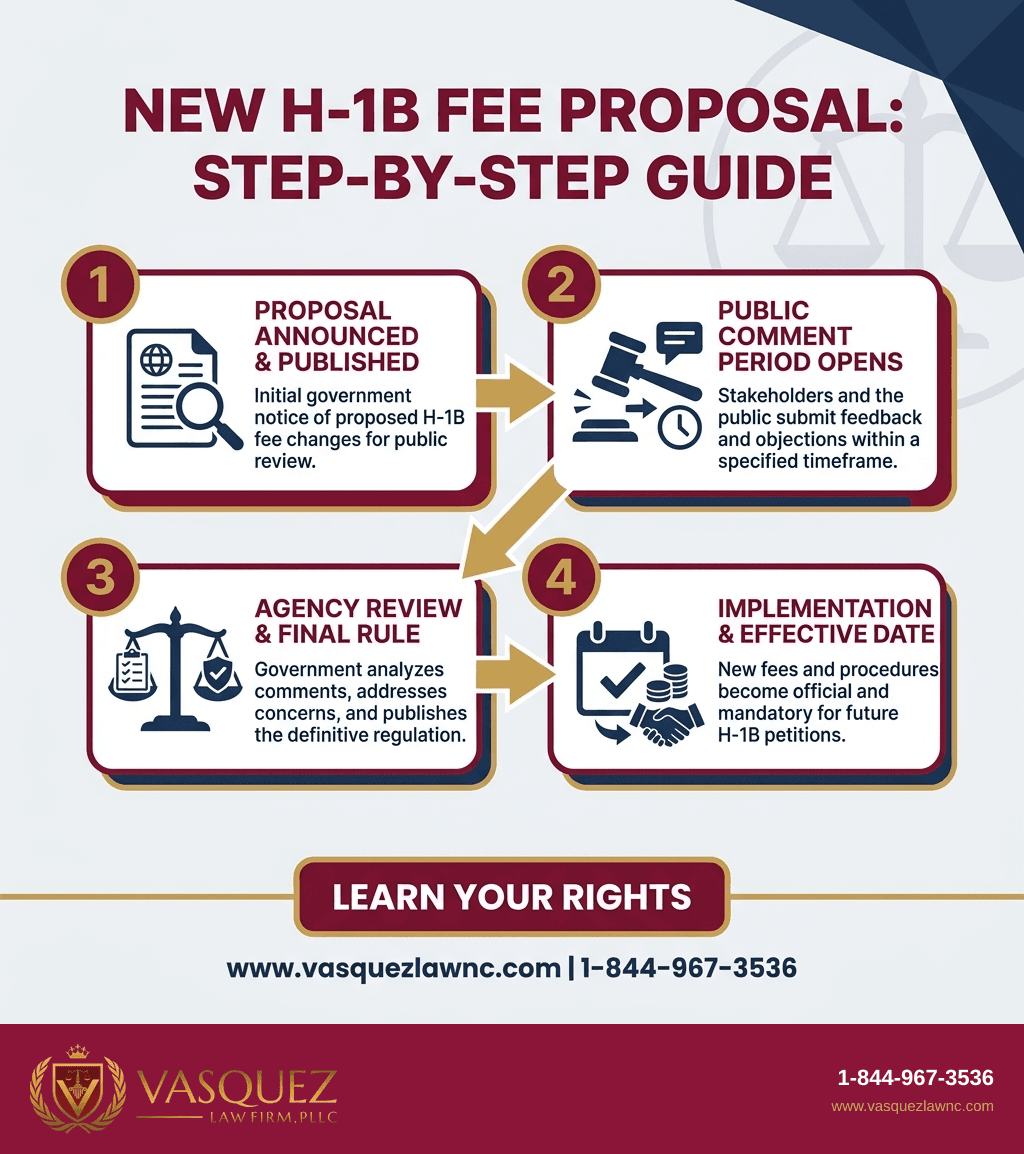
After the August 24, 2026 announcement, DHS will publish the proposed rule in the Federal Register. They will open a public comment period. People and groups can send feedback before DHS makes the rule final.
The DHS notice does not say when the rule will be final. After it is final, the fee will start on the date given in the rule.
DHS expects the fee will bring in about $8.8 billion each year. This is based on about 85,000 cap-subject petitions. The money will support many federal immigration functions.
"The proposed fee would generate revenue to recover a portion of the federal governmente28099s costs for administering the lawful immigration system. These costs include adjudication of immigration benefits, fraud detection and national security vetting, systems modernization, records and fee collection operations, immigration court operations, consular visa processing, labor standards enforcement, and interagency coordination." (Source: DHS, https://www.uscis.gov/newsroom/news-releases/dhs-proposes-additional-h-1b-fee)
What's Your Immigration Situation?
Answer 3 questions - we'll tell you your options
Question 1 / 3
What best describes your situation?
Keep Reading
Employers and applicants should watch for official updates on the USCIS website. They should also talk with immigration lawyers to understand how the final rule affects their cases.
Frequently Asked Questions about the new H-1B fee proposal
1. When will the new H-1B fee take effect?
The DHS has proposed the fee but has not announced an effective date. The fee will take effect after the public comment period and final rule publication. Applicants should monitor USCIS updates for exact timing.
2. Does the new fee apply to all H-1B petitions?
No. The fee applies only to cap-subject H-1B petitions, including those with advanced degree exemptions. Cap-exempt petitions filed by nonprofit research organizations, government research entities, and higher education institutions are excluded.
3. How much is the proposed additional H-1B fee?
The proposed additional fee is $103,265 per cap-subject H-1B petition, to be paid at the time of filing, on top of existing fees.
4. Will this fee affect adjustment of status applications?
The fee directly applies to H-1B petition filings, not adjustment of status. However, it may indirectly affect applicants who rely on H-1B status as a step toward permanent residence under 8 U.S.C. a7 1255.
5. Can employers get a refund if the petition is denied?
The DHS notice does not specify refund policies for this fee. Typically, USCIS fees are non-refundable even if the petition is denied. Employers should confirm this with USCIS or legal counsel.
This article gives general legal information. It is not legal advice for your specific case. Reading it does not create a lawyer-client relationship. For advice about your situation, contact Vasquez Law Firm.
For more information on this proposal, visit the USCIS official announcement and talk with experienced immigration lawyers in Raleigh, NC and Orlando, FL.
At Vasquez Law Firm, we give detailed guidance on immigration fee changes. We help employers and applicants understand how these changes affect their cases. Visit our immigration practice area page for more resources and contact information.
Reviewed by William Vasquez, Founder & CEO, Vasquez Law Firm, PLLC.
Related Topics

William Vasquez
Founder & CEO, Vasquez Law Firm, PLLC
William Vasquez is the founder and CEO of Vasquez Law Firm, PLLC, a results-driven firm specializing in immigration, criminal defense, personal injury, and workers' compensation. A U.S. Air Force veteran and recipient of the Joint Service Achievement Medal, William is dedicated to fiercely fighting for his clients' rights.
Related Legal Services
Need legal help? Learn more about NC immigration legal team, or contact us for a free evaluation.
You can also visit statewide immigration attorneys for more information.