Justice Dept Moves to Revoke Citizenship of 17 Naturalized Criminals in 2026
The Justice Department announced in June 2026 that it filed denaturalization actions against 17 naturalized U.S. citizens accused of serious crimes including sexual offenses, fraud, and drug trafficking. This article explains who is affected, what the law says about revoking citizenship, and what naturalized citizens in Raleigh, NC should know about these developments.
Published on June 13, 2026
Have questions? Talk to an attorney - free evaluation.
Call 1-844-967-3536Free Tool
Check Your USCIS Case Status Now
Enter your receipt number - get the official USCIS status in English or Spanish. No registration.
This article provides general legal information, not individualized legal advice. Reading does not create an attorney-client relationship. For advice specific to your situation, contact Vasquez Law Firm.
What recent actions has the Justice Department taken regarding denaturalization of U.S. citizens?
Worried your citizenship will be questioned?
Recent enforcement makes documentation more important than ever. 15-min call to see what proof you need.
In June 2026, the U.S. Department of Justice (DOJ), in partnership with U.S. Citizenship and Immigration Services (USCIS), filed civil denaturalization complaints against 17 naturalized U.S. citizens accused of serious crimes including sexual offenses, fraud, and drug distribution. These actions seek to revoke their citizenship on grounds that their naturalization was procured illegally through concealment or misrepresentation.
On June 12, 2026, the DOJ announced these filings in various U.S. district courts, targeting individuals who committed offenses such as sexual abuse of minors, wire and bank fraud, and wholesale drug distribution without licenses. The DOJ emphasized that citizenship is a privilege earned honestly, and those who lie or commit serious crimes during the immigration process forfeit that privilege.
The denaturalization actions represent a coordinated effort between USCIS, DOJ, U.S. Immigration and Customs Enforcement (ICE), and multiple U.S. Attorney’s Offices across the country. The cases involve individuals from diverse countries of origin and a range of criminal conduct discovered after naturalization.
This recent enforcement wave highlights the government’s commitment to using all lawful means to remove individuals who obtained citizenship through fraud or who lack the good moral character required by law.
As Secretary of Homeland Security Markwayne Mullin stated, “American citizenship is a privilege, and it must be earned honestly. If you come here, break our laws, and lie in your immigration proceedings, you forfeit that privilege.” (Source: USCIS, USCIS Newsroom - Denaturalization News Release)
Who are the individuals affected by these denaturalization actions and how might this impact residents in Raleigh, NC?
The 17 individuals targeted by the DOJ’s denaturalization complaints come from various countries including Cuba, Haiti, Colombia, Mexico, Jamaica, India, Somalia, China, the Dominican Republic, the Philippines, and others. Their ages range from late 30s to late 60s. The alleged crimes include sexual offenses against minors, health care and financial fraud, drug trafficking, identity fraud, and conspiracy to commit various offenses.
Examples include Jean Claude Alfred from Haiti, convicted of sexual battery on a minor before and during his naturalization; Andrea Marroquin from Colombia, involved in wire and bank fraud using drug money; and Federico Michel Fermin from the Dominican Republic, convicted of wholesale drug distribution without a license. Several others engaged in identity fraud or concealed criminal conduct during their naturalization applications.
While the announcement does not specify any individuals residing in Raleigh, NC, the enforcement actions reflect a nationwide effort that could affect naturalized citizens in North Carolina who obtained citizenship through fraud or who committed serious crimes. Raleigh, NC has a growing immigrant population with many naturalized citizens, so awareness of these denaturalization risks is important.
Denaturalization can lead to loss of citizenship and removal proceedings, which have serious consequences for individuals and their families. Residents of Raleigh, NC who are naturalized citizens should be mindful of the legal requirements for maintaining citizenship and the government's ability to revoke it if procured unlawfully.
These cases also underscore the importance of truthful and complete disclosure during immigration and naturalization processes to avoid future legal jeopardy.
What does the law say about denaturalization and the grounds for revoking citizenship?
Denaturalization is governed primarily by the Immigration and Nationality Act (INA). Under 8 U.S.C. § 1451, a naturalized citizen’s citizenship may be revoked if it was illegally procured or procured by concealment of a material fact or willful misrepresentation. This includes lying about criminal history or identity during the naturalization process.
Specifically, the government must prove that the individual obtained citizenship through fraud or concealment of facts that would have made them ineligible. The standard of proof in denaturalization cases is "clear, unequivocal, and convincing evidence." The government may also revoke citizenship if the individual was not eligible for naturalization due to lack of good moral character, criminal conduct, or other disqualifying factors at the time of naturalization.
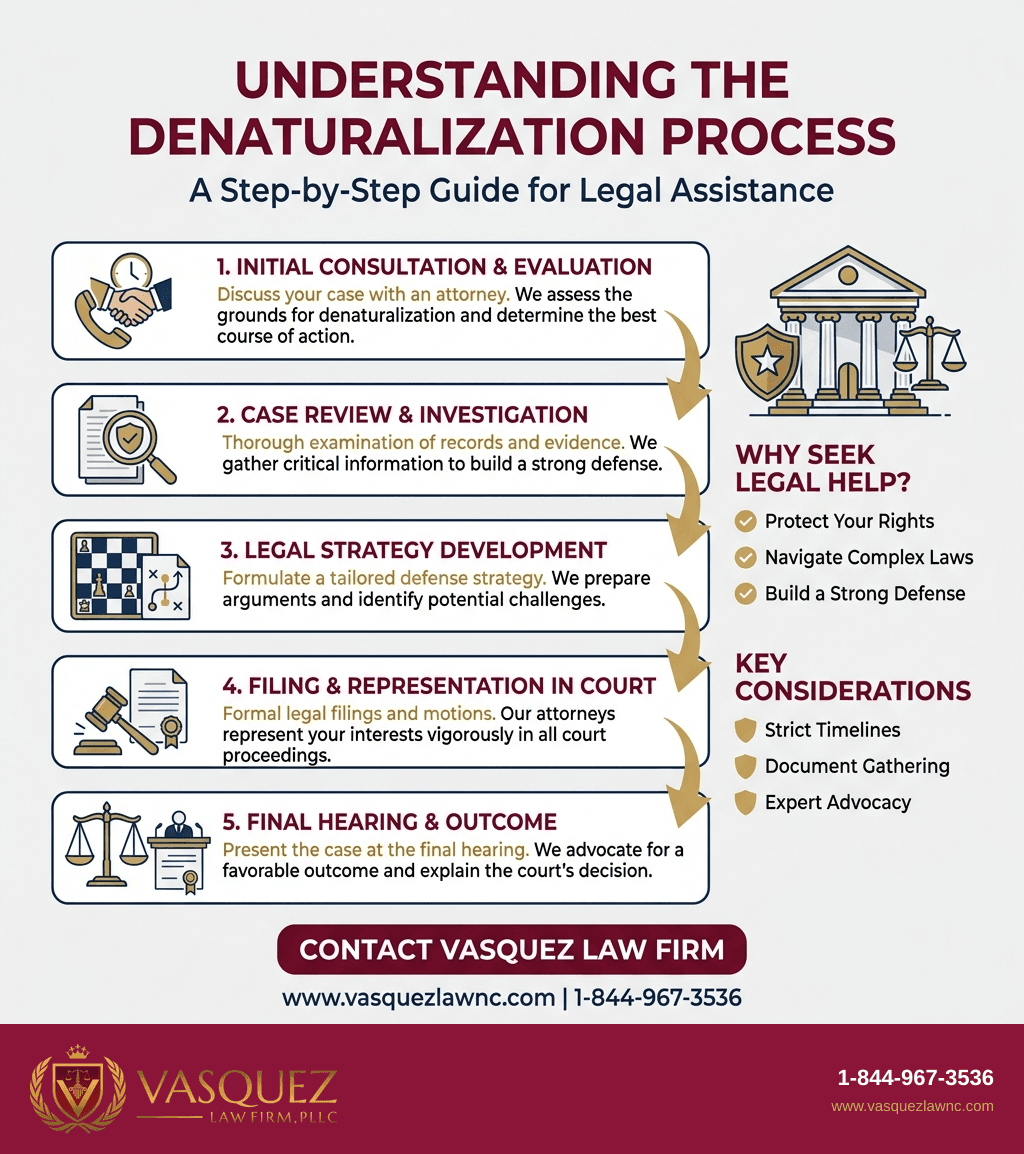
According to the USCIS announcement, the DOJ’s denaturalization actions target individuals who committed crimes before or during their naturalization proceedings and who concealed those crimes or used false identities to obtain citizenship.
"Under the Immigration and Nationality Act, a naturalized U.S. citizen’s citizenship may be revoked, and certificate of naturalization canceled, if the naturalization was illegally procured or procured by concealment of a material fact or by willful misrepresentation." (Source: USCIS, https://www.uscis.gov/newsroom/news-releases/justice-department-moves-to-strip-us-citizenship-from-17-naturalized-sex-offenders-fraudsters-drug)
The INA also requires applicants for naturalization to demonstrate good moral character, which excludes individuals convicted of serious crimes such as sexual offenses, fraud, or drug trafficking. Concealing such conduct during the application process violates the law and can lead to denaturalization.
In addition to denaturalization statutes, other relevant laws include provisions on deportable aliens under 8 U.S.C. § 1227, which address removal grounds for non-citizens, including those stripped of citizenship through denaturalization.
What should individuals do if they are concerned about denaturalization or naturalization eligibility?
If you are a naturalized U.S. citizen or an applicant for naturalization, it is critical to be truthful and fully disclose all relevant information during your immigration proceedings. Concealing crimes, using false identities, or misrepresenting facts can lead to denaturalization and removal.
At our Raleigh, NC office, we typically see that the most common mistake applicants make is underestimating the importance of disclosing past criminal conduct or immigration violations. Even minor offenses or arrests that did not lead to convictions should be disclosed to avoid allegations of fraud.
Individuals who fear they may be subject to denaturalization actions should take the following steps:
- Consult an experienced immigration attorney promptly to evaluate your case and potential risks.
- Gather all documentation related to your immigration history, criminal records, and naturalization application.
- Do not ignore any notices or legal proceedings related to denaturalization or removal.
- Be prepared to respond to government inquiries with honesty and legal representation.
- Consider potential defenses such as lack of materiality of alleged misrepresentations or procedural errors.
Below is a summary table of key actions and timelines relevant to naturalization and denaturalization:
| Action | Typical Timeline | Notes |
|---|---|---|
| Naturalization Application | Varies, often 6-12 months | Must disclose all relevant facts truthfully |
| Naturalization Interview | Within application processing | Oath and testimony under penalty of perjury |
| Denaturalization Complaint Filed | After discovery of fraud or crimes | Filed in U.S. district court |
| Denaturalization Trial | Varies, can take months to years | Government must prove fraud or concealment |
| Loss of Citizenship | Upon court order | Leads to potential removal proceedings |
It is important to note that the government has the burden of proof in denaturalization cases, but the consequences of losing citizenship are severe. Legal advice is essential.
For more information on naturalization eligibility and requirements, see USCIS’s official guidance and consult our immigration practice area.
What happens next after the DOJ files denaturalization complaints?
After the DOJ files civil denaturalization complaints in federal district courts, the cases proceed through litigation. The accused individuals have the right to defend against the allegations, and the government must prove that citizenship was obtained illegally or by concealment.
If the court rules in favor of the government, the individual’s citizenship is revoked, and the certificate of naturalization is canceled. This revocation can lead to removal (deportation) proceedings since the individual is no longer a U.S. citizen.
The DOJ’s announcement states that these cases are prosecuted by the Office of Immigration Litigation with assistance from USCIS, ICE, and various U.S. Attorney’s Offices. The process can be lengthy and complex, involving discovery, motions, and potentially appeals.
What's Your Immigration Situation?
Answer 3 questions - we'll tell you your options
Question 1 / 3
What best describes your situation?
Keep Reading

"We will continue to use every lawful avenue to denaturalize and remove aliens." (Source: USCIS, https://www.uscis.gov/newsroom/news-releases/justice-department-moves-to-strip-us-citizenship-from-17-naturalized-sex-offenders-fraudsters-drug)
Individuals subject to denaturalization should seek legal representation immediately to protect their rights and explore possible defenses or relief.
The USCIS and DOJ also encourage the public to report suspected immigration benefit fraud through official channels, such as the USCIS Tip Form.
The memo does not specify the exact timeline for these cases but indicates ongoing efforts to identify and prosecute those who obtained citizenship unlawfully.
What are common questions about denaturalization and these recent DOJ actions?
Can U.S. citizenship be revoked after many years?
Yes. Citizenship obtained through fraud or concealment can be revoked at any time if the government proves the naturalization was illegally procured, regardless of how many years have passed.
Does denaturalization automatically mean deportation?
Denaturalization removes citizenship status. Afterward, the individual becomes subject to removal proceedings as a non-citizen and may be deported depending on their immigration status and grounds for removal.
What crimes can lead to denaturalization?
Serious crimes such as sexual offenses, fraud, drug trafficking, and identity fraud, especially if concealed during naturalization, can be grounds for denaturalization.
How can someone defend against denaturalization?
Defenses may include showing the alleged misrepresentation was not material, that the government failed to meet its burden, or procedural errors in the case. Legal counsel is essential.
Where can I report suspected immigration fraud?
The USCIS Tip Form is the official channel for reporting suspected immigration benefit fraud or abuse.
This article provides general legal information, not individualized legal advice. Reading does not create an attorney-client relationship. For advice specific to your situation, contact Vasquez Law Firm.
Reviewed by William Vasquez, Founder & CEO, Vasquez Law Firm, PLLC.
Related Topics

William Vasquez
Founder & CEO, Vasquez Law Firm, PLLC
William Vasquez is the founder and CEO of Vasquez Law Firm, PLLC, a results-driven firm specializing in immigration, criminal defense, personal injury, and workers' compensation. A U.S. Air Force veteran and recipient of the Joint Service Achievement Medal, William is dedicated to fiercely fighting for his clients' rights.
Related Legal Services
Need legal help? Learn more about our immigration law practice, or contact us for a free evaluation.
You can also visit North Carolina immigration law firm for more information.
![Houston Federal Lawsuit Accuses Meneses Law of Coaching Immigrants [2026]](/_next/image?url=https%3A%2F%2Fvuuyorlsmhunqektprqy.supabase.co%2Fstorage%2Fv1%2Fobject%2Fpublic%2Fblogs%2Fimmigration-header-1782500614693.png&w=1920&q=75)