How ICE Immigration Arrests Occur and What to Know in 2026
Learn how ICE immigration arrests work in 2026. Understand your rights, process, and legal help. Contact Vasquez Law for a free consultation today.
Published on August 18, 2026

Have questions? Talk to an attorney - free evaluation.
Call 1-844-967-3536Worried how the latest immigration news affects you?
Get a free, confidential case review with an immigration attorney - know exactly where you stand.
How ICE Immigration Arrests Occur and What to Know in 2026
ICE immigration arrests have significant impacts on individuals and families, especially in Raleigh, NC, and Orlando, FL. This 2026 guide explains how ICE arrests operate, legal protections, and what steps to take if you or a loved one faces detention. Stay informed about ICE arrest numbers, detainee locator tools, and your rights during enforcement actions.
Need help with your case? Our experienced attorneys are ready to fight for you. Se Habla Español.
Or call us now: 1-844-967-3536
Quick Answer
ICE immigration arrests involve detention by federal officers of individuals suspected of immigration violations. Arrests can occur during workplace raids, traffic stops, or community enforcement. In 2026, knowing your rights and how to use resources like the ICE Detainee Locator is essential for detained immigrants and their families in Raleigh, NC, and Orlando, FL.
- ICE arrests numbers remain significant in key states including NC and FL.
- Detention centers hold arrested individuals while cases proceed.
- ICE detainee mugshots and inmate lookup tools assist family tracking.
- Individuals have rights to contest detention and seek legal counsel.
- Federal law governs arrest and detention procedures under 8 U.S.C. § 1226(a).
Understanding ICE Immigration Arrests
In 2026, ICE immigration arrests remain a crucial enforcement tool used by U.S. Immigration and Customs Enforcement (ICE). For example, in Raleigh, NC, a local worker might be detained during a workplace enforcement operation if suspected of violating immigration laws. Arrests happen in various situations including raids, checkpoints, or referrals from local police.
ICE arrest procedures start when an agent identifies someone potentially removable under immigration law, frequently noncitizens without legal status or those with deportation orders. ICE officers have authority under 8 U.S.C. § 1226(a) to arrest and detain individuals pending removal proceedings or status determinations. Arrests are considered civil, not criminal, though related criminal charges might arise in some cases.
The complexity of ICE arrests often leaves arrested individuals confused about their rights. One key resource is the ICE Detainee Locator, an online tool which helps families and attorneys find out if someone is detained and where. The locator uses detainee information such as names or Alien Registration Numbers. This aids greatly in maintaining contact and preparing for legal defenses.
Because the Vasquez Law Firm provides immigration legal services in Raleigh, NC, and Orlando, FL, we emphasize knowing detention center locations and ICE procedures specific to these areas. Common detention centers in or near these cities include Stewart Detention Center (GA, near FL border) and local Field Offices which handle initial arrests and processing.
ICE Arrest Statistics in North Carolina and Florida
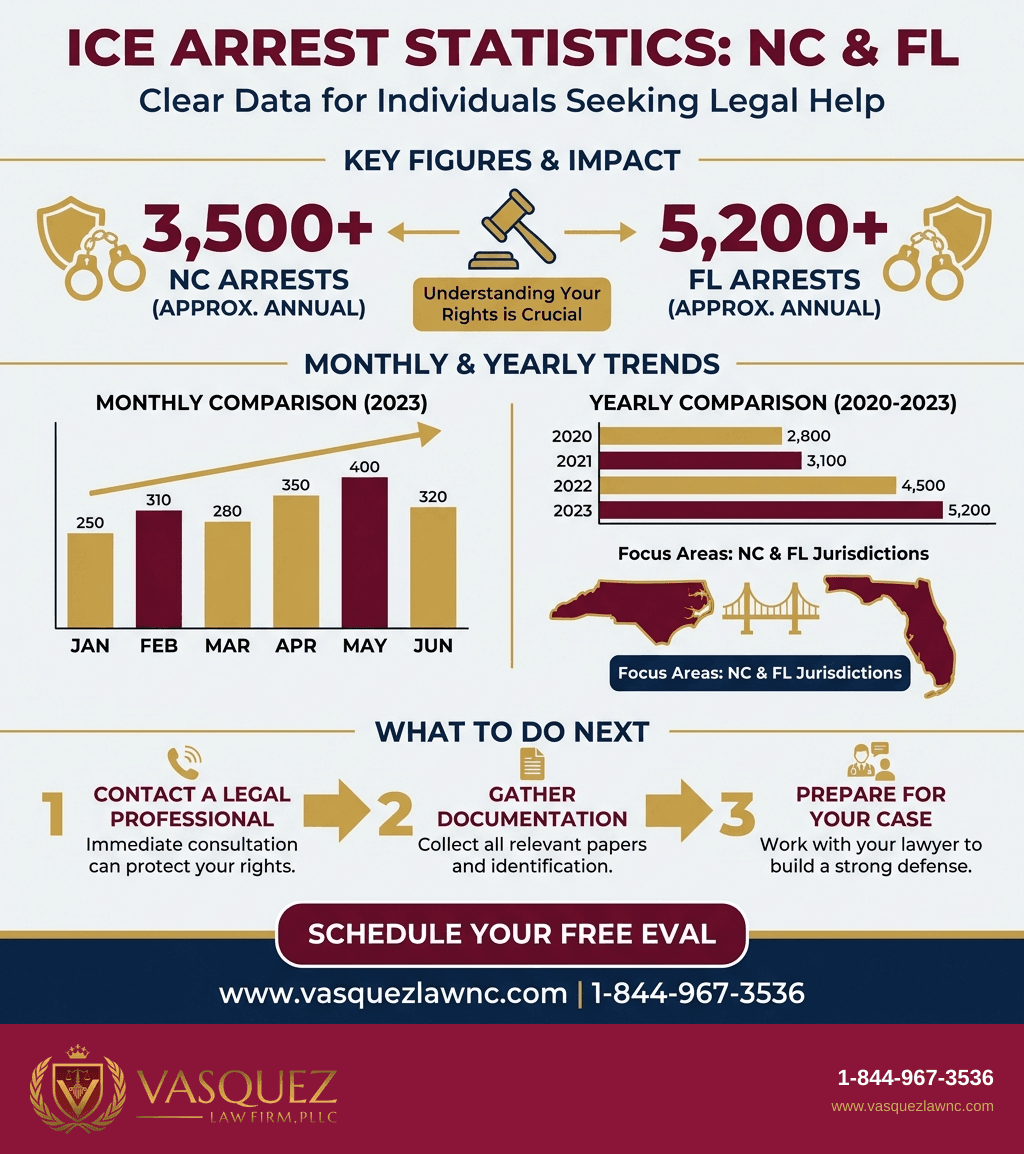
Official ICE reports for 2026 reveal over 5,000 arrests in Florida and more than 1,200 in North Carolina through the first half of the year. These arrests often result from operations targeting workplaces, ensuring authorized employment under federal regulations. Raleigh and Orlando experience these enforcement patterns reflecting the immigrant population concentrations. Understanding these patterns helps communities prepare and seek legal assistance promptly.
For instance, a meatpacking plant in Florida might be subject to a surprise ICE raid, leading to multiple arrests of undocumented workers. Similarly, in North Carolina, small businesses with immigrant employees may be inspected, resulting in detentions and subsequent legal challenges. These enforcement actions reflect federal priorities but also underscore the need for community education about rights and resources.
Community organizations in both states have responded by increasing outreach programs to educate immigrants on how to respond if ICE agents arrive. Knowing where to seek legal help quickly can prevent long-term detention and possible deportation, especially when arrest patterns indicate heightened enforcement in certain industries or regions.
How ICE Determines Whom to Arrest
Agents rely on databases, tips, and referrals from local law enforcement. They check immigration status through documents or interviews. While ICE cannot detain U.S. citizens legally, mistakes occur, requiring quick legal action. These procedures are governed under 8 C.F.R. § 236.1, outlining arrest and detention protocols.
ICE often prioritizes individuals with criminal records or those subject to prior removal orders. However, arrests may also target individuals with pending immigration applications or those who have overstayed visas. For example, an individual stopped at a traffic checkpoint in Orlando may be questioned if ICE has a warrant or reasonable suspicion regarding their immigration status.
It is important to note that ICE collaboration with local law enforcement varies by jurisdiction. Some counties have agreements to share information leading to referrals for immigration enforcement, while others limit such cooperation. This variation affects the likelihood and context of ICE arrests in different communities, emphasizing the importance of local legal knowledge.
Key Steps to Take After an ICE Arrest
If someone you know is arrested by ICE, first check the ICE Detainee Locator tool or call local ICE offices. Confirming the detainee’s location enables family and attorneys to communicate effectively. Then, contacting an experienced immigration attorney is critical to protect rights and explore relief options such as bond or stays of removal.
Step 1: Locate the Detainee
Use the ICE Detainee Locator or contact local ICE Field Offices. Have identifying details ready — full name, Alien Registration Number, and date of birth.
In some cases, detainees may be transferred between facilities rapidly, especially if initial processing centers reach capacity. Families should check the locator regularly and communicate with attorneys to stay updated. For example, a detainee arrested in Raleigh might be transferred to a detention center in Georgia, affecting visitation and legal access.
It is also advisable to keep a record of all communications with ICE and detention centers. This documentation can help attorneys track case progress and respond promptly to changes in detainee status or location.
Step 2: Understand the Charges
ICE will serve a Notice to Appear (NTA) alleging immigration violations. This document triggers removal proceedings. Knowing the specific grounds — e.g., unlawful presence under INA § 212(a)(9)(B) — helps frame your legal strategy.
The NTA outlines the basis for removal and the date of the initial immigration court hearing. Delays in receiving the NTA can occur, so staying informed through attorneys is crucial. Understanding the charges allows detainees and their families to explore potential defenses such as asylum, cancellation of removal, or adjustment of status.
For example, someone charged with unlawful presence may qualify for relief if they have family ties or if removal would cause extreme hardship. Legal counsel can evaluate eligibility and file necessary applications within deadlines.
Step 3: Request Bond or Release When Possible
Many detained individuals may request bond. Bond hearings occur before immigration judges. Legal representation improves chances to obtain release pending court outcomes.
Bond amounts vary based on the detainee’s flight risk and danger to the community. For example, a community leader with strong family ties in Orlando may successfully argue for a lower bond or release, while someone with prior criminal history might face higher bond or ineligibility for release.
Families should prepare financial resources if bond is granted and understand that bond hearings can be rescheduled, requiring persistence and effective legal advocacy. Attorneys can present evidence such as employment history, community ties, and health issues to support bond requests.
Step 4: Prepare for Immigration Court
Removal proceedings can span months or years. Attend all hearings on time, have evidence ready, and understand available relief such as adjustment of status (8 U.S.C. § 1255) or cancellation of removal (INA § 240A(b)).
Legal preparation includes gathering documentation like proof of residence, family relationships, and any evidence of persecution or hardship. For example, a detainee seeking asylum must prepare credible testimony and country condition reports demonstrating risk if returned.
Failure to appear at hearings can result in removal orders in absentia. Attorneys emphasize the importance of communication with clients to ensure attendance and compliance. Virtual hearings may be available, but detainees must stay informed of scheduling changes.
Common Mistakes to Avoid During ICE Detention
- Not Knowing Your Rights: Always exercise the right to remain silent and request an attorney.
- Failure to Inform Family: Provide loved ones with detention information to maintain support.
- Missing Court Dates: Not appearing can result in automatic removal orders.
- Signing Documents Without Legal Advice: Avoid agreeing to anything without consulting counsel.
- Ignoring Possible Relief: Many are eligible for relief but may miss deadlines or procedures.
- Relying on Non-Legal Help: Avoid relying solely on informal advice; consult qualified attorneys.
- Delaying Legal Representation: Early legal help is crucial for good outcomes.
If you only remember one thing: Do not waive your right to legal counsel and attend all scheduled hearings.
Additional errors include speaking to ICE agents without a lawyer present, as statements can be used against detainees in removal proceedings. For example, an offhand comment admitting unauthorized work could jeopardize relief eligibility. It is best to politely decline to answer questions until legal representation is available.
Another mistake is neglecting health and mental well-being during detention. Seeking medical attention promptly and informing attorneys of health conditions can impact bond hearings and case outcomes. Families should advocate for detainees’ health needs by staying in contact and relaying information to legal teams.
Finally, detainees often underestimate the importance of building a support network. Community groups, faith organizations, and legal aid providers can offer assistance beyond legal representation, including emotional support and advocacy, which are vital during prolonged detention.
Timeline and What to Expect with ICE Detention
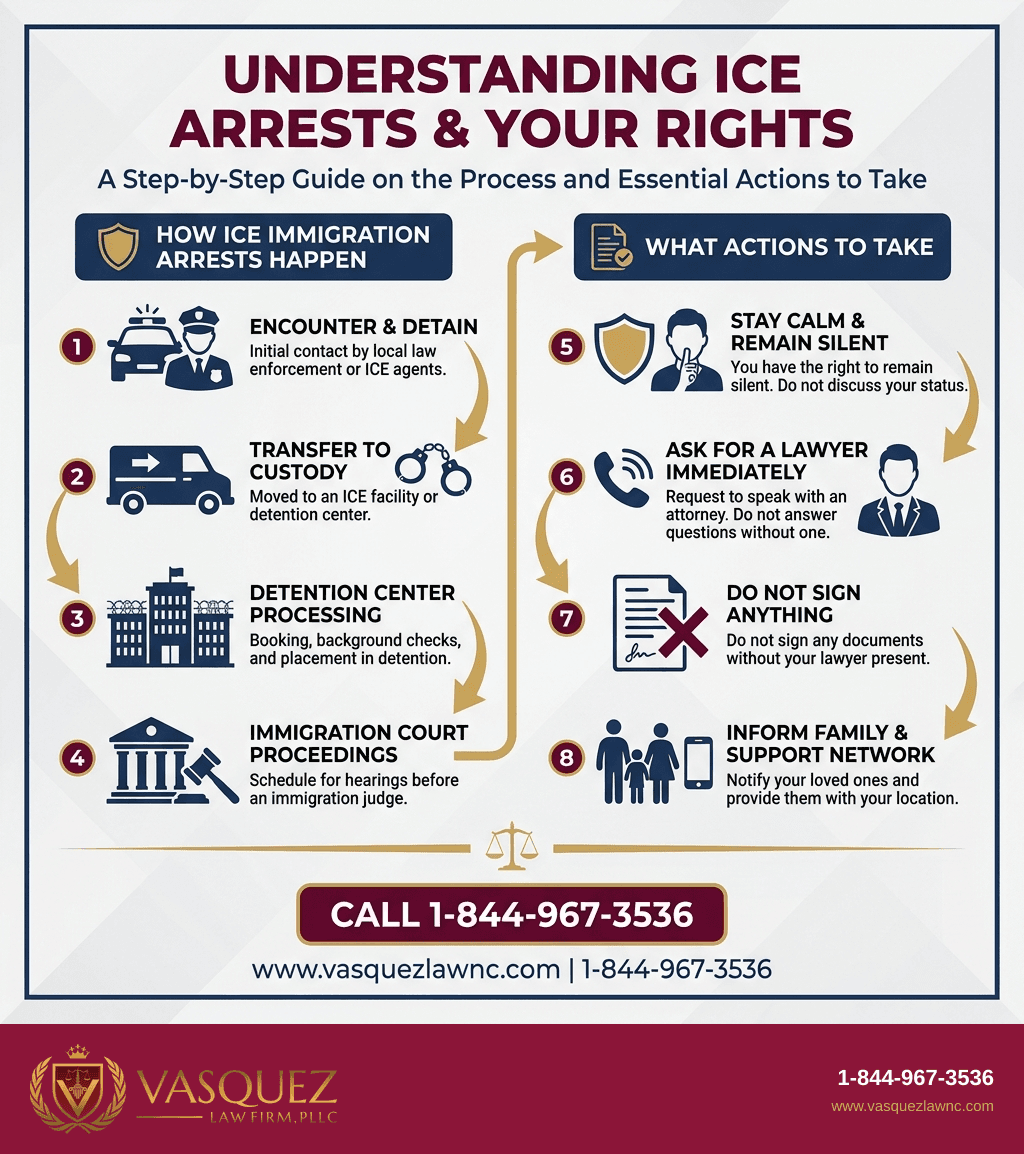
- Day 1-3: Arrest and transfer to an ICE detention center. Initial medical and biometric processing.
- Within 1 Week: Receive a Notice to Appear and be assigned an immigration court date.
- Weeks 2-8: Possible bond hearing if eligible. Legal representation can request bond.
- Months 1-12: Immigration court hearings begin; case status updates via EOIR or attorney.
- Year 1+: Resolution may occur via relief granted, voluntary departure, or removal order.
Processing times vary, but according to USCIS processing resources (USCIS Processing Times), timelines for adjustment of status or work permits linked to removal cases can be lengthy. Patience and legal guidance remain crucial throughout.
For example, a detainee applying for asylum may wait months for a credible fear interview and then years for a final decision, during which detention status might change. Conversely, those eligible for expedited removal may face faster proceedings but less opportunity for relief.
It is also common for detained individuals to be transferred between facilities during this timeline, which can complicate communication and access to counsel. Families and attorneys should be proactive in monitoring case updates and facility changes to ensure continued legal support.
Understanding this timeline helps detainees and their families plan financially, emotionally, and legally. Preparation for a potentially extended detention period includes securing legal representation early and arranging for family support and advocacy.
Frequently Asked Questions about ICE Arrests
Can ICE legally detain U.S. citizens?
ICE cannot legally detain U.S. citizens for immigration violations. However, errors sometimes occur due to mistaken identity or lack of proper documentation verification. If a U.S. citizen is mistakenly detained, it is vital to prove citizenship quickly by providing documents such as a birth certificate or passport. Prompt legal intervention can lead to release and may open avenues for addressing any damages caused by wrongful detention.
How can I find out if someone is in ICE custody?
The ICE Detainee Locator online tool is the primary resource to determine if someone is in ICE custody. By entering the individual’s full name or Alien Registration Number, family members and attorneys can access information about the detainee’s current location and status. This tool is updated regularly and is essential for maintaining contact and coordinating legal representation. In cases where the locator is not immediately helpful, contacting local ICE offices may provide additional assistance.
What happens after an ICE arrest?
After an ICE arrest, the individual is transported to a detention center for processing, which includes biometric data collection and medical screening. Subsequently, a Notice to Appear is issued to initiate removal proceedings. The detainee may be eligible for a bond hearing to seek release pending the outcome of their case. Throughout this process, legal counsel plays a critical role in navigating court appearances, applying for relief, and advocating for the detainee's rights.
Can ICE legally ask for ID during a stop?
ICE agents may request identification if they have reasonable suspicion that a person is in the country unlawfully. However, individuals have the right to remain silent and are not obligated to provide information beyond their identity. Refusing to answer questions or provide documents should be done respectfully, and requesting legal counsel before answering is advisable to avoid self-incrimination or involuntary admission of immigration status.
What are common mistakes detainees make?
Common mistakes detainees make include missing court dates, which can lead to automatic removal orders; signing documents without consulting an attorney, potentially waiving rights unknowingly; and failing to seek immediate legal counsel, which diminishes chances for relief. Additionally, speaking to ICE agents without representation or not informing family members about detention can hinder support and defense efforts. Timely legal advice and adherence to court schedules are critical.
Are ICE detainee mugshots public?
ICE detainee mugshots are not routinely made public. Access to such images is generally limited to legal representatives, family members, or through formal legal requests. Privacy protections and agency policies restrict widespread distribution. However, in some cases, mugshots may be available indirectly through detention center records or third-party databases, but relying on official channels is recommended to ensure accuracy and compliance with privacy laws.
How do ICE arrest numbers vary by state?
ICE arrest numbers vary significantly by state, largely influenced by immigrant population sizes and local enforcement policies. States like Florida, with large immigrant communities, report higher arrest figures, as seen in the 5,000+ arrests in 2026. North Carolina is experiencing an increase in enforcement actions, reflective of growing immigrant populations and targeted operations. Understanding these patterns helps communities anticipate enforcement trends and prepare accordingly.
Can someone be detained without criminal charges?
Yes. ICE frequently detains individuals based on civil immigration violations without any accompanying criminal charges. This is common in removal proceedings where the individual is suspected of being unlawfully present or violating immigration laws. Detention under civil statutes allows ICE to hold individuals pending hearings or removal, even if no criminal offense has been committed. Legal counsel is essential to challenge detention and explore relief options.
About Vasquez Law Firm
At Vasquez Law Firm, we combine compassion with aggressive representation. Our motto "Yo Peleo®" (I Fight) reflects our commitment to standing up for your rights.
- Bilingual Support: Se Habla Español — Spanish-speaking attorneys and staff available
- Service Areas: North Carolina, plus Florida and nationwide for immigration
- Experience: Over 30 years helping clients navigate complex legal matters
- Results: Thousands of successful cases across multiple practice areas
Attorney Trust and Experience
William J. Vásquez is admitted to the North Carolina State Bar (2011) and to the U.S. Courts of Appeals for the 4th, 5th, and 11th Circuits. The firm has provided dedicated legal representation since 2011, with personalized attention to each client's case.
Our attorneys understand the complexities of immigration law and the emotional toll of ICE detention. We provide strategic counsel tailored to each client’s unique circumstances, whether seeking bond, asylum, or other relief. Our bilingual team ensures language is not a barrier to effective representation, and we maintain a strong track record of favorable outcomes in Raleigh, Orlando, and beyond.
We also engage with community organizations and advocacy groups to stay informed on the latest enforcement trends and policy changes affecting immigrant communities. This ongoing commitment allows us to provide timely advice and comprehensive legal support during challenging times.
Don't wait to get the help you deserve. Call us now for immediate assistance.
Se Habla Español
Sources and References
- U.S. Citizenship and Immigration Services
- Executive Office for Immigration Review
- Legal Information Institute
Take the first step toward justice today. Our team is standing by to help.
Start Your Free Evaluation Now
Call us: 1-844-967-3536
Se Habla Español - Estamos aquí para ayudarle.
If you need legal assistance, learn more about immigration case consultation, or call us at 1-844-967-3536 for a free evaluation.

William Vasquez
Founder & CEO, Vasquez Law Firm, PLLC
William Vasquez is the founder and CEO of Vasquez Law Firm, PLLC, a results-driven firm specializing in immigration, criminal defense, personal injury, and workers' compensation. A U.S. Air Force veteran and recipient of the Joint Service Achievement Medal, William is dedicated to fiercely fighting for his clients' rights.
Related Legal Services
Need legal help? Learn more about immigration case consultation, or contact us for a free evaluation.
You can also visit NC immigration legal help for more information.