What Happens After Asylum Denials in Orlando in 2026
Facing asylum denials in Orlando? Learn your next steps, eligibility, and options. Contact Vasquez Law for a free evaluation to protect your future.
Published on June 3, 2026
Talk to an immigration attorney
Free call. A clear plan for your case.
Free & confidential · Se habla espanol · 24/7
Have questions? Talk to an attorney - free evaluation.
Call 1-844-967-3536Worried how the latest immigration news affects you?
Schedule a confidential case review with an immigration attorney - know exactly where you stand.
What Happens After Asylum Denials in Orlando in 2026
Asylum denials can drastically impact immigrants seeking protection in the United States, especially in Orlando and across North Carolina. Understanding what happens after an asylum denial is critical in 2026 to protect your rights and explore alternatives like defensive asylum claims. This guide explains eligibility, timelines, and practical steps you can take if your application is denied. It also highlights common pitfalls and how Vasquez Law Firm can help you navigate this complex process.
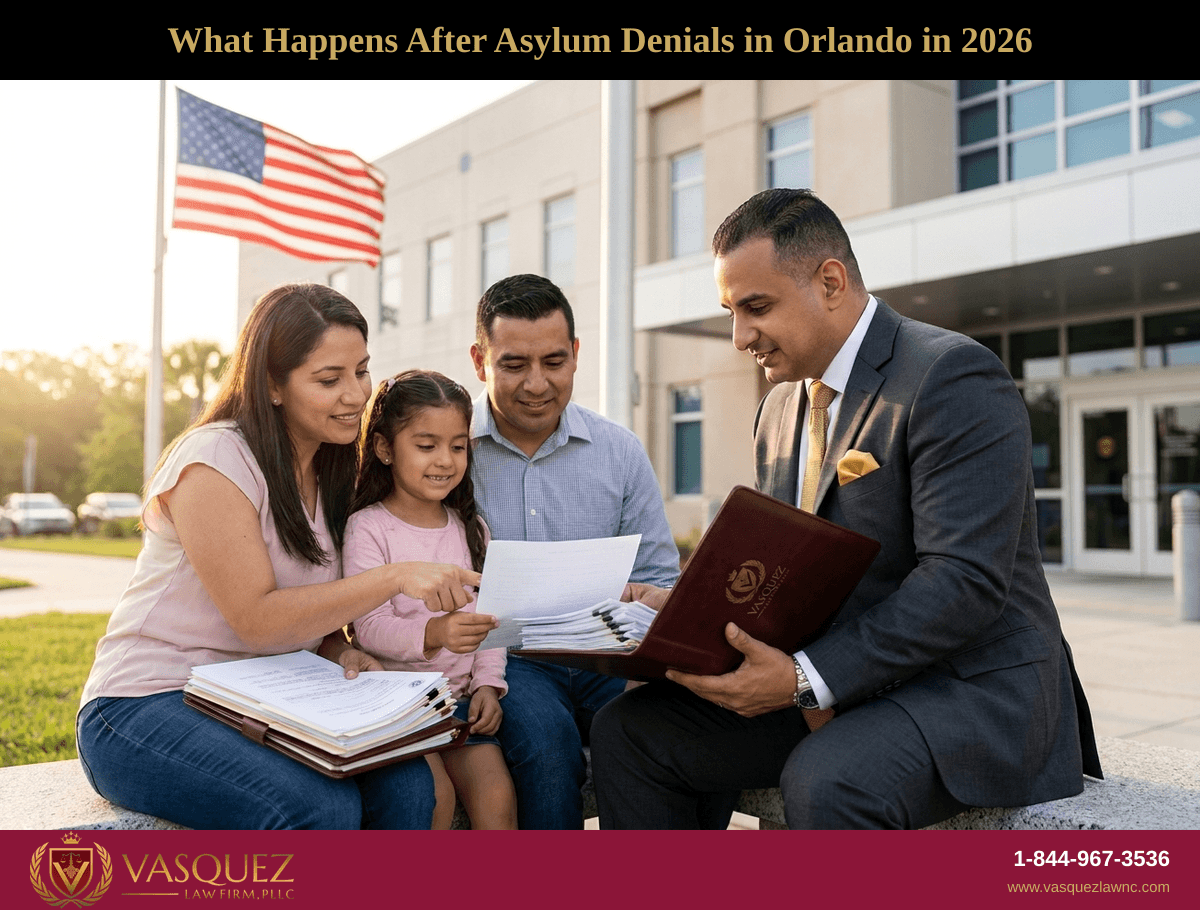
A denial is not always the end — an asylum lawyer can explain appeals and other forms of relief.
Need help with your case? Our experienced attorneys are ready to fight for you. Se Habla Español.
Or call us now: 1-844-967-3536
Quick Answer
If your asylum application is denied in Orlando or North Carolina, several options remain, including appeal, requesting a reopening, or defensive asylum in immigration court.
- Denials do not always lead to immediate deportation.
- Defensive asylum requires court hearings.
- Timely legal action is critical to preserving rights.
- Common reasons for denial include missing deadlines or insufficient evidence.
- Consulting an immigration attorney can improve your chances of relief.
Understanding Asylum Denials
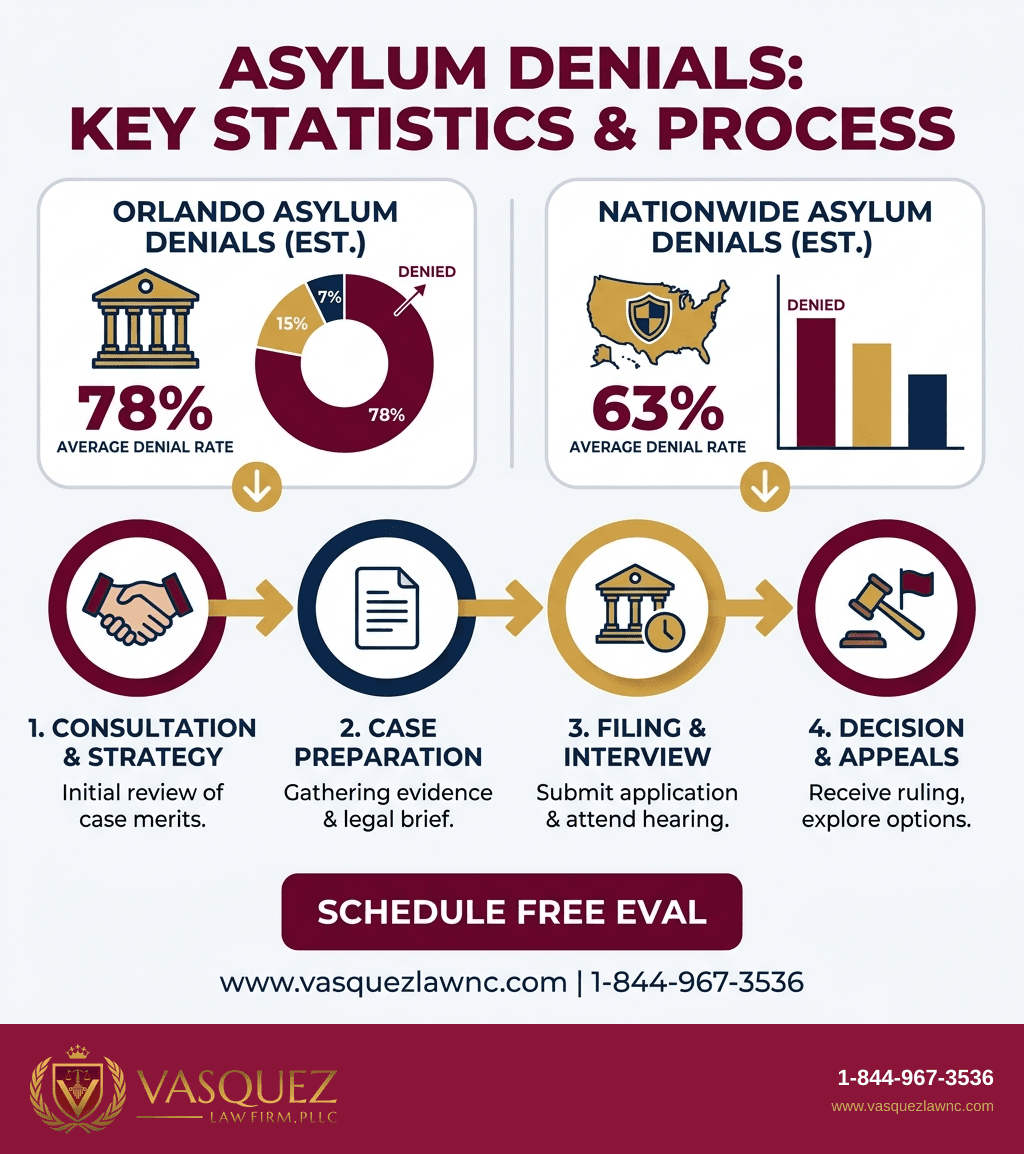
In 2026, the denial rates for asylum applications remain significant nationwide, with approximately 55% of claims denied by USCIS or immigration courts. An asylum denial means the evidence or testimony provided failed to meet the legal standard under INA § 208 and 8 C.F.R. § 208.14. This could be due to failure to demonstrate a credible fear of persecution, missing filing deadlines, or disqualifying criminal history.
For immigrants in Orlando, FL and Raleigh, NC, understanding what an asylum denial means and its consequences is crucial. A denial does not always mean deportation will be immediate. Often, applicants may transition to defensive asylum during removal proceedings managed by the Executive Office for Immigration Review (EOIR). This pathway allows applicants a court hearing before an immigration judge, providing a chance to present a stronger case.
Immigration authorities consider factors like country conditions and individual circumstances. While some countries offer asylum to U.S. citizens under extraordinary conditions, most asylum cases involve foreign nationals who fear persecution in their home countries based on race, religion, nationality, political opinion, or membership in a particular social group. USCIS outlines strict asylum eligibility rules at https://www.uscis.gov. A denial generally indicates failure to meet these criteria or procedural errors.
Types of Asylum Denials
- Affirmative Asylum Denials: When USCIS reviews and denies the claim before any removal proceedings.
- Defensive Asylum Denials: When an immigration judge denies asylum during removal proceedings.
- Denials Based on Procedural Issues: Including late filings or incomplete applications.
Each form of denial requires different legal responses and timelines for appeal or reopening. Knowing these details affects next steps significantly for anyone facing asylum denials.
For example, an applicant who was denied affirmatively by USCIS due to failure to submit sufficient evidence may still have the opportunity to present a stronger case during defensive asylum proceedings. Alternatively, a procedural denial such as a late filing may require a motion to reopen based on extraordinary circumstances, like a recent change in country conditions or new evidence of persecution. Understanding the nuances between these denial types helps applicants and attorneys develop effective legal strategies tailored to their specific situation.
Practical scenarios often include cases where applicants initially failed to articulate their fear of persecution clearly, leading to an affirmative denial, but later, with legal assistance, submitted additional affidavits and country condition reports that strengthened their case during removal proceedings. Similarly, some applicants face denials due to criminal history, and in these cases, waiver applications or alternative forms of relief may be considered. These examples highlight the importance of thorough preparation and legal guidance throughout the asylum process.
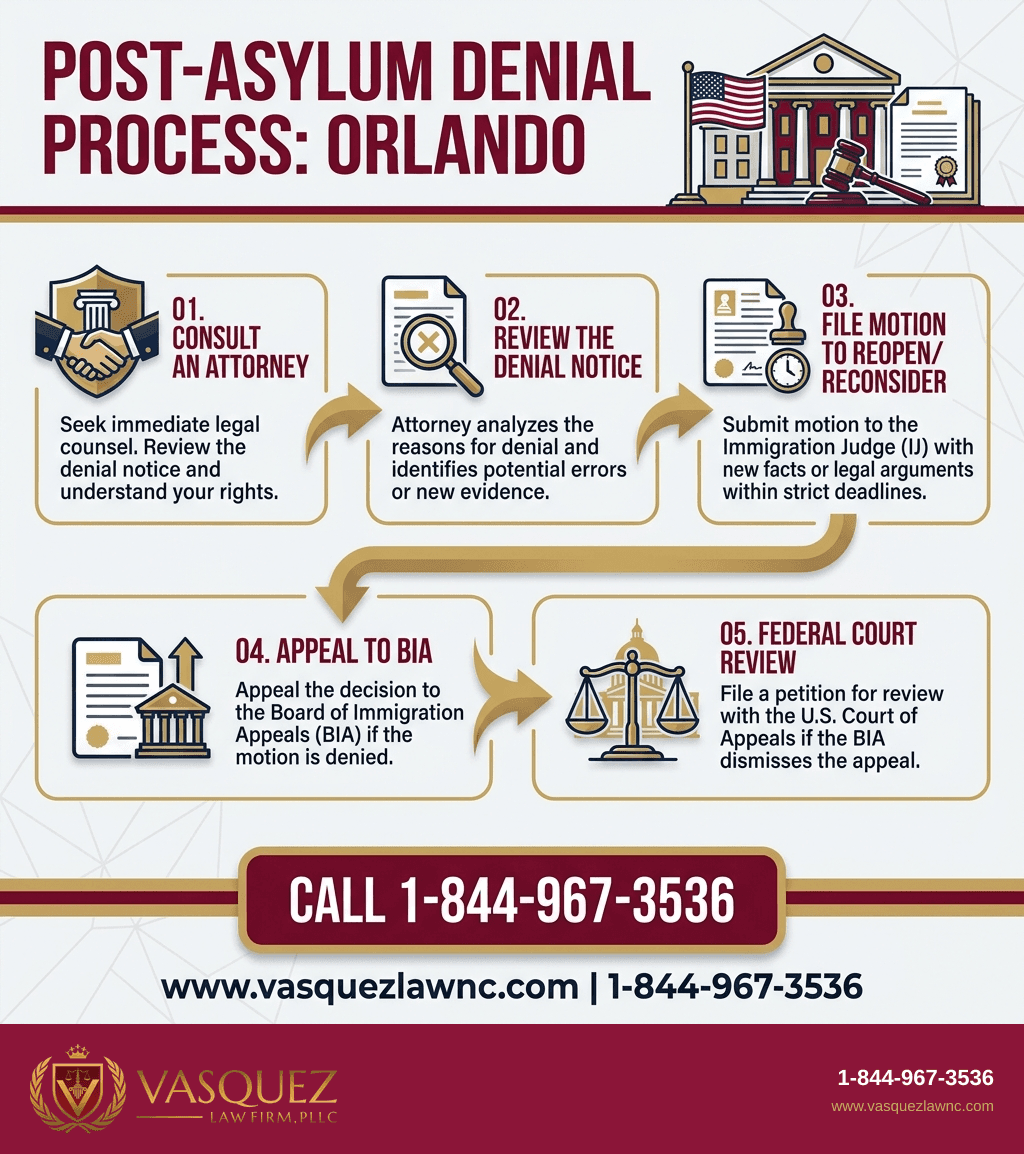
Key Steps After an Asylum Denial
When an asylum application is denied in Orlando or North Carolina, acting promptly is essential. Many immigrants are uncertain about what to do next. Here are key steps to consider:
1. Review the Denial Notice Carefully
Understand the exact reasons for denial. The notice explains the grounds and whether an appeal or motion to reopen is possible. Missing deadlines may limit options.
It is vital to pay special attention to the specific deficiencies cited by USCIS or the immigration judge. For instance, if the denial was based on insufficient evidence of persecution, applicants should gather additional supporting documents such as police reports, medical records, or expert country condition analyses to address these gaps.
Additionally, some denial notices include instructions on timelines for appeals or motions. Failing to adhere to these deadlines can result in losing the right to challenge the decision, so it is crucial to act quickly. Reviewing the denial notice with an immigration attorney ensures understanding of all available options and deadlines.
2. File an Appeal with the Board of Immigration Appeals (BIA)
If eligible, you can appeal to the BIA within 30 days of the denial. This involves legal briefs and possible court hearings. The BIA reviews USCIS or immigration judge decisions.
The appeal process requires careful preparation of legal arguments to demonstrate errors in the initial decision. For example, if the immigration judge overlooked key evidence or misapplied asylum law, the appeal can highlight these points to seek reversal.
Filing a timely and well-supported appeal can prevent removal while the case is pending. It is also important to consider that some appeals may be resolved solely on the written record, while others may require oral argument before the BIA. Engaging experienced counsel improves the likelihood of a successful appeal.
3. Consider Defensive Asylum
If placed in removal proceedings, defensive asylum offers a chance to argue your claim before an immigration judge. This procedure often requires experienced attorney guidance.
Defensive asylum is particularly important for applicants who were denied affirmatively but have not yet been removed. In this setting, applicants can present new evidence, request witness testimony, and cross-examine government witnesses to strengthen their case.
For example, a client denied asylum due to inadequate documentation might submit affidavits from family members or human rights organizations during defensive proceedings. This additional evidence can persuade the immigration judge to grant asylum or alternative forms of relief, such as withholding of removal.
4. Explore Other Forms of Relief
Alternatives such as withholding of removal, protection under the Convention Against Torture, or U visas for crime victims may apply depending on your circumstances.
Withholding of removal requires a higher burden of proof but can provide protection if asylum is not granted. It prohibits deportation to countries where the applicant would face persecution but does not grant permanent status.
Similarly, the Convention Against Torture (CAT) protection shields individuals from being returned to countries where they would likely be tortured. For victims of certain crimes, U visas offer another pathway to remain legally in the U.S. Understanding all available relief options ensures applicants can pursue the best possible outcome based on their unique situation.
5. Consult With an Immigration Attorney Promptly
Legal counsel helps navigate the complex processes, deadlines, and evidentiary requirements. Vasquez Law Firm provides expert advice and free evaluations for asylum seekers in Orlando and Raleigh.
Working with an experienced attorney early after denial increases the chances of successfully appealing or reopening a case. Attorneys can advise on gathering new evidence, preparing legal briefs, and representing clients during hearings.
For example, in cases where applicants missed filing deadlines due to emergencies or lack of knowledge, attorneys can file motions to reopen based on exceptional circumstances. Timely legal intervention often makes the difference between remaining in the U.S. and facing removal.
Common Mistakes to Avoid After a Denial
- Missing Appeal Deadlines: Failing to file within required time frames renders most appeal options unavailable.
- Ignoring Legal Advice: Proceeding without experienced counsel reduces chances for relief.
- Failing to Gather New Evidence: New credible evidence can impact motions to reopen or appeals.
- Not Preparing for Court Hearings: Immigration court is formal; proper preparation is vital.
- Assuming Deportation Is Immediate: Many remain eligible to pursue relief during removal proceedings.
- Not Understanding Country Conditions: Updated country reports strengthen claims significantly.
- Relying Solely on Social Media: Forums like Reddit provide anecdotal info but may lack accuracy for your case.
If you only remember one thing: Timely legal action and professional guidance dramatically improve outcomes after asylum denials.
Additional common pitfalls include misunderstanding the difference between an appeal and a motion to reopen, which have different deadlines and procedural requirements. For instance, an appeal challenges the legal basis of the decision, while a motion to reopen introduces new evidence or changed circumstances. Confusing these options may cause missed opportunities.
Also, some applicants make the mistake of submitting incomplete or inconsistent information in subsequent filings, which can harm credibility. Consistency and thoroughness in documentation and testimony are critical to persuade adjudicators of the validity of your claim.
Finally, failing to stay informed about changes in immigration law and policies can adversely affect case strategy. Immigration law is dynamic, and recent 2026 updates may impact eligibility and procedural options. Regular consultation with a knowledgeable attorney helps applicants stay current and adapt their approach accordingly.
Timeline and What to Expect
Asylum cases and related appeals follow federally regulated timelines. The average USCIS asylum processing time in 2026 ranges from 4 to 14 months after the interview (see USCIS Processing Times).
If your asylum claim was denied affirmatively, you generally have 30 days to file an appeal with the BIA. Once in immigration court for defensive asylum, scheduling varies by the EOIR's caseload and your immigration judge’s calendar.
Appeal decisions can take from 6 months to over a year. Multiple factors, including country conditions, legal complexity, and court backlogs, influence these timelines.
Our team at Vasquez Law Firm understands the local system in Orlando, FL and Raleigh, NC. We help clients anticipate timeframes and prepare every step in advance.
It is important to note that delays in processing are common due to the high volume of asylum cases nationwide. For example, a client who files an appeal after an affirmative denial may wait several months before the BIA issues a decision. Similarly, defensive asylum hearings can be postponed multiple times due to court backlogs or administrative issues.
During these waiting periods, maintaining communication with your attorney and complying with any requests from immigration authorities is essential. For instance, applicants should report address changes promptly and attend all scheduled hearings and biometrics appointments to avoid adverse consequences.
Moreover, applicants should use this time to gather supplementary evidence, such as updated country condition reports or affidavits from new witnesses, which can strengthen their case before the immigration judge or appellate body.
Frequently Asked Questions
What happens if my asylum is denied in Orlando?
You can file an appeal with the Board of Immigration Appeals or apply for defensive asylum in immigration court. Immediate deportation is not automatic, but timely action is required. After denial, it is critical to review the reasons carefully and consult an attorney to explore options such as appeals, motions to reopen, or alternative relief. Taking prompt legal steps increases the chance of remaining protected in the U.S. while your case progresses.
How long does it take to receive an asylum decision after the interview?
On average, USCIS takes between 4 and 14 months after the asylum interview to issue a decision. Processing times depend on case complexity and local office workload. Factors such as background checks, additional evidence requests, or office backlogs can extend this timeline. Applicants are encouraged to stay in contact with USCIS and their attorney to monitor progress and respond promptly to any requests for information.
Are there alternatives if my asylum claim is denied?
Yes. Options include withholding of removal or protection under the Convention Against Torture, or other humanitarian relief. An attorney can evaluate eligibility. These alternatives may offer protection even if asylum is denied, though they often require meeting different legal standards. For example, withholding of removal demands proof of a clear probability of persecution, while CAT protection focuses on the risk of torture. Exploring all relief avenues is essential for comprehensive defense.
Can I remain in the U.S. if my asylum application is denied?
Many applicants remain in the U.S. during appeals or defensive asylum proceedings. Deportation can be avoided if legal protections are pursued promptly. It is crucial to follow all procedural requirements and attend hearings. In some cases, applicants may be eligible for bond or parole while their case is pending. Consulting an attorney helps ensure compliance with immigration rules and enhances the possibility of lawful presence during litigation.
What is defensive asylum and how does it work?
Defensive asylum is claimed during removal proceedings before an immigration judge, serving as a defense against deportation based on fear of persecution. Unlike affirmative asylum, defensive claims are made after USCIS denial or initiation of removal proceedings. Applicants can present new evidence, call witnesses, and cross-examine government witnesses. This process offers an opportunity for a full hearing to prove eligibility for asylum or other relief, requiring skilled legal representation.
Can my asylum denial be appealed?
Yes, if you file a timely appeal with the Board of Immigration Appeals. Missing deadlines may limit this option, so act quickly. Appeals typically challenge legal or factual errors in the initial decision. Successful appeals can reverse denials and result in asylum grants. Legal counsel is critical to prepare compelling arguments and meet strict procedural requirements, ensuring your appeal is properly filed and supported.
How can I prepare after an asylum denial?
Gather new evidence, consult with an attorney, file timely appeals or motions, and prepare for court hearings with professional support. Preparation includes obtaining detailed country condition reports, affidavits from experts or witnesses, and addressing any credibility issues raised in the denial. Working closely with your attorney to develop a clear legal strategy and practicing testimony for court hearings enhances your chances of success.
Does USCIS sometimes deny asylum without an interview?
Proposals in 2026 suggest USCIS may waive interviews for some asylum cases, but currently, most applicants must be interviewed to assess eligibility properly. Waivers could be considered for straightforward cases with strong documentation. However, interviews remain a critical opportunity for applicants to explain their claims and provide testimony. Skipping interviews is rare and may affect the thoroughness of USCIS adjudication.
About Vasquez Law Firm
At Vasquez Law Firm, we combine compassion with aggressive representation. Our motto "Yo Peleo®" (I Fight) reflects our commitment to standing up for your rights.
- Bilingual Support: Se Habla Español — Spanish-speaking attorneys and staff available
- Service Areas: North Carolina, Florida, and nationwide immigration services
- Experience: Over 30 years helping clients navigate complex legal matters
- Results: Thousands of successful cases across multiple practice areas
Attorney Trust and Experience
William J. Vásquez is admitted to the North Carolina State Bar (2011) and to the U.S. Courts of Appeals for the 4th, 5th, and 11th Circuits. Florida-jurisdiction matters at the firm are handled by Florida Bar attorney Harold Estrada-Rodriguez (FL Bar No. 1041171). The firm has provided dedicated legal representation since 2011, with personalized attention to each client's case.
Don't wait to get the help you deserve. Call us now for immediate assistance.
Se Habla Español
Sources and References
- U.S. Citizenship and Immigration Services
- Executive Office for Immigration Review
- Legal Information Institute
Take the first step toward justice today. Our team is standing by to help.
Start Your Free Evaluation Now
Call us: 1-844-967-3536
Se Habla Español - Estamos aquí para ayudarle.
If you need legal assistance, learn more about how our immigration attorneys can help, or call us at 1-844-967-3536 for a free evaluation.


William Vasquez
Founder & CEO, Vasquez Law Firm, PLLC
William Vasquez is the founder and CEO of Vasquez Law Firm, PLLC, a results-driven firm specializing in immigration, criminal defense, personal injury, and workers' compensation. A U.S. Air Force veteran and recipient of the Joint Service Achievement Medal, William is dedicated to fiercely fighting for his clients' rights.
Related Legal Services
Need legal help? Learn more about how our immigration attorneys can help, or contact us for a free evaluation.
You can also visit North Carolina immigration lawyers for more information.