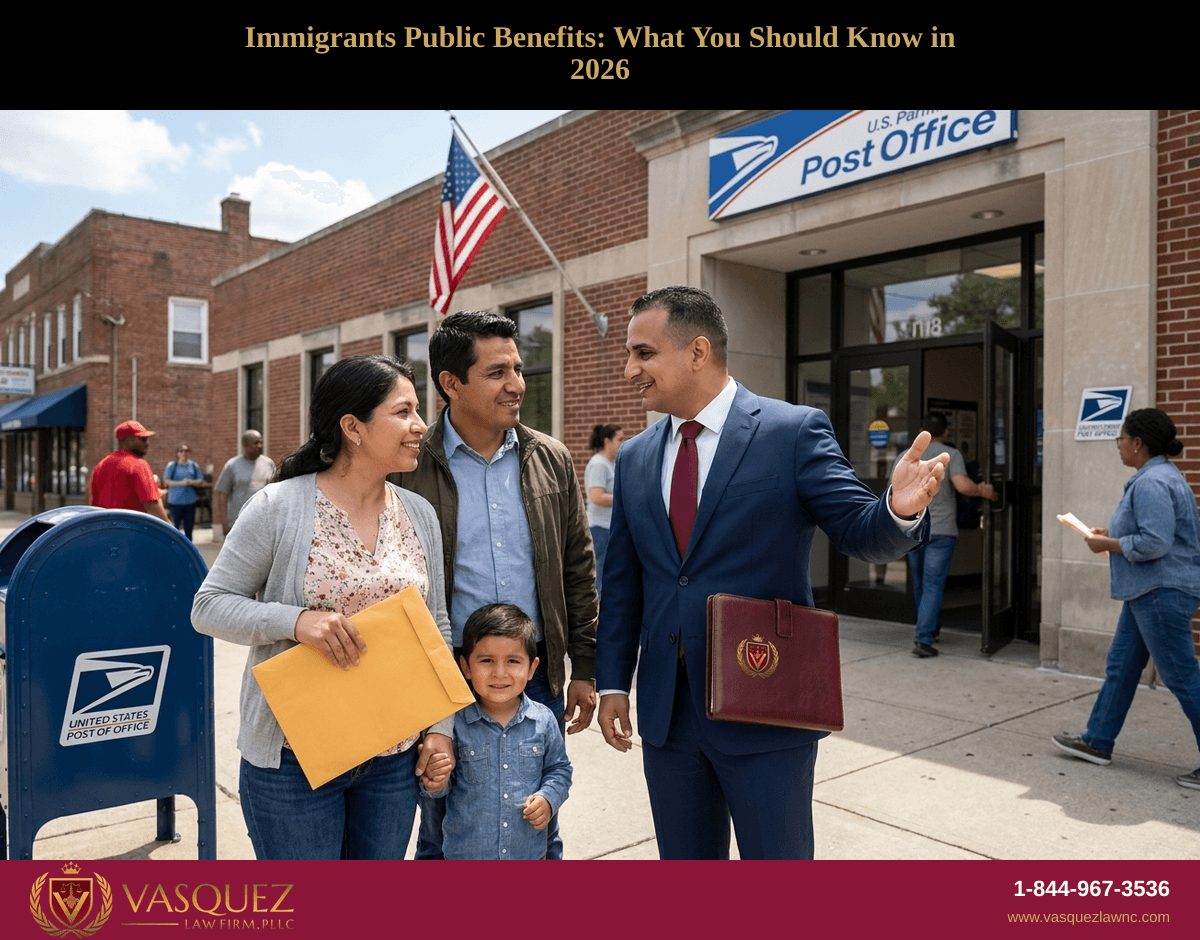
Immigrants Public Benefits: What You Should Know in 2026
Wondering about immigrants public benefits availability in 2026? Learn eligibility rules, common assistance types, and how to get help. Contact us now.
Published on July 24, 2026
Talk to an immigration attorney
Free call. A clear plan for your case.
Free & confidential · Se habla espanol · 24/7
Have questions? Talk to an attorney - free evaluation.
Call 1-844-967-3536Worried how the latest immigration news affects you?
Schedule a confidential case review with an immigration attorney - know exactly where you stand.
Immigrants Public Benefits: What You Should Know in 2026
Understanding immigrants public benefits is very important for newcomers and undocumented people in Orlando and Raleigh. This guide explains who can get help, common types of support like welfare and housing, and clears up wrong ideas about undocumented immigrants getting benefits. Updated for 2026, it covers federal rules and local details in North Carolina and Florida. This helps immigrants make smart choices about support programs they can use.
Need help with your case? Our experienced lawyers are ready to fight for you. Se Habla Español.
Or call us now: 1-844-967-3536
Quick Answer
Whether immigrants can get public benefits mostly depends on their legal status. Most federal welfare programs require people to have legal permission to be in the U.S. This limits access for undocumented immigrants. Some state and local programs in Orlando and Raleigh may give limited help. Knowing your rights and programs can protect your family and avoid legal problems.
- Federal benefits mostly require legal status
- Undocumented immigrants face many limits
- State and local programs may offer some help
- Emergency services often available no matter status
- Talk to an immigration lawyer for advice
Understanding Immigrants Public Benefits
Immigrants who come to the United States have many questions about who can get public benefits. In 2026, immigration law is still strict about who can get welfare, housing help, and other government aid. Federal law, especially 8 U.S.C. a7 1611 and a7 1621, limits most public benefits to "qualified aliens." A "qualified alien" means immigrants with legal permanent resident status or other protected immigration types.
For example, undocumented immigrantsa0a0a0a0a0a0a0a0those without legal permissiona0usually cannot get federal programs like Supplemental Nutrition Assistance Program (SNAP, formerly called food stamps), Temporary Assistance for Needy Families (TANF), and Medicaid. These rules affect families in Orlando and Raleigh who might want support.
Types of Public Benefits
- Cash welfare: TANF gives cash support but needs legal status.
- Food assistance: SNAP benefits also need qualified immigration status.
- Medicaid and CHIP: Health coverage programs mostly for qualified immigrants and children.
- Housing assistance: Public housing and Section 8 vouchers need legal residency.
- Emergency services: Undocumented immigrants can get emergency Medicaid and urgent help.
State and Local Differences
North Carolina and Florida (including Orlando) have some state and local programs that sometimes offer limited help without checking federal status. For example, community health centers give low-cost or free care no matter immigration status. Also, some cities have rental help or homelessness prevention programs that immigrants can use no matter their status.
But benefits vary a lot and often have strict rules or waiting times. It is very important to check current local policies or talk to a lawyer who knows immigration law in Orlando, NC, and FL.
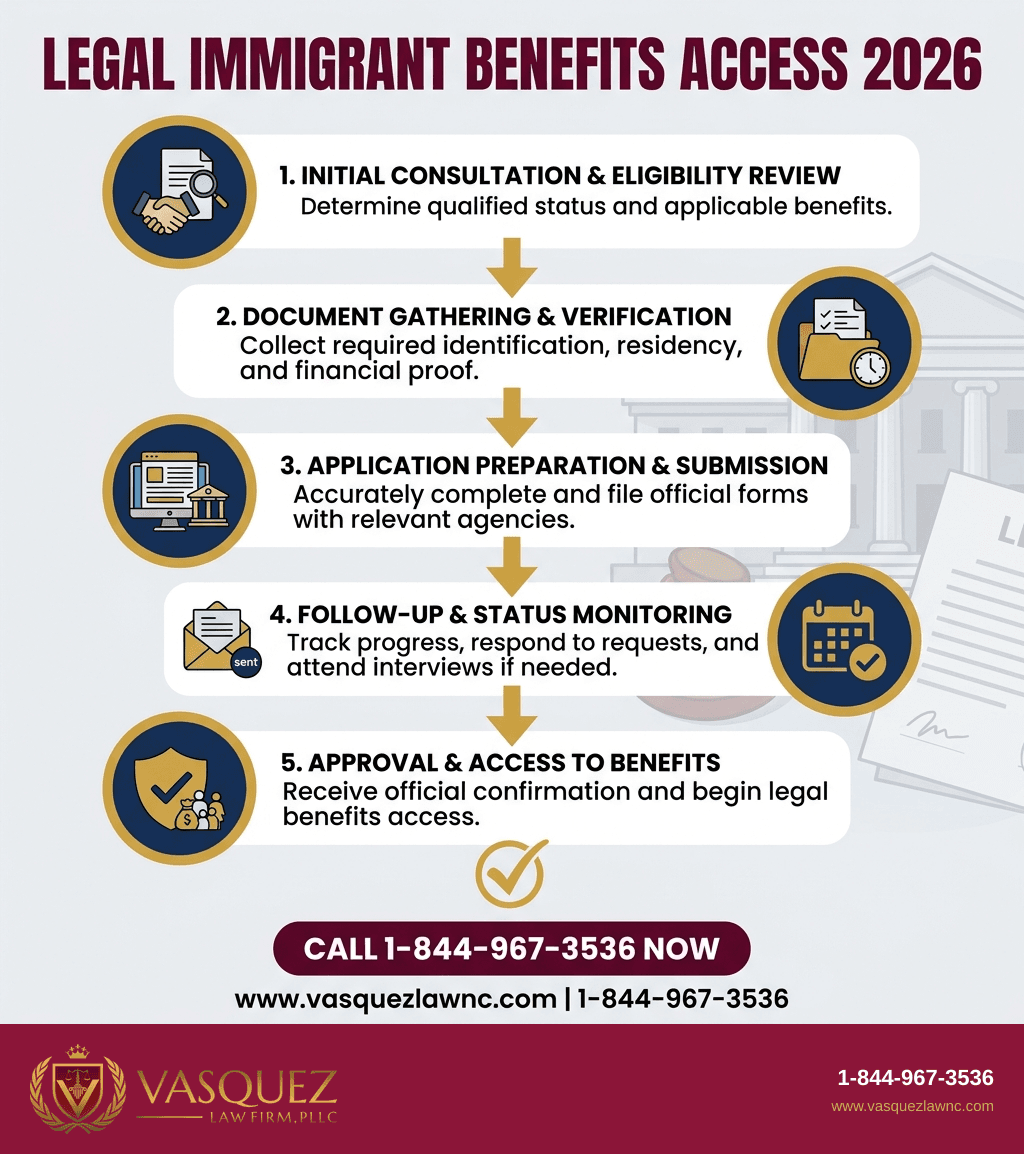
Key Steps to Access Benefits
Applying for public benefits as an immigrant has important steps to avoid mistakes and legal risks. Here is a simple process to follow in 2026 if you live in Orlando or Raleigh.
Step 1: Determine Your Eligibility
Look closely at your immigration status. Legal permanent residents, refugees, asylees, and some visa holders may qualify for certain benefits. Undocumented immigrants have very limited access, mostly to emergency services.
Step 2: Gather Required Documents
These usually include proof of immigration status, identity, income, and where you live. Documents like green cards, work permits, passports, and utility bills are common. Each program has its own list.
Step 3: Consult a Qualified Immigration Attorney
Before applying, it is smart to talk to a lawyer. A lawyer who knows immigration law in Orlando and Raleigh can help explain your eligibility, possible public charge issues, and how to apply.
Step 4: Submit Applications Carefully
Fill out forms correctly and give all needed proof. Keep copies of everything you send. Do not share extra information that might hurt your immigration case.
Step 5: Monitor Your Case and Follow Up
Watch for requests from agencies for more documents or interviews. Answer quickly to improve your chances and avoid delays.
Common Mistakes to Avoid
- Assuming eligibility: Many immigrants wrongly think they qualify for all benefits. Wrong ideas can cause legal trouble.
- Ignoring public charge effects: Getting some benefits might affect immigration status applications under INA a7 212(a)(4).
- Sending incomplete applications: Missing documents can cause denials.
- Not getting legal advice: Federal and local laws are complex; expert help is very important.
- Trusting unverified sources: Wrong information can cause fear or missed chances.
- Not thinking about state differences: Benefits change by placea0a0what works in Raleigh may not in Orlando.
If you remember only one thing: Always check your eligibility and talk to an immigration lawyer before applying for benefits. This helps avoid risking your immigration status or legal cases.
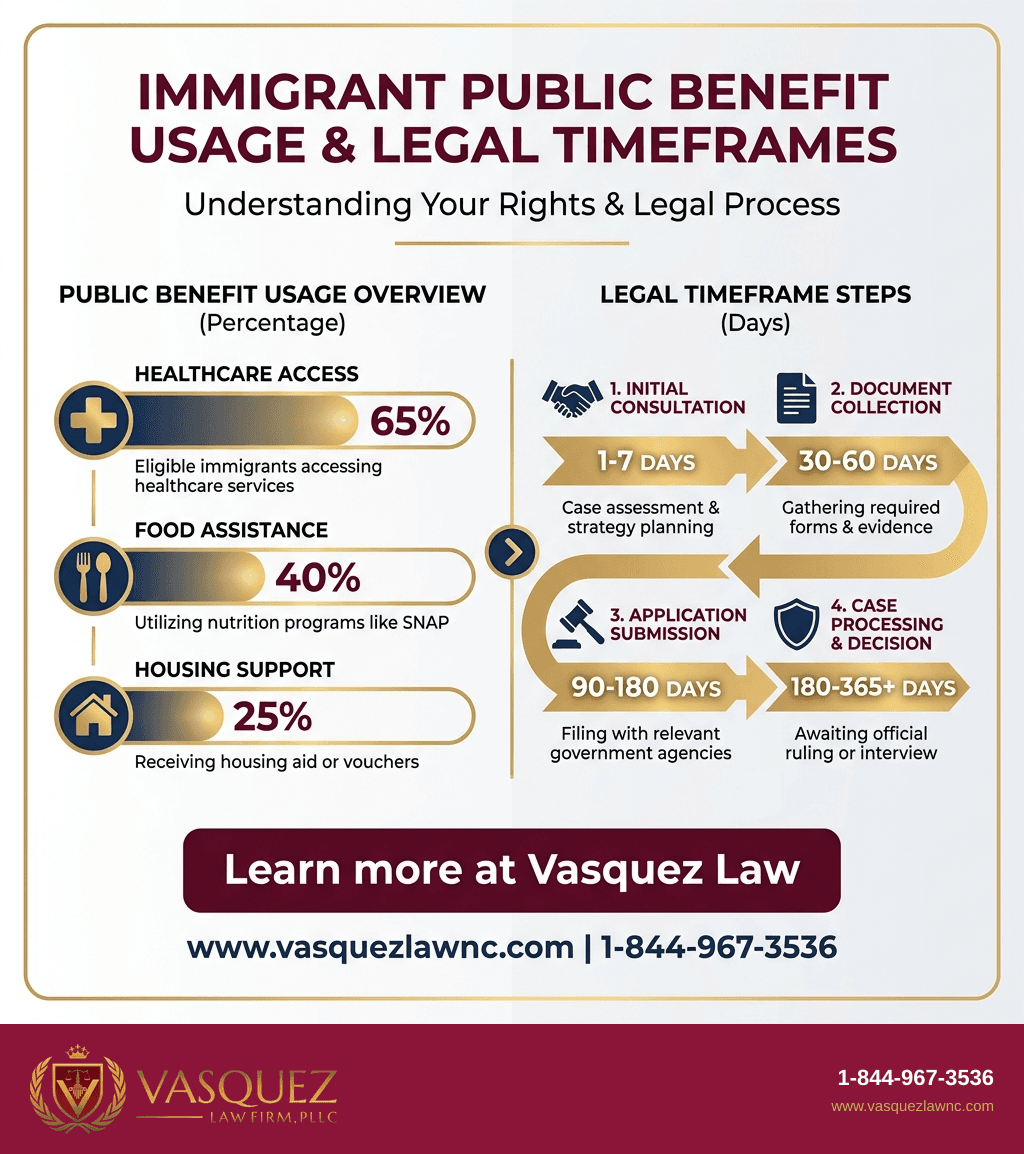
Timeline and What to Expect
How long public benefit applications take depends on the program, agency, and your situation. For example, SNAP applications usually take 30 days, but emergency decisions might happen in 7 days. Medicaid enrollment depends on state rules and if they ask for more documents.
Changes in legal status or new papers can affect eligibility and timing. Talking to a lawyer in Orlando or Raleigh early can help you understand what to expect for each program.
- Application submission: 1 day
- Initial processing: 7 to 30 days depending on program
- Interview or document request: 1 to 3 weeks (if needed)
- Final decision: within 30-45 days
Frequently Asked Questions
Can undocumented immigrants get government assistance?
Undocumented immigrants usually cannot get most federal public benefits. But they might get limited emergency services and some local help. Eligibility depends on immigration status under federal law 8 U.S.C. a7 1611.
Do immigrants get more welfare than U.S. citizens?
Immigrants do not get more welfare than citizens. Eligibility depends on legal status and income, not citizenship. Many immigrants cannot get benefits like SNAP or TANF.
Can illegal immigrants get housing assistance?
Most federal housing programs need legal residency; undocumented immigrants usually cannot get them. Some local emergency housing may be available.
What benefits do immigrants get when they come to America?
Qualified immigrants may get programs like Social Security, Medicaid, or SNAP. Access depends on immigration type and state rules.
How are illegal immigrants getting government assistance?
Mostly through emergency services, local charity programs, or indirect help when some family members qualify legally.
Can you get welfare if you are not a US citizen?
Legal permanent residents and some immigrants qualify for welfare depending on program rules; undocumented immigrants mostly do not.
What percentage of immigrants receive public assistance?
About 15-20% of immigrant households get assistance, mostly legal residents or naturalized citizens. Undocumented use is much lower.
Are there exceptions for undocumented immigrants to receive benefits?
Yes, emergency medical care and some state-specific benefits may be exceptions, including programs for children or prenatal care.
Jurisdiction notes
Federal Framework
Federal law under 8 U.S.C. a7a7 1611 and 1621 limits many public benefits to "qualified aliens." Immigration types like legal permanent residents, refugees, and asylees usually qualify. Undocumented immigrants do not.
North Carolina and Florida Notes
North Carolina and Florida (including Orlando) have some limited non-federal help programs. These include state-funded health care or emergency housing support. They often are available no matter immigration status. These programs vary by location and may have rules.
Nationwide Notes
Federal benefit rules are the same across the country. But state and local programs can be very different. Always check the rules where you live before applying.
When to call a lawyer now
- If you are not sure about your eligibility for public benefits
- If you got a notice denying benefits because of immigration status
- If you have questions about public charge issues affecting green card or visa applications
- If your application needs legal help or appeals
- If you are applying to change your status and worry about benefit use affecting your case
- If you live in Orlando or Raleigh and want to know local help options
- If you need help separating public assistance issues from deportation risks
- If you want to know your family's rights under federal and state laws
About Vasquez Law Firm
At Vasquez Law Firm, we mix care with strong representation. Our motto "Yo Peleoae" (I Fight) shows our promise to stand up for your rights.
- Bilingual Support: Se Habla Espaf1ol a0a0Spanish-speaking lawyers and staff available
- Service Areas: North Carolina, plus Florida and nationwide for immigration
- Experience: Over 15 years helping clients with hard legal matters
- Results: Thousands of successful cases in many practice areas
Attorney Trust and Experience
Attorney Jessica Vasquez, JD, is licensed in North Carolina and Florida. She has 15 years of experience helping immigrants in Raleigh, NC, and Orlando, FL. She knows the details of immigrants public benefits and guides clients with personal care.
Don't wait to get the help you deserve. Call us now for quick assistance.
Se Habla Espaf1ol
Sources and References
- U.S. Citizenship and Immigration Services
- Executive Office for Immigration Review
- Legal Information Institute
Take the first step toward justice today. Our team is ready to help.
Start Your Free Evaluation Now
Call us: 1-844-967-3536
Se Habla Espaf1ol - Estamos aqued para ayudarle.
If you need legal assistance, learn more about our immigration law practice, or call us at 1-844-967-3536 for a free evaluation.


William Vasquez
Founder & CEO, Vasquez Law Firm, PLLC
William Vasquez is the founder and CEO of Vasquez Law Firm, PLLC, a results-driven firm specializing in immigration, criminal defense, personal injury, and workers' compensation. A U.S. Air Force veteran and recipient of the Joint Service Achievement Medal, William is dedicated to fiercely fighting for his clients' rights.
Related Legal Services
Need legal help? Learn more about our immigration law practice, or contact us for a free evaluation.
You can also visit North Carolina immigration law firm for more information.