Cannabis Possession in North Carolina: What Happens in 2026?
Facing cannabis possession charges in North Carolina? Learn the current laws, penalties, and defenses for 2026. Get a free evaluation from expert criminal defense lawyers.
Published on September 8, 2026
Protect your record and your freedom
Free, confidential review. 24/7.
Free & confidential · Se habla espanol · 24/7
Have questions? Talk to an attorney - free evaluation.
Call 1-844-967-3536Protect Your Record and Your Freedom
A confidential case review - available 24/7 for emergencies.
Cannabis Possession in North Carolina: What Happens in 2026?
Cannabis possession remains a frequent criminal charge in North Carolina in 2026. Despite ongoing debates about legalization, state law classifies cannabis as a controlled substance subject to criminal prohibitions. This article explains the current cannabis possession laws in the Smithfield area, possible legal consequences, and steps you can take if charged. Understanding these rules can help protect your rights and preserve your future.
Need help with your case? Our experienced attorneys are ready to fight for you. Se Habla Español.
Or call us now: 1-844-967-3536
Quick Answer
In North Carolina, cannabis possession remains illegal under the Controlled Substances Act in 2026. Possession of any amount can lead to misdemeanor or felony charges depending on the quantity and prior offenses. Legal defenses vary, and early legal advice significantly improves outcomes.
- Possession is a criminal offense under the Controlled Substances Act
- Penalties increase with amount and prior convictions
- Smithfield is in Johnston County, applying state law
- Federal law also prohibits cannabis possession
- Legal help is crucial for navigating charges and defenses
Understanding Cannabis Possession Laws in North Carolina
Nearly one in four drug arrests nationally remain for cannabis possession, highlighting its prevalence and the continuing importance of understanding legal risks. In North Carolina, the Controlled Substances Act (N.C. Gen. Stat. § 90-95) classifies cannabis as a Schedule VI controlled substance, rendering possession illegal under state law.
Smithfield, located in Johnston County, follows these laws strictly. While some states have legalized or decriminalized marijuana, North Carolina has not. This means individuals found with cannabis remain subject to criminal prohibitions and face charges ranging from misdemeanors for small amounts to felonies for larger quantities or trafficking.
The Controlled Substances Act and Cannabis
The Act regulates marijuana possession by quantity, intent, and prior offense status. For example, possession of less than 0.5 ounces of marijuana is usually charged as a Class 3 misdemeanor, punishable by fines and up to 20 days in jail. Possession exceeding 0.5 ounces but less than 1.5 ounces is a Class 1 misdemeanor with potential for longer jail sentences and higher fines. Above 1.5 ounces, felony charges may apply, significantly raising legal risks.
Federal Law Implications
Along with state laws, cannabis remains illegal federally as a Schedule I drug under the Controlled Substances Act (21 U.S.C. § 844). While the federal government often focuses on large-scale trafficking, any possession violates federal law and could impact immigration or federal employment cases. Enforcement in North Carolina typically follows state statutes, but federal charges remain possible in severe cases.
Medical Marijuana Exceptions
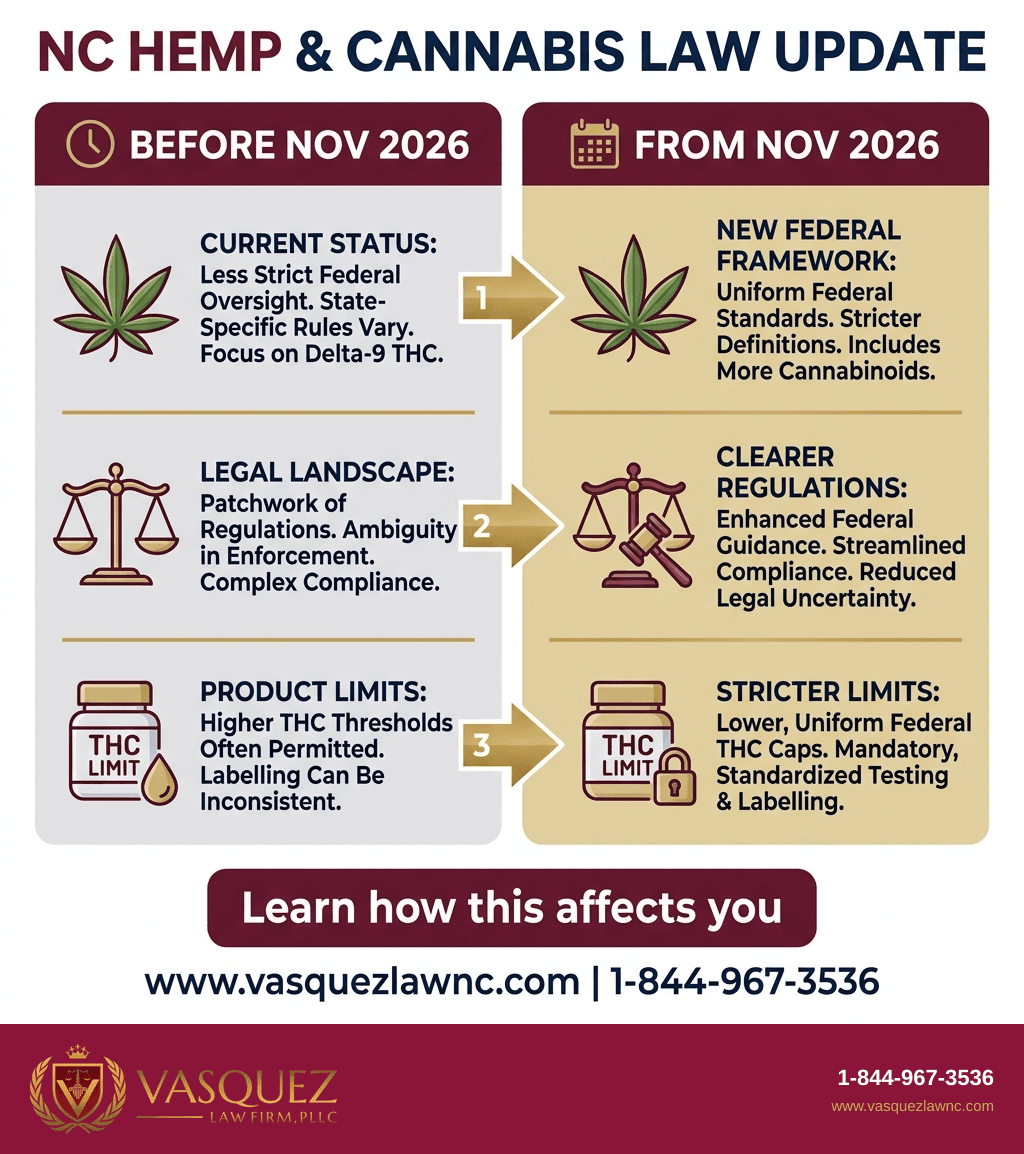
North Carolina permits limited use of CBD oil for specific medical conditions but does not have a comprehensive medical marijuana program. Patients must comply strictly with the law to avoid criminal liability. Possession outside these narrow exceptions is subject to prosecution.
Understanding the dual state and federal laws and the specific quantities involved is crucial when facing cannabis possession charges in Smithfield. Early legal advice can clarify your rights under both state and federal frameworks.
Step-by-Step: What to Do if Charged with Cannabis Possession
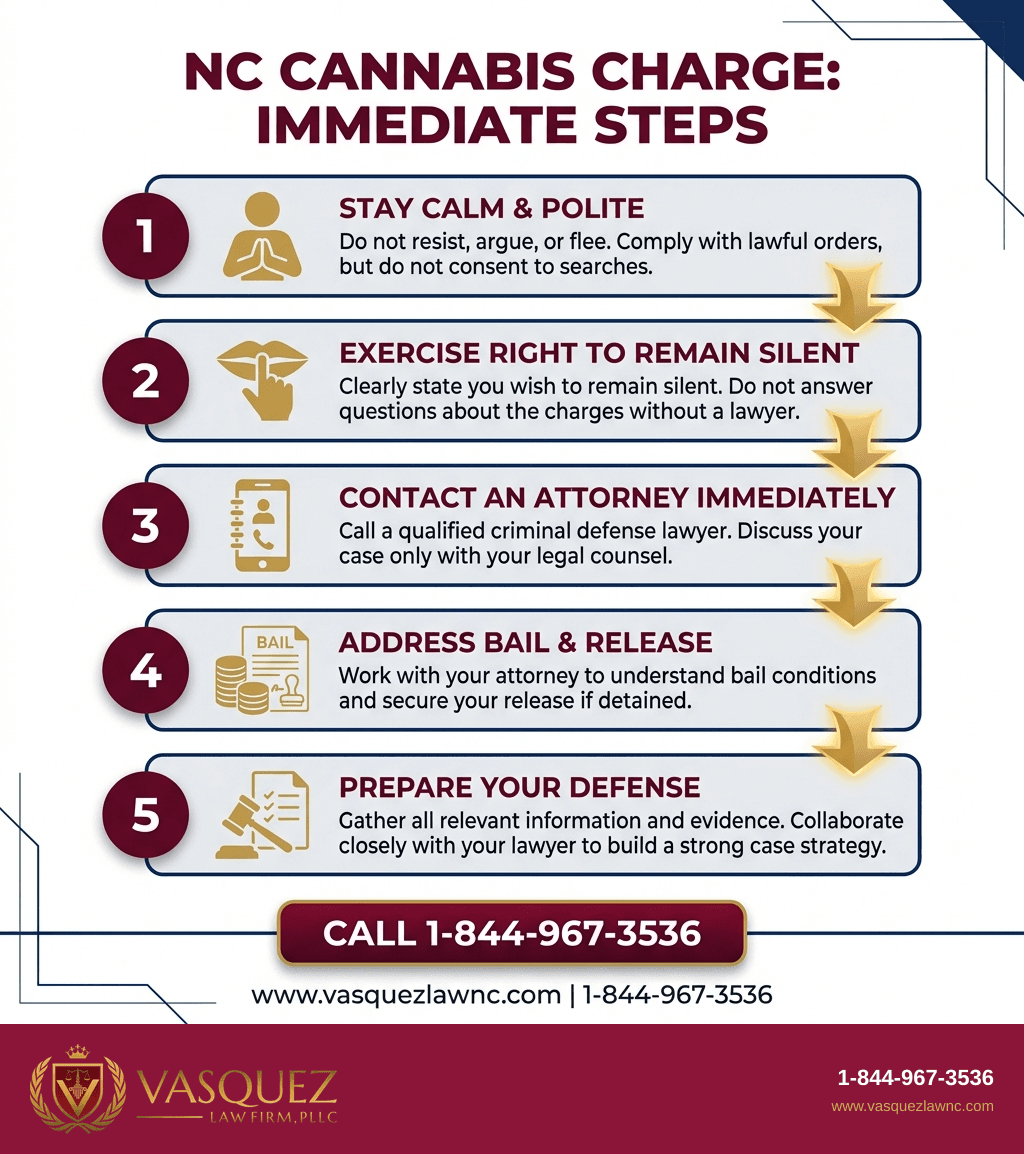
- Remain calm and respectful during police encounters. Always know your rights but comply to avoid escalation.
- Do not consent to searches without a warrant. Illegal searches can be a key defense.
- Request an attorney immediately if arrested. Do not answer questions without legal counsel.
- Contact a criminal defense attorney experienced with cannabis cases in Johnston County. Early representation helps protect your rights and evidence.
- Gather Documents and Evidence. Collect any documentation, witness info, and details about the search or arrest.
- Attend all court dates promptly. Failure to appear can worsen legal issues.
- Explore possible defenses. Your attorney may challenge the legality of the seizure or suggest alternative sentencing like diversion programs.
- Consider plea agreements carefully. Sometimes negotiating a reduced charge or sentence is the best option.
Following these steps can improve your outcome in a cannabis possession case. Learn more about our criminal defense legal services and how they can assist your defense.
Common Mistakes in Cannabis Possession Cases
- Talking to police without a lawyer. Anything said can be used as evidence. Always request counsel first.
- Failing to appear in court. Missing hearings leads to warrants and more serious charges.
- Consenting to illegal searches. Know your rights; do not voluntarily allow a search.
- Ignoring the seriousness of possession charges. Even misdemeanors affect your criminal record and future opportunities.
- Not seeking an experienced criminal defense attorney. Local legal expertise in Johnston County is critical.
- Assuming medical marijuana laws protect you in NC. Exceptions are very narrow and not a general defense.
- Overlooking potential immigration consequences. Charges may impact visa holders or immigrants; consult specialized counsel.
- Waiting too long to act. Defense preparation is time-sensitive; delay can hurt your case.
If you only remember one thing: Do not face cannabis possession charges alone. Early legal help matters.
Timeline and What to Expect During the Legal Process
- Arrest and Booking: Immediate after police find cannabis. You may be held or released on bail.
- Initial Court Appearance: Usually within days or weeks, the charges will be formally read, and bail/bond issues addressed.
- Pre-trial Phase: Your attorney investigates evidence, file motions to suppress if applicable, and negotiates with the prosecutor.
- Plea Negotiation or Trial: Many cases resolve at this stage to lessen penalties; some require jury trial.
- Sentencing or Case Dismissal: Depending on outcome, penalties may be imposed or charges dropped. Diversion programs may be available.
Johnston County courts follow a regular schedule, but complex cases may take longer. For a specific timeline, consult local court resources or your attorney contact our Smithfield office.
When to Call a Lawyer Immediately
- Arrested or charged with cannabis possession in Johnston County.
- Police conducted a search or seizure involving your property.
- You face enhanced penalties due to prior drug convictions.
- Immigration status could be affected by your charge.
- You need advice on dealing with court proceedings or pre-trial motions.
- Received a summons or notice about a pending drug charge.
- Confused about your rights following a police encounter or arrest.
- Considering plea agreements or diversion programs and want professional guidance.
About Vasquez Law Firm
At Vasquez Law Firm, we combine compassion with aggressive representation. Our motto "Yo Peleo®" (I Fight) reflects our commitment to standing up for your rights.
- Bilingual Support: Se Habla Español — Spanish-speaking attorneys and staff available
- Service Areas: North Carolina, including Johnston County and Smithfield
- Experience: Over 30 years helping clients navigate complex criminal defense matters
- Results: Thousands of cases handled, emphasizing detailed, strategic defense
Attorney Trust and Experience
William J. Vásquez is admitted to the North Carolina State Bar (2011) and to the U.S. Courts of Appeals for the 4th, 5th, and 11th Circuits. The firm has provided dedicated criminal defense representation since 2011, with personalized attention to each client's case.
Don't wait to get the help you deserve. Call us now for immediate assistance. Se Habla Español.
Frequently Asked Questions
What are the current cannabis laws in North Carolina?
As of 2026, cannabis is illegal for recreational use in North Carolina. The Controlled Substances Act classifies marijuana as a Schedule VI substance, making possession subject to criminal penalties. Only limited medical use of CBD oil is legal. Charges vary by amount and prior convictions.
What penalties can I face for cannabis possession in Smithfield?
Penalties range from Class 3 misdemeanors with fines and short jail terms for small amounts, to felonies for larger quantities. Repeat offenses typically result in harsher punishments including probation and drug treatment requirements.
Can I be charged with cannabis possession for a small amount?
Yes. North Carolina law prohibits possession of any amount of cannabis. Even small amounts intended for personal use can lead to criminal charges, depending on the circumstances of the arrest or search.
What defenses can I use against possession charges?
Defenses include illegal search and seizure, lack of knowledge or possession, and procedural errors. Hiring an attorney early can help uncover possible defenses tailored to your situation.
How does a possession charge affect immigration status?
Drug convictions, including cannabis possession, can lead to removal, inadmissibility, or denial of immigration benefits. It is essential to consult with both criminal defense and immigration attorneys if you have immigration concerns.
How long does a possession case take in Johnston County?
Cases typically take months to over a year depending on complexity, court availability, and defense strategy. Early legal involvement can sometimes speed case resolution or avoid trial.
Is cannabis possession treated differently by state and federal law?
Yes. Cannabis is illegal federally and in North Carolina. Federal prosecutors usually focus on trafficking, but state law enforces possession laws strictly. Both layers affect potential outcomes and penalties.
What should I do immediately after a cannabis possession arrest?
Remain calm, do not answer questions without a lawyer, and avoid consenting to searches. Contact a knowledgeable criminal defense attorney promptly to protect your rights and prepare a defense.
Sources and References
- North Carolina Courts
- United States Department of Justice Civil Rights Division
- Legal Information Institute
Take the first step toward justice today. Our team is standing by to help. Se Habla Español.
Start Your Free Evaluation Now
Call us: 1-844-967-3536
Se Habla Español - Estamos aquí para ayudarle.


William Vasquez
Founder & CEO, Vasquez Law Firm, PLLC
William Vasquez is the founder and CEO of Vasquez Law Firm, PLLC, a results-driven firm specializing in immigration, criminal defense, personal injury, and workers' compensation. A U.S. Air Force veteran and recipient of the Joint Service Achievement Medal, William is dedicated to fiercely fighting for his clients' rights.
Related Legal Services
Need legal help? Learn more about how our defense attorneys can help, or contact us for a free evaluation.
You can also visit North Carolina criminal defense lawyers for more information.