Afghan Refugees: What You Should Know About Their Journey in 2026
Learn about Afghan refugees' status and legal challenges in 2026. Discover how to support or seek help. Contact Vasquez Law for a free evaluation.
Published on August 31, 2026
Talk to an immigration attorney
Free call. A clear plan for your case.
Free & confidential · Se habla espanol · 24/7
Have questions? Talk to an attorney - free evaluation.
Call 1-844-967-3536Worried how the latest immigration news affects you?
Schedule a confidential case review with an immigration attorney - know exactly where you stand.
Afghan Refugees: What You Should Know About Their Journey in 2026
As of 2026, Afghan refugees face one of the most complex humanitarian crises worldwide. This article covers who Afghan refugees are, why they are fleeing Afghanistan, and what legal options exist in the United States, including North Carolina and Orlando, FL. If you are an Afghan refugee or advocate, understanding these issues is vital.
Need help with your case? Our experienced attorneys are ready to fight for you. Se Habla Español.
Or call us now: 1-844-967-3536
Quick Answer
Afghan refugees are individuals fleeing violence and persecution in Afghanistan. Many have resettled in countries like the U.S., Pakistan, and Iran. In 2026, Afghan refugees seek asylum and other protections, but legal processes are complex and require expert help.
- Pakistan hosts the largest number of Afghan refugees worldwide.
- Violence, political instability, and threats drive the refugee crisis.
- U.S. offers asylum, refugee status, and special visas to eligible Afghans.
- Legal help is crucial to navigate asylum and immigration laws.
- Vasquez Law Firm provides guidance to Afghan refugees in Raleigh and Orlando.
Understanding Afghan Refugees
Afghan refugees are people who have been forced to leave Afghanistan due to ongoing conflict, human rights abuses, and insecurity. The Taliban’s return to power in 2021 led to a massive increase in the number of Afghans fleeing the country. Many fear persecution based on ethnicity, religion, or political opinion.
Globally, millions of Afghans live outside their homeland, primarily in neighboring countries like Pakistan and Iran. Others have resettled in Western nations such as the United States, the United Kingdom, and India. Each country has its legal framework for refugee protection and asylum.
For Afghan refugees in America, understanding U.S. immigration law is key. The U.S. government offers various legal protections, including refugee status under the Refugee Act of 1980, asylum under 8 U.S.C. § 1158, and the Special Immigrant Visa (SIV) program for those who assisted U.S. forces or agencies.
Why Afghan Refugees Flee
Violent conflict and human rights violations are the primary drivers. According to the United Nations High Commissioner for Refugees (UNHCR), over 2.6 million Afghan refugees worldwide remain displaced. Ethnic minorities and women activists face particular risks. Economic collapse and lack of basic services add urgency to flee.
Regional Refugee Populations
Pakistan hosts approximately 1.5 million Afghan refugees, making it the top country of asylum. Iran follows with nearly one million refugees. India, while not a main host, has accepted some Afghan asylum seekers, often on humanitarian grounds. The UK has also resettled many Afghan evacuees after the U.S. withdrawal.
Afghan Refugees in the U.S.
The U.S. admitted tens of thousands of Afghan refugees following the 2021 evacuation. Many entered through the Special Immigrant Visa program or claimed asylum. However, processing delays, legal complexities, and changing policies have made the experience challenging for many.
If you are an Afghan refugee in Raleigh, NC or Orlando, FL, it is vital to understand your rights and responsibilities under immigration law. Vasquez Law Firm specializes in immigration services, helping clients navigate these complex processes.
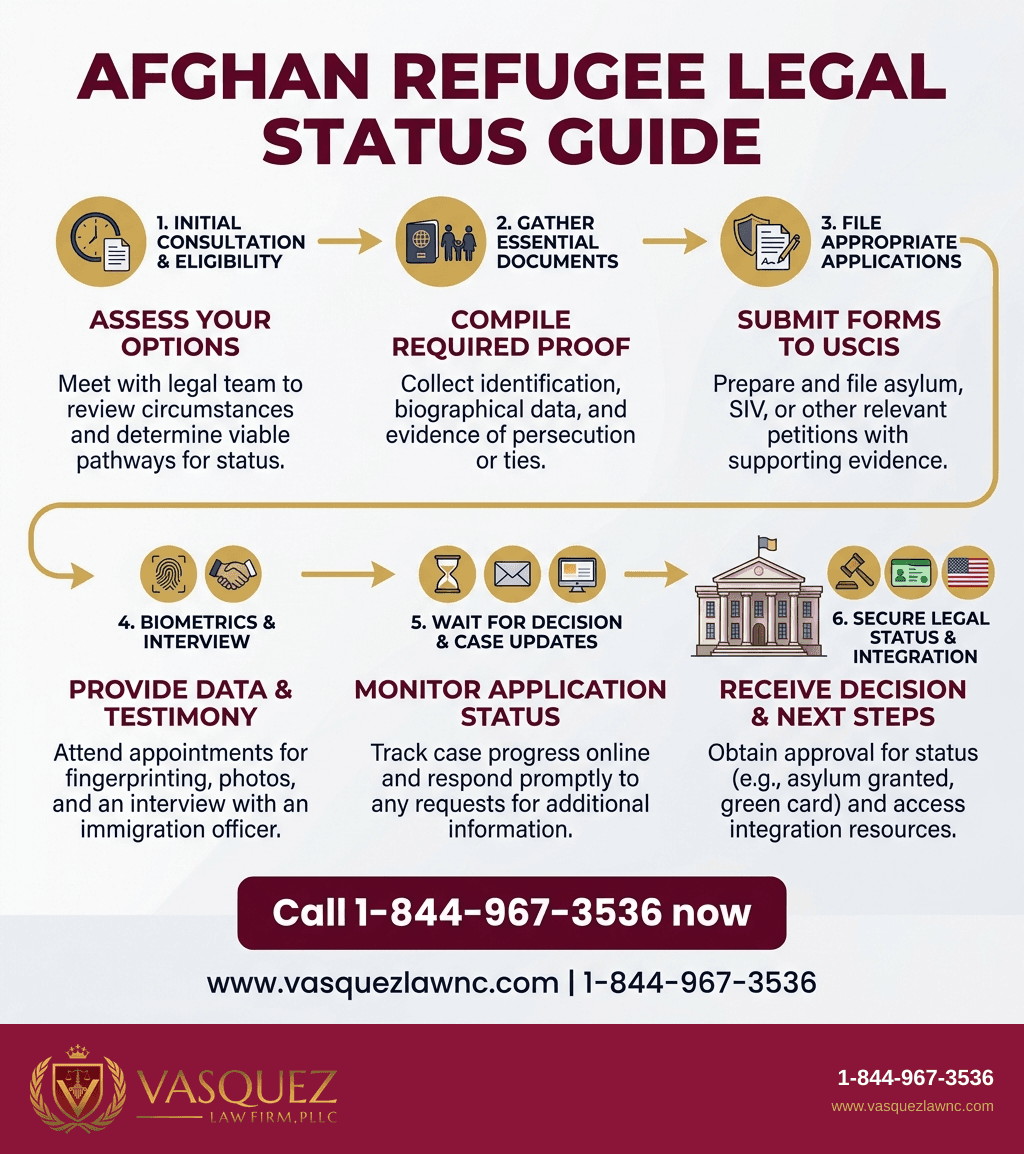
Key Steps for Afghan Refugees in America
Arriving in the U.S. is just the beginning. Afghan refugees must follow several steps to secure lawful status and integrate into their new communities. Below is an overview of critical steps:
1. Register with Authorities
New arrivals should register with USCIS and the Office of Refugee Resettlement if applicable. Registration establishes eligibility for benefits and legal protections.
2. Apply for Asylum or Refugee Status
Most Afghan refugees apply for asylum by filing Form I-589 within one year of entry, per 8 U.S.C. § 1158. Refugee status may be granted before arrival under the U.S. Refugee Admissions Program.
3. Obtain Work Authorization
Afghan refugees who have filed for asylum or hold refugee status can apply for employment authorization using Form I-765. This enables legal employment while waiting for their case resolution.
4. Access Benefits and Support Services
Refugees can apply for healthcare, housing assistance, education, and other social services. Local nonprofits and legal firms like Vasquez Law provide vital support.
5. Consider Adjustment of Status
After one year in refugee or asylum status, Afghan refugees may apply for adjustment of status to become lawful permanent residents under 8 U.S.C. § 1255 if eligible.
Our immigration attorneys in Raleigh can guide you through each step and help you meet deadlines and documentation requirements.
Common Legal Mistakes Afghan Refugees Make
Navigating immigration law is complex. Afghan refugees often encounter pitfalls that can delay or jeopardize their cases. Avoiding these mistakes is essential.
- Missing Deadlines: Asylum applications must be filed within one year of arrival. Missing this window requires proving extraordinary circumstances.
- Incomplete Applications: Failing to provide all required evidence or documentation can lead to denials.
- Inaccurate Information: Inconsistencies or errors in applications can result in credibility issues.
- Ignoring Legal Notices: Not responding to USCIS or immigration court requests causes cases to be dismissed.
- Delaying Legal Help: Early consultation with immigration lawyers improves the chance of success.
- Unauthorized Employment: Working without authorization risks removal and future bar from legal status.
- Failing to Update Address: USCIS requires updated contact info. Failure may lead to missed notices.
If you only remember one thing: consult an immigration attorney as soon as possible to ensure your immigration rights are protected.
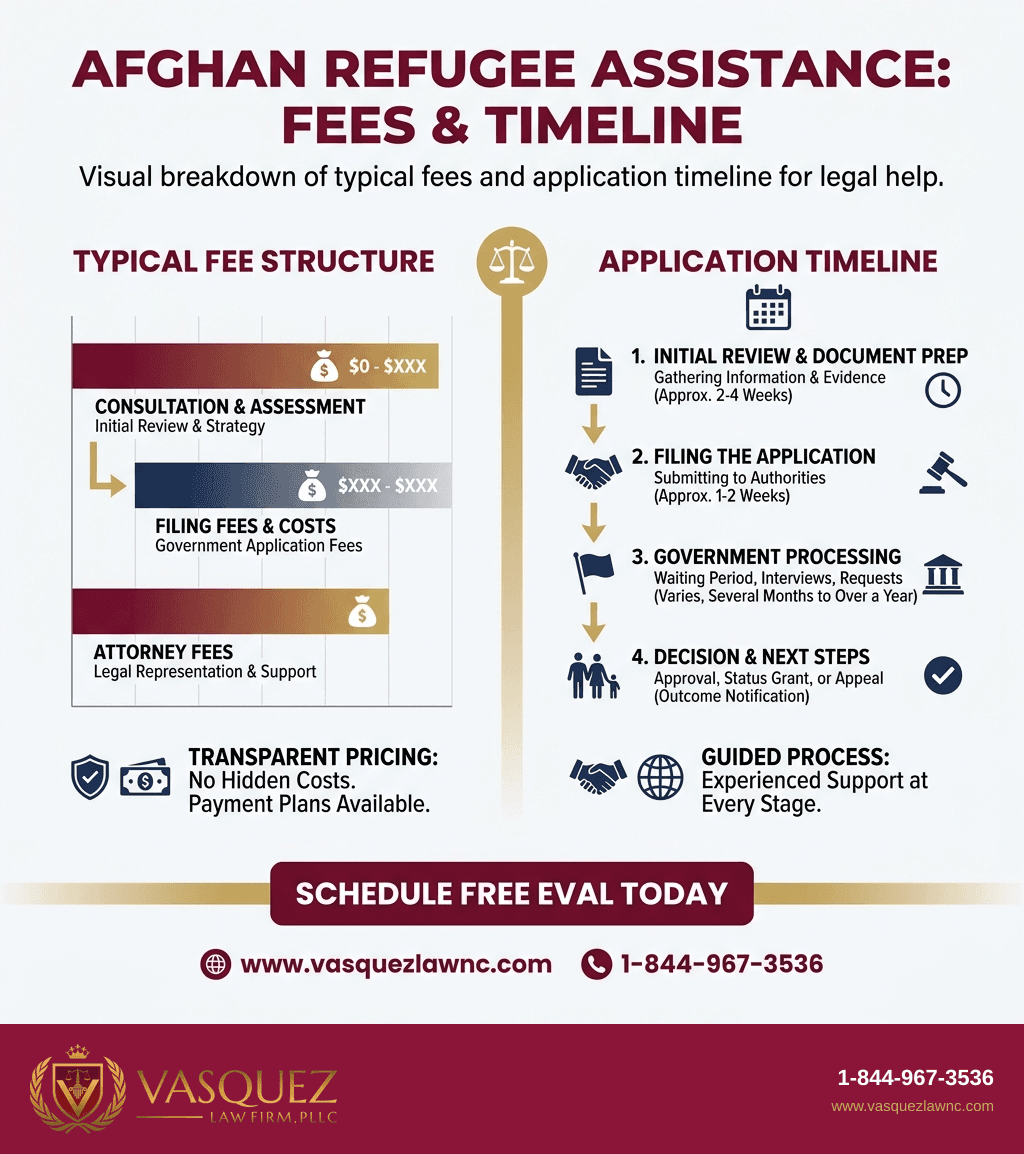
Timeline to Resettlement and Legal Status
The resettlement journey varies significantly based on legal pathways and case complexity. Generally, the timeline is as follows:
- Pre-arrival processing: For refugee or Special Immigrant Visa cases, this may take 6 to 18 months, including interviews, background checks, and health screenings.
- Arrival to asylum filing: Afghan refugees must file asylum within 1 year of U.S. arrival.
- Employment authorization: USCIS processing for Form I-765 takes 3 to 6 months, depending on field office; check current processing times at USCIS Processing Times.
- Asylum adjudication or hearing: Can take 1 to 3 years, depending on court backlog.
- Adjustment of status: After 1 year of asylum/refugee status, USCIS may take 8 to 14 months to process permanent residency applications.
Each case differs. Patience and legal guidance are essential to navigate this complex timeline successfully.
Costs and Fees: What Impacts the Price
Immigration processes involve various fees and costs. Understanding these helps Afghan refugees budget appropriately:
- Application fees: USCIS charges fees for forms including I-589 (asylum – no fee), I-765 (work permit – $410 as of 2026), and I-485 (adjustment of status – $1,140 plus biometrics).
- Legal fees: Hiring an attorney typically ranges from $1,500 to $5,000 or more, depending on case complexity and services.
- Medical exams and tests: Required for refugee and adjustment cases, costing between $200 and $500.
- Travel and documentation: Costs may include document translation, travel to appointments, and mailing fees.
Many Afghan refugees qualify for fee waivers or pro bono assistance. Early consultation with Vasquez Law Firm can clarify your options.
Jurisdiction Notes
Federal Framework
Immigration law, including asylum and refugee status, is governed at the federal level. The Department of Homeland Security (DHS) and its agency USCIS process applications. The Executive Office for Immigration Review (EOIR) manages immigration court proceedings. Federal statutes such as the Immigration and Nationality Act (INA), particularly 8 U.S.C. §§ 1158 and 1255, shape eligibility and processes.
North Carolina and Florida Practical Notes
Vasquez Law Firm assists Afghan refugees located in Raleigh, NC and Orlando, FL with local application preparation, hearings, and support services. Regional USCIS field offices serve these areas. Refugees may access state and local social programs. Due to differing court backlogs and policies, legal guidance tailored to the specific location is invaluable.
When to Call a Lawyer Now
- If you have missed a filing deadline for asylum or adjustment of status.
- If USCIS sends a Request for Evidence (RFE) or Notice of Intent to Deny.
- If you receive a Notice to Appear in immigration court.
- If you experience difficulties obtaining work authorization or renewing documents.
- If you face detention or removal proceedings.
- If you are unsure about your eligibility for Special Immigrant Visas or Temporary Protected Status.
- If you are uncertain about legal requirements or documentation preparation.
- If you encounter discriminatory treatment or abuse during immigration processing.
About Vasquez Law Firm
At Vasquez Law Firm, we combine compassion with aggressive representation. Our motto "Yo Peleo®" (I Fight) reflects our commitment to standing up for your rights.
- Bilingual Support: Se Habla Español — Spanish-speaking attorneys and staff available
- Service Areas: North Carolina, plus Florida and nationwide for immigration
- Experience: Over 30 years helping clients navigate complex legal matters
- Results: Thousands of successful cases across multiple practice areas
Attorney Trust and Experience
William J. Vásquez is admitted to the North Carolina State Bar (2011) and to the U.S. Courts of Appeals for the 4th, 5th, and 11th Circuits. The firm has provided dedicated legal representation since 2011, with personalized attention to each client's case.
Don't wait to get the help you deserve. Call us now for immediate assistance.
Se Habla Español
Frequently Asked Questions
What country has the most Afghan refugees?
Pakistan hosts the largest number globally with approximately 1.5 million registered Afghan refugees. Iran follows closely. Their proximity to Afghanistan and established Afghan communities allow easier access for those fleeing conflict and persecution.
Why are refugees fleeing Afghanistan?
Conflict, persecution from the Taliban and other groups, political instability, and economic collapse force Afghans to seek safe haven abroad. These conditions escalated after the U.S. military withdrawal in 2021.
What is the current status of Afghan refugees in the U.S.?
Many Afghan refugees are present with Special Immigrant Visas or asylum claims. While some have permanent status, many await adjudication, often facing long wait times and legal complexities that require expert assistance.
Is the U.S. deporting Afghan refugees?
Generally, no. Deportation of Afghan refugees is uncommon due to humanitarian considerations. Those with pending cases or valid protection status are typically allowed to remain during case reviews.
How do Afghan refugees apply for asylum in the U.S.?
They must file Form I-589 within one year of entry to USCIS, submitting proof of fearing persecution. The process includes interviews and may require hearings in immigration court.
Can Afghan refugees work legally in North Carolina and Florida?
Yes, with valid work authorization which is obtainable after asylum application approval or through refugee status. Work permits allow legal employment while cases proceed.
What support services are available for Afghan refugees in Raleigh?
Legal assistance, housing, health care, and community integration programs are accessible. Vasquez Law Firm supports refugees with immigration cases and connects them to local resources.
What should Afghan refugees avoid during the immigration process?
Avoid missing deadlines, submitting incomplete applications, unauthorized work, and neglecting to consult experienced attorneys. Early legal help significantly improves success chances.
Sources and References
- U.S. Citizenship and Immigration Services
- Executive Office for Immigration Review
- Legal Information Institute
Take the first step toward justice today. Our team is standing by to help.
Start Your Free Evaluation Now
Call us: 1-844-967-3536
Se Habla Español - Estamos aquí para ayudarle.

William Vasquez
Founder & CEO, Vasquez Law Firm, PLLC
William Vasquez is the founder and CEO of Vasquez Law Firm, PLLC, a results-driven firm specializing in immigration, criminal defense, personal injury, and workers' compensation. A U.S. Air Force veteran and recipient of the Joint Service Achievement Medal, William is dedicated to fiercely fighting for his clients' rights.
Related Legal Services
Need legal help? Learn more about speak with an immigration lawyer, or contact us for a free evaluation.
You can also visit our North Carolina immigration practice for more information.