Immigrant Families: How Immigration Law Affects You in 2026
Discover how immigration law impacts immigrant families in 2026. Learn key steps to protect your family. Contact Vasquez Law for a free consultation today.
Published on June 25, 2026· Updated June 25, 2026
Talk to an immigration attorney
Free call. A clear plan for your case.
Free & confidential · Se habla espanol · 24/7
Have questions? Talk to an attorney - free evaluation.
Call 1-844-967-3536Worried how the latest immigration news affects you?
Schedule a confidential case review with an immigration attorney - know exactly where you stand.
USCIS Case Status
Check your USCIS case status
Enter your receipt number and get the official status. Free, no registration.
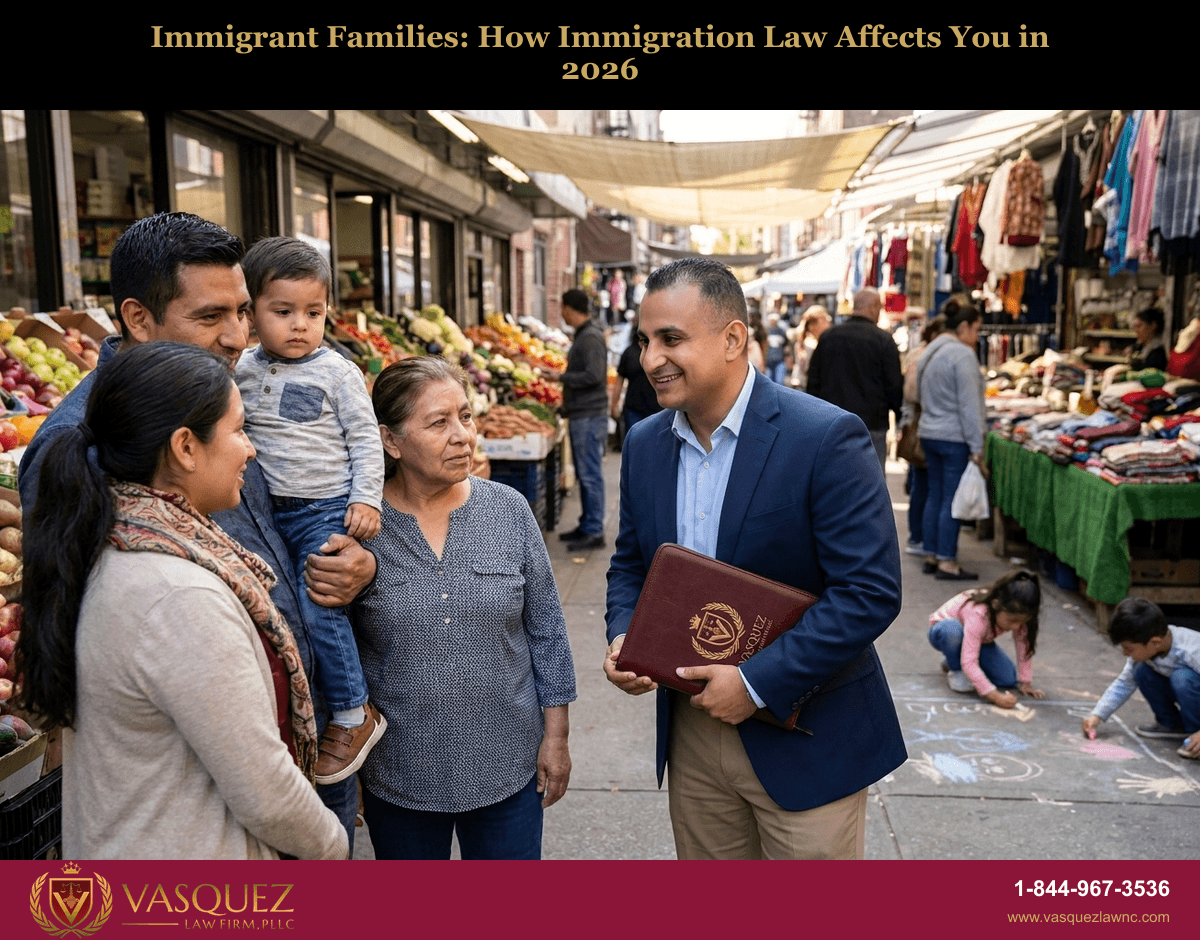
Immigrant Families: How Immigration Law Affects You in 2026
Immigrant families face special legal challenges in 2026, especially in states like North Carolina and Florida. Knowing immigration laws can help protect your family’s future. This guide explains important issues, the difference between immigrant and migrant families, and practical steps to keep families together during changing rules. Whether you are a child of immigrants or an adult trying to get legal status, learn your rights and options in immigration law today.
Need help with your case? Our experienced attorneys are ready to fight for you. Se Habla Español.
Or call us now: 1-844-967-3536
Quick Answer
Immigrant families in North Carolina and Florida face complex federal immigration laws that affect visas, deportation risks, and keeping families together. Legal help is very important to understand changes, protect children, and apply for adjustment of status or other legal relief.
- Federal laws mainly control immigrant family petitions
- Children of immigrants have rights to education and protection
- Migrant and immigrant families differ by their plans to live permanently
- Without legal help, the risk of family separation grows
- The process can take from one year to several years
Understanding Immigrant Families in America
More than 44 million people in the United States belong to immigrant families. These include people born in other countries and their relatives born in the U.S. In states like North Carolina and Florida, immigrant populations keep growing. These families come from many countries and have different needs and cultures.
Who Qualifies as an Immigrant Family?
An immigrant family has at least one member who came to the U.S. from another country. This can be someone who is a lawful permanent resident (a person allowed to live in the U.S. permanently), a visa holder (someone with permission to stay temporarily), a refugee (someone who fled danger), or someone without legal status. This also includes children born in the U.S. to immigrant parents. These children often face difficult situations if a parent’s immigration status is unclear.
Difference Between Immigrant and Migrant Families
Migrant families usually move temporarily for seasonal work or safety reasons. They do not plan to live permanently in the U.S. Immigrant families plan to live legally and permanently in the U.S. This difference affects who can get certain benefits and protections under U.S. immigration law. Mixing up these terms can cause mistakes in applications and legal defenses.
Impact of Federal Policies on Immigrant Families
Recent federal rules have changed benefits like food aid and public help for immigrant families. For example, some new rules exclude certain mixed-status households from programs they could use before. This affects their financial stability. These policy changes make it more urgent for families to seek legal immigration options sooner.
For legal advice made for your situation, visit our immigration legal services in Raleigh and Orlando.
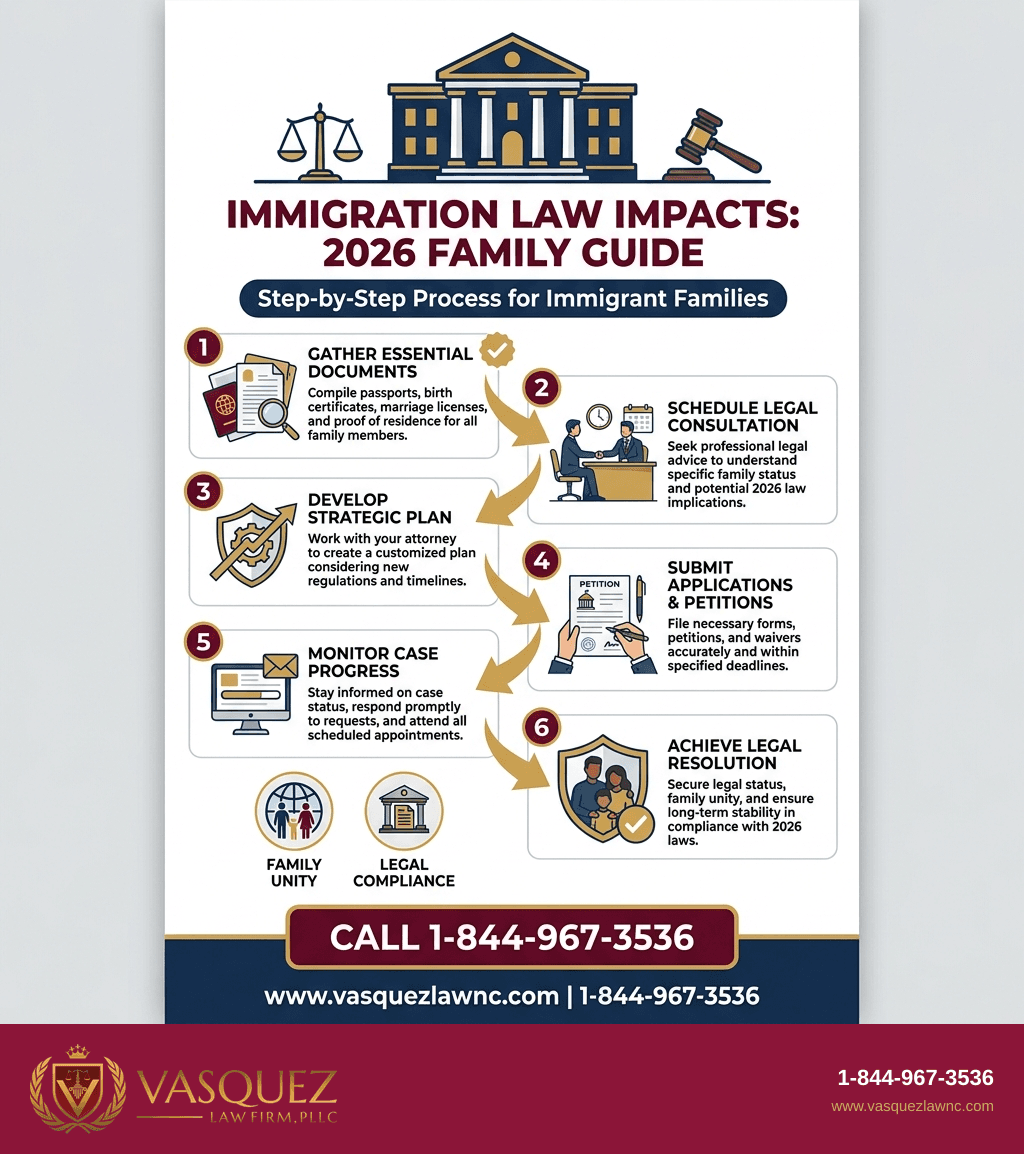
Key Steps Immigrant Families Should Take
Step 1: Identify Your Family’s Immigration Status
It is very important to know your current immigration status. Are you undocumented (without legal permission), on a visa (temporary permission), or a green card holder (permanent resident)? Knowing this helps you understand which legal options you have. For example, some relief options require you to have lived legally in the U.S. continuously or meet certain residency rules.
Step 2: Gather Important Documents
Collect passports, birth certificates, marriage licenses, financial records, and any letters from USCIS (U.S. Citizenship and Immigration Services). These papers support your petitions and applications. If your documents are messy or missing, it can cause delays or denials.
Step 3: File Petitions or Applications Promptly
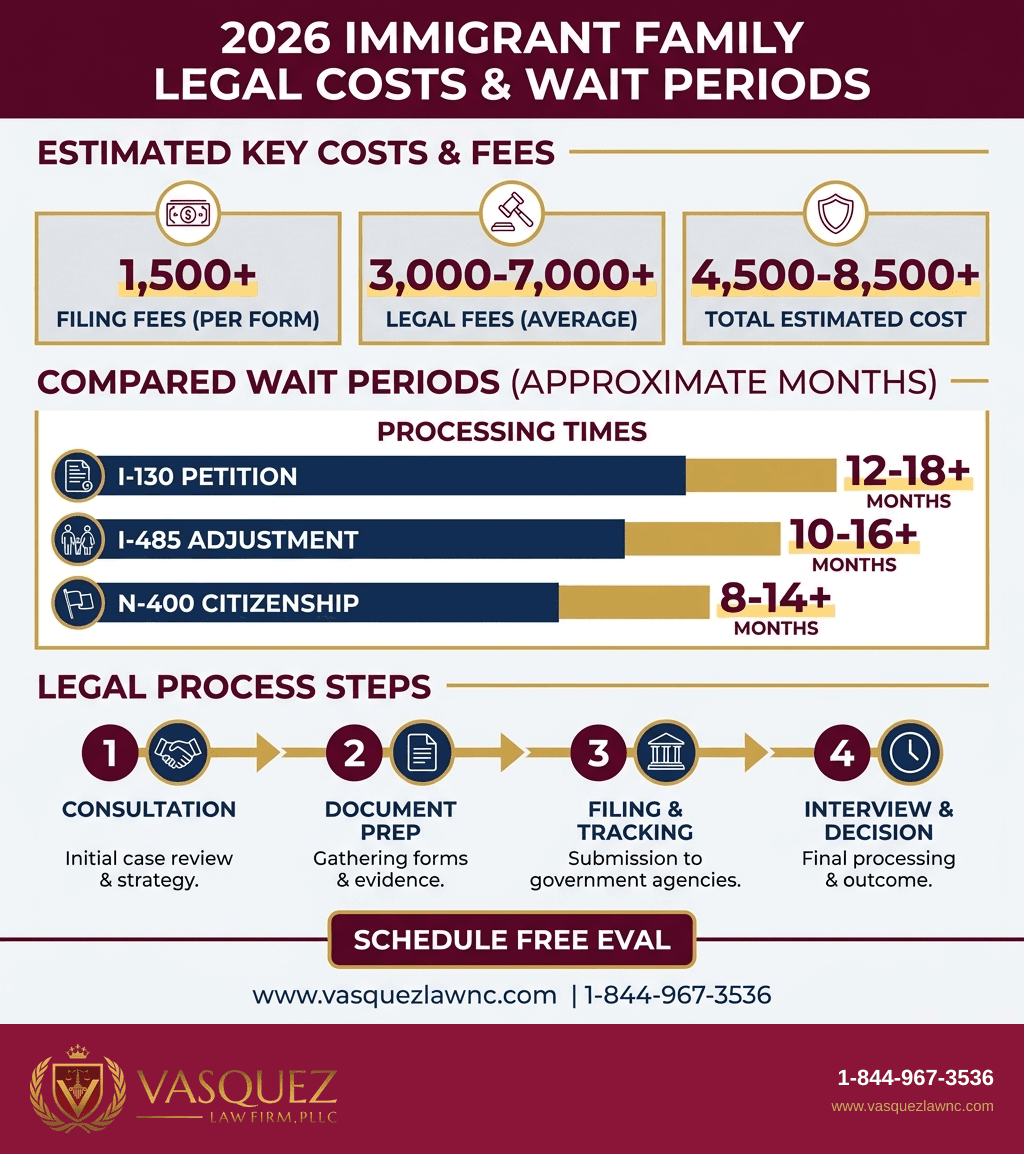
Options like family-based green cards or asylum need you to file forms correctly and on time. USCIS currently processes forms like I-130 and I-485 with wait times from one to three years, according to official USCIS processing times.
Step 4: Prepare for Interviews and Hearings
Immigrant families must attend USCIS interviews or immigration court hearings to show they qualify. If you miss these, you can get deportation orders. Having a lawyer with you helps you prepare and answer questions well.
Step 5: Plan for Contingencies
If there are delays or denials, you can appeal or ask to reopen your case. Having legal help during these steps is very important to improve your chances and keep your family together.
Our Attorney Vasquez and team help families through these steps with bilingual support and personal guidance.
Common Mistakes Immigrant Families Make
- Missing deadlines: Not filing on time can cause you to lose options; fix this by tracking deadlines carefully with legal help.
- Incorrect paperwork: Sending incomplete or wrong forms leads to rejection; fix this by consulting an immigration lawyer before filing.
- Lack of legal representation: Handling complex cases alone raises the risk of deportation; fix this by getting an experienced lawyer early.
- Failure to disclose past immigration violations: Hiding facts can cause permanent bans; fix this by telling your lawyer everything.
- Ignoring USCIS interview notices: Missing interviews can cause automatic denials; fix this by keeping your contact info updated and replying quickly.
- Not understanding differences between immigrant and migrant family terms: This leads to wrong applications; fix this by clarifying your status with legal advice.
- Relying on misinformation: Using unverified sources can hurt your case; fix this by trusting official USCIS guidance and your lawyer.
If you remember only one thing: Get legal help as soon as possible to avoid costly mistakes that can harm your family’s future.
Timeline and What Immigrant Families Should Expect
- Initial assessment and document gathering: 1-3 weeks
- Filing petitions (e.g., I-130, I-485): As soon as you are ready
- USCIS processing: 12-36 months, depending on your case and visa type (USCIS Processing Times)
- Interview scheduling: 6-12 months after filing
- Decision or Notice to Appear for removal proceedings: Time varies by case; may include appeals
- Possible appeals or motions: Additional 6-18 months
- Total time to permanent residence: 1-5 years in many cases
These times are estimates. Delays happen often because policies change and there are backlogs. Our offices in Raleigh, NC and Orlando, FL keep clients informed and prepared at every step.
Costs and Fees: What Affects the Price
- Application fees: USCIS charges fees for most forms. For example, Form I-485 costs $1,225 as of 2026.
- Legal fees: Lawyer fees vary by case difficulty but usually range from $2,500 to $8,000 for family immigration cases.
- More costs: Document translation, medical exams, travel for interviews.
- Fee waivers: Some immigrants with low income may qualify to skip USCIS fees.
- Faster processing: Limited options; extra fees apply for certain visa types.
Talk openly about costs with your immigration lawyer to plan your budget well.
Notes for NC, FL, and Nationwide
North Carolina Notes
Raleigh has many immigrant families who face local challenges like fewer resources. North Carolina offers state programs to help with education and health, but federal immigration law controls status and deportation risks.
Florida Notes
Orlando has a large immigrant community with many legal aid groups. Florida has stricter public assistance rules affecting immigrant families since 2021. Keeping families together is a main goal for advocates and lawyers here.
Nationwide Concepts (General Only)
Federal immigration law applies the same in all states. Rules about immigrant families, like asylum or cancellation of removal, come from the Immigration and Nationality Act and federal rules (for example, 8 U.S.C. § 1255, INA § 240A). But local resources and enforcement can differ a lot.
When to Call a Lawyer Now
- If you get a Notice to Appear for removal proceedings
- When a family member is detained or arrested by immigration officers
- If you plan to apply for adjustment of status or asylum
- When you get a Request for Evidence from USCIS
- If your DACA status is denied or ended
- If you are unsure if you qualify for family petitions or relief
- If you or your children have been separated because of immigration enforcement
- Before signing any immigration papers or waivers
- If you need help understanding how 2026 policy changes affect immigration
About Vasquez Law Firm
At Vasquez Law Firm, we mix care with strong legal work. Our motto "Yo Peleo®" (I Fight) shows our promise to stand up for your rights.
- Bilingual Support: Se Habla Español - Spanish-speaking lawyers and staff available
- Service Areas: North Carolina, Florida, and immigration services across the country
- Experience: Over 30 years helping clients with tough legal issues
- Results: Thousands of successful cases in many practice areas
Attorney Trust and Experience
William J. Vásquez joined the North Carolina State Bar in 2011. He is also admitted to the U.S. Courts of Appeals for the 4th, 5th, 6th, and 11th Circuits. Florida cases at the firm are handled by Florida Bar lawyer Alekssandra Lopez. The firm has offered focused legal help since 2011, giving personal attention to each client’s case.
Don't wait to get the help you deserve. Call us now for immediate assistance.
Se Habla Español
Frequently Asked Questions
What are immigrant families?
Immigrant families are households where at least one member moved to the United States from another country. These families often face complex immigration laws affecting legal status, benefits, and family unity. Understanding who qualifies and the challenges involved helps access legal protections and support.
What is the difference between a migrant family and an immigrant family?
Migrant families usually move temporarily, often for seasonal work or safety reasons, without intending to stay permanently. Immigrant families aim to live permanently in the U.S. This difference affects eligibility for immigration benefits and legal protections, so proper classification is important for applications.
What happens to U.S.-born children if their immigrant parents are deported?
U.S.-born children remain citizens but may face separation from deported parents. Courts focus on the child’s best interest, and social services may provide care. Legal options may be available to prevent separation, but cases can be complicated and require skilled lawyer representation.
How can immigrant families stay together during immigration proceedings?
Families should apply for every possible legal relief early, including family petitions and cancellation of removal. Skilled attorneys guide families to prepare documents and attend hearings, significantly reducing the risk of separation during proceedings.
What are common immigration benefits available to immigrant families?
Benefits include family sponsorships for green cards, asylum protection, TPS, DACA, and specific visas for victims of crime or abuse. Each benefit has precise eligibility rules and filing requirements that families must meet to protect their status legally.
How long does the immigration process take for families in 2026?
Processing times vary. Family green card petitions typically take from 1 to 3 years depending on backlog and visa category. DACA renewals currently average 14 to 22 months according to USCIS processing times. Delays are common, so legal counsel helps families plan accordingly.
What documents do immigrant families need when applying for benefits?
Essential documents include passports, birth certificates, marriage licenses, proof of residence, and prior USCIS filings. Supporting evidence like school or medical records may be needed for children. Proper document preparation avoids filing delays.
Can children of immigrant families get help with clothing and education?
Yes. Community programs in North Carolina and Florida provide assistance with clothing, school supplies, and educational resources for immigrant children. Legal status might affect some services, so families should consult with local agencies and legal advisors to understand available help.
Sources and References
Take the first step toward justice today. Our team is standing by to help.
Start Your Free Evaluation Now
Call us: 1-844-967-3536
Se Habla Español - Estamos aquí para ayudarle.


William Vasquez
Founder & CEO, Vasquez Law Firm, PLLC
William Vasquez is the founder and CEO of Vasquez Law Firm, PLLC, a results-driven firm specializing in immigration, criminal defense, personal injury, and workers' compensation. A U.S. Air Force veteran and recipient of the Joint Service Achievement Medal, William is dedicated to fiercely fighting for his clients' rights.
Related Legal Services
Need legal help? Learn more about get immigration legal help today, or contact us for a free evaluation.
You can also visit statewide immigration legal services for more information.