Trump Immigration Rules: What You Should Know in 2026
Wondering about Trump immigration rules in 2026? Learn how changes affect your case and what to expect. Contact Vasquez Law for a free evaluation.
Published on June 18, 2026
Talk to an immigration attorney
Free call. A clear plan for your case.
Free & confidential · Se habla espanol · 24/7
Have questions? Talk to an attorney - free evaluation.
Call 1-844-967-3536Worried how the latest immigration news affects you?
Schedule a confidential case review with an immigration attorney - know exactly where you stand.
USCIS Case Status
Check your USCIS case status
Enter your receipt number and get the official status. Free, no registration.
Trump Immigration Rules: What You Should Know in 2026
Trump immigration rules continue to affect many individuals, especially in Raleigh, NC and Orlando, FL, as of 2026. This article explains key changes brought about by former President Donald Trump’s policies, how they impact immigration applicants, and what to expect when navigating these rules. Whether you seek work visas, asylum, or family petitions, understanding these policies helps protect your rights under current U.S. immigration law.
Need help with your case? Our experienced attorneys are ready to fight for you. Se Habla Español.
Or call us now: 1-844-967-3536
Quick Answer
Trump immigration rules instituted many changes from 2017 to 2021 that still affect immigration processes in 2026. Applicants in Raleigh and Orlando should be aware of ongoing restrictions on visas, asylum, and public charge policies. For personalized guidance navigating these rules, consulting with an immigration attorney is recommended.
- Trump's policies tightened asylum and refugee rules.
- Public charge rules impact green card eligibility.
- Visa vetting and travel bans affected certain nationals.
- Some changes have been reversed; others remain in place.
- Legal counsel is crucial to navigate complex policies.
Understanding Trump Immigration Rules in 2026
Donald Trump's presidency brought substantial immigration policy shifts. These included stricter enforcement, new limits on asylum eligibility, and changes to visa issuance criteria. Even though the administration ended in 2021, many of its rules influence how immigration decisions are made today. For example, adjustments to "public charge" criteria, which consider if an immigrant is likely to depend on government aid, still affect green card and visa applications in Raleigh and Orlando.
Understanding these lingering effects is vital for immigration applicants. Applicants must carefully prepare documentation and anticipate longer processing times. For personalized assistance, our immigration attorneys in Raleigh and Orlando are available to help you comprehend how these factors apply.
If you want to understand more about current immigration rules and navigate your application successfully, our immigration services can offer tailored support.
Key Changes to Immigration Policy
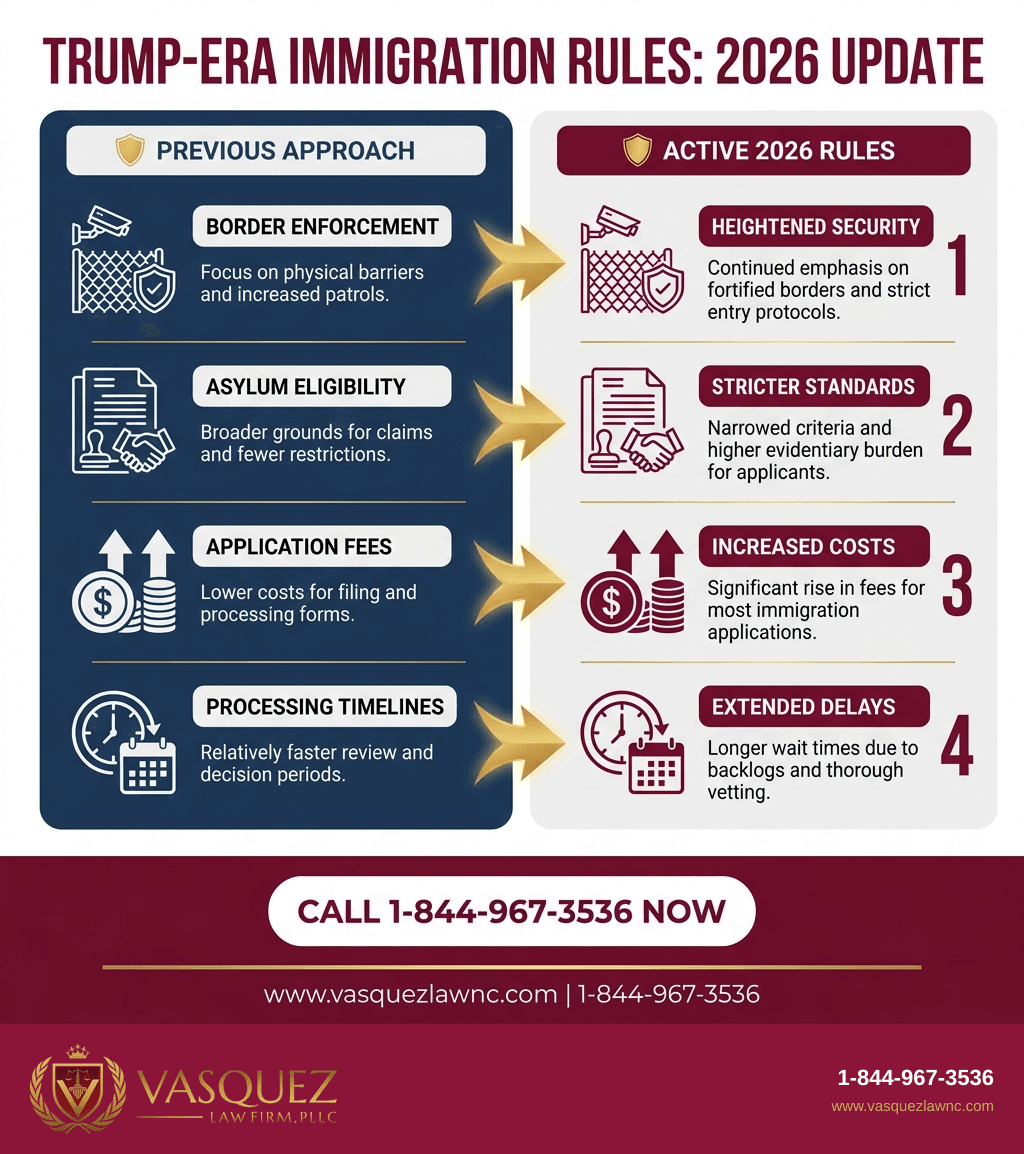
Trump’s administration implemented several prominent immigration changes that impact cases in 2026:
- Public Charge Rule Expansion: This rule increased scrutiny of applicants' potential use of public benefits, affecting green card approvals.
- Travel Bans: Restrictions on nationals from certain majority-Muslim and African countries limited visa issuance and entry.
- Asylum Rule Tightening: New regulations limited eligibility for asylum seekers, requiring them to apply in third countries first under some conditions.
- Increased ICE Enforcement: Enforcement policies shifted to prioritize deportation of undocumented immigrants without regard to certain factors previously considered.
These changes caused increased application denials and longer processing times. However, some courts have blocked or partially reversed specific policies. Being aware of which policies still apply can help applicants avoid delays.
For deeper insight into how our immigration attorneys in North Carolina navigate these changes, contact us for a consultation.
Step-by-Step Guidance for Applicants
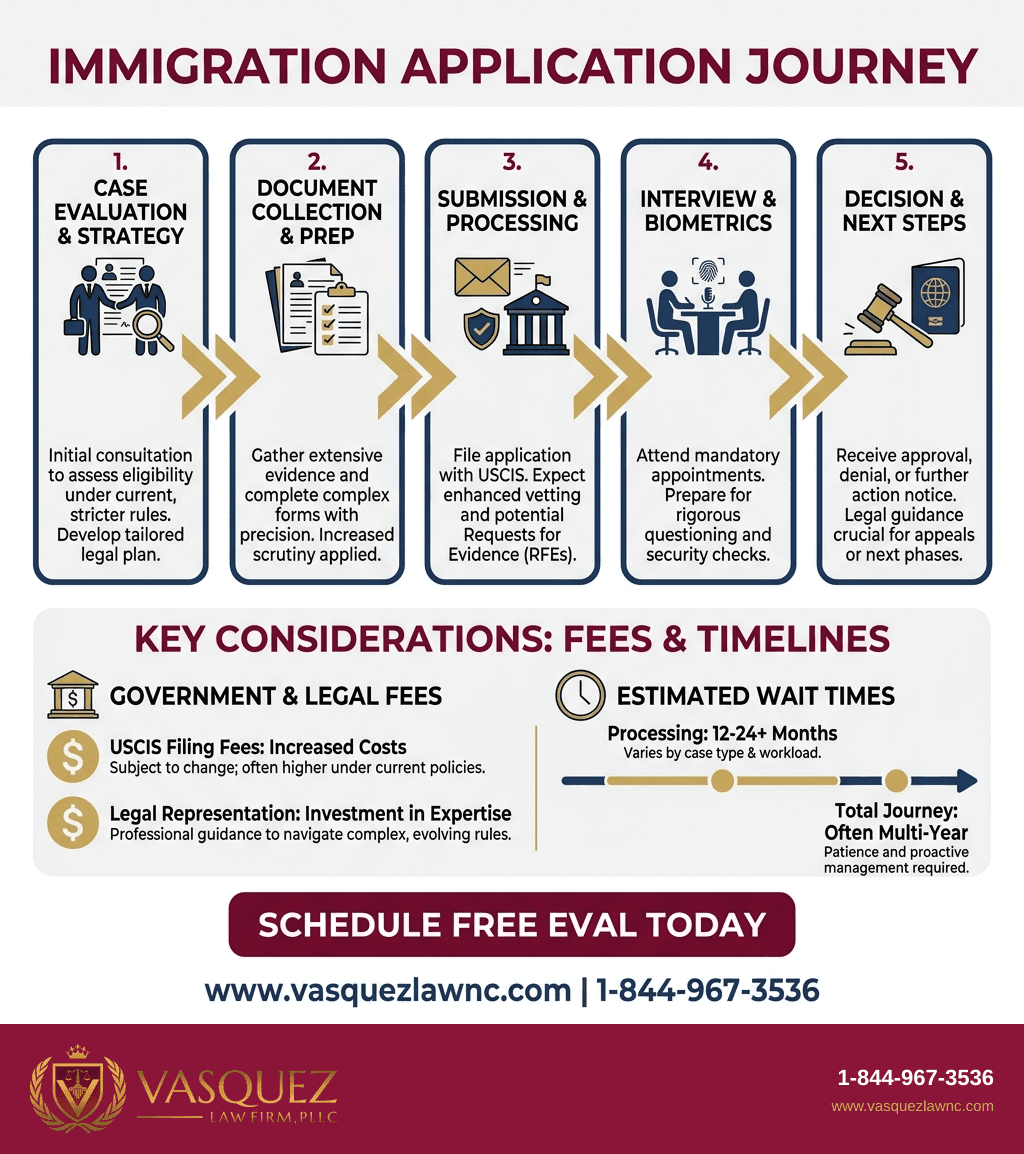
- Know Your Eligibility: Assess your eligibility based on current rules, including public charge considerations and asylum criteria.
- Gather Required Documents: Collect evidence like proof of income, health insurance, and travel history.
- Complete Application Forms Accurately: Errors can cause delays and denials.
- Submit Fees on Time: USCIS processing fees vary by form; timely payment prevents application refusal.
- Prepare for Interviews: Practice for potential USCIS or consulate interviews.
- Monitor Processing Times: Check USCIS processing times for forms like I-821D for DACA or I-485 for adjustment of status at USCIS processing times.
- Consult an Attorney: Consult with an immigration lawyer to understand the impact of Trump immigration rules and receive personalized advice.
Common Mistakes to Avoid
- Inaccurate Form Submission: Double-check all applications for errors before submitting.
- Misunderstanding Public Charge Rules: Improper documentation can trigger denials.
- Failing to Update USCIS on Address: Missing notices can delay your case.
- Ignoring Travel Ban Restrictions: Attempting travel without verifying bans can lead to denial or detention.
- Missing Deadlines: Late filings or fee payments hurt your chances.
- Not Seeking Legal Help Early: Complex rules require professional guidance to avoid pitfalls.
- Failing to Prepare for Interviews: Being unprepared can cause unnecessary delays or denials.
If you only remember one thing: Thorough preparation and legal guidance make the biggest difference when dealing with Trump immigration rules in 2026.
Timeline and What to Expect
- Initial Application Submission: Processing can range from 6 months to over 2 years depending on the benefit type due to backlogs and policy complexity.
- Biometrics Appointment: Usually scheduled 4-8 weeks after submission.
- Interviews: May occur 6-14 months after submission for adjustment of status or asylum cases.
- Decision Notification: Can take several weeks to months after interview.
- Appeals or Motions: Lengthen overall timeline significantly if case is denied.
For example, DACA renewals using Form I-821D currently take about 14-22 months according to USCIS processing data. Staying informed about specific processing times for your form is crucial.
Costs and Factors Affecting Your Case
- USCIS Filing Fees: Vary widely by benefit type from $50 for fee waivers to over $700 for green card applications.
- Attorney Fees: Professional guidance helps navigate complex policies but adds to cost.
- Additional Document Preparation: You may need translations, medical exams, or police certificates.
- Appeal or Motion Fees: If your case is denied, appealing adds time and costs.
- Consultation Fees: Some firms offer free initial consultations; others may charge.
Planning financially for all potential expenses helps applicants manage the process without surprises.
Jurisdiction Notes for Raleigh, NC and Orlando, FL
North Carolina Notes
In Raleigh and throughout North Carolina, immigration cases are handled federally but local USCIS offices and courts process filings. Trump immigration changes apply federally but local processing times and practices vary. Our Raleigh office supports clients with case strategy and filings under current immigration rules.
Florida Notes
In Orlando and Florida overall, federal immigration enforcement mirrors national standards with some regional variances in processing speed. Trump-era policy effects remain significant, especially in public charge and asylum cases. Our Orlando team is familiar with these nuances and conditions to best serve clients.
Nationwide Concepts (General Only, Rules Vary)
Trump immigration rules reflect federal authority and apply nationwide, but state-specific factors affect application timing and outcomes. Court rulings across districts sometimes conflict over enforcement of various policies. Applicants anywhere in the U.S. should obtain tailored advice considering jurisdictional specifics.
When to Call a Lawyer
- If you received a Request for Evidence (RFE) or Notice of Intent to Deny (NOID)
- If you are subject to public charge or inadmissibility concerns
- If your asylum case was recently impacted by rule changes
- If you are dealing with travel bans or visa revocations
- If USCIS processing times exceed estimates without updates
- When preparing complex petitions, like family petitions affected by Trump policies
- If you face removal proceedings in immigration court
- If you have past deportations or immigration violations
- For immigrants in Raleigh or Orlando needing help understanding Trump rule implications
- If you want to appeal or respond to adverse immigration decisions
About Vasquez Law Firm
At Vasquez Law Firm, we combine compassion with aggressive representation. Our motto "Yo Peleo®" (I Fight) reflects our commitment to standing up for your rights.
- Bilingual Support: Se Habla Español — Spanish-speaking attorneys and staff available
- Service Areas: North Carolina, Florida, and nationwide immigration services
- Experience: Over 30 years helping clients navigate complex legal matters
- Results: Thousands of successful cases across multiple practice areas
Attorney Trust and Experience
William J. Vásquez is admitted to the North Carolina State Bar (2011) and to the U.S. Courts of Appeals for the 4th, 5th, 6th, and 11th Circuits. Florida-jurisdiction matters at the firm are handled by Florida Bar attorney Alekssandra Lopez. The firm has provided dedicated legal representation since 2011, with personalized attention to each client's case.
Don't wait to get the help you deserve. Call us now for immediate assistance. Se Habla Español.
Frequently Asked Questions
Did Trump change any immigration policy?
Yes, Trump implemented stricter rules on visas, asylum, and public benefits. Many still impact applicants in Raleigh and Orlando in 2026. Knowing these helps in avoiding pitfalls.
What is the new immigration law in the USA?
No single new law replaced Trump’s policies. A mix of regulations and court rulings shape immigration today, making legal advice essential for your case.
What did Trump change about immigration policy?
His administration increased restrictions on asylum seekers and expanded criteria for denying green cards based on public charge concerns.
What is Donald Trump's approval on immigration?
Opinions vary. Some support stricter controls, others criticize impacts on families. In Raleigh and Orlando, focus is on law, not politics.
How do Trump immigration rules affect current DACA applicants?
They limited renewals at times, but court rulings helped maintain protections. Processing can take over a year, so plan accordingly.
Can Trump immigration rules impact family petitions?
Yes, public charge rules and affidavit requirements raised scrutiny, affecting approval timelines, requiring complete documentation.
Are Trump’s changes reversible in 2026?
Some changes were reversed, others remain. Immigration law continues to evolve, underscoring the need for expert legal help.
Where can I find official updates on Trump immigration rules?
Visit USCIS (https://www.uscis.gov) and EOIR (https://www.justice.gov/eoir) for authoritative, up-to-date immigration information.
Sources and References
- U.S. Citizenship and Immigration Services
- Executive Office for Immigration Review
- Legal Information Institute
Take the first step toward justice today. Our team is standing by to help. Se Habla Español.
Start Your Free Evaluation Now
Call us: 1-844-967-3536
Se Habla Español - Estamos aquí para ayudarle.


William Vasquez
Founder & CEO, Vasquez Law Firm, PLLC
William Vasquez is the founder and CEO of Vasquez Law Firm, PLLC, a results-driven firm specializing in immigration, criminal defense, personal injury, and workers' compensation. A U.S. Air Force veteran and recipient of the Joint Service Achievement Medal, William is dedicated to fiercely fighting for his clients' rights.
Related Legal Services
Need legal help? Learn more about immigration case consultation, or contact us for a free evaluation.
You can also visit statewide immigration legal services for more information.