How US Visa Bureaucracy Affects You in 2026
Learn how US visa bureaucracy impacts your immigration process in 2026. Get practical steps and legal help. Contact Vasquez Law for a free consultation.
Published on August 12, 2026
Talk to an immigration attorney
Free call. A clear plan for your case.
Free & confidential · Se habla espanol · 24/7
Have questions? Talk to an attorney - free evaluation.
Call 1-844-967-3536Worried how the latest immigration news affects you?
Schedule a confidential case review with an immigration attorney - know exactly where you stand.
USCIS Case Status
Check your USCIS case status
Enter your receipt number and get the official status. Free, no registration.
How US Visa Bureaucracy Affects You in 2026
US visa bureaucracy causes many problems for immigrants. These include delays and complicated steps that affect people applying for visas and green cards. In Raleigh, NC and Orlando, FL, it is important to understand the paperwork, government rules, and timelines in 2026. This article explains common visa types, recent rule changes under the Trump administration, how to handle cancellations, and what applicants can expect.
Need help with your case? Our experienced attorneys are ready to fight for you. Se Habla Español.
Or call us now: 1-844-967-3536
Quick Answer
US visa bureaucracy in 2026 still affects applicants with complicated forms, long delays, and changing federal rules. Knowing visa types, correct documents, and common problems helps applicants in Raleigh, NC and Orlando, FL handle this difficult system better.
- Visa applications need detailed paperwork and security checks.
- Trump-era policies canceled or limited several visa types.
- Fees, timelines, and who can apply have changed recently.
- Common delays include requests for more evidence and extra processing.
- Legal help improves chances of approval and faster processing.
Understanding US Visa Bureaucracy and Its Impact
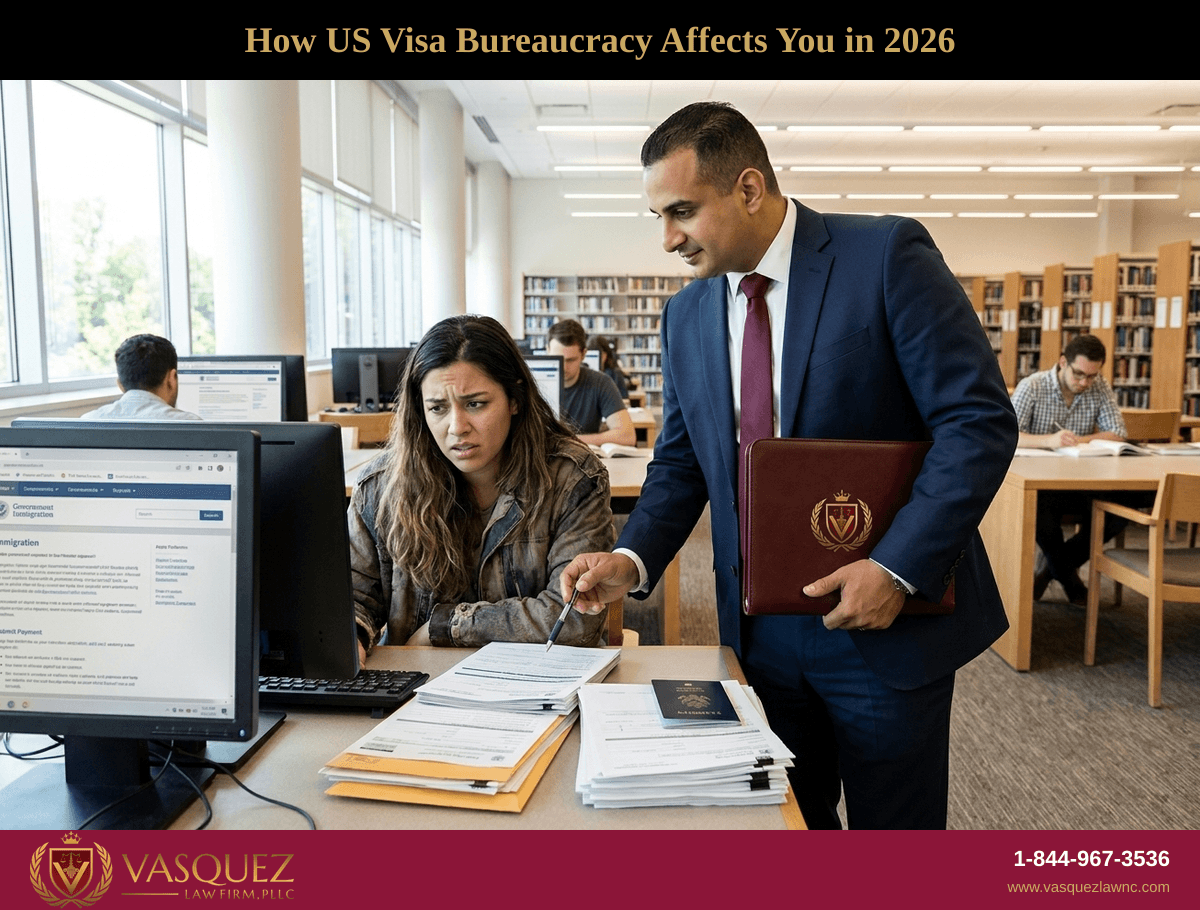
Imagine an international scholar applying for a visa at the U.S. consulate in Raleigh. Her application needs many forms, background checks, and document verification. Each step has layers of government bureaucracy, often causing confusing delays. This difficulty is common in 2026 when US visa bureaucracy keeps challenging applicants across the country, including in North Carolina and Florida.
The term "US visa bureaucracy" means the administrative steps needed to issue a visa or green card. These steps include USCIS decisions, consular interviews, security checks by several federal agencies, and following changing immigration laws and executive orders.
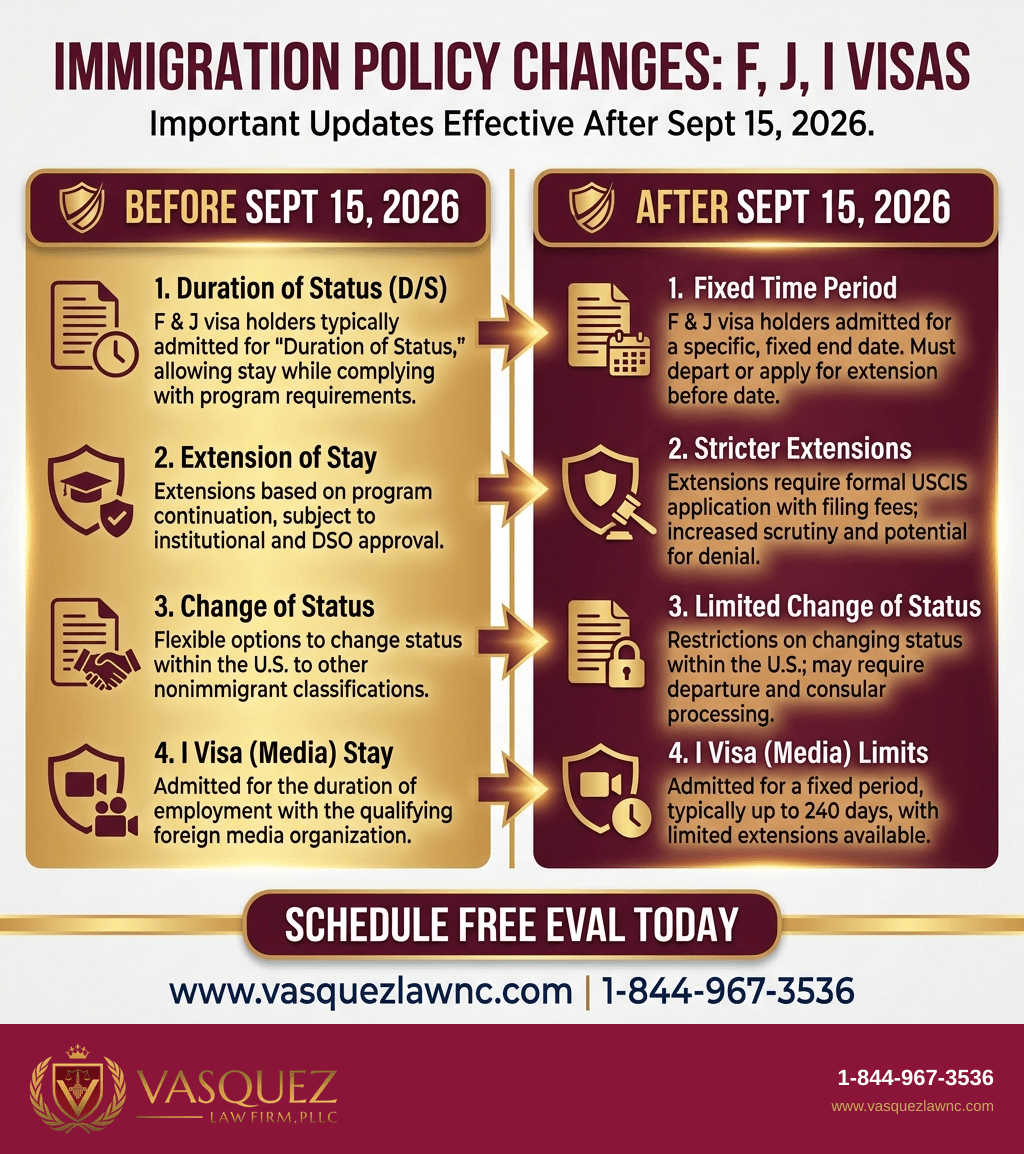
For example, the Trump administration made rules that limited some visa types—like H-1B work visas and some student visas—affecting thousands of applicants. Some limits were removed by later administrations, but their effects and stronger security checks are still part of the visa bureaucracy in 2026. Applicants must carefully follow these rules.
Millions of people depend on these visas to enter, work, study, or reunite with family in the U.S. But bureaucracy often causes long wait times. Many visa petitions face delays because of more security reviews or missing documents. USCIS processing times for forms like I-129 (work visa petitions) and I-130 (family petitions) can take more than 6 to 12 months, according to official USCIS data (USCIS Processing Times).
It is important to know the main agencies—the State Department, USCIS, and the Department of Homeland Security—and how their steps affect visa applications. These agencies apply federal immigration laws from INA statutes and related rules like 8 U.S.C. 1255 (about adjustment of status) and 8 C.F.R. 245.1 (rules about eligibility).
Our immigration legal services in Raleigh and Orlando provide important help to manage these steps and increase your chance of success.
Key Agencies and Their Roles
- USCIS: Handles petitions and applications for most visas and green cards.
- State Department: Manages consular visa interviews and approvals at U.S. embassies and consulates.
- DHS and Security Agencies: Perform background checks and decide final admissibility.
Recent Changes Affecting Visa Applicants
Visa bureaucracy has changed because of security concerns and political shifts. Some Trump-era limits—like those restricting visas for certain countries or jobs—are still partly in effect or have been changed by new policies. For example, some visa types had temporary pauses or extra review steps, which affected processing times and approval rates.
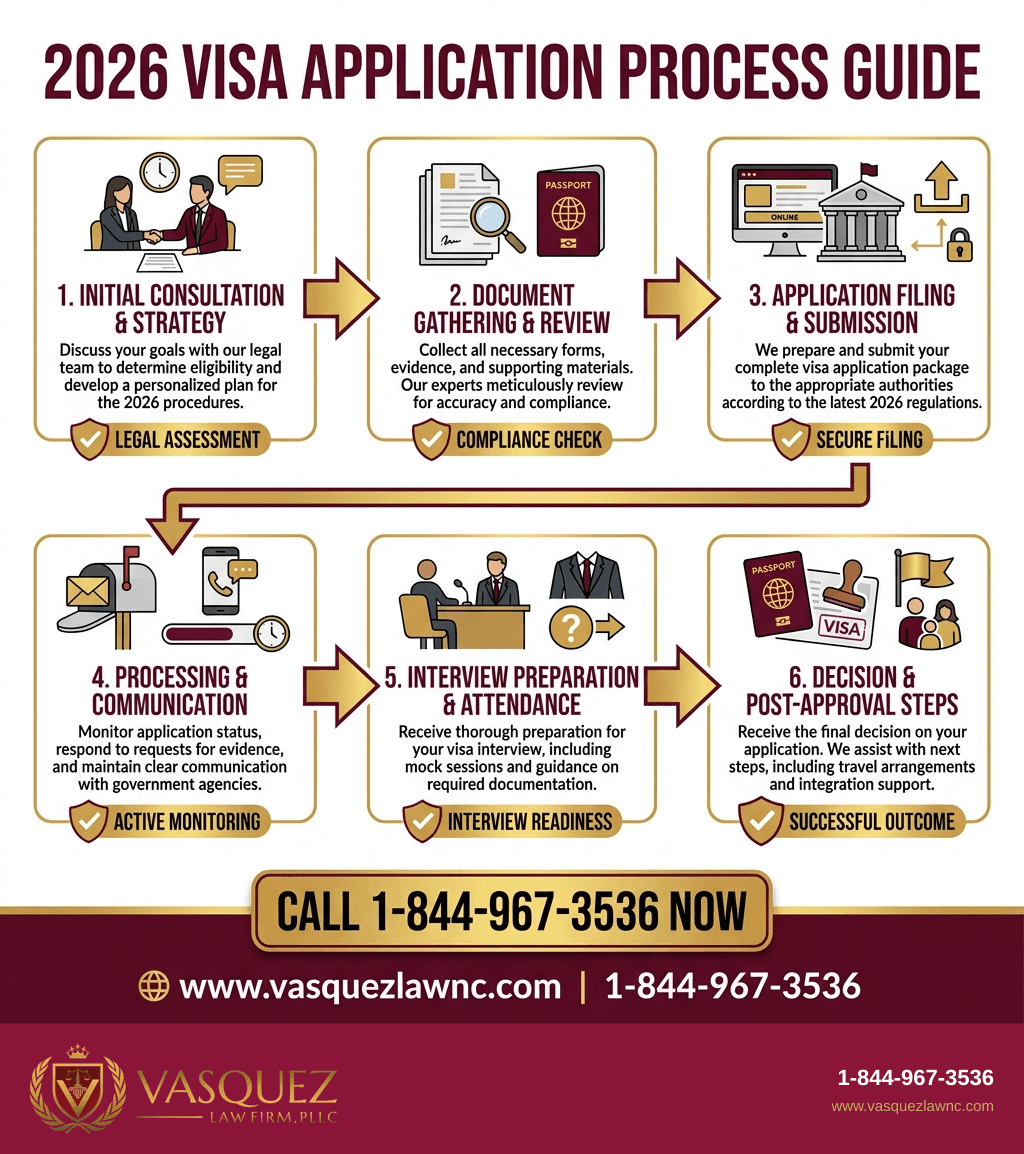
Step-by-Step Guide to Navigating Visa Procedures
Think about a family member in Orlando who sponsors a relative from another country. The process has several clear steps that need careful attention:
- Identify Visa Type: Check if you need a visitor visa, work visa, or family-based visa. Different forms apply (like I-130, I-129, DS-160).
- Prepare Documentation: Gather identity documents, proof of money, and legal forms. Missing or wrong paperwork often causes delays.
- File Petition or Application: Send forms to USCIS or the consulate, pay fees, and wait for receipt notices.
- Attend Biometrics and Interviews: USCIS in-person biometrics or consular interviews are required for background checks.
- Respond to Requests for Evidence (RFE): If USCIS or consulate asks for more information, answer quickly to avoid automatic denials or longer processing.
- Receive Decision: Approval means visa issuance or status adjustment. Denials can be appealed or refiled with legal help.
Applying for visas in Raleigh, NC or Orlando, FL follows the same federal rules but may differ in appointment availability or consular speed. Our Attorney Vasquez and legal team assist applicants from these areas to prepare and file with confidence.
Documents Checklist
- Valid passport
- Completed petition or application forms
- Proof of relationship or job offer
- Financial affidavit or proof of sponsorship
- Biometrics appointment notice
- Any requested supporting evidence
Common Mistakes in US Visa Applications
- Incomplete Applications: Missing signatures or pages can cause rejections. Fix: Check all documents carefully before sending.
- Ignoring Deadlines: Not answering RFEs on time leads to denials. Fix: Watch deadlines closely and reply quickly.
- Lack of Strong Evidence: Not enough proof of eligibility hurts your case. Fix: Provide clear, verifiable supporting documents.
- Misunderstanding Eligibility: Applying under the wrong visa type causes delays. Fix: Talk to an attorney to pick the right type.
- Failure to Track Status: Not checking case progress misses important requests. Fix: Use USCIS online tools and keep your records updated.
- Overlooking Fee Requirements: Wrong or unpaid fees cause rejection. Fix: Check USCIS fee schedule before paying.
- Not Legalizing Documents: Using uncertified documents may cancel applications. Fix: Get certified translations and notarizations as needed.
- Disregarding Policy Updates: Rules change often; missing updates affects eligibility. Fix: Stay informed or ask knowledgeable attorneys.
If you only remember one thing: Being accurate, responsive, and getting legal help greatly improves your chance of success.
Timeline and What to Expect in 2026
The timeline depends a lot on visa type and local USCIS or consulate workload. For example, family petition I-130 forms now take about 7 to 14 months nationally, according to USCIS processing times data (USCIS Processing Times).
Work visas like H-1B may take 3 to 6 months or more if extra processing applies. Student visas (F-1) can be faster but also face more checks because of recent policy changes.
Applicants in Raleigh and Orlando should consider appointment availability at USCIS offices or consulates, which can add weeks or months. Our attorneys guide you through real timelines and help you ask for faster processing if you qualify.
Typical Timeline Breakdown
- Week 1-4: Submit application and initial review
- Week 5-8: Schedule biometrics and interview notice
- Week 9-12: Biometrics appointment and background checks
- Month 3-6: Decision notice, possible Requests for Evidence
- Month 6+: Visa approval, consular appointment, or appeal if needed
Frequently Asked Questions about US Visa Bureaucracy
What visas did Trump cancel?
The Trump administration canceled and limited several visa types, including some H-1B and H-4 visas, and paused issuing some student and work visas. Some policies aimed to limit immigration for economic and national security reasons. However, many of these limits have been reviewed or changed since then. Visa eligibility and cancellations depend on current federal rules and personal situations.
What is the new rule for U.S. visas in 2026?
In 2026, USCIS started new electronic filing rules and updated eligibility for some visa types. These changes aim to reduce delays and improve security checks. Applicants should stay informed about specific form instructions and filing steps, as these may differ by visa type and location. Always talk to an immigration attorney to understand the latest rules for your case.
Do I have to pay $250 to enter the USA?
There is no general $250 fee to enter the USA. But some visa applications or programs have specific fees. For example, the USCIS Immigrant Fee or some ESTA applications have processing costs. Always check your exact visa type requirements and fees on the official USCIS website before applying or traveling.
What is the new rule for green cards?
In 2026, USCIS continues to update green card application steps, including electronic filing and biometrics. Some policy changes have made background checks faster for some categories but also tightened eligibility for others. If you apply for adjustment of status (I-485) or through consular processing, keep up with the latest rules to avoid delays or denials.
How long does US visa processing take in 2026?
Processing times differ a lot depending on visa type, applicant country, and USCIS workload. For example, H-1B visa petitions may take 3 to 6 months, while family-based green cards often take 8 months to 2 years. You can check current processing times on the USCIS official site at https://egov.uscis.gov/processing-times/. Planning ahead and answering requests quickly can reduce delays.
Can US visa applications be canceled unexpectedly?
Yes, USCIS or the State Department may cancel visa applications or approvals because of fraud, security concerns, missing documents, or changes in eligibility. For example, visa cancellations under INA 221(g) happen when an application is incomplete or needs more review. If your visa is canceled, legal help can guide you on appeals or reapplying.
What should I do if my US visa is delayed by bureaucracy?
First, check your application status online through USCIS or consulate websites. Keep all notices and documents organized. Contact an experienced immigration attorney in Raleigh, NC or Orlando, FL for advice on speeding up or fixing problems. Do not miss deadlines or requests for evidence because they can cause more delays.
How can Vasquez Law Firm help with visa bureaucracy?
Vasquez Law Firm’s immigration attorneys help clients understand complex visa rules, prepare correct applications, answer USCIS requests, and appeal denials. Serving Raleigh, NC and Orlando, FL, the firm offers bilingual support and personal guidance for students, workers, families, and scholars dealing with visa bureaucracy in 2026.
About Vasquez Law Firm
At Vasquez Law Firm, we combine care with strong representation. Our motto "Yo Peleo" (I Fight) shows our promise to stand up for your rights.
- Bilingual Support: Se Habla Español Spanish-speaking attorneys and staff available
- Service Areas: North Carolina, plus Florida and nationwide for immigration
- Experience: Over 30 years helping clients with complex legal issues
- Results: Thousands of successful cases in many practice areas
Attorney Trust and Experience
William J. Vásquez is admitted to the North Carolina State Bar (2011) and to the U.S. Courts of Appeals for the 4th, 5th, 6th, and 11th Circuits. The firm has given dedicated legal help since 2011, with personal attention to each client's case.
Don't wait to get the help you deserve. Call us now for immediate assistance.
Se Habla Español
Sources and References
- U.S. Citizenship and Immigration Services
- Executive Office for Immigration Review
- Legal Information Institute
Take the first step toward justice today. Our team is ready to help.
Start Your Free Evaluation Now
Call us: 1-844-967-3536
Se Habla Español - Estamos aqu para ayudarle.

William Vasquez
Founder & CEO, Vasquez Law Firm, PLLC
William Vasquez is the founder and CEO of Vasquez Law Firm, PLLC, a results-driven firm specializing in immigration, criminal defense, personal injury, and workers' compensation. A U.S. Air Force veteran and recipient of the Joint Service Achievement Medal, William is dedicated to fiercely fighting for his clients' rights.
Related Legal Services
Need legal help? Learn more about learn about our immigration practice, or contact us for a free evaluation.
You can also visit immigration legal services throughout NC for more information.