What You Should Know About the U.S.-Mexico Border in 2026
Discover key facts about the U.S.-Mexico border in 2026 and its impact on immigration. Get help with border crossing and legal questions. Contact us for a free evaluation.
Published on August 7, 2026
Talk to an immigration attorney
Free call. A clear plan for your case.
Free & confidential · Se habla espanol · 24/7
Have questions? Talk to an attorney - free evaluation.
Call 1-844-967-3536Worried how the latest immigration news affects you?
Schedule a confidential case review with an immigration attorney - know exactly where you stand.
USCIS Case Status
Check your USCIS case status
Enter your receipt number and get the official status. Free, no registration.
What You Should Know About the U.S.-Mexico Border in 2026
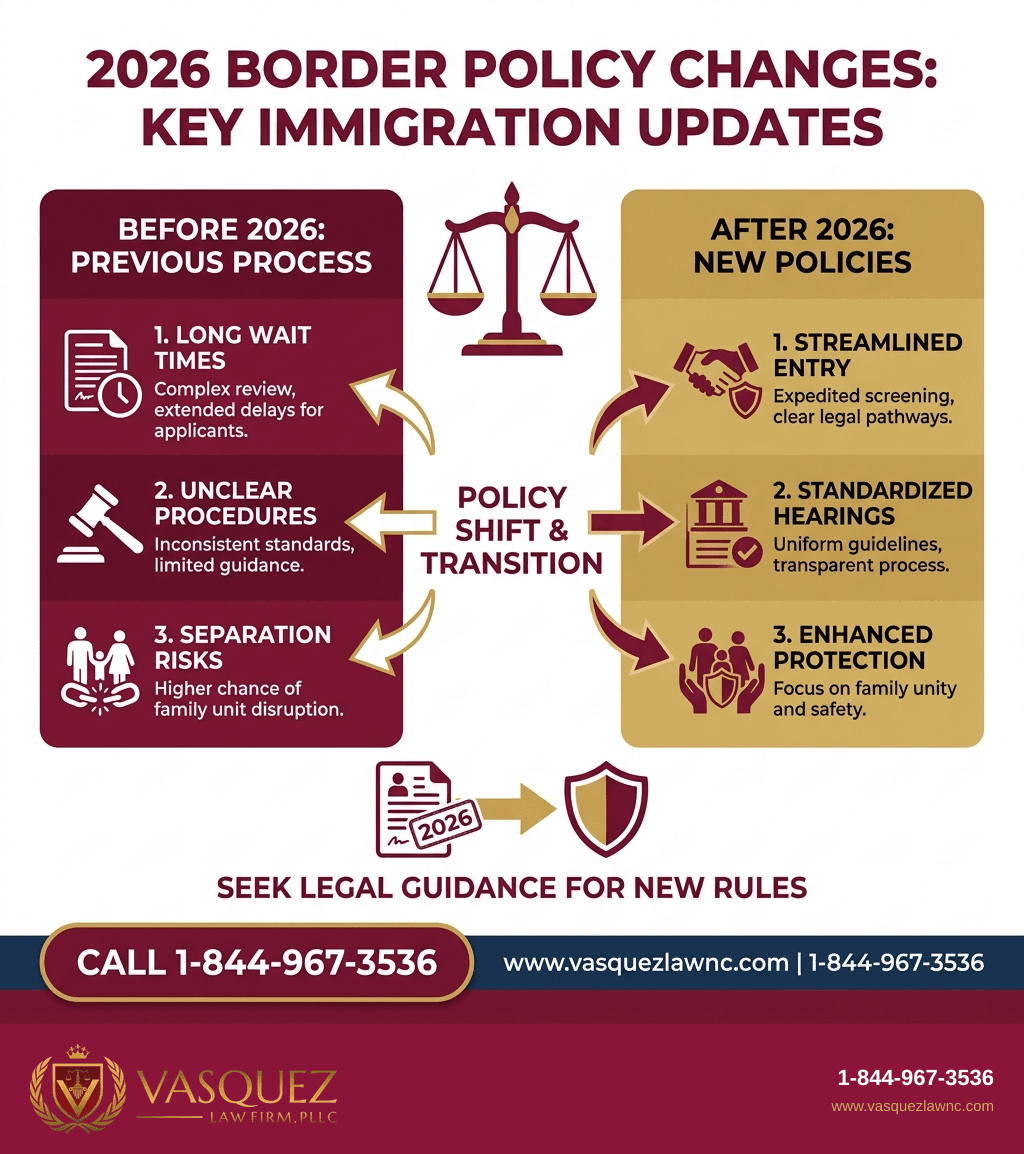
The U.S.-Mexico border is very important for immigration rules and policies in 2026. It is over 1,954 miles long. This border affects families and people all over the country, including immigrants in North Carolina and Orlando, FL. This guide explains key facts about the border, recent changes, how to cross legally, and how immigration legal help can support you.
Need help with your case? Our experienced lawyers are ready to fight for you. Se Habla Español.
Or call us now: 1-844-967-3536
Quick Answer
The U.S.-Mexico border is a 1,954-mile international boundary where people cross actively. It has a physical border wall and complex immigration enforcement, which means rules and actions to control who can enter. The border is not officially closed in 2026. However, crossing rules and limits change depending on the place and situation. Legal help is very important to understand border and immigration laws that affect families in Orlando, FL and Raleigh, NC.
- The border goes through four U.S. states including Texas and California
- Physical walls and barriers are between 15 and 30 feet tall
- Legal border crossings need valid travel papers or visas
- Immigration enforcement can include removal (deportation) proceedings, which means sending someone back to their country
- Border policies change and affect immigrant families across the country
- Experienced immigration lawyers can help protect your rights
Understanding the U.S.-Mexico Border
The U.S.-Mexico border is about 1,954 miles long. It is the third longest international border in the world. It starts at the Pacific Ocean in California and goes east through Arizona, New Mexico, and Texas. It ends at the Gulf of Mexico. This border is very important legally and for humanitarian reasons. It shapes immigration policy and border enforcement efforts across the country.
Geographical Features and Border States
The border crosses deserts, rivers like the Rio Grande, and cities. The four U.S. border states—California, Arizona, New Mexico, and Texas—have many official border crossings. These are places where legal entry is checked. Along with these ports of entry, there are many barriers, including the U.S.-Mexico border wall. These barriers stop people from crossing without permission.
Border Wall Characteristics and Physical Barriers
The U.S.-Mexico border wall is not the same everywhere. Some parts have steel bollards, which are strong metal posts. These bollards stand between 15 and 30 feet tall. The wall also has vehicle barriers, cameras, and patrol roads. These physical structures work with technology and U.S. Customs and Border Protection (CBP) agents. CBP agents watch the border and enforce immigration laws.
Why the Border Remains a National Focus
The border is a key place for controlling immigration, customs enforcement, and national security. Changes in federal policies and enforcement affect people and families in Raleigh, NC and Orlando, FL, and across the country. Knowing the facts about the border helps immigrants prepare for challenges and legal rules.
Our immigration services give full guidance on border matters, petitions, and legal protections for your case.
Key Steps for Crossing and Immigration
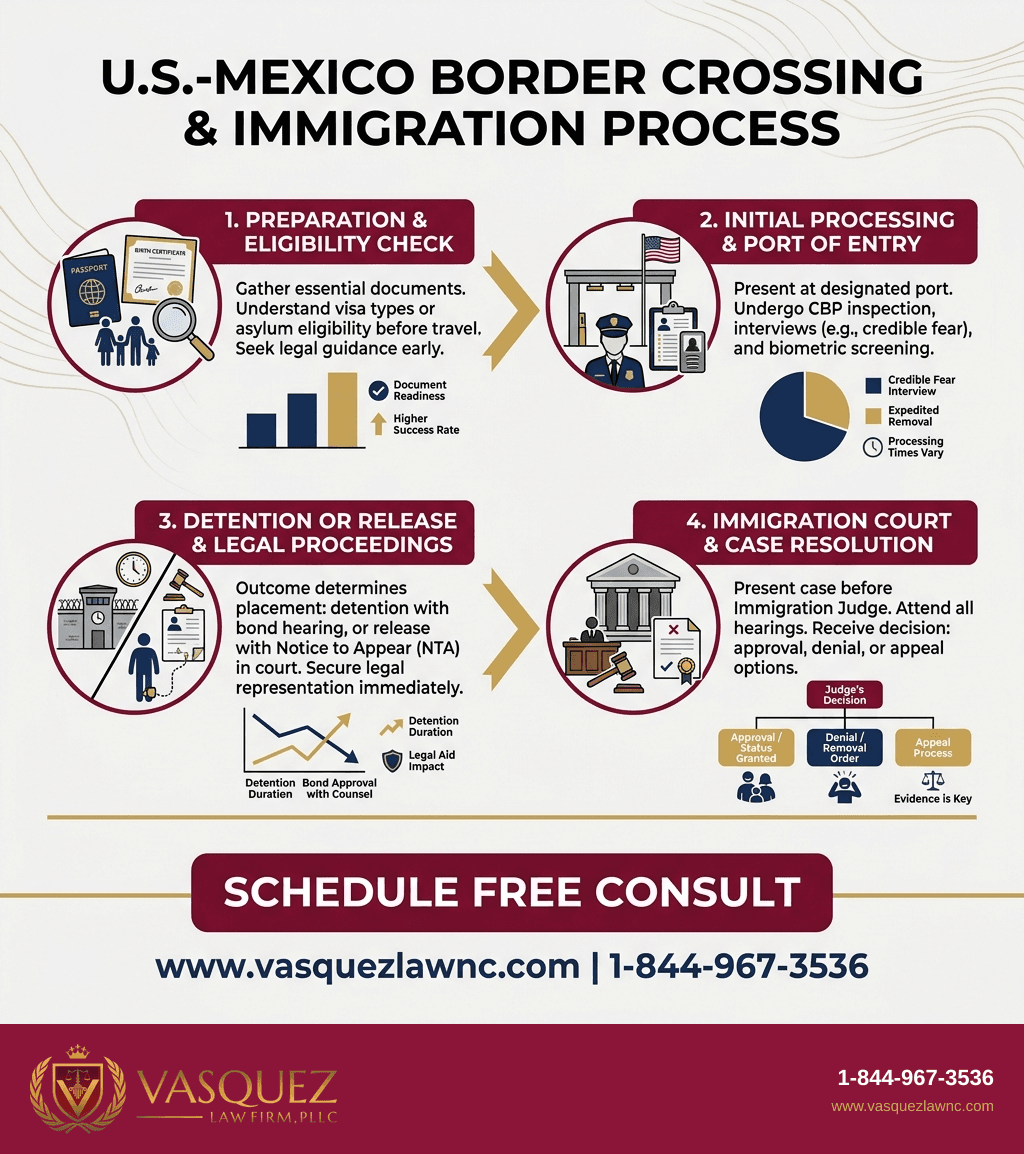
To cross the U.S.-Mexico border legally, you must prepare and follow federal immigration rules. Anyone trying to enter the U.S. must show valid papers and be allowed by U.S. Customs and Border Protection.
Presenting Documents at Port of Entry
All travelers must show a valid passport or trusted traveler card. Non-U.S. citizens may need visas or proper immigration status. People without the right papers may be denied entry or detained. Trusted traveler programs like SENTRI help qualified people cross faster.
Possible Inspection and Detention
CBP agents check travelers to see if they can enter. They verify papers and check criminal or immigration history. Sometimes, people are detained for more processing or sent to removal proceedings, which means legal steps to send them back. Knowing your rights and getting legal help is very important during these times.
Legal Protections and Asylum Process
People who fear harm in their home country can apply for asylum after entering the U.S. Asylum means protection for people escaping danger. The process includes interviews to show credible fear and court hearings managed by the Executive Office for Immigration Review (EOIR). These steps can take months or years (8 U.S.C. § 1229a).
Immigrants needing help can contact Attorney Vasquez to learn about eligibility and prepare applications well. Consultations for business immigration, including visas like H-1B or TN, are available online.
Common Mistakes to Avoid When Crossing the Border
- Trying to enter without valid papers always carry your passport or visa.
- Not understanding asylum rules make sure your claim has the right grounds with proof.
- Signing detention or removal papers without legal advice this can give up important rights.
- Believing wrong information about border closures policies change and you need current facts.
- Not telling family or lawyer if caught quick contact can help your case.
- Missing U.S. immigration deadlines or court dates this can cause automatic deportation.
- Not talking to experienced immigration lawyers early legal advice helps avoid costly errors.
If you remember one thing: Always check with a qualified lawyer before crossing or handling immigration issues at the border.
Timeline: What to Expect When Applying for Immigration Benefits
- USCIS takes 6 to 18 months to process initial applications, depending on the form (see USCIS Processing Times).
- Asylum hearings before EOIR may take months to years; emergency relief can be asked for if you qualify.
- Adjustment of status for permanent residence usually takes 8 to 14 months.
- Appeals or motions to reopen removal orders can add months or more to the timeline.
Costs and Fees: What Impacts the Price
- USCIS fees depend on the application; for example, Form I-485 (adjustment of status) costs $1,225 as of 2026.
- Legal fees depend on how complex the case is; some lawyers charge flat fees or hourly rates.
- Other costs may include medical exams, fingerprinting, and translations.
- Fee waivers or reductions may be available for people with low income.
Jurisdiction Notes
North Carolina Notes
Immigration cases about border issues or relief can be handled by federal courts and EOIR immigration courts. Appeals can go to the Fourth Circuit Court of Appeals, which covers North Carolina. Local offices in Raleigh, NC offer in-person help for filing some petitions.
Florida Notes
In Orlando, FL, immigration services include advice and legal help on border and immigration issues. Federal immigration courts in Florida also handle removal cases for residents.
Nationwide Notes
Immigration law is controlled by the federal government. The U.S.-Mexico border and related policies affect applicants all over the U.S. Vasquez Law Firm helps clients nationwide with federal rules, EOIR hearings, and USCIS processes.
When to Call a Lawyer Now
- After being caught or detained by immigration officers.
- If you face deportation or removal proceedings.
- Before sending asylum or humanitarian applications.
- If you get a Notice to Appear (NTA) in immigration court.
- When applying for adjustment of status or family petitions.
- If immigration policies change and affect your case.
About Vasquez Law Firm
At Vasquez Law Firm, we mix care with strong representation. Our motto "Yo Peleo" (I Fight) shows our promise to stand up for your rights.
- Bilingual Support: Se Habla Español Spanish-speaking lawyers and staff are available
- Service Areas: North Carolina, plus Florida and nationwide for immigration
- Experience: Over 30 years helping clients with complex legal matters
- Results: Thousands of successful cases in many practice areas
Attorney Trust and Experience
William J. Vásquez joined the North Carolina State Bar in 2011. He is also admitted to the U.S. Courts of Appeals for the 4th, 5th, 6th, and 11th Circuits. The firm has offered dedicated legal help since 2011, giving personal attention to each client.
Don't wait to get the help you need. Call us now for quick assistance.
Se Habla Español
Frequently Asked Questions
Is the U.S.-Mexico border currently closed?
As of 2026, the U.S.-Mexico border is open but has specific entry limits based on health and security rules. Access can change by port of entry. Check official government sources or talk to a lawyer to know the current rules.
What is the length of the U.S.-Mexico border?
The border is about 1,954 miles long from California to Texas. It crosses deserts, rivers, and cities. Many communities live near it, and immigration authorities manage it carefully.
Can I legally cross the U.S.-Mexico border without a passport?
No. Crossing without a valid passport or travel papers is illegal and risky. Only in rare cases for U.S. citizens or lawful residents are exceptions allowed. Proper papers are needed to enter the U.S. legally.
What is the U.S.-Mexico border wall and how tall is it?
The wall has physical barriers from 15 to 30 feet tall. It is built to stop illegal crossings. It also has cameras and patrols. The wall is not the same all along the border and uses natural features too.
What states does the U.S.-Mexico border touch?
The border touches California, Arizona, New Mexico, and Texas. Each state has different border crossings and enforcement rules.
What should I do if apprehended crossing the border illegally?
If you are caught, stay calm, ask for a lawyer, and do not sign papers without advice. Legal help is very important to protect your rights during detention or removal proceedings.
How does the U.S. immigration system process border crossings?
CBP checks entries, verifies papers, and sends some cases to immigration courts. The process depends on each person’s situation. Some may apply for asylum or humanitarian help.
Can immigrant families get legal help in Orlando or Raleigh?
Yes. Vasquez Law Firm offers immigration legal services in Orlando, FL and Raleigh, NC. We help families with border and immigration issues. Our staff speaks Spanish and gives expert advice.
Sources and References
- U.S. Citizenship and Immigration Services
- Executive Office for Immigration Review
- Legal Information Institute
Take the first step toward justice today. Our team is ready to help.
Start Your Free Evaluation Now
Call us: 1-844-967-3536
Se Habla Español - We are here to help you.


William Vasquez
Founder & CEO, Vasquez Law Firm, PLLC
William Vasquez is the founder and CEO of Vasquez Law Firm, PLLC, a results-driven firm specializing in immigration, criminal defense, personal injury, and workers' compensation. A U.S. Air Force veteran and recipient of the Joint Service Achievement Medal, William is dedicated to fiercely fighting for his clients' rights.
Related Legal Services
Need legal help? Learn more about learn about our immigration practice, or contact us for a free evaluation.
You can also visit NC immigration legal help for more information.