How U.S. Immigration Works in Raleigh: What to Expect 2026
Learn how U.S. immigration applies in Raleigh in 2026. Discover your options for visas, green cards, and asylum. Call Vasquez Law for a free evaluation.
Published on July 8, 2026
Talk to an immigration attorney
Free call. A clear plan for your case.
Free & confidential · Se habla espanol · 24/7
Have questions? Talk to an attorney - free evaluation.
Call 1-844-967-3536Worried how the latest immigration news affects you?
Schedule a confidential case review with an immigration attorney - know exactly where you stand.
How U.S. Immigration Works in Raleigh: What to Expect 2026
If you live in Raleigh, NC or Orlando, FL and are dealing with U.S. immigration issues, understanding the process is crucial. From applying for green cards and visas to seeking asylum or citizenship, immigration law involves complex, federally governed procedures. This article explains how U.S. immigration operates as of 2026, what evidence you need, and timelines to expect. Learn about rigorous immigration rules, how data sharing controversies may affect you, and details on citizenship and refugee protections. Whether you're a Dreamer, asylum seeker, or business visa applicant, clear guidance is essential. Vasquez Law Firm in Raleigh and Orlando helps clients across immigration challenges, providing bilingual support and aggressive advocacy.
Need help with your case? Our experienced attorneys are ready to fight for you. Se Habla Español.
Or call us now: 1-844-967-3536
Quick Answer
The U.S. immigration system sets federal rules for visas, green cards, asylum, and citizenship. In Raleigh and Orlando, you must follow these procedures strictly, including providing required documents and meeting deadlines. Processing times vary widely, from months to years. Legal assistance can help avoid common errors and protect your rights under rigorous immigration enforcement policies.
- Apply according to federal forms and rules
- Require evidence like passports, proof of residence, and affidavits
- Processing times may be 7-24 months or longer
- Asylum applicants must apply within 1 year of entry
- Legal help improves success chances and compliance
Understanding U.S. Immigration
U.S. immigration is governed by federal law and administered primarily by U.S. Citizenship and Immigration Services (USCIS), Immigration Customs Enforcement (ICE), Customs and Border Protection (CBP), and immigration courts under the Executive Office for Immigration Review (EOIR). Applicants seeking legal status must navigate numerous visa categories, adjustment of status procedures, and deportation defenses.
For residents in Raleigh, NC and Orlando, FL, these federal rules apply fully, though local offices affect some in-person processes. For example, Raleigh USCIS offices handle family-based green card applications and naturalization interviews. Business immigration consultations (H-1B, L-1 visas) are virtual, reflecting national USCIS policies.
Rigorous Immigration Policies in 2026
The U.S. continues rigorous immigration enforcement, increasing scrutiny at entry points and within communities. ICE's role in detentions and removals remains expansive. The recent 2026 lawsuit alleging U.S. data sharing with Iran highlights risks to immigrant privacy and trust, especially among refugees and asylum seekers from certain countries. Knowledge of your rights during immigration encounters is crucial.
Immigration and Refugee Protections
The U.S. offers protections for refugees and asylum seekers under INA § 208, allowing individuals persecuted on account of race, religion, nationality, or political opinions to apply for relief. This process has strict filing deadlines and requires documentation of threats. Vasquez Law Firm helps applicants in Raleigh and Orlando prepare reliable cases backed by evidence.
Green Cards and Citizenship Learnings
Green cards grant lawful permanent residency, allowing work and travel rights. Citizenship requires several years on a green card (usually 5) and passing the naturalization test under INA § 1427. Citizenship confers additional rights like voting and federal employment eligibility, making it an important goal for many immigrants.
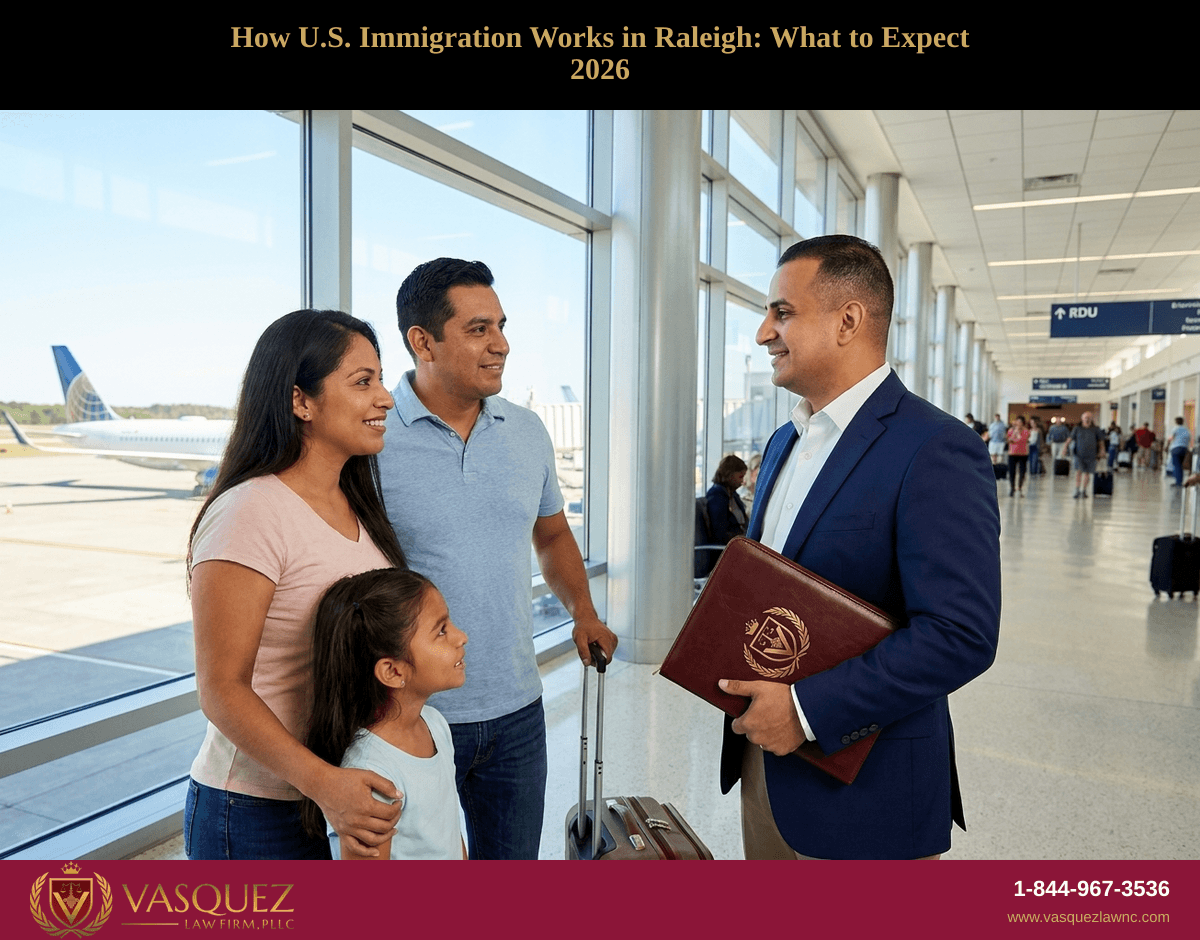
Step-by-Step: How to Apply for Immigration Benefits
Applying for U.S. immigration benefits involves structured steps requiring thorough documentation and tight compliance with USCIS instructions.
Step 1: Determine Eligibility
Check if you qualify based on family relationship, employment status, asylum, or other grounds. Some categories have annual quotas, which create wait times.
Step 2: Complete the Correct Forms
Common forms include I-130 (family petitions), I-485 (adjustment of status), and I-765 (work permits). Use USCIS official forms and follow instructions carefully. For instance, DACA applicants file Form I-821D.
Step 3: Submit Evidence
Gather identification, proof of residence, employment letters, and affidavits. Missing evidence causes delays or denials.
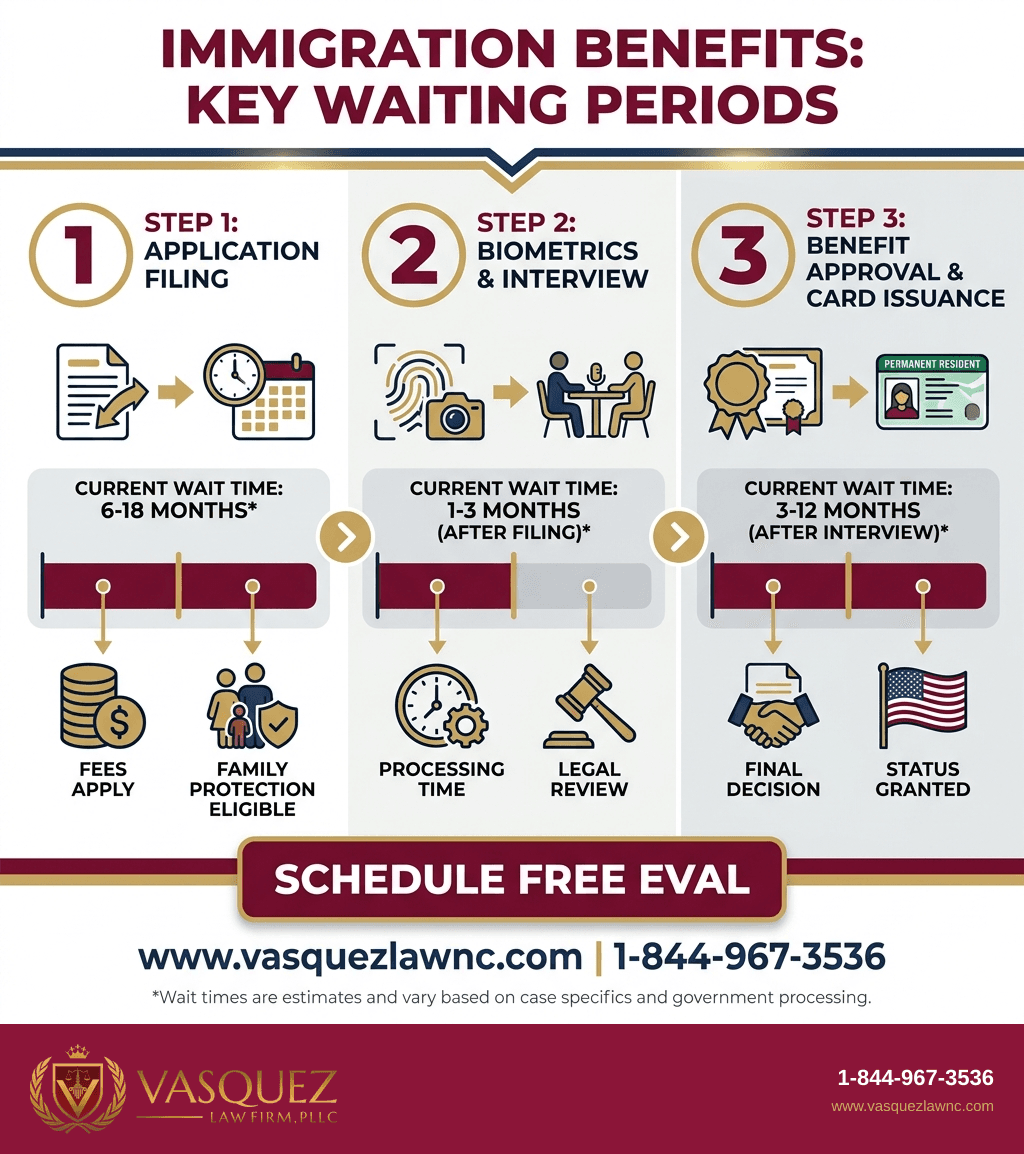
Step 4: Attend Biometrics and Interview
USCIS schedules biometric fingerprinting and interviews in many cases to verify identity and eligibility.
Step 5: Receive USCIS Decision
Processing times vary; decisions are mailed with instructions on next steps or appeal rights.
Common Mistakes to Avoid in Immigration Cases
- Missing Application Deadlines: File forms within deadline windows, especially asylum (within one year of entry).
- Incomplete or Incorrect Forms: Errors may lead USCIS to reject or delay applications; always review carefully.
- Lack of Supporting Evidence: Submit credible documents to prove residence, relationship, or persecution claims.
- Not Reporting Address Changes: Failing to update USCIS about moves can cause lost notices or denials.
- Ignoring Requests for Additional Information: Respond promptly to USCIS Requests for Evidence (RFEs).
- Filing Without Legal Help: Complex cases benefit from attorney guidance to navigate federal procedures.
- Failing to Understand Enforcement Risks: Know your rights during ICE or immigration officer encounters in NC and FL.
If you only remember one thing: Make no mistakes in your immigration paperwork and respond promptly to government requests to protect your opportunity.
Timeline: What to Expect During Your Application
- Initial Processing: Submission to biometrics appointment usually takes 1-3 months.
- Interview Scheduling: Depending on the case, interviews often occur 7-12 months after filing.
- Decision Notice: USCIS decision typically comes within 6-24 months for most adjustment of status cases.
- Asylum Cases: Can take 1-3 years due to backlog unless expedited.
- DACA Renewals: Average processing is 14-22 months for Form I-821D as per USCIS 2026 data.
Check current processing times regularly at USCIS Processing Times.
Costs and Fees: What Impacts the Price
- Application fees vary by form. For example, Form I-485 currently costs $1,225, including biometrics.
- Legal fees depend on case complexity and attorney experience.
- Additional costs can include document translations, medical exams, and travel.
- Fee waivers or reductions are available for qualifying applicants but require proof of hardship.
NC, FL, and nationwide notes
North Carolina Notes
In Raleigh and across NC, USCIS offices process family-based and adjustment applications. Local immigration courts in Charlotte and Raleigh handle removal cases. Vasquez Law Firm supports clients region-wide with offices in Raleigh.
Florida Notes
Our Orlando office supports immigrants with family, asylum, and employment visas. The Florida Immigration Court in Orlando handles removal proceedings. Business visa consultations are virtual but include local support.
Nationwide Concepts (General Only, Rules Vary)
Immigration law is federal but practical processing and enforcement may vary regionally. Always verify local USCIS office rules and court schedules. Comprehensive federal rules are available at USCIS Policy Manual.
When to Call a Lawyer Now
- If you receive a Notice to Appear (NTA) for removal proceedings
- After an ICE or CBP enforcement encounter
- If your green card or visa application is denied
- If you need to apply for asylum or refugee status
- If you face criminal charges affecting immigration
- Before applying for complex immigration benefits like business visas
- If you have immigration-related questions about family petitions
- To handle appeals or Requests for Evidence (RFEs) from USCIS
About Vasquez Law Firm
At Vasquez Law Firm, we combine compassion with aggressive representation. Our motto "Yo Peleo®" (I Fight) reflects our commitment to standing up for your rights.
- Bilingual Support: Se Habla Español — Spanish-speaking attorneys and staff available
- Service Areas: North Carolina, Florida, and nationwide immigration services
- Experience: Over 30 years helping clients navigate complex legal matters
- Results: Thousands of successful cases across multiple practice areas
Attorney Trust and Experience
William J. Vásquez is admitted to the North Carolina State Bar (2011) and to the U.S. Courts of Appeals for the 4th, 5th, and 11th Circuits. Florida-jurisdiction matters at the firm are handled by Florida Bar attorney Harold Estrada-Rodriguez (FL Bar No. 1041171). The firm has provided dedicated legal representation since 2011, with personalized attention to each client's case.
Don't wait to get the help you deserve. Call us now for immediate assistance. Se Habla Español.
Frequently Asked Questions
What is the difference between a green card and citizenship?
A green card grants lawful permanent resident status, allowing you to live and work in the U.S. Citizenship provides full legal rights including voting and federal employment eligibility. Naturalization typically requires 5 years of permanent residency and passing a citizenship test under 8 U.S.C. § 1427.
How long does a typical green card process take?
USCIS processing times vary by category and workload. Family-based green cards usually take 7 months to several years. Employment-based applications often take 12-24 months. Check current times at USCIS Processing Times.
What are common mistakes immigrant applicants make?
Common mistakes include missing deadlines, submitting incomplete applications, lacking evidence like proof of residence, or failing to disclose past arrests. These errors can delay or deny benefits. Consulting with an immigration attorney can help avoid these pitfalls.
Can I apply for asylum if I am already in the U.S.?
Yes. Those physically present in the U.S. may file for asylum if they fear persecution due to specific protected grounds. Filing must usually be within one year of entry under INA § 208 unless exceptional circumstances exist.
How does the 2026 data sharing lawsuit affect immigrant privacy?
The 2026 federal lawsuit alleges U.S. immigration data was shared improperly with Iran. This raises concerns about privacy and safety, especially for vulnerable immigrants, refugees, and asylum seekers. Legal advice can help protect your rights in uncertain times.
What is rigorous immigration enforcement in 2026?
This term describes the federal government's intensified monitoring, detention, and removal efforts. Knowing your rights during immigration enforcement in NC and FL is essential to avoid unlawful treatment.
Are DACA renewals still processing in 2026, and how long do they take?
Yes, DACA renewals continue with current USCIS processing times ranging from 14 to 22 months for Form I-821D, according to official data. Early renewal is important to maintain protection and work authorization.
How can Vasquez Law Firm help with U.S. immigration cases?
We provide bilingual legal support for visas, green cards, asylum, deportation defense, and naturalization in Raleigh, NC, and Orlando, FL. Our attorneys combine compassion with aggressive representation to protect your rights in complex federal immigration matters.
Sources and References
- U.S. Citizenship and Immigration Services
- Executive Office for Immigration Review
- Legal Information Institute
Take the first step toward justice today. Our team is standing by to help. Se Habla Español.
Start Your Free Evaluation Now
Call us: 1-844-967-3536
Se Habla Español - Estamos aquí para ayudarle.
If you need legal assistance, learn more about how our immigration attorneys can help, or call us at 1-844-967-3536 for a free evaluation.

William Vasquez
Founder & CEO, Vasquez Law Firm, PLLC
William Vasquez is the founder and CEO of Vasquez Law Firm, PLLC, a results-driven firm specializing in immigration, criminal defense, personal injury, and workers' compensation. A U.S. Air Force veteran and recipient of the Joint Service Achievement Medal, William is dedicated to fiercely fighting for his clients' rights.
Related Legal Services
Need legal help? Learn more about how our immigration attorneys can help, or contact us for a free evaluation.
You can also visit North Carolina immigration law firm for more information.
![DHS Purchases California ICE Detention Centers: Essential Update [2026]](/_next/image?url=https%3A%2F%2Fvuuyorlsmhunqektprqy.supabase.co%2Fstorage%2Fv1%2Fobject%2Fpublic%2Fblogs%2Fimmigration-header-1783512327822.png&w=1920&q=75)