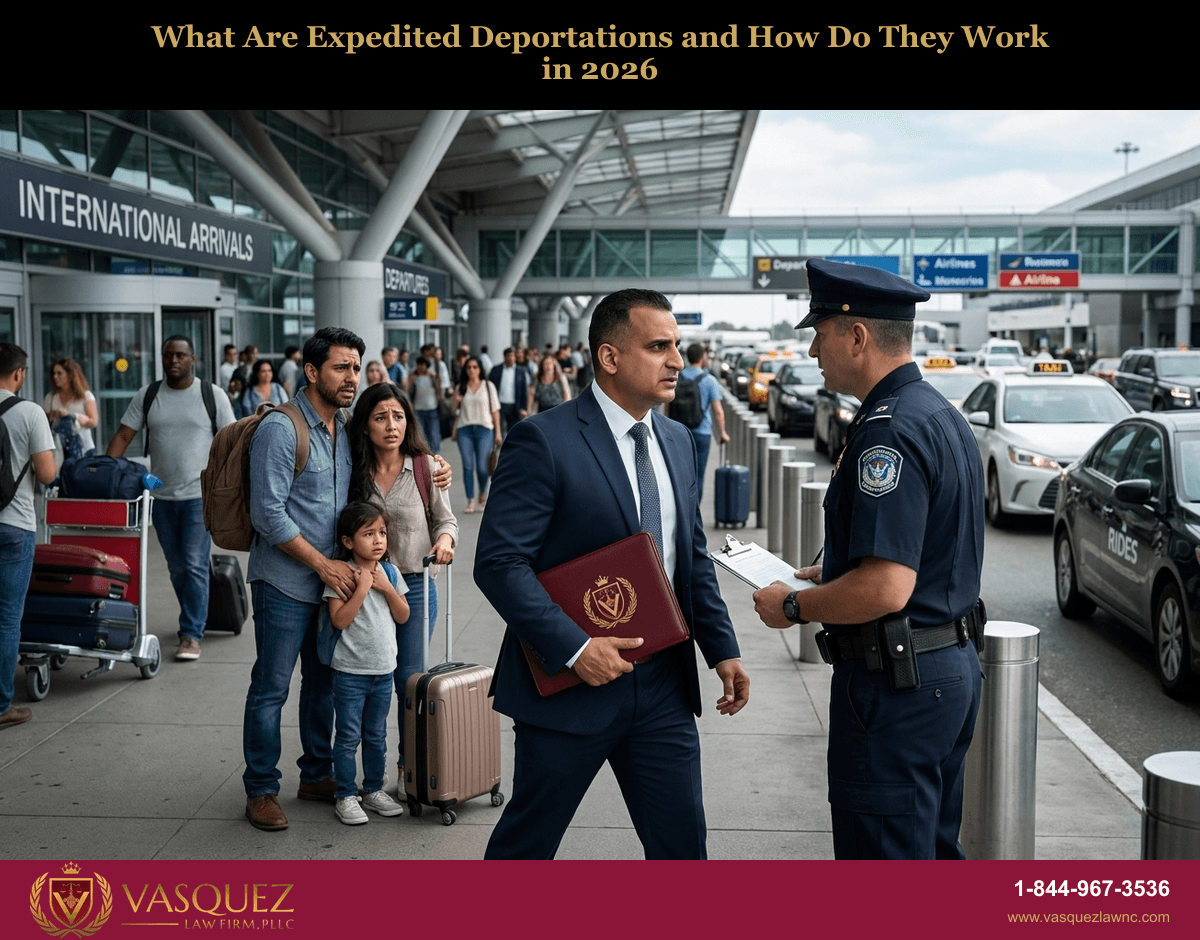
How Immigration Detention Works and What to Expect in 2026
Wondering how immigration detention works in 2026? Learn about your rights, legal procedures, and what to expect. Contact Vasquez Law for a free evaluation.
Published on June 25, 2026· Updated September 9, 2026
Talk to an immigration attorney
Free call. A clear plan for your case.
Free & confidential · Se habla espanol · 24/7

Have questions? Talk to an attorney - free evaluation.
Call 1-844-967-3536Worried how the latest immigration news affects you?
Schedule a confidential case review with an immigration attorney - know exactly where you stand.
USCIS Case Status
Check your USCIS case status
Enter your receipt number and get the official status. Free, no registration.
How Immigration Detention Works and What to Expect in 2026
Immigration detention is an important issue affecting thousands of people in Raleigh and Orlando as of 2026. Understanding the purpose, legal steps, and rights involved can help families who are affected. This article explains what immigration detention means, the laws behind it, and what people can expect during the process. Whether you or a loved one faces immigration detention, knowing your rights and what to do can make a big difference in your case. Vasquez Law Firm offers caring, bilingual legal help in Raleigh, NC and Orlando, FL to guide you through each step.
Need help with your case? Our experienced attorneys are ready to fight for you. Se Habla Español.
Or call us now: 1-844-967-3536
Quick Answer
Immigration detention means holding people while their immigration status is decided. Usually, this happens in ICE facilities. People who are detained have rights. These include the right to a lawyer and bond hearings, depending on their case. Immigration detention centers like Florence ICE in Arizona or centers near Raleigh and Orlando follow federal rules under laws including 8 U.S.C. § 1226 and 1231.
- Legal rights include access to lawyers and bond hearings
- Use ICE Detainee Locator to find detainees
- Detention is to make sure people go to court and for safety
- There may be alternatives to detention
- How long detention lasts varies a lot
Understanding Immigration Detention in 2026
In 2026, immigration detention is still a key part of the U.S. immigration system. About 20,000 people are held every day in immigration detention centers across the country. These centers, like the Florence immigration detention Center in Arizona and smaller centers near Raleigh, hold non-citizens who face removal (deportation) or entry problems. The Department of Homeland Security (DHS) runs detention through ICE (U.S. Immigration and Customs Enforcement).
Immigration detention is not the same as criminal jail. It is civil detention under laws 8 U.S.C. § 1226 and § 1231. Its goal is to make sure people attend immigration hearings or leave the country if ordered. Detention centers can be run by private companies or the federal government. Conditions and rules differ but must meet federal standards.
While detained, people face problems like limited contact with family, difficulty reaching lawyers, and uncertainty about release. Knowing the laws can help detainees and their families make smart choices about bail, asking for relief, and appeals.
Our immigration legal services in Raleigh and Orlando can help if you or a loved one is detained. We have experience with detention rules and protecting your rights during this hard time.
What Is the Purpose of Immigration Detention?
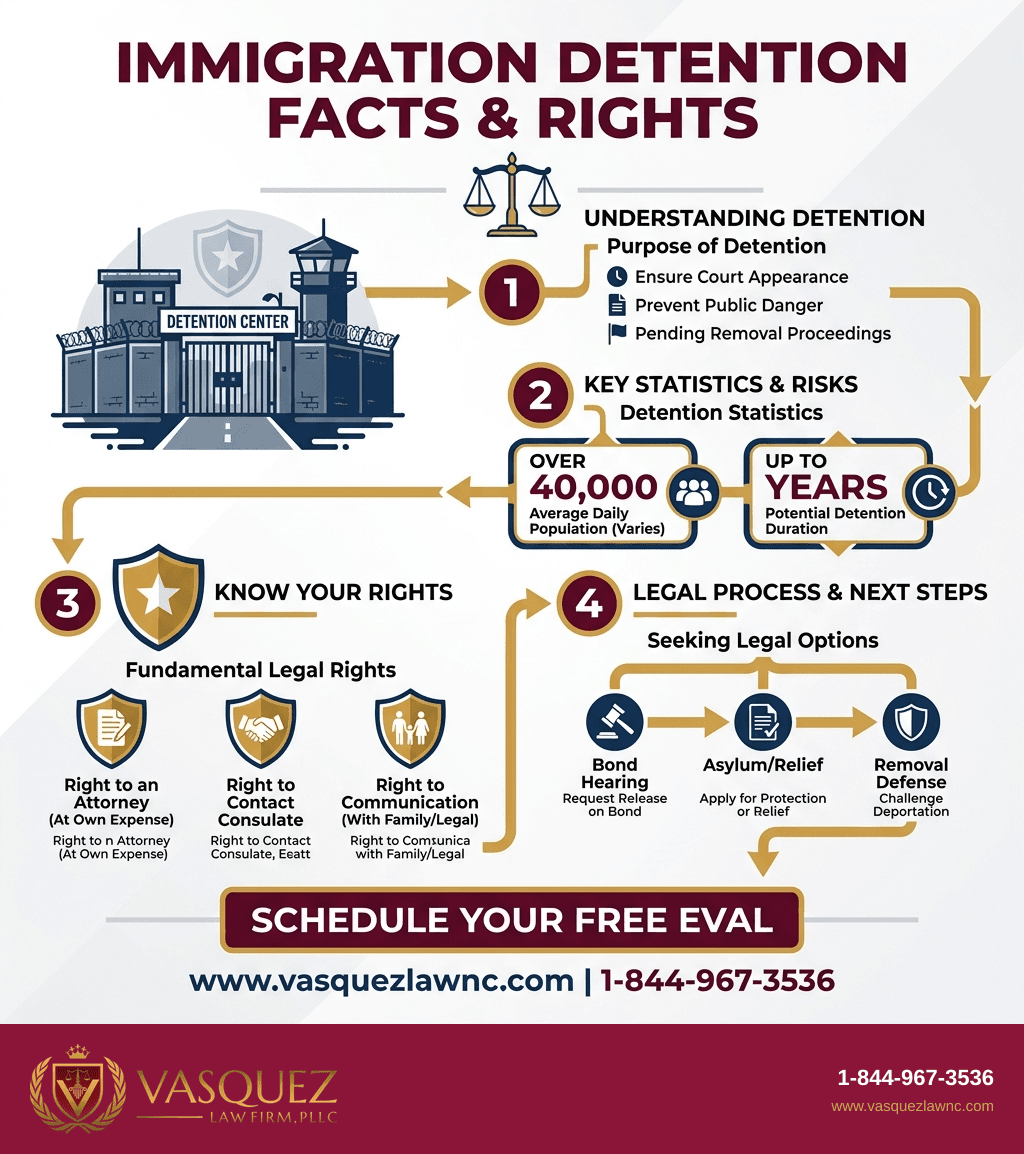
The main purpose is to make sure people go to immigration hearings and to protect public safety. Immigration detention also stops unauthorized entry or re-entry into the U.S. after removal. Detention must follow legal limits and cannot punish people like criminal jail does.
Types of Immigration Detention Centers
Detention centers are different. Large centers like the Florence immigration detention Center hold many detainees and have many resources. Smaller local jails or contract centers near Raleigh and Orlando hold detainees for a short time. ICE shares a list of detention centers but finding a detainee needs tools like the ICE Detainee Locator.
Rights of Individuals in Immigration Detention
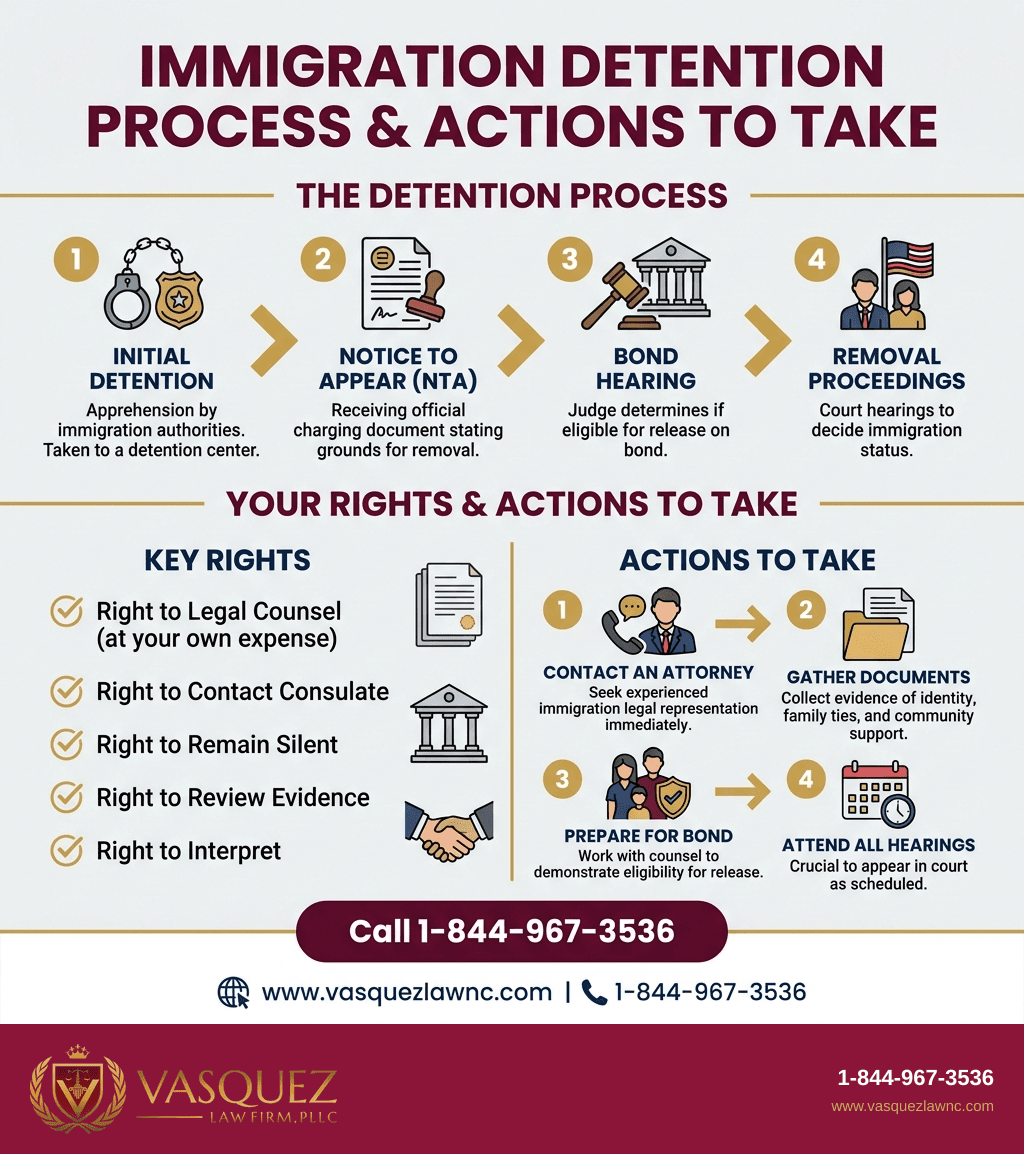
Detainees have rights. These include due process (fair legal steps), access to lawyers, humane treatment, and medical care. They can ask for bond hearings and talk with lawyers and family. These rights can be limited in practice but should be strongly protected. The USCIS and EOIR give official information on legal rights.
Step-by-Step: What to Do If Detained
- Stay calm and do not fight authorities during arrest.
- Ask for their ID and why you are detained.
- Use your right to stay silent. Do not sign papers without a lawyer.
- Try to get contact info for your family or lawyer.
- Use the ICE Detainee Locator online to find your detention center.
- Family can use the ICE Detainee Locator to check location.
- Ask for a bond hearing or apply for relief if you qualify.
- Work with an immigration lawyer to prepare and collect evidence.
- Get ready for immigration court hearings.
- Keep all documents and letters safe.
- Go to all hearings and follow all rules.
- Missing hearings can lead to deportation orders.
Quick Tips
- Memorize your lawyer's contact info.
- Keep your immigration papers in a safe place.
- Don't talk about your case with other detainees.
Documents and Evidence Checklist
- ID documents (passport, birth certificate, Green Card if you have one)
- Any immigration papers (notices, past applications, visas)
- Proof of where you live and work (leases, paystubs)
- Letters that support your case (from employer, family, community)
- Medical records if health reasons matter for your case
- Criminal or court records if related to your case
Timeline: What to Expect During Detention
- Day 1-3: Initial processing and placement in a detention center.
- Week 1-2: Use ICE Detainee Locator to confirm location; possible scheduling of master calendar hearing.
- Week 4-6: Bond hearing if you qualify; meet with lawyers.
- Month 2-6: Individual hearing on your case and chance to apply for relief.
- Month 6+: Possible appeals or final removal orders.
Note: These times can change a lot depending on case details and local court schedules.
Costs and Fees Impacting Your Case
- Lawyer fees vary based on case difficulty and if bond hearings happen.
- Filing fees for applications like cancellation of removal or asylum may apply.
- Detention itself does not cost the detainee, but travel and phone costs may come up.
- Costs for expert witnesses, translations, or document certifications may be needed.
- Proof of money is needed for bond sponsorship.
Common Mistakes and How to Avoid Them
- Not getting a lawyer quickly: Fix this by contacting an experienced immigration lawyer as soon as possible.
- Missing court dates or appointments: Use calendars and reminders; ask your lawyer for alerts.
- Signing papers without understanding: Always review with your lawyer first.
- Not giving complete evidence: Prepare well and collect all supporting papers early.
- Giving limited or wrong info to authorities: Be honest but don't give extra details you don't need to.
- Ignoring bond hearing chances: Talk with your lawyer about your eligibility carefully.
- Letting family or friends trust unofficial sources: Check all info with official ICE sources or lawyers.
If you remember only one thing: Get experienced legal help right away to protect your rights during detention.
NC and FL Immigration Detention Notes
North Carolina Notes
People detained in North Carolina may be held in local jails or contract centers near Raleigh before moving to bigger centers. Local immigration courts serve the area, but delays happen because of many cases. Help with these courts can improve results.
Florida Notes
In Orlando and nearby Florida areas, detainees may be held in regional ICE centers or county jails. Places like the Krome Service Processing Center near Miami serve south Florida. Having a lawyer is very important because Florida immigration courts can be fast and strict.
Nationwide Concepts
Immigration detention follows federal laws (8 U.S.C. § 1226, 8 U.S.C. § 1231) and is run by DHS and ICE policies. Courts and centers follow these laws everywhere, but local rules and conditions differ. There may be alternatives to detention depending on your case.
When to Call a Lawyer Immediately
- You have been detained or arrested by ICE.
- You got a Notice to Appear in immigration court.
- You face a bond hearing or were denied bond.
- You are dealing with a removal or deportation order.
- You worry about a family member’s detention conditions or health.
- You are unsure about your rights in detention.
- You were denied asylum or other immigration benefits.
- You need help understanding alternatives to detention.
About Vasquez Law Firm
At Vasquez Law Firm, we mix care with strong representation. Our motto "Yo Peleo®" (I Fight) shows our promise to stand up for your rights.
- Bilingual Support: Se Habla Español - Spanish-speaking lawyers and staff available
- Service Areas: North Carolina, Florida, and immigration services across the country
- Experience: Over 30 years helping clients with complex legal issues
- Results: Thousands of successful cases in many practice areas
Attorney Trust and Experience
William J. Vásquez is licensed by the North Carolina State Bar (2011) and the U.S. Courts of Appeals for the 4th, 5th, 6th, and 11th Circuits. Florida cases at the firm are handled by Florida Bar lawyer Alekssandra Lopez. The firm has offered dedicated legal help since 2011, giving personal attention to each client.
Don't wait to get the help you need. Call us now for quick assistance. Se Habla Español.
Frequently Asked Questions
What are the rights of individuals in immigration detention?
Individuals have the right to legal representation, humane treatment, medical care, and bond hearings if eligible. Access to family and attorneys is protected, although sometimes limited by facility rules. Knowing and asserting these rights can improve detainees' situations within detention centers.
What is the purpose of immigration detention?
Immigration detention ensures detained individuals appear at removal hearings and protects public safety. It confines those without lawful status pending legal processes following federal immigration laws under 8 U.S.C. § 1226 and 1231.
How can I find someone detained in an immigration detention center?
Families and attorneys can use the ICE Detainee Locator website to locate detainees nationwide. Accurate names and birthdates aid location. Centers include large facilities like the Florence immigration detention Center and others near Raleigh or Orlando.
What legal procedures are involved in immigration detention?
Detained individuals appear before immigration courts for bond and removal hearings. They may apply for relief such as asylum or cancellation of removal. Having legal counsel is crucial to navigate complex court proceedings effectively.
Are there alternatives to immigration detention?
Yes. Alternatives include supervised release, electronic monitoring, and periodic check-ins with ICE to reduce detention’s financial and emotional impacts. These options depend on individual circumstances and discretion of immigration authorities.
Can ICE legally detain a U.S. citizen?
ICE generally cannot detain U.S. citizens. Detention targets non-citizens suspected of violating immigration laws. If a citizen is detained mistakenly, prompt legal action can correct the error and secure release.
What should I bring if visiting someone in immigration detention?
Visitors should bring valid photo identification and documentation proving relationship. Each detention center has unique visitation rules, so checking ahead with the facility like Florence or local centers near Raleigh or Orlando is recommended.
How long does immigration detention usually last?
Detention durations vary widely from a few weeks to over a year. Factors include case complexity, court schedules, ICE policies, and availability of relief. Understanding processing timelines helps manage expectations during detention.
Sources and References
- U.S. Citizenship and Immigration Services
- Executive Office for Immigration Review
- Legal Information Institute
Take the first step toward justice today. Our team is ready to help. Se Habla Español.
Start Your Free Evaluation Now
Call us: 1-844-967-3536
Se Habla Español - Estamos aquí para ayudarle.
If you need legal assistance, learn more about NC immigration legal team, or call us at 1-844-967-3536 for a free evaluation.


William Vasquez
Founder & CEO, Vasquez Law Firm, PLLC
William Vasquez is the founder and CEO of Vasquez Law Firm, PLLC, a results-driven firm specializing in immigration, criminal defense, personal injury, and workers' compensation. A U.S. Air Force veteran and recipient of the Joint Service Achievement Medal, William is dedicated to fiercely fighting for his clients' rights.
Related Legal Services
Need legal help? Learn more about NC immigration legal team, or contact us for a free evaluation.
You can also visit NC immigration legal help for more information.