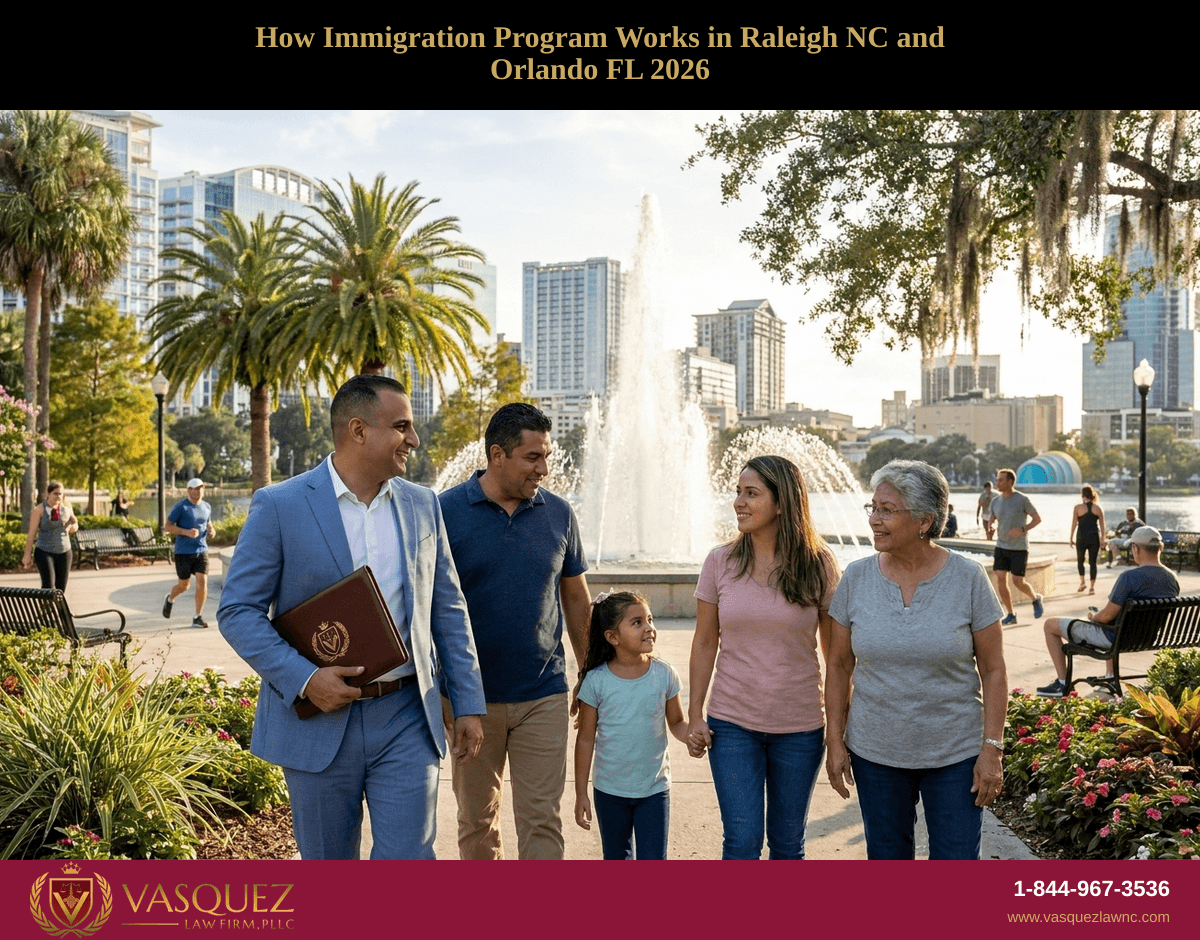
How Immigration Program Works in Raleigh NC and Orlando FL 2026
Learn how the immigration program works in 2026. Discover eligibility, timelines, and legal steps. Contact Vasquez Law Firm for a free evaluation today.
Published on June 29, 2026
Talk to an immigration attorney
Free call. A clear plan for your case.
Free & confidential · Se habla espanol · 24/7
Have questions? Talk to an attorney - free evaluation.
Call 1-844-967-3536Worried how the latest immigration news affects you?
Schedule a confidential case review with an immigration attorney - know exactly where you stand.
USCIS Case Status
Check your USCIS case status
Enter your receipt number and get the official status. Free, no registration.
How Immigration Program Works in Raleigh NC and Orlando FL 2026
Navigating an immigration program can be complicated, especially in 2026’s changing legal landscape. Whether you're applying for a visa, seeking permanent status, or exploring citizenship options in Raleigh, NC or Orlando, FL, understanding the federal immigration program framework is crucial. This guide outlines key program types, application steps, and common pitfalls to help immigrants protect their rights and achieve their goals. Our immigration attorneys in Raleigh and Orlando provide bilingual service to support your journey at every step.
Need help with your case? Our experienced attorneys are ready to fight for you. Se Habla Español.
Or call us now: 1-844-967-3536
Quick Answer
An immigration program is a federal set of legal pathways that allow individuals to enter, stay, and become lawful residents in the U.S. Understanding which program fits your situation helps navigate visa applications, permanent residency, or citizenship while avoiding deportation risks.
- Includes family, employment, and humanitarian options
- Requires meeting eligibility criteria and submission of specific forms
- Processing times vary by case and program
- Legal counsel improves chances of success
- Programs can include asylum, DACA, and visa categories like H-1B
Understanding the Immigration Program
Imagine Maria, living in Raleigh, NC, wishing to adjust her status after marrying a U.S. citizen. Choosing the right immigration program is essential for her legal residence and avoiding complications like deportation. Immigration programs set by federal law provide different paths such as family sponsorship, asylum, employment visas, or humanitarian relief.
As of 2026, U.S. immigration is governed primarily by the Immigration and Nationality Act (INA), and administered by U.S. Citizenship and Immigration Services (USCIS) and the Executive Office for Immigration Review (EOIR). Programs have specific requirements under these agencies, found on the U.S. immigration website.
Programs are designed to manage who is allowed entry and how to become a permanent resident or citizen. Categories include:
- Family-Based Immigration: Allows U.S. citizens and permanent residents to sponsor relatives.
- Employment-Based Immigration: For workers with specialized skills or petitions from employers.
- Humanitarian Programs: Includes asylum, Temporary Protected Status, and specific visas for crime victims (U visa) or domestic violence survivors (VAWA petitions).
- Diversity Lottery: A lottery for individuals from countries underrepresented in U.S. immigration.
Knowing the difference between these programs in Raleigh and Orlando’s context is vital. For example, employment visas like H-1B require employer sponsorship, and these consultations are offered virtually by Vasquez Law Firm. Family petitions are usually filed from within the U.S. or via consulates abroad.
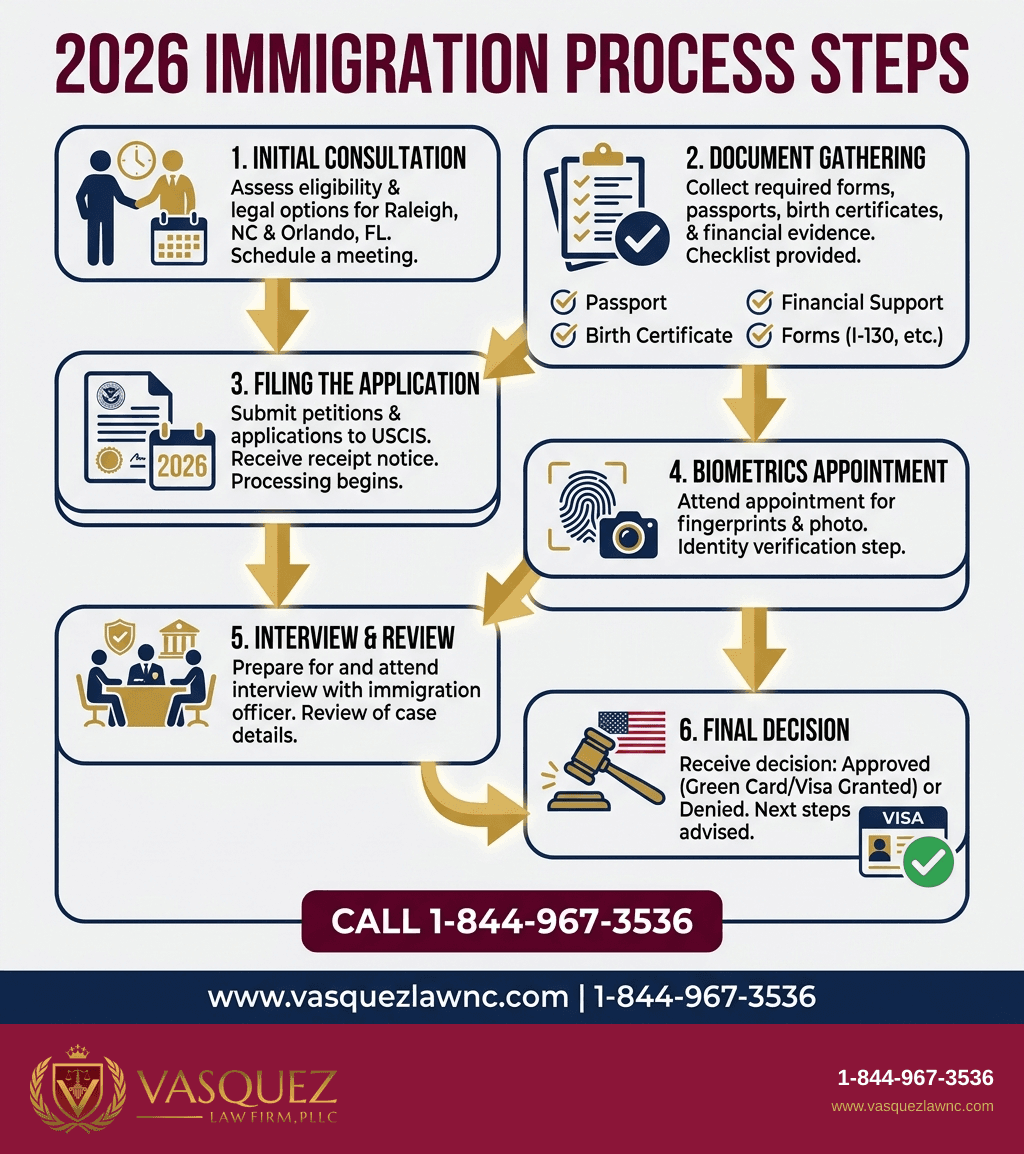
Step-by-step: What to Do
- Determine Eligibility: Evaluate which immigration program matches your situation. Are you a worker, family member, victim of crime, or seeking asylum? Use the official U.S. immigration website for criteria.
- Gather Documents: Prepare evidence such as identity documents, relationship proof, employment letters, and police reports if applying under humanitarian grounds.
- Complete Forms: Typical forms include I-130 (family sponsorship), I-485 (adjustment of status), or I-765 (work authorization). USCIS updates forms regularly, check latest versions.
- File Application: Submit applications to USCIS or the appropriate agency, paying attention to deadlines and associated fees.
- Attend Biometrics Appointment: USCIS schedules fingerprinting and background checks as part of processing.
- Interview: Some programs require interviews where applicants must demonstrate eligibility.
- Wait for Decision: Processing times vary; check USCIS processing times for the latest estimates.
- Receive Notice: Approvals result in permanent resident cards or visas; denials will include appeal options.
Documents or Evidence Checklist
- Valid passport or identity documents
- Proof of relationship (marriage certificate, birth certificates)
- Employment verification letters or contracts
- Medical examination and vaccination records
- Police clearance certificates and criminal record checks
- Proof of continuous residence or hardship letters
- Filing fee payment receipt or waiver requests
- Affidavit of support when required
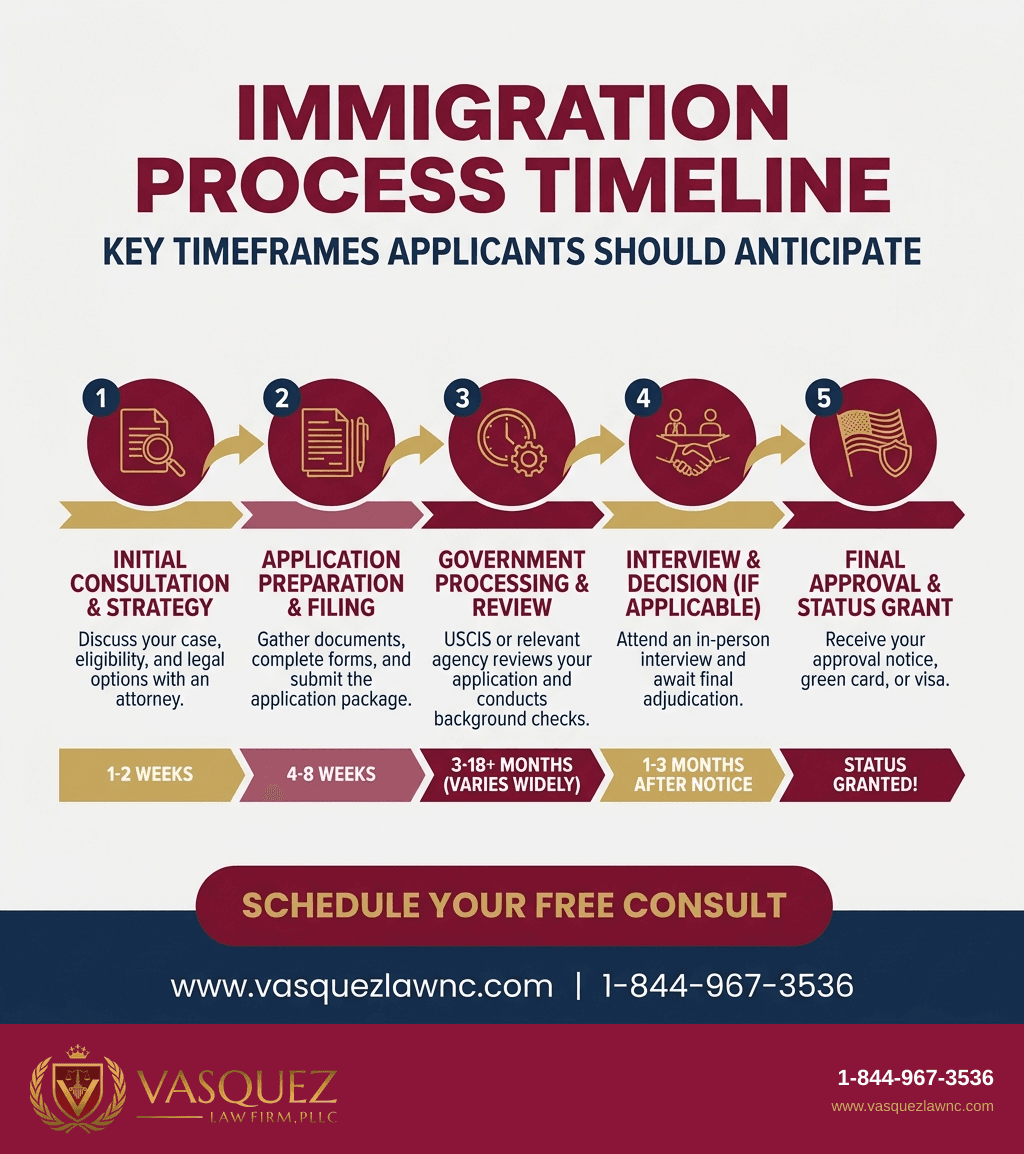
Timeline: What to Expect
- Initial Application: Submission and receipt notice within 2-4 weeks
- Biometric Appointment: Scheduled approx. 4-12 weeks after filing
- USCIS Processing: Typically 6 to 18 months, depending on program category
- Interview: 9 to 14 months after initial filing, if applicable
- Final Decision: Following interview, decision within 30-60 days
- Appeals or Motions: Can extend timeline by several additional months
Example: Adjustment of status under INA § 245 takes approximately 8-14 months in 2026 in NC and FL offices. Checking USCIS processing times regularly helps keep applicants informed and prepared.
Costs and Fees: What Impacts the Price
- Filing Fees: Range from $230 for some petitions to over $1,200 for permanent residency forms
- Medical Exams: Variable cost depending on provider
- Legal Fees: Vary based on case complexity; consultations in Raleigh and Orlando offered with transparent pricing
- Translation and Document Preparation: Additional charges if documents are not in English
- Appeals or Motions: Possible extra costs if your case requires further legal action
Vasquez Law Firm provides clear cost estimates during consultations and offers payment plans when applicable. Avoid hidden costs by working with trusted attorneys.
Common Mistakes and How to Avoid Them
- Incomplete Applications: Submit all required forms and documents to prevent delays.
- Missing Deadlines: Track USCIS deadlines and respond quickly to Requests for Evidence (RFEs).
- Poor Translation: Use certified translators to avoid misinterpretation.
- Inconsistent Information: Provide accurate and consistent details in all filings and interviews.
- Delaying Legal Help: Consult an immigration attorney early to navigate complex cases.
- Ignoring Criminal or Deportation Risks: Disclose and address any prior violations with your lawyer.
- Not Understanding Program Limits: Know your program’s restrictions to avoid overstaying or violating terms.
If you only remember one thing: Complete, truthful, and timely filings with legal guidance dramatically improve your chances under an immigration program.
NC, FL, and Nationwide Notes
North Carolina Notes
Raleigh has USCIS local field offices and immigration courts for removal proceedings. Vasquez Law Firm’s Raleigh office offers bilingual support in Spanish to assist with forms and appeals. Note that employment-based consultations are virtual only. Local law enforcement may collaborate with ICE but must follow federal law.
Florida Notes
Orlando hosts significant immigrant populations. Vasquez Law Firm’s Orlando office supports family and humanitarian cases, with virtual consultations for business immigration. Florida’s local practices sometimes affect timing and client communication, so staying in contact with your attorney is critical.
Nationwide Concepts
The immigration program is federally regulated, meaning eligibility and forms are consistent nationwide but processing times vary by location. Federal laws such as INA § 240 govern removal procedures, and INA § 245 defines adjustment of status eligibility. Always rely on official federal resources like USCIS.gov for updated information.
When to Call a Lawyer Now
- Received a Notice to Appear for removal proceedings
- Application Request for Evidence or Notice of Intent to Deny
- Facing criminal charges that may affect immigration status
- Denied renewal or extension of visa status
- Suffered abuse or domestic violence and wish to apply for humanitarian relief
- Unsure about eligibility for a specific immigration program
- Need assistance filing complex petitions like asylum or U visas
- Notice of a scheduled immigration interview or biometrics appointment
About Vasquez Law Firm
At Vasquez Law Firm, we combine compassion with aggressive representation. Our motto "Yo Peleo®" (I Fight) reflects our commitment to standing up for your rights.
- Bilingual Support: Se Habla Español — Spanish-speaking attorneys and staff available
- Service Areas: North Carolina, Florida, and nationwide immigration services
- Experience: Over 30 years helping clients navigate complex legal matters
- Results: Thousands of successful cases across multiple practice areas
Attorney Trust and Experience
William J. Vásquez is admitted to the North Carolina State Bar (2011) and to the U.S. Courts of Appeals for the 4th, 5th, 6th, and 11th Circuits. Florida-jurisdiction matters at the firm are handled by Florida Bar attorney Alekssandra Lopez. The firm has provided dedicated legal representation since 2011, with personalized attention to each client's case.
Don't wait to get the help you deserve. Call us now for immediate assistance. Se Habla Español.
Or contact our office for a free evaluation.
Frequently Asked Questions
What is an immigration program?
An immigration program is a federal set of legal pathways that allow foreign nationals to enter, stay, and eventually become lawful permanent residents or citizens in the U.S. These programs can be family-based, employment-related, humanitarian, or diversity-driven, each with unique application processes and eligibility requirements.
Can ICE deport permanent residents?
Permanent residents can face deportation under certain grounds such as criminal convictions or immigration fraud. Despite having permanent status, they have due process rights including hearings before an immigration judge where they may contest the removal.
What are the common types of immigration programs?
Common programs include family sponsorship, employment-based visas, humanitarian protections like asylum or U visas, and the diversity visa lottery. Each program has specific eligibility criteria according to federal law.
How do I apply for an immigration program in 2026?
You typically submit designated USCIS forms like I-130 or I-485, meet eligibility criteria, provide evidence, attend biometrics and interviews, and wait for final decisions. Processing times can be found on the USCIS website.
What immigration program changes were made in 2026?
Recent 2026 changes include stricter eligibility for certain humanitarian programs, especially for domestic violence victims under VAWA, along with shifts in enforcement and processing priorities. Staying updated on USCIS notices is critical.
What is the Atlantic Immigration Program and does it apply in the U.S.?
The Atlantic Immigration Program is a Canadian employer-driven immigration route to Atlantic provinces and does not apply in the U.S. The U.S. uses separate federal visa categories for employer sponsorship.
Where can I find official U.S. immigration program information?
The official information is available at the U.S. Citizenship and Immigration Services website (USCIS.gov), which hosts applications, guidelines, and updates. The Executive Office for Immigration Review (EOIR) handles court matters.
How do I protect myself from deportation under an immigration program?
Maintain lawful status, submit renewals on time, avoid criminal offenses, and seek legal help promptly if facing removal proceedings. Understanding your rights under INA §§ 237 and 240A can prevent deportation.
Sources and References
- U.S. Citizenship and Immigration Services
- Executive Office for Immigration Review
- Legal Information Institute
Take the first step toward justice today. Our team is standing by to help. Se Habla Español.
Start Your Free Evaluation Now
Call us: 1-844-967-3536
Se Habla Español - Estamos aquí para ayudarle.
If you need legal assistance, learn more about immigration lawyers in North Carolina, or call us at 1-844-967-3536 for a free evaluation.


William Vasquez
Founder & CEO, Vasquez Law Firm, PLLC
William Vasquez is the founder and CEO of Vasquez Law Firm, PLLC, a results-driven firm specializing in immigration, criminal defense, personal injury, and workers' compensation. A U.S. Air Force veteran and recipient of the Joint Service Achievement Medal, William is dedicated to fiercely fighting for his clients' rights.
Related Legal Services
Need legal help? Learn more about immigration lawyers in North Carolina, or contact us for a free evaluation.
You can also visit immigration attorneys across North Carolina for more information.