What Are US Immigration Policies and How They Affect You in 2026
What are the current US immigration policies in 2026? Learn key changes and rules affecting your case. Contact Vasquez Law for a free evaluation today.
Published on June 11, 2026
Talk to an immigration attorney
Free call. A clear plan for your case.
Free & confidential · Se habla espanol · 24/7
Have questions? Talk to an attorney - free evaluation.
Call 1-844-967-3536Worried how the latest immigration news affects you?
Schedule a confidential case review with an immigration attorney - know exactly where you stand.
USCIS Case Status
Check your USCIS case status
Enter your receipt number and get the official status. Free, no registration.
What Are US Immigration Policies and How They Affect You in 2026
US immigration policies shape the lives of millions in the United States. In 2026, new rules and changes impact how immigrants, including those in Raleigh, NC and Orlando, FL, navigate legal processes. This guide explains the current policies, what to expect, and how Vasquez Law Firm helps immigrants protect their rights nationwide.
Need help with your case? Our experienced attorneys are ready to fight for you. Se Habla Español.
Or call us now: 1-844-967-3536
Quick Answer
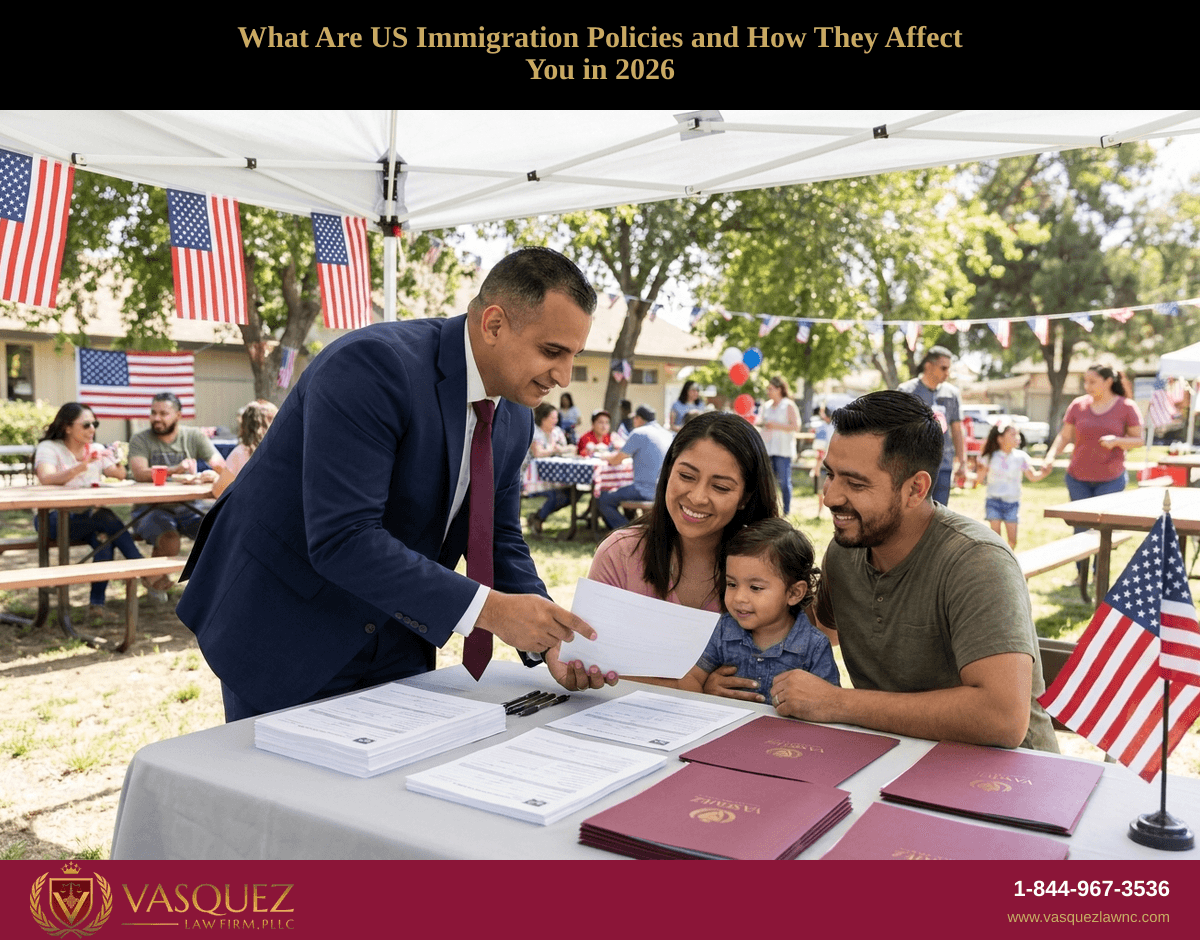
In 2026, US immigration policies include updated green card rules, adjustments in visa categories, and enhanced procedural guidelines. These policies affect immigrants across the country, including those in Raleigh and Orlando. Understanding these changes and working with skilled immigration attorneys can improve your chances of legal success.
- Recent policy changes implemented by USCIS and EOIR
- Updated green card eligibility and processing times
- Streamlined deportation and asylum procedures
- New employment and family-based visa updates
- Legal rights during ICE encounters
Understanding US Immigration Policies
A concrete example of immigration policy in action is the recent update to green card rules effective as of 2026. The United States government adjusts immigration laws regularly to reflect economic needs, humanitarian concerns, and security priorities. These policies govern who can enter, stay, and become permanent residents or citizens.
US immigration laws are primarily federal, outlined in the Immigration and Nationality Act (INA) codified at 8 U.S.C. Chapters 12 and implemented through regulations at 8 C.F.R. Agencies such as USCIS handle applications while EOIR manages immigration court proceedings. These policies impact visa issuance, asylum claims, deportation defense, and naturalization.
For those living in Raleigh, NC or Orlando, FL, these federal rules have direct effects. Local USCIS field offices process applications, and local immigration courts enforce deportation and asylum hearings. Therefore, legal actions and policy changes at the national level resonate locally.
This section will include examples of immigration policies, highlighting changes and how they function in 2026. For instance, changes to the work visa categories or adjustments in asylum eligibility criteria are key policy shifts affecting many clients.
Immigration Laws List and Historical Context
US immigration policy is shaped by laws enacted since the early 20th century. Key statutes include the Immigration Act of 1990, Illegal Immigration Reform and Immigrant Responsibility Act of 1996, and more recent acts. Historical perspective helps understand why certain policies exist today and informs current reforms.
Examples include the creation of Deferred Action for Childhood Arrivals (DACA) in 2012, and Temporary Protected Status (TPS) renewals impacting millions. These programs reflect policy efforts to balance enforcement with humanitarian relief. For details, USCIS resources provide the latest updates and official policy manuals.
U.S. Immigration Policy PDF and Official Resources
Documents such as the USCIS Policy Manual provide a detailed explanation of current rules. These PDFs are essential references for attorneys and applicants alike to understand specific eligibility and process steps. They also outline recent policy changes affecting 2026 applications.
Access these resources directly on the USCIS website to stay current on processing, eligibility, and enforcement policies. Vasquez Law Firm relies on these official materials to guide clients accurately.
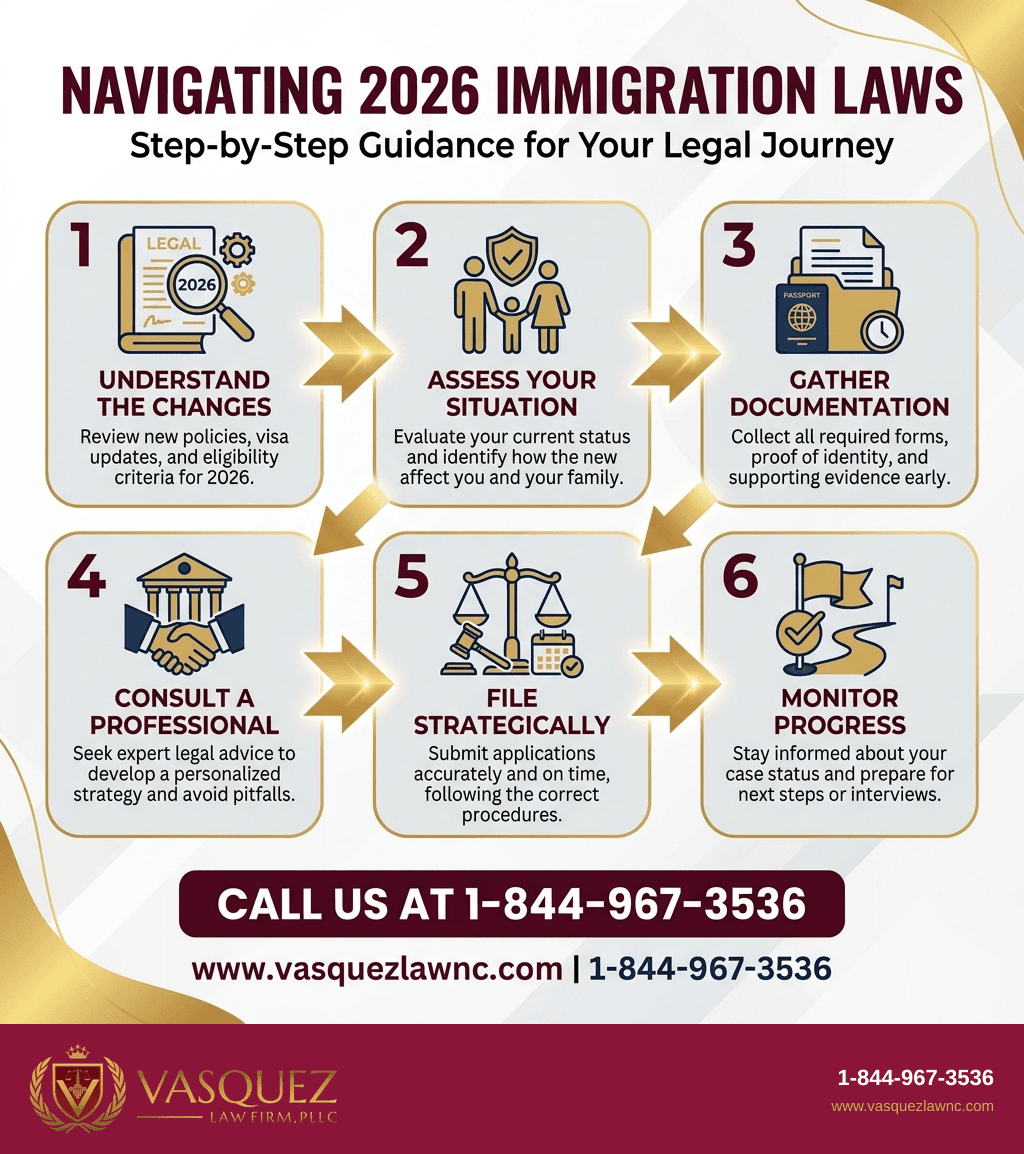
Key Steps to Navigate Immigration Policy Changes
Practical scenarios in Raleigh and Orlando show the importance of understanding new immigration policy changes. For example, a green card applicant must be aware of updated eligibility rules and timelines set by USCIS.
- Gather essential documents: passports, birth certificates, proof of residency, and any required immigration forms.
- Review updated policy criteria: including changes to visa categories or employment authorizations.
- File correct applications: submitting forms like I-485 or I-130 accurately is critical to avoid delays.
- Attend interviews: prepare for USCIS interviews and biometric appointments.
- Monitor case status: via the USCIS online portal and through attorney guidance.
Following these steps improves chances for approval and compliance with policy changes. For example, USCIS has adjusted processing times in 2026, as cited on their official website, which impacts when applicants can expect final decisions.
Documents Checklist
- Valid government-issued ID or passport
- Birth certificates or adoption records
- Proof of lawful entry and presence
- Marriage or divorce certificates (if family-based)
- Financial documentation such as tax returns or affidavits of support
- Completed USCIS forms with correct fees
Common Scenarios
Clients in Raleigh have reported confusion over new green card priority dates, which shifted in 2026 due to backlog adjustments. Others in Orlando navigated updated asylum application steps faster thanks to policy streamlining. These examples underscore the importance of local attorney support to understand nuanced changes.
Common Mistakes in Immigration Processes
Immigration applicants often make errors that lead to delays or denials. Common mistakes include:
- Submitting incomplete evidence or forms
- Missing strict USCIS deadlines for biometrics or interviews
- Failing to update address changes with USCIS
- Ignoring the impact of recent policy changes on eligibility
- Misunderstanding how to respond to Requests for Evidence (RFEs)
- Not consulting immigration attorneys when complex issues arise
- Assuming ICE will not pursue enforcement without legal counsel
If you only remember one thing: Always double-check applications and seek legal advice to avoid costly mistakes under 2026 policies.
Timeline and What to Expect in Your Case
- Initial application submission: Day 0
- Receipt notice from USCIS: 2-4 weeks after submission
- Biometrics appointment: 4-8 weeks
- Interview scheduling: 6-12 months depending on case type
- Decision or Request for Evidence: 6-18 months
- Approval or next step: varies by scenario
USCIS processing times may shift based on workload and policy changes. Check the latest estimated timeframes at USCIS Processing Times. Timelines also depend on visa category and applicant background.
Costs and Fees: What Impacts the Price
- Filing fees for forms like I-485, I-130
- Biometrics and fingerprinting costs
- Attorney fees for case preparation and representation
- Potential costs for additional evidence or translation services
- Appeal or motion fees if necessary
Understanding costs upfront aids planning. Vasquez Law Firm offers free case evaluations to discuss fee structures and payment options tailored to your case.
NC, FL, and Nationwide Notes
North Carolina Notes
Residents of Raleigh and other NC counties handle most immigration matters federally but benefit from local USCIS offices and supportive attorneys familiar with state-specific community resources. Legal assistance in Raleigh ensures compliance and timely filing amid policy changes in 2026.
Florida Notes
In Orlando and the broader Florida region, federal immigration procedures apply similarly, with local USCIS centers managing applications. Local attorneys in Orlando offer bilingual support critical for Hispanic communities. Policy updates are monitored closely to advise on impacts.
Nationwide Concepts
All US immigration policies operate under a federal framework, affecting every state. While local offices process applications, laws from INA and regulations at 8 C.F.R. apply nationally. It remains key to consult qualified lawyers who track these federal updates across jurisdictions.
When to Call a Lawyer Now
- After receiving a Notice to Appear (NTA) for immigration court
- If USCIS issues a Request for Evidence with complex questions
- When ICE agents contact or detain you
- Before filing for adjustment of status or naturalization
- Facing deportation or removal hearings
- Confused about new green card or visa rules
- Encountering delays exceeding published USCIS processing times
- Need help with family-based sponsorship or asylum claims
- When criminal charges may impact immigration status
About Vasquez Law Firm
At Vasquez Law Firm, we combine compassion with aggressive representation. Our motto "Yo Peleo®" (I Fight) reflects our commitment to standing up for your rights.
- Bilingual Support: Se Habla Español — Spanish-speaking attorneys and staff available
- Service Areas: North Carolina, Florida, and nationwide immigration services
- Experience: Over 30 years helping clients navigate complex legal matters
- Results: Thousands of successful cases across multiple practice areas
Attorney Trust and Experience
William J. Vásquez is admitted to the North Carolina State Bar (2011) and to the U.S. Courts of Appeals for the 4th, 5th, and 11th Circuits. Florida-jurisdiction matters at the firm are handled by Florida Bar attorney Harold Estrada-Rodriguez (FL Bar No. 1041171). The firm has provided dedicated legal representation since 2011, with personalized attention to each client's case.
Don't wait to get the help you deserve. Call us now for immediate assistance. Se Habla Español.
Or contact us at our office for a free case evaluation.
Frequently Asked Questions
What is the current U.S. policy on immigration?
As of 2026, U.S. immigration policy balances border security with legal immigration and humanitarian protections. Recent changes include updated green card rules and new visa categories. These policies are governed by the Immigration and Nationality Act (INA) and implemented by USCIS and EOIR, impacting applicants nationwide including Raleigh and Orlando residents.
What are the new green card rules for 2026?
Green card rules updated in 2026 aim to streamline application processing and clarify eligibility. Priority dates shifted for some categories under INA § 203, and USCIS has adjusted processing workflows to reduce backlogs. Applicants in Raleigh, NC and Orlando, FL should consult knowledgeable attorneys for tailored guidance.
Do you have to show ICE your ID?
ICE agents may request ID during immigration enforcement encounters, but refusal can have legal consequences depending on the context. Individuals have rights to remain silent and avoid self-incrimination. Consulting an immigration attorney in Raleigh or Orlando immediately is important if confronted by ICE.
What's the hardest citizenship to get?
U.S. citizenship requires continuous residency, good moral character, and knowledge tests. Citizenship may be harder to obtain if applicants have criminal records or extended absences. Legal assistance from qualified lawyers in Raleigh and Orlando can help applicants navigate challenges effectively.
How have U.S. immigration policies changed recently?
In 2026, policy updates include expanded employment-based visa categories, faster asylum procedures, and clearer enforcement priorities. These reflect new administration objectives and judicial rulings. Staying informed through USCIS and experienced attorneys in Raleigh and Orlando helps applicants adapt.
What documents are needed under current immigration law?
Required documents generally include valid IDs, birth certificates, proof of lawful presence, marriage or divorce records, financial statements, and completed USCIS forms like I-485. Requirements vary by visa type. Consulting local attorneys in Raleigh or Orlando ensures submissions meet current standards.
How long do immigration applications usually take in 2026?
Processing times differ by form type. For example, DACA renewals take roughly 14 to 22 months as cited by USCIS. Green card applications may take 6 to 18 months or longer depending on category. Checking USCIS processing times online and attorney consultations help applicants set expectations.
Can immigration policies impact family reunification in 2026?
Yes, evolving policies influence family sponsorship eligibility, wait times, and documentary requirements. While the government emphasizes family unity, changes may require applicants to act timely and comply carefully. Legal advice in Raleigh and Orlando can guide families through the process.
Sources and References
- U.S. Citizenship and Immigration Services
- Executive Office for Immigration Review
- Legal Information Institute
Take the first step toward justice today. Our team is standing by to help. Se Habla Español.
Start Your Free Evaluation Now
Call us: 1-844-967-3536
Se Habla Español - Estamos aquí para ayudarle.
If you need legal assistance, learn more about our immigration law practice, or call us at 1-844-967-3536 for a free evaluation.


William Vasquez
Founder & CEO, Vasquez Law Firm, PLLC
William Vasquez is the founder and CEO of Vasquez Law Firm, PLLC, a results-driven firm specializing in immigration, criminal defense, personal injury, and workers' compensation. A U.S. Air Force veteran and recipient of the Joint Service Achievement Medal, William is dedicated to fiercely fighting for his clients' rights.
Related Legal Services
Need legal help? Learn more about our immigration law practice, or contact us for a free evaluation.
You can also visit our NC immigration team for more information.
![Birthright Citizenship Explained: Essential Guide [2026]](/_next/image?url=https%3A%2F%2Fvuuyorlsmhunqektprqy.supabase.co%2Fstorage%2Fv1%2Fobject%2Fpublic%2Fblogs%2Fimmigration-header-1782500689266.png&w=1920&q=75)