How US Immigrant Visa Process Works in 2026 for Applicants
Learn how the US immigrant visa process works in 2026, including types and application steps. Contact Vasquez Law for a free evaluation today.
Published on August 26, 2026
Talk to an immigration attorney
Free call. A clear plan for your case.
Free & confidential · Se habla espanol · 24/7
Have questions? Talk to an attorney - free evaluation.
Call 1-844-967-3536Worried how the latest immigration news affects you?
Schedule a confidential case review with an immigration attorney - know exactly where you stand.
How US Immigrant Visa Process Works in 2026 for Applicants
Understanding how the US immigrant visa process works in 2026 is very important for people applying from North Carolina, Orlando, FL, and across the country. Many face problems like the current US immigrant visa pause, different visa types, changes in how to apply, and dealing with complex status rules. This guide explains the main immigrant visa types, recent immigration news, and step-by-step advice for applicants in NC and Orlando.
Need help with your case? Our experienced lawyers are ready to fight for you. Se Habla Español.
Or call us now: 1-844-967-3536
Quick Answer
The US immigrant visa process in 2026 involves applying by filing a petition, getting USCIS approval, processing by the National Visa Center, and attending a consulate interview. Applicants from NC and Orlando must follow these steps. But a recent immigrant visa pause affects many people. Knowing visa types, who can apply, and timelines helps you prepare and avoid common mistakes.
- Many visa types: family, work, diversity lottery
- Temporary immigrant visa pause affects applications
- Petition filing and USCIS approval needed
- Consulate interview is an important step
- Processing time depends on case and country
Understanding US Immigrant Visa Types
In 2026, the US offers immigrant visas in main types based on who can apply and why. Family-sponsored visas let US citizens and lawful permanent residents (people allowed to live in the US permanently) ask for relatives like spouses, children, and parents. Employment-based visas are given based on a job offer and sometimes a labor certification (a test that shows no US worker can fill the job). The Diversity Visa Lottery gives visas to people from countries with low immigration to the US. Humanitarian visas include refugee or asylum status (protection for people fleeing danger).
Each visa type has rules about who can apply and how to apply. For example, family-sponsored visas include immediate relatives who do not have to wait in line for visa numbers. Employment visas like EB-2 or EB-3 need the employer to show they followed Department of Labor rules.
Applicants in North Carolina and Orlando must pick the right visa type and get all needed papers ready. Our immigration services team helps clients choose the right visa and file correctly.
Family-Sponsored Visa Categories
- Immediate relatives: spouses, unmarried children under 21, parents of US citizens
- Family preference categories: adult children, siblings, married children
Employment-Based Visa Categories
- EB-1: Priority workers with extraordinary ability
- EB-2: Advanced degree professionals
- EB-3: Skilled workers and professionals
- Some temporary worker categories are non-immigrant (H-1B, but may lead to immigrant status)
Diversity Visa Lottery
The green card lottery gives 55,000 visas each year to people from countries with low immigration rates to the US. To apply, you must have certain education or work experience.
Current US Immigrant Visa Pause and Its Impact
In 2026, the US government has a limited pause on processing immigrant visa applications from about 75 countries. This pause delays new interview appointments at US consulates and slows entry for thousands of people. The pause is because of security, staff shortages, or diplomatic reasons and may change.
Applicants in North Carolina and Orlando affected by this pause should watch official news closely. Not all visa types are affected the same. For example, humanitarian cases like refugees or urgent family cases often get exceptions.
Our latest blog talks about what this means for applicants and ways to handle delays. Staying informed helps avoid surprises and get ready on time.
Step-by-Step US Immigrant Visa Application Process
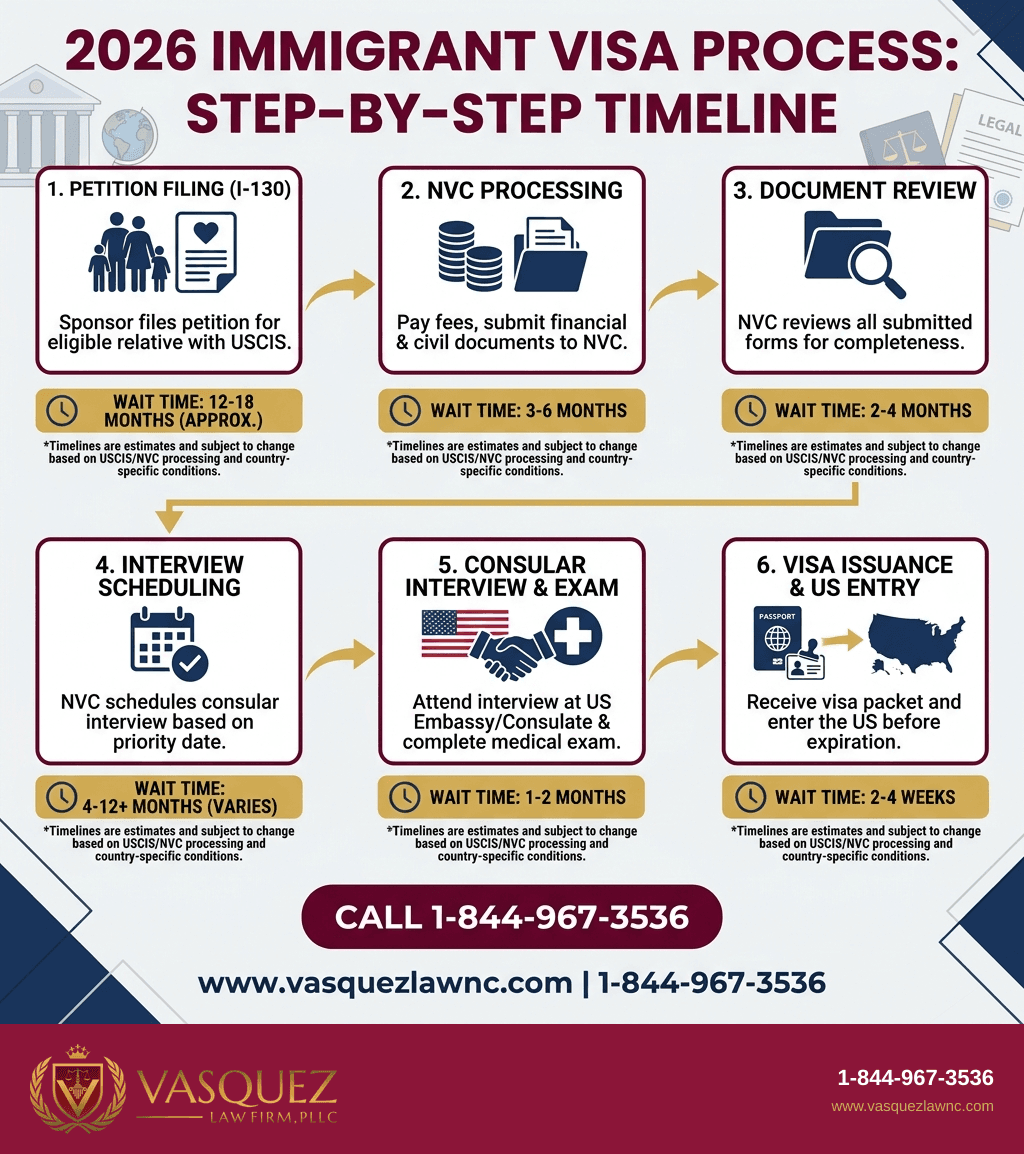
- Check if you qualify and pick your visa type. Look at USCIS rules or talk to an immigration lawyer to find the right visa.
- File an immigrant petition. A US petitioner sends Form I-130 (family) or Form I-140 (work) to USCIS with proof that you qualify.
- USCIS approves the petition. Processing times vary. Check USCIS processing times often for your form.
- National Visa Center (NVC) processes your case. After USCIS approves, NVC collects fees and papers to get your case ready for the consulate interview.
- Schedule your consulate interview. The US Embassy or Consulate in your home country sets your interview date.
- Do a medical exam and get documents ready. You must have a medical exam with an approved doctor and prepare financial and ID papers.
- Attend the visa interview. The consular officer reviews your application, asks questions, and decides if you get the visa.
- Get your visa and travel to the US. If approved, you get an immigrant visa stamp to enter the US and get your green card after arrival.
Timeline and What to Expect During Processing
How long it takes to process your immigrant visa depends on the visa type, USCIS workload, and consulate location. Family-based petitions usually take 8 to 14 months. Employment-based cases can take 9 to 18 months. The current visa pause may add more waiting time for interviews.
Applicants should expect to spend weeks gathering papers and going to biometric appointments (fingerprints and photos). Delays in getting appointments are common during the pause. Checking USCIS and Department of State websites often helps you stay updated.
Example Timeline Breakdown
- Petition filing and USCIS approval: 4 to 10 months
- NVC processing: 2 to 4 months
- Consulate interview scheduling: 1 to 3 months (may be longer because of pauses)
- Visa issuance: 1 month
Working with skilled lawyers helps make sure you meet all deadlines and send the right papers. This prevents delays you can avoid.
Common Application Mistakes and How to Avoid Them
- Incomplete or wrong forms: Always check forms carefully before sending.
- Missing supporting papers: Give all proof USCIS and consulate ask for to avoid denial or delays.
- Not telling full background: Leaving out information can cause denial or permanent bans.
- Missing deadlines: Late papers can close your case or force you to start over.
- Missing interviews: Not going to appointments usually causes denial.
- Not understanding visa expiration: You must travel and adjust status on time after getting your visa.
- Not getting legal help: Hard cases do better with a qualified immigration lawyer to guide you.
If you remember only one thing: Good preparation and full honesty stop most immigrant visa problems.
Jurisdiction Notes for NC and Orlando Applicants
Immigration law is run by the federal government but works a little differently depending on where the consulate is. People in North Carolina and Orlando work with local USCIS offices and consulates based on their home country.
North Carolina Notes
USCIS offices in Raleigh handle many immigration applications and biometric services. Local help from lawyers who know NC rules can help avoid common delays or mistakes in the state.
Orlando, FL Notes
Our Orlando office offers in-person meetings and help with immigrant visa cases. Some consulate appointments happen abroad, but local support is very helpful. We also offer business immigration help online across Florida.
Across the country, the US Department of State manages visa appointments abroad. Embassy conditions and consulate capacity vary and affect scheduling. The 2026 immigrant visa pause applies nationwide but affects countries differently.
When to Call a Lawyer for Your Immigrant Visa
- If your immigrant visa petition was denied or delayed without clear reason
- When you have complex eligibility questions or problems with admissibility (rules about who can enter)
- If you apply under humanitarian or special immigrant categories
- If the consulate refuses your visa or delays your case for administrative reasons
- If you need help understanding the immigrant visa pause and updates
- If you have a criminal record or immigration violations
- To get ready for Department of State interviews
- If you want help with family-based or work-based petitions
- If you are unsure about document needs or changes in immigration law
About Vasquez Law Firm
At Vasquez Law Firm, we combine care with strong representation. Our motto "Yo Peleo" (I Fight) shows our promise to stand up for your rights.
- Bilingual Support: Se Habla Espaol Spanish-speaking lawyers and staff available
- Service Areas: North Carolina, plus Florida and nationwide for immigration
- Experience: Over 30 years helping clients with complex legal matters
- Results: Thousands of successful cases in many practice areas
Attorney Trust and Experience
William J. Vsquez is licensed by the North Carolina State Bar (2011) and the U.S. Courts of Appeals for the 4th, 5th, and 11th Circuits. The firm has offered dedicated legal help since 2011, giving personal attention to each client's case.
Don't wait to get the help you need. Call us now for fast assistance.
Se Habla Espaol
Frequently Asked Questions
What are the different types of US immigrant visas?
US immigrant visas include family-sponsored, employment-based, diversity lottery, and humanitarian categories. Family visas need petitions by US citizens or permanent residents for relatives. Employment visas usually need an employer to sponsor you. The diversity lottery offers random visas to eligible countries. Picking the right visa type ensures you qualify and file properly.
What is the current status of the US immigrant visa pause?
In 2026, a temporary pause affects immigrant visa appointments and interviews for people from 75 countries. This causes delays but exceptions exist for humanitarian and some immediate family cases. Applicants from NC and Orlando should watch official news for updates.
Who is eligible for a US immigrant visa?
Eligibility depends on the visa type. It usually includes qualifying family members, workers with job offers, or humanitarian reasons. Applicants must pass medical exams and security checks. Talking to an immigration lawyer helps understand eligibility based on your facts.
What are the main steps in the immigrant visa application process?
Start by filing a petition (Form I-130 or I-140), then wait for USCIS approval. Next, the National Visa Center processes your case, then schedules your consulate interview. After the interview and medical exams, successful applicants get a visa to enter the US.
How long does immigrant visa processing usually take?
Processing can take 6 to 18 months, depending on visa type and consulate location. The current visa pause may make wait times longer. Check USCIS processing times online for current estimates.
Can I check my US immigrant visa application status online?
Yes, USCIS has an online case status portal. The Department of State also offers visa status tools for applicants to track interview dates and approvals.
What happens if my immigrant visa application is denied?
Denials may happen because of missing papers or rules about who can enter. You can appeal or apply again, often with a lawyer's help to fix the problem and improve your chances.
Are there any recent changes in US immigrant visa policies in 2026?
The main change is the temporary immigrant visa pause, which affects appointments and processing times for some countries. USCIS and the Department of State give updates as rules change.
Sources and References
- U.S. Citizenship and Immigration Services
- Executive Office for Immigration Review
- Legal Information Institute
Take the first step toward justice today. Our team is ready to help. Se Habla Espaol.
Start Your Free Evaluation Now
Call us: 1-844-967-3536
Se Habla Espaol - Estamos aqu para ayudarle.


William Vasquez
Founder & CEO, Vasquez Law Firm, PLLC
William Vasquez is the founder and CEO of Vasquez Law Firm, PLLC, a results-driven firm specializing in immigration, criminal defense, personal injury, and workers' compensation. A U.S. Air Force veteran and recipient of the Joint Service Achievement Medal, William is dedicated to fiercely fighting for his clients' rights.
Related Legal Services
Need legal help? Learn more about learn about our immigration practice, or contact us for a free evaluation.
You can also visit NC immigration legal help for more information.