What You Need to Know About U.S. Deportations in 2026
Wondering how U.S. deportations work in 2026? Learn the process, key facts, and how to protect your rights. Contact Vasquez Law Firm for a free consultation.
Published on June 12, 2026
Talk to an immigration attorney
Free call. A clear plan for your case.
Free & confidential · Se habla espanol · 24/7

Have questions? Talk to an attorney - free evaluation.
Call 1-844-967-3536Check your case status now
Look up your immigration case below, then talk to an attorney about what it means — free.
Questions about your result?
Talk to an attorney about your case — free, no obligation.
What You Need to Know About U.S. Deportations in 2026
U.S. deportations continue to affect thousands of individuals nationwide every year. In 2026, understanding the deportation process, who can be deported, and the rights immigrants have is crucial—especially for residents in Orlando, FL and Raleigh, NC. This guide covers current deportation statistics, procedures, and legal protections to help you stay informed and prepared.
Need help with your case? Our experienced attorneys are ready to fight for you. Se Habla Español.
Or call us now: 1-844-967-3536
Quick Answer
In 2026, U.S. deportations involve the legal removal of noncitizens violating immigration laws or convicted of crimes. Deportation numbers fluctuate yearly, and in states like Florida and North Carolina, immigrants face particular enforcement strategies. Knowing the process and your rights is vital for anyone at risk.
- Deportations exceeded 160,000 in 2025 nationwide.
- Green card holders can be deported for criminal offenses.
- U.S. citizens cannot be deported.
- Legal defenses like asylum or cancellation can delay removal.
- Immigration courts in Raleigh and Orlando handle removal cases.
Understanding U.S. Deportations
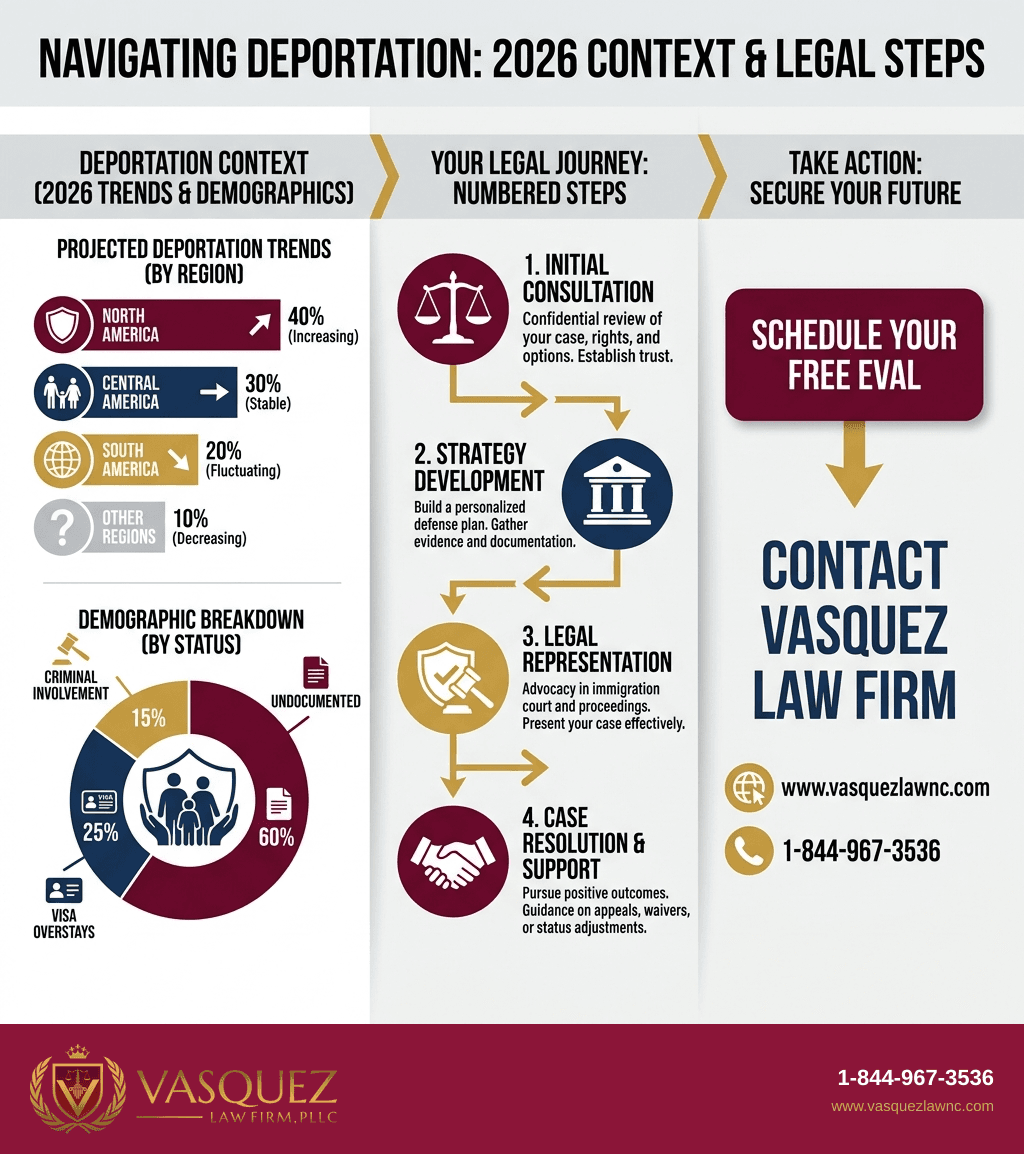
In 2025, U.S. Immigration and Customs Enforcement (ICE) reported approximately 167,000 deportations nationwide. Deportations, legally referred to as removals under federal law, happen when a noncitizen violates immigration rules or commits certain crimes. The current 2026 enforcement priorities include individuals convicted of serious offenses, recent unauthorized border crossers, and those with final removal orders.
Deportations can result from administrative or judicial processes. Administrative removal is expedited for some categories like aggravated felons, while judicial removal involves hearings before immigration judges. The Executive Office for Immigration Review (EOIR) oversees immigration courts in Raleigh for North Carolina and Orlando for Florida, making local proceedings critical for anyone facing deportation in these areas.
Legal grounds for deportation are detailed in 8 U.S.C. § 1227. They include crimes related to moral turpitude, drug offenses, and security threats. For green card holders, even lawful permanent residence is not a guarantee against removal if deportable offenses occur.
Our immigration services in Orlando and Raleigh provide essential support through these complex proceedings, helping families understand legal rights and options.
Deportation List and Statistics in 2026
Official U.S. deportation lists and annual statistics are published by ICE and the Department of Homeland Security. These lists identify individuals with final orders of removal and track numbers by country of origin. Data updated through 2025 shows increases in removals from countries including Mexico, Guatemala, Honduras, and others.
The USCIS and EOIR track ongoing removal proceedings and enforcement actions, with data accessible on their websites. In 2026, the trend continues with emphasis on those violating public safety laws.
Step-by-step: What to Do if Facing Deportation
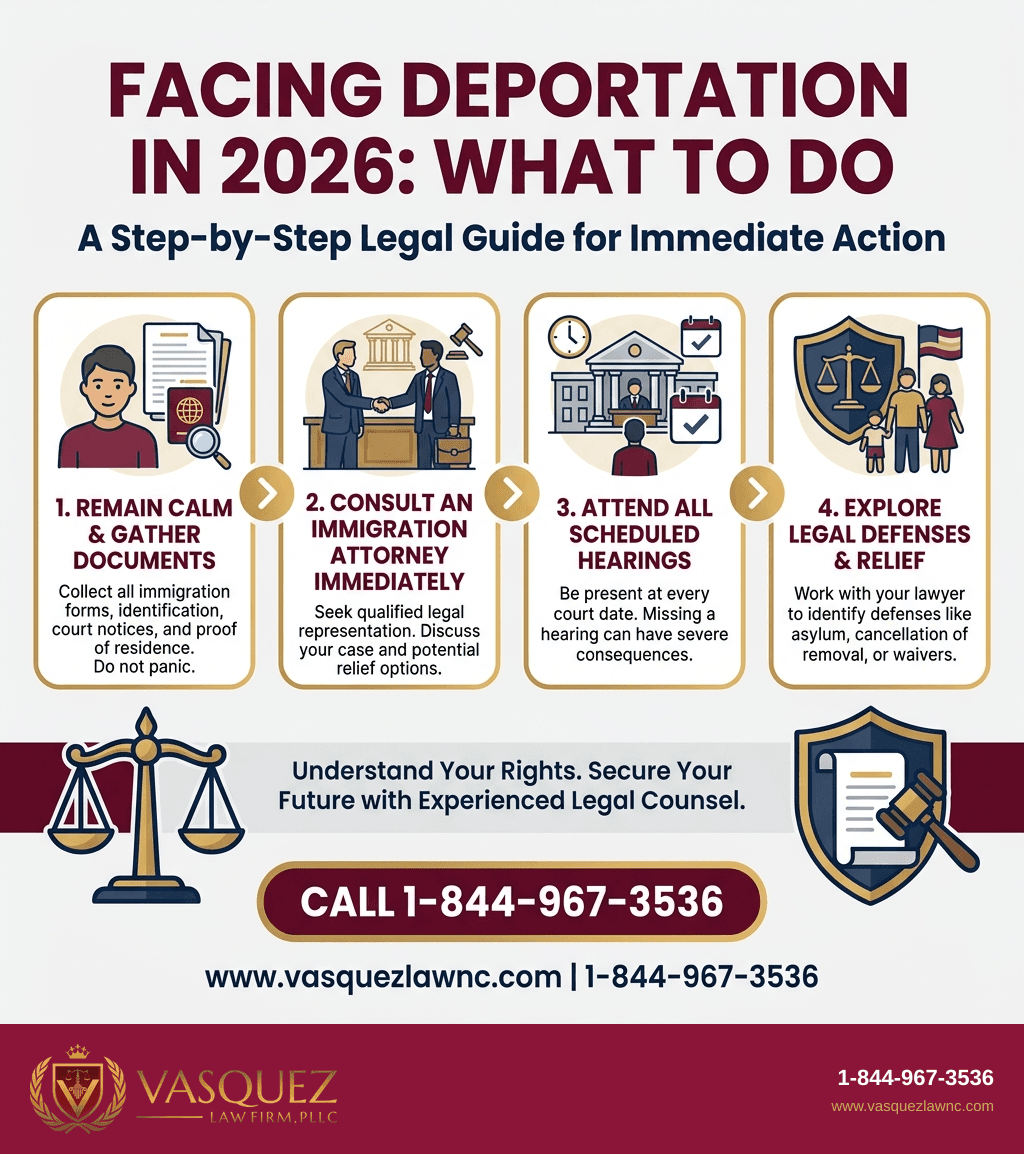
- Get legal representation immediately. Contact a qualified immigration attorney in Orlando, FL, or Raleigh, NC as soon as possible.
- Attend all immigration court hearings. Missing a hearing can result in deportation orders without your input.
- Gather and organize documents. Include passports, green cards, criminal records, and evidence supporting your case.
- Explore relief options. These may include asylum, cancellation of removal under INA § 240A(b), or adjustment of status if eligible.
- File necessary applications on time. Deadlines are strict, and late filings often lead to automatic removal.
- Prepare for bond hearings if detained. Bond can provide release from detention while the case proceeds.
- Stay informed about changes. Immigration laws and rulings can shift, so maintain communication with your lawyer.
Legal Relief Options
Common relief options include asylum, which protects individuals fearing persecution; cancellation of removal for nonpermanent residents who meet criteria under INA § 240A(b); and adjustment of status for those who have qualifying family or employment sponsorship. Every case is unique, so legal advice is key.
Vasquez Law Firm’s immigration attorneys specialize in these applications to maximize your chances of success.
Common Mistakes to Avoid During Deportation Proceedings
- Ignoring court dates. Missing hearings can lead to deportation orders by default. Always attend or notify your attorney.
- Not hiring experienced legal help. Deportation law is complex; unrepresented individuals face severe disadvantages.
- Failing to provide proper documentation. Missing evidence can weaken defenses and relief petitions.
- Trusting unauthorized representatives. Only licensed attorneys should handle your case.
- Delaying action. Early intervention increases chances of relief or stays of removal.
- Overlooking relief eligibility. Many qualified for asylum or cancellation do not apply due to lack of legal guidance.
- Misunderstanding rights. Know your right to counsel and to present evidence before immigration judges.
If you only remember one thing: Immediate consultation with an experienced immigration attorney in Orlando or Raleigh can protect your future.
Timeline and What to Expect During Deportation
- Initial Detention or Notice: ICE may detain or issue a Notice to Appear (NTA) within days of identifying the individual.
- Master Hearing: Usually scheduled within weeks, where the noncitizen enters a plea.
- Individual Hearing: Takes place several months later to review evidence and relief claims.
- Decision: Immigration judge issues a removal or relief decision, which can be appealed to the Board of Immigration Appeals (BIA).
- Appeals: May take months or years; meanwhile, removal can be stayed.
Processing times vary by court and location. According to USCIS processing data, average hearings in Orlando and Raleigh take between 6 and 18 months depending on case complexity.
Costs and Fees: What Impacts the Price
- Attorney fees: Vary depending on case type, complexity, and required filings.
- Filing fees: USCIS charges fees for applications like asylum, adjustment, and work permits.
- Bond: If detained, bond amounts vary but can be thousands of dollars.
- Additional expenses: May include translation services, expert witnesses, and travel to court appearances in Orlando or Raleigh.
Vasquez Law Firm offers free initial consultations to discuss cost estimates and work out payment options.
NC, FL, and Nationwide Notes
North Carolina Notes
Immigration proceedings in Raleigh handle removal cases for many local residents. Local immigration courts follow federal procedures overseen by EOIR. North Carolina’s diverse immigrant community includes many who benefit from specialized legal help focused on deportation defense and relief applications.
Florida Notes
Orlando's immigration courts serve central Florida with high volumes of removal cases, especially involving recent arrivals and those arrested for immigration violations. Local attorneys are experienced with rapid enforcement responses to protect client rights.
Nationwide Concepts (General Only, Rules Vary)
Deportation is governed by federal law, but practices can differ by jurisdiction and ICE enforcement priorities. Always consult an attorney in your area, such as Orlando or Raleigh, for advice tailored to your case.
When to Call a Lawyer Now
- You receive a Notice to Appear (NTA) for removal proceedings.
- You were arrested or detained by ICE.
- You have a criminal conviction and hold a green card.
- You fear you may be targeted for deportation due to recent immigration raids.
- You want to file for asylum or cancellation of removal.
- You missed an immigration court hearing.
- You received a final order of removal but want to explore appeals.
- You need help applying for work authorization during proceedings.
About Vasquez Law Firm
At Vasquez Law Firm, we combine compassion with aggressive representation. Our motto "Yo Peleo®" (I Fight) reflects our commitment to standing up for your rights.
- Bilingual Support: Se Habla Español — Spanish-speaking attorneys and staff available.
- Service Areas: North Carolina, Florida, and nationwide immigration services.
- Experience: Over 30 years helping clients navigate complex legal matters.
- Results: Thousands of successful cases across multiple practice areas.
Attorney Trust and Experience
William J. Vásquez is admitted to the North Carolina State Bar (2011) and to the U.S. Courts of Appeals for the 4th, 5th, and 11th Circuits. Florida-jurisdiction matters at the firm are handled by Florida Bar attorney Harold Estrada-Rodriguez (FL Bar No. 1041171). The firm has provided dedicated legal representation since 2011, with personalized attention to each client's case.
Don't wait to get the help you deserve. Call us now for immediate assistance.
Se Habla Español
Frequently Asked Questions
How many people have been deported from the USA in recent years?
In 2025, ICE reported roughly 167,000 deportations nationwide. This number reflects enforcement of immigration laws focused on public safety and border integrity. Trends into 2026 indicate continued enforcement with particular emphasis on individuals convicted of crimes and unauthorized border crossers.
Can green card holders be deported from the U.S.?
Lawful permanent residents can be deported if they commit certain crimes or violate immigration laws. Grounds for deportation include aggravated felonies and security concerns under 8 U.S.C. § 1227. Consulting a lawyer is important for green card holders facing legal troubles.
Is it possible for U.S. citizens to be deported?
U.S. citizens cannot be deported under any circumstances. Deportation applies exclusively to noncitizens. In rare cases, mistaken identity or fraud could cause problems, but legal counsel can quickly address these issues.
Who is ICE currently deporting in 2026?
ICE prioritizes deportations of noncitizens with criminal convictions, recent unauthorized arrivals, and those with final removal orders. Enforcement varies, but criminal records significantly increase risk. In states like Florida and North Carolina, local enforcement reflects federal priorities.
What rights do immigrants have if facing deportation?
Immigrants have the right to legal representation, hearings before immigration judges, and to present evidence and witnesses. While counsel is not provided for free, understanding and exercising your rights is crucial to a fair hearing.
How can someone stop or delay a deportation in North Carolina or Florida?
Filing for relief like asylum, cancellation of removal, or adjustment of status with assistance from an immigration lawyer can stop or delay deportation. In locations such as Orlando and Raleigh, timely legal help improves chances of favorable outcomes.
What documents are important to have if facing deportation?
Identity documents, immigration forms, criminal records, proof of residence, and evidence supporting relief claims are vital. Having these ready helps your lawyer prepare a strong defense and applications for relief.
Where can I find official U.S. deportation statistics and lists?
U.S. deportation data is available on DHS, ICE, and EOIR websites. They publish reports and maintain lists tracking removals by year and country. Staying informed about these numbers helps understand enforcement trends.
Sources and References
- U.S. Citizenship and Immigration Services
- Executive Office for Immigration Review
- Legal Information Institute
Take the first step toward justice today. Our team is standing by to help.
Start Your Free Evaluation Now
Call us: 1-844-967-3536
Se Habla Español - Estamos aquí para ayudarle.


William Vasquez
Founder & CEO, Vasquez Law Firm, PLLC
William Vasquez is the founder and CEO of Vasquez Law Firm, PLLC, a results-driven firm specializing in immigration, criminal defense, personal injury, and workers' compensation. A U.S. Air Force veteran and recipient of the Joint Service Achievement Medal, William is dedicated to fiercely fighting for his clients' rights.
Related Legal Services
Need legal help? Learn more about experienced immigration attorneys in Charlotte, or contact us for a free evaluation.
You can also visit statewide immigration legal services for more information.
![Houston Federal Lawsuit Accuses Meneses Law of Coaching Immigrants [2026]](/_next/image?url=https%3A%2F%2Fvuuyorlsmhunqektprqy.supabase.co%2Fstorage%2Fv1%2Fobject%2Fpublic%2Fblogs%2Fimmigration-header-1782500614693.png&w=1920&q=75)