United States v. Goode: Key Outcomes in 2026 Criminal Defense
Explore United States v. Goode, its criminal defense implications, and what it means for Smithfield defendants in 2026. Contact Vasquez Law Firm for help.
Published on June 8, 2026
Protect your record and your freedom
Free, confidential review. 24/7.
Free & confidential · Se habla espanol · 24/7
Have questions? Talk to an attorney - free evaluation.
Call 1-844-967-3536Protect Your Record and Your Freedom
A confidential case review - available 24/7 for emergencies.
United States v. Goode: Key Outcomes in 2026 Criminal Defense
United States v. Goode is a key case impacting criminal defense strategies related to appeal waivers and violent felony classifications in Smithfield and North Carolina courts. Understanding its outcomes helps defendants and their attorneys navigate complex legal challenges in 2026.
Need help with your case? Our experienced attorneys are ready to fight for you. Se Habla Español.
Or call us now: 1-844-967-3536
Quick Answer
The case United States v. Goode holds important lessons about appeal waiver enforcement after merits litigation and clarifies which offenses qualify as violent felonies under the ACCA. For defendants in Smithfield, this means understanding your rights during appeals and how certain convictions can affect sentencing.
- Clarifies appeal waiver enforcement in federal district courts
- Confirms North Carolina second-degree murder as an ACCA violent felony
- Impacts sentencing enhancements based on prior convictions
- Relevant for defendants indicted and convicted in federal court
- Highlights importance of knowing your legal rights in criminal appeals
Understanding United States v. Goode
In 1895, the Supreme Court case Goode v. United States (159 U.S. 663) addressed complex issues involving federal criminal convictions. More recently, the case entitled United States v. Goode has emerged as a crucial precedent in criminal defense, particularly related to appeal waiver enforcement and violent felony classifications.
This case involves George Goode, who was indicted and convicted in the district court of North Carolina. The ruling clarified that once a defendant has litigated the merits of a case, enforcement of an appeal waiver becomes a prominent issue. Appeal waivers are provisions that defendants sometimes sign, giving up the right to appeal their convictions or sentences. The Goode case examined the limits of such waivers when a defendant has already raised substantive appellate issues.
Additionally, the case settled the interpretation of North Carolina's second-degree murder statute as a violent felony under the Armed Career Criminal Act (ACCA), 18 U.S.C. § 924(e). This classification has significant consequences for defendants facing enhanced sentences due to prior convictions.
Understanding these aspects can help defendants in Smithfield working within the North Carolina legal system, especially when dealing with indictments or convictions in federal district courts. Knowing how federal law intersects with state statutes and how appeal waivers affect your case is vital for a strong defense.
Key Legal Issues in Goode Case
Appeal Waiver Enforcement
The ruling emphasized that appeal waivers may be enforced depending on whether the defendant has already litigated substantive issues in court. If the defendant has not raised arguments concerning the merits, courts tend to enforce these waivers strictly. However, if the defendant has pursued a merits-based appeal, the waiver may not bar further appellate review.
This distinction impacts many criminal defense cases where defendants sign plea agreements including appeal waivers. Understanding this nuance helps those indicted and convicted in the district court determine their rights after sentencing.
Second-Degree Murder as ACCA Violent Felony
United States v. Goode also established that North Carolina second-degree murder qualifies as a violent felony under the ACCA. This determination means that prior convictions for second-degree murder can trigger sentencing enhancements, increasing prison terms significantly.
Defendants in Smithfield facing charges linked to prior violent felonies must recognize how this federal classification affects their sentences. The ACCA requires three or more prior violent felony convictions for enhanced penalties, and Goode clarified which offenses meet this threshold in North Carolina.
Impact on Sentencing
The Goode decision influences sentencing guidelines and judicial discretion by establishing important precedent for how prior convictions affect current cases under federal statutes. Criminal defense in Smithfield must integrate this understanding to provide effective representation.
Step-by-Step Defense Strategy in Smithfield
1. Early Case Evaluation
After being indicted, it is crucial to promptly consult an experienced criminal defense attorney in Smithfield. Early evaluation helps identify whether an appeal waiver exists and assess its scope under Goode.
2. Review Appeal Waiver Terms
Examine the plea agreement carefully to understand the precise language of any appeal waiver. The enforcement of waivers depends on language and prior activity on merits litigation.
3. Investigate Prior Convictions
Assess any prior convictions under the ACCA framework. Determine if they qualify as violent felonies influenced by Goode's interpretation of North Carolina second-degree murder.
4. Challenge Unfair Waivers
If you have already litigated the merits, work with your attorney to challenge the enforcement of an appeal waiver that might unfairly limit your appellate rights.
5. Prepare for Sentencing Impact
Anticipate how previous convictions identified in the case could lead to enhanced sentences under ACCA and discuss options with your defense team.
Common Mistakes to Avoid in Criminal Defense
- Ignoring Appeal Waiver Details: Failing to read and understand appeal waivers can lead to missed opportunities for appeal. Always review documents with your attorney.
- Not Disclosing Prior Convictions Early: This can affect plea negotiations and sentencing preparation negatively.
- Assuming Appeal Rights Are Waived Automatically: Goode clarifies this is not always the case, especially after merits litigation.
- Delay in Legal Consultation: Waiting too long after indictment reduces the ability to effectively challenge waiver enforcement.
- Overlooking North Carolina-Specific Law: Familiarity with local statutes and how federal law applies is critical in Smithfield and NC courts.
- Neglecting Sentencing Strategy: Addressing potential ACCA enhancements early can influence favorable outcomes.
- Failing to Document Evidence Properly: Incomplete records can hinder appeals and post-conviction relief efforts.
If you only remember one thing: Thoroughly understand appeal waivers and prior convictions to protect your appellate rights under the Goode decision.
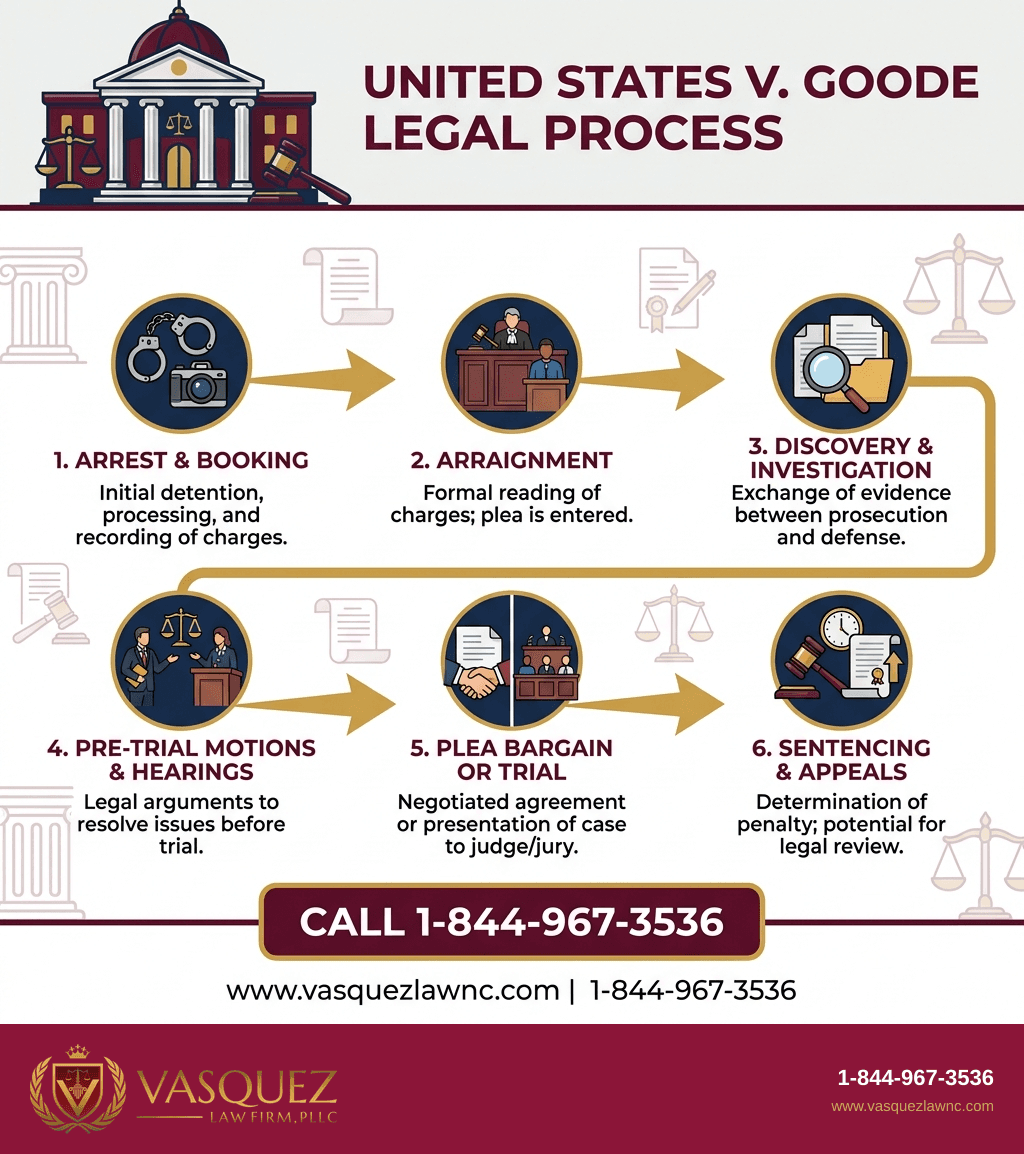
Timeline and What to Expect in Your Case
- Indictment and Arraignment: Typically occurs within weeks after charges are filed in district court.
- Plea Negotiations: May begin shortly after arraignment, including discussions of appeal waivers.
- Pre-Trial Motions: Defense may file motions challenging waiver enforcement or classification of crimes.
- Trial or Guilty Plea: Trial scheduling varies; plea deals may be resolved earlier.
- Sentencing: Sentencing hearings include assessment of ACCA violent felony status based on prior convictions.
- Appeal Process: If an appeal waiver was signed but challenged, courts will determine enforceability, as seen in Goode.
- Post-Conviction Relief: May be available if appeal rights are limited by waiver enforcement.
When to Call a Lawyer for Serious Charges
- You have been indicted in the district court for a felony charge
- An appeal waiver is part of your plea agreement
- You are facing sentencing enhancements due to prior convictions
- You do not understand your appellate rights after conviction
- A second-degree murder charge or similar violent felony is involved
- You discover errors or unfair treatment during your criminal proceedings
- You want to challenge the classification of your conviction under ACCA
- You have questions about the impact of United States v. Goode on your case
About Vasquez Law Firm
At Vasquez Law Firm, we combine compassion with aggressive representation. Our motto "Yo Peleo" (I Fight) reflects our commitment to standing up for your rights.
- Bilingual Support: Se Habla Espaol Spanish-speaking attorneys and staff available
- Service Areas: North Carolina with focused support in Smithfield and the district courts
- Experience: Over 15 years helping clients navigate complex criminal defense cases including appeal waivers and sentencing enhancements
- Results: Hundreds of successful defenses locally in the district court system
Attorney Trust and Experience
Attorney Vasquez, JD, is admitted to the North Carolina State Bar and has handled numerous cases relating to appeal waiver enforcement and violent felony classifications. With 15 years of experience, Attorney Vasquez understands the complexities of cases like United States v. Goode and provides tailored legal strategies for clients in Smithfield.
Don't wait to get the help you deserve. Call us now for immediate assistance.
Se Habla Espaol
Frequently Asked Questions
What is an appeal waiver?
An appeal waiver is a contract provision where a defendant waives the right to appeal their conviction or sentence. United States v. Goode examines how waivers are enforced if a defendant has already raised legal issues on appeal.
How does United States v. Goode affect criminal appeals?
The case clarifies that appeal waivers may not stop further appellate review if the defendant has already litigated the merits. This impacts defendants in federal district courts who signed such waivers.
What is a violent felony under the ACCA?
Under 18 U.S.C. § 924(e), violent felonies include serious crimes that increase sentencing if prior convictions exist. United States v. Goode classified second-degree murder in North Carolina as a violent felony, affecting sentence lengths.
Why is appeal waiver enforcement important?
Appeal waiver enforcement determines whether a defendant can challenge their conviction or sentence on appeal. Mishandling this can limit legal options significantly, emphasizing careful review of plea agreements.
Where are criminal cases like United States v. Goode heard?
Such cases are decided in federal district courts. United States v. Goode specifically concerns cases in the District of North Carolina, including Smithfield, where Vasquez Law Firm provides defense services.
What should I do if I've been indicted and signed an appeal waiver?
Contact a knowledgeable criminal defense attorney immediately. They can assess waiver enforceability and guide you on your appellate rights under Goode and related legal precedents.
Can prior convictions affect my current criminal sentence?
Yes. The ACCA enhances sentences for defendants with three or more violent felony convictions. Goode’s classification of North Carolina second-degree murder as violent is key to understanding sentencing impacts.
How long does the appeal process take after conviction?
Appeal timelines vary but generally take several months. The process may be shorter or longer depending on the enforcement of appeal waivers and the complexity of issues raised on appeal.
Sources and References
Take the first step toward justice today. Our team is standing by to help.
Start Your Free Evaluation Now
Call us: 1-844-967-3536
Se Habla Español - Estamos aquí para ayudarle.
If you need legal assistance, learn more about our criminal defense legal services, or call us at 1-844-967-3536 for a free evaluation.


William Vasquez
Founder & CEO, Vasquez Law Firm, PLLC
William Vasquez is the founder and CEO of Vasquez Law Firm, PLLC, a results-driven firm specializing in immigration, criminal defense, personal injury, and workers' compensation. A U.S. Air Force veteran and recipient of the Joint Service Achievement Medal, William is dedicated to fiercely fighting for his clients' rights.
Related Legal Services
Need legal help? Learn more about our criminal defense legal services, or contact us for a free evaluation.
You can also visit our NC defense attorneys for more information.