What the ICE Out Ban Means for Immigrants in 2026
Wondering how the ICE Out ban impacts immigrant protections in 2026? Learn the facts, what to expect, and when to seek help. Contact us for support.
Published on July 2, 2026· Updated September 9, 2026
Talk to an immigration attorney
Free call. A clear plan for your case.
Free & confidential · Se habla espanol · 24/7
Have questions? Talk to an attorney - free evaluation.
Call 1-844-967-3536Worried how the latest immigration news affects you?
Schedule a confidential case review with an immigration attorney - know exactly where you stand.
USCIS Case Status
Check your USCIS case status
Enter your receipt number and get the official status. Free, no registration.
What the ICE Out Ban Means for Immigrants in 2026
The ICE Out ban has caused many discussions about how the federal government enforces immigration laws. This is especially true for immigrants living in states like North Carolina and Florida. This updated article for 2026 explains what the ICE Out ban is. It also covers how recent court decisions affect how it is enforced. If you live in Orlando, FL or Raleigh, NC, it is very important to understand this legal change. Knowing about it can help you protect your rights and handle any contact with ICE agents in 2026.
Need help with your case? Our experienced attorneys are ready to fight for you. Se Habla Español.
Or call us now: 1-844-967-3536
Quick Answer
The ICE Out ban means local laws that try to limit what Immigration and Customs Enforcement (ICE) officers can do. This includes rules about wearing masks and how they carry out enforcement. A recent federal judge stopped Philadelphia’s ban. This means ICE’s power stays the same as of mid-2026. Immigrants in North Carolina and Florida should keep up with local laws. They should also know their rights when dealing with ICE.
- Philadelphia made the ICE Out law to limit ICE actions.
- A federal court stopped the ICE Out ban on masked enforcement agents.
- ICE still works across the country, including in NC and FL.
- Knowing your rights during ICE meetings is very important.
- Legal help is available for immigrants facing ICE actions.
Understanding the ICE Out Ban and Its Background
In early 2026, Philadelphia passed an "ICE Out" ban. This law targets certain actions by ICE officers. It stops them from wearing masks during enforcement. The law aims to make ICE more open and stop them from working secretly in the community. But this ban caused a lot of arguments about whether it is legal and how it should be enforced.
A federal judge recently stopped Philadelphia’s ICE Out ban. The judge said it conflicts with federal immigration law and ICE’s authority to operate. This decision supports ICE’s power across the country, including in states like North Carolina and Florida. Executive Office for Immigration Review.
ICE uses powers given by federal laws like 8 U.S.C. § 1226 and rules under 8 C.F.R. § 287.8. These laws let ICE detain and question people suspected of being in the country without permission. Understanding the ICE Out debate helps immigrants know what protections they have. It also shows the limits of local laws in immigration enforcement.
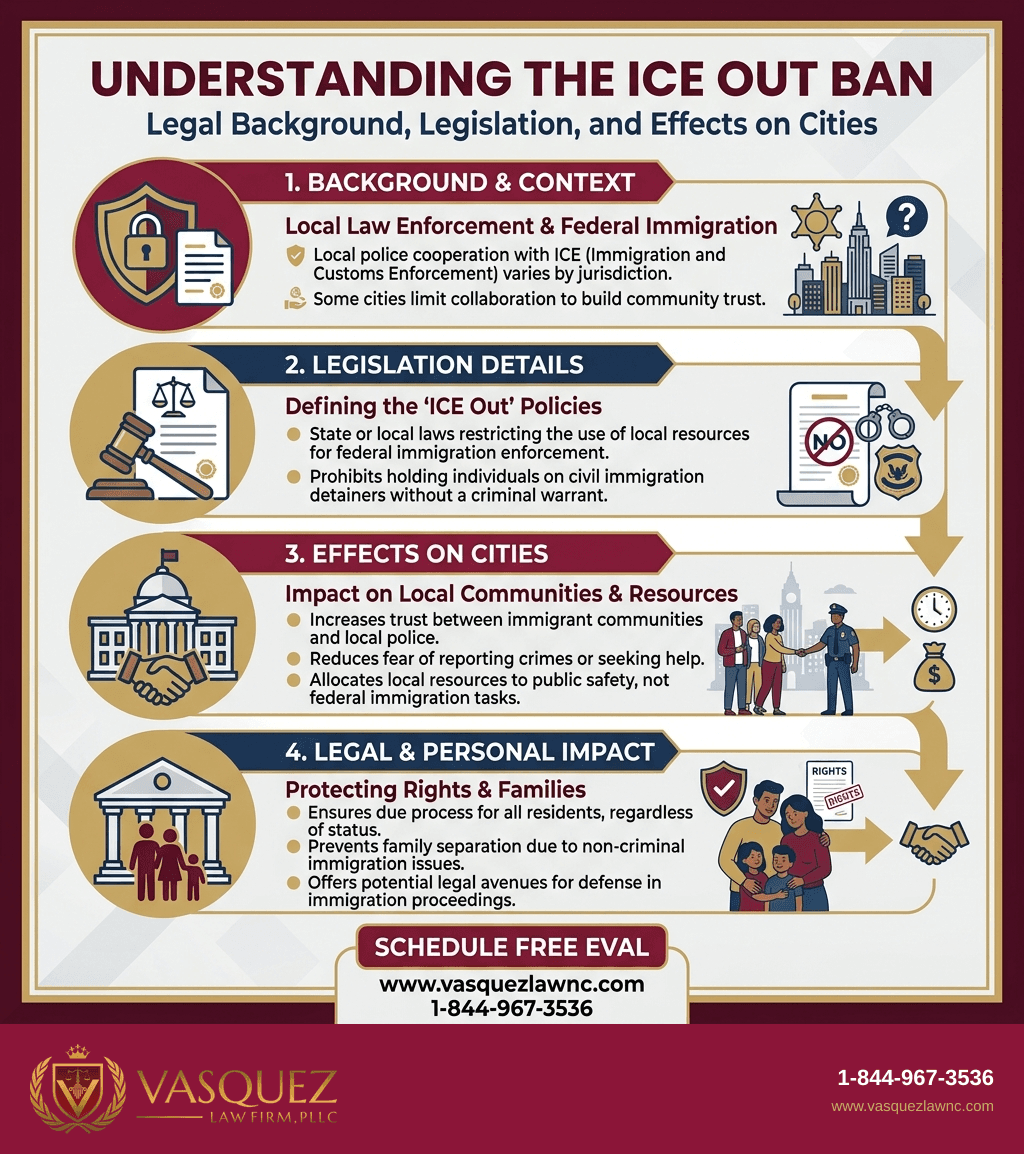
What is the ICE Out Ban?
The ICE Out ban means laws passed by some cities, especially Philadelphia, that limit how ICE officers make arrests and detain people locally. It stops ICE agents from wearing masks during enforcement. It also limits how they work with local police. Supporters say this protects immigrant communities from secret actions and abuse. Opponents say it weakens federal immigration enforcement.
Philadelphia ICE Out Legislation Details
Philadelphia’s law stops ICE officers from wearing masks. It also limits joint operations with local police. These rules aim to support immigrant rights groups and reduce detentions. The city’s efforts match similar programs like ICE OUT PHILLY trainings. These programs teach communities how to know and use their rights.
How Does This Affect Other Cities?
Even though it targets Philadelphia, the legal fight over the ICE Out ban affects immigrants in other places by setting legal examples. In Orlando, FL and Raleigh, NC, ICE keeps doing its usual enforcement. Federal law is stronger than local bans. Immigrants should stay aware of their rights and watch for local legal changes.
Key Steps to Take if Affected by ICE Enforcement
Being stopped by ICE agents can cause stress and confusion. Knowing what to do protects your rights. It also helps avoid being detained or deported unnecessarily.
Step 1: Stay Calm and Do Not Agree to Searches
If ICE agents come to you or your home, stay calm. You do not have to agree to a search without a warrant. Politely say you do not agree. This stops them from entering or searching without court permission.
Step 2: Ask to See ICE Identification and Warrant
ICE agents must show valid ID. If they want to enter your home, they must have a court warrant. Look at these papers carefully. Do not open your door unless they have a proper warrant. This helps stop illegal searches or detentions.
Step 3: Know Your Right to Stay Silent
You can refuse to answer questions, especially about your immigration status, if you do not have a lawyer with you. Be polite but say you will not talk until a lawyer is present.
Step 4: Contact an Immigration Lawyer Right Away
If you are detained or questioned, call a lawyer as soon as you can. Our immigration attorneys in Orlando help immigrants understand their choices and protect their rights.
Don't wait to get the help you deserve. Call us now for immediate assistance. Se Habla Español.
Common Mistakes to Avoid Regarding ICE Interactions
- Agreeing to searches without a warrant: Always ask for a warrant to protect yourself legally.
- Not knowing your rights: Know that you do not have to talk or admit your status without a lawyer.
- Sharing information with ICE too quickly: Do not give personal details or answer questions about your status.
- Not getting legal help quickly: Getting a lawyer early improves your chances in immigration cases.
- Ignoring local legal news: Laws can change; keep up with laws in NC and FL.
- Thinking local bans beat federal law: ICE enforcement follows federal law, so local bans may not protect you.
- Waiting too long after an ICE encounter: Write down what happened, including place and time, right away.
If you only remember one thing: Do not agree to searches without a warrant. Contact an immigration lawyer right after any ICE contact.
Timeline and What to Expect from ICE Enforcement
- Encounter: ICE may stop you at home, work, or on the street to check your status or detain you.
- Detention: If arrested, you might be taken to detention centers while waiting for hearings.
- Hearing timeline: Immigration court hearings usually happen within weeks to months, but times can vary. USCIS processing can take 12-24 months for some applications (USCIS Processing Times).
- Legal proceedings: You may respond to charges, file motions, and seek relief under federal laws like INA § 240A(b)(1) for cancellation of removal. These steps can affect your case outcome.
Frequently Asked Questions About the ICE Out Ban
Is ICE going to get banned?
ICE cannot be banned under federal law. While some local laws like Philadelphia's "ICE Out" try to limit ICE's local actions, federal immigration enforcement powers stay the same across the country. Federal courts have always ruled to keep ICE’s power to enforce immigration laws, including in North Carolina and Florida.
What is the ICE Out controversy?
The controversy is about local efforts to block or limit ICE enforcement methods, like wearing masks or working with police. Supporters want to protect immigrant communities from what they see as harsh enforcement. Opponents say local bans stop federally required immigration enforcement and public safety.
Can ICE just stop you and ask for ID?
ICE can ask for immigration papers but cannot detain or arrest you without a good reason or proper permission. People have rights during these meetings, including refusing to answer questions and not agreeing to searches without warrants. Knowing your rights is very important to protect yourself.
Is ICE actually deporting illegal immigrants in 2026?
Yes. ICE continues deportation processes against people without legal status, following federal law and due process. However, detention and deportation rules may change depending on government priorities, local help, and individual cases.
Does the ICE Out ban apply in North Carolina and Florida?
No. The ICE Out ban is a local Philadelphia law. Federal immigration law controls ICE enforcement everywhere, including Orlando, FL and Raleigh, NC. Local attempts to limit ICE differ by place but usually do not beat federal law.
What should I do if ICE comes to my home?
Ask to see an ICE warrant before letting them in. Do not agree to a search without one. Stay calm, politely say your rights, and call an immigration lawyer right away. Our team in Orlando, FL is ready to help immigrants facing ICE actions.
Are mask bans on ICE agents legal?
Federal courts have challenged local mask bans on ICE agents because they interfere with law enforcement work. Mask rules help officer safety and privacy. Philadelphia’s mask ban was stopped by a federal judge in 2026 for these reasons.
How can Vasquez Law Firm help if I have ICE issues?
Vasquez Law Firm offers trusted immigration legal help in Raleigh, NC and Orlando, FL. Our lawyers help clients know their rights, prepare defenses, and handle complex immigration cases.
About Vasquez Law Firm
At Vasquez Law Firm, we mix care with strong representation. Our motto "Yo Peleo®" (I Fight) shows our promise to stand up for your rights.
- Bilingual Support: Se Habla Español - Spanish-speaking lawyers and staff available
- Service Areas: North Carolina, Florida, and immigration services across the country
- Experience: Over 30 years helping clients with complex legal matters
- Results: Thousands of successful cases in many practice areas
Attorney Trust and Experience
William J. Vásquez joined the North Carolina State Bar in 2011. He is also admitted to the U.S. Courts of Appeals for the 4th, 5th, 6th, and 11th Circuits. Florida cases at the firm are handled by Florida Bar lawyer Alekssandra Lopez. The firm has given dedicated legal help since 2011, giving personal attention to each client.
Take the first step toward justice today. Our team is ready to help. Se Habla Español.
Start Your Free Evaluation Now
Call us: 1-844-967-3536
This article gives general legal information and is not legal advice. Every case is different, and results depend on specific facts and situations. Contact a lawyer for advice about your case.
Sources and References


William Vasquez
Founder & CEO, Vasquez Law Firm, PLLC
William Vasquez is the founder and CEO of Vasquez Law Firm, PLLC, a results-driven firm specializing in immigration, criminal defense, personal injury, and workers' compensation. A U.S. Air Force veteran and recipient of the Joint Service Achievement Medal, William is dedicated to fiercely fighting for his clients' rights.
Related Legal Services
Need legal help? Learn more about our immigration legal services, or contact us for a free evaluation.
You can also visit North Carolina immigration law firm for more information.