How Supreme Court Decisions Affect Immigration in 2026
Learn how Supreme Court decisions impact immigration law in 2026. Understand rulings affecting green card holders. Contact Vasquez Law for a free evaluation.
Published on June 23, 2026
Talk to an immigration attorney
Free call. A clear plan for your case.
Free & confidential · Se habla espanol · 24/7
Have questions? Talk to an attorney - free evaluation.
Call 1-844-967-3536Worried how the latest immigration news affects you?
Schedule a confidential case review with an immigration attorney - know exactly where you stand.
USCIS Case Status
Check your USCIS case status
Enter your receipt number and get the official status. Free, no registration.
How Supreme Court Decisions Affect Immigration in 2026
The Supreme Court plays a critical role in shaping immigration law nationwide. In 2026, new decisions continue to affect immigrants, including green card holders facing deportation. This guide explains recent rulings, what they mean for North Carolina and Orlando residents, and how Vasquez Law Firm can assist you in navigating these changes.
Need help with your case? Our experienced attorneys are ready to fight for you. Se Habla Español.
Or call us now: 1-844-967-3536
Quick Answer
The Supreme Court has issued rulings in 2026 making it easier for border agents to deport some green card holders. These decisions affect immigrants across the country, including in Raleigh, NC and Orlando, FL. If you are affected, understanding these changes and knowing how to respond quickly is essential.
- Rulings affect deportation and removal proceedings nationwide
- Green card holders now face increased deportation risks
- Immigration courts must follow new legal interpretations
- Seek legal advice promptly to protect your rights
- Vasquez Law Firm offers help in Raleigh and Orlando
Understanding Supreme Court Impact on Immigration
Imagine you are a permanent resident facing deportation. A recent Supreme Court decision might change whether you receive a hearing before removal. The Supreme Court is the highest court in the United States. It interprets constitutions and federal laws including immigration statutes under Title 8 of the U.S. Code. Its rulings create binding legal precedents for all immigration courts and agencies.
For example, under 8 U.S.C. § 1229a, removal proceedings follow rules shaped by court interpretations. When the Supreme Court changes the meaning of these laws, immigration courts adjust their decisions accordingly. This affects people in Raleigh, NC and Orlando, FL who rely on fair hearings and protections.
The Supreme Court consists of nine justices appointed by the President and confirmed by the Senate. These lifetime appointments help maintain judicial independence. Their decisions can expand or limit the powers of immigration agencies and the executive branch.
Understanding which cases the court decides and the justices’ legal philosophies provides insight into how immigration law may evolve in 2026. For immigrants in North Carolina and Florida, these rulings are critical because they often determine eligibility for relief or deportation risk.
Recent Supreme Court Decisions Today in Immigration
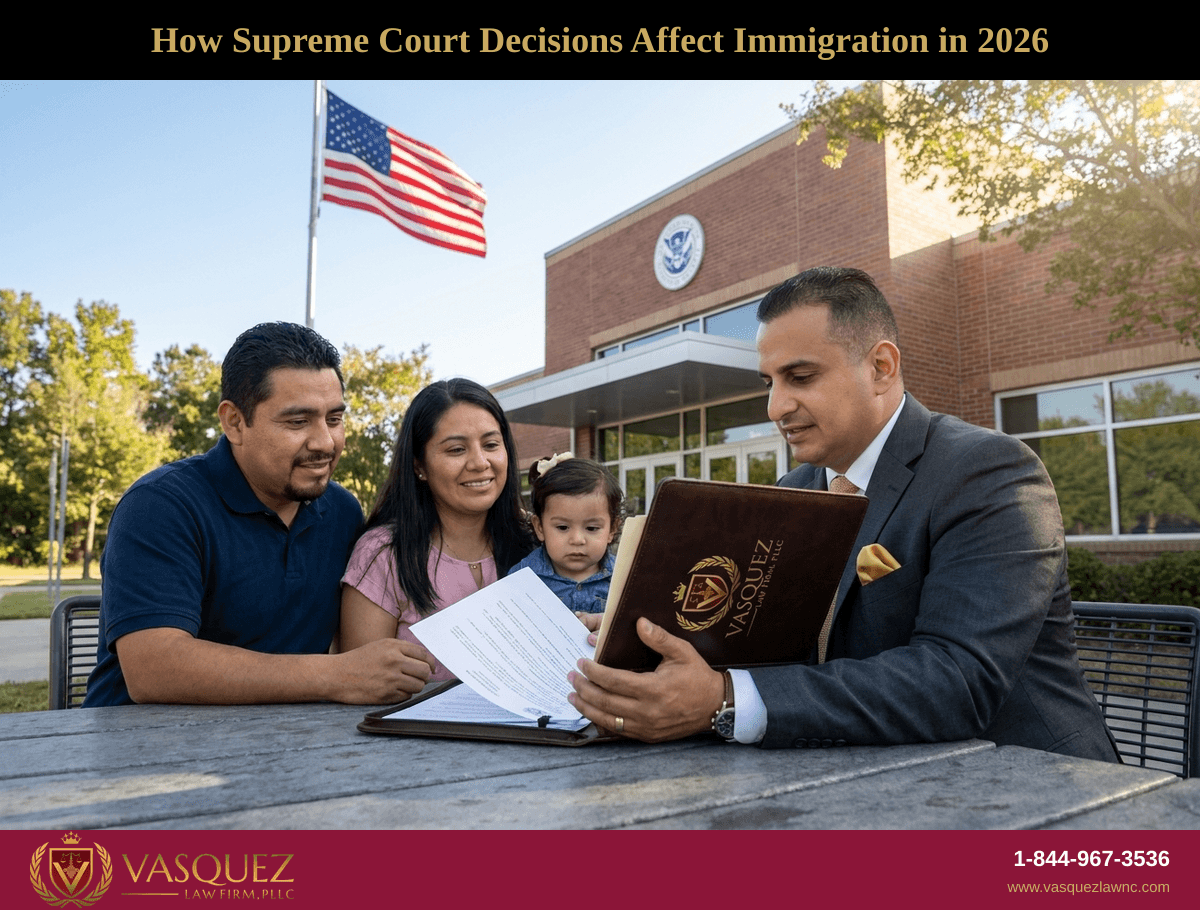
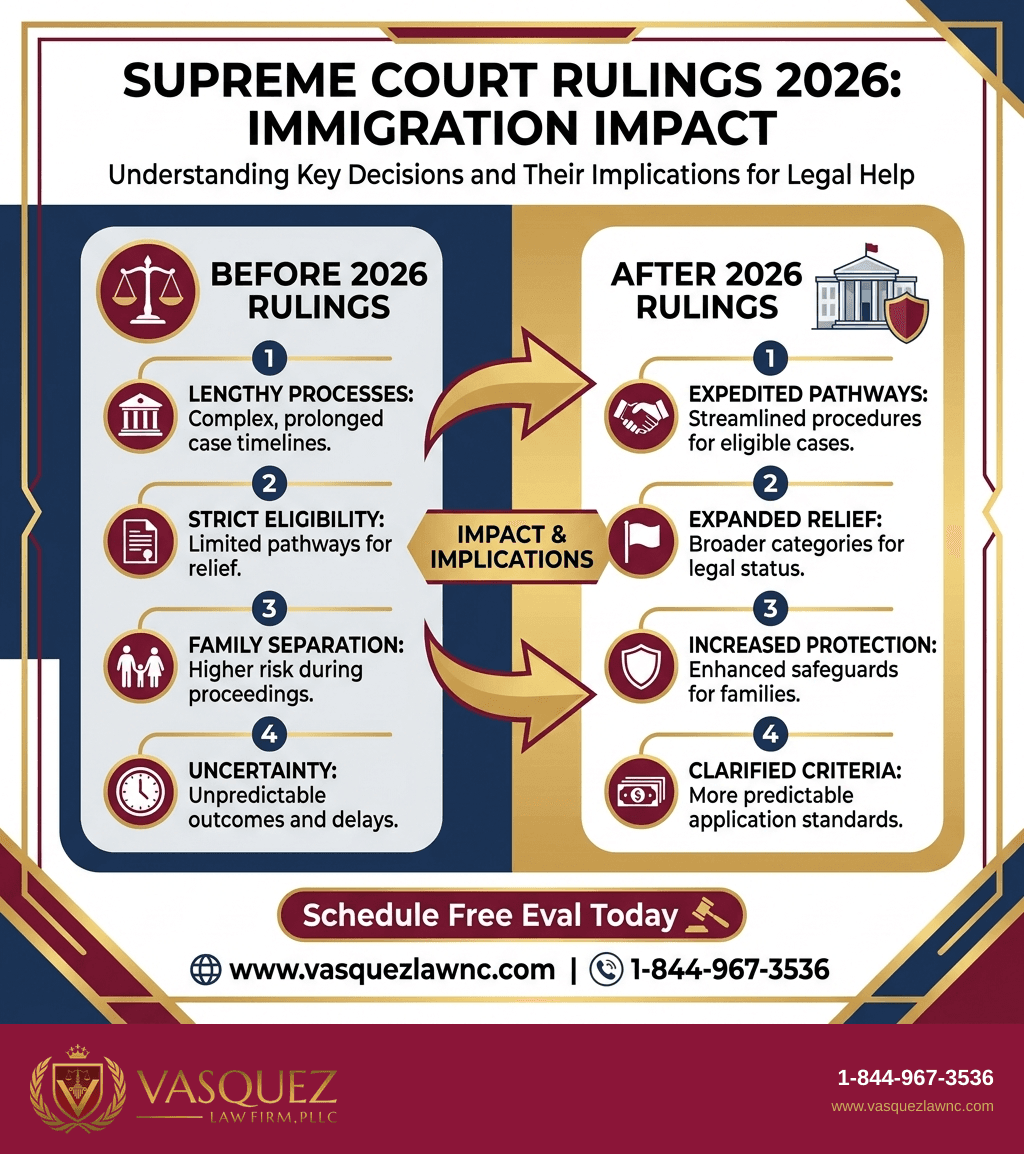
In 2026, the Supreme Court has heard multiple immigration cases with wide effects. One notable ruling made it easier for border agents to deport green card holders without a full hearing. This affects lawful permanent residents who may now face expedited removal procedures.
This decision impacts thousands of immigrants nationwide, including in Raleigh and Orlando. The ruling underscores the court’s influence on immigration enforcement priorities. It also increases the urgency for green card holders to understand their rights and legal options.
Checking daily court decisions is crucial. The Executive Office for Immigration Review (EOIR) posts updates on how immigration courts implement Supreme Court rulings.
For example, following rulings this week, immigration judges in North Carolina may apply stricter standards for admissibility. Meanwhile, in Florida’s Orlando immigration courts, lawyers see changes in how applications for relief are processed.
If you want the latest updates on Supreme Court decisions today affecting immigration, our team closely monitors these developments and relays practical advice to help you.
Key Steps for Immigrants After Supreme Court Rulings
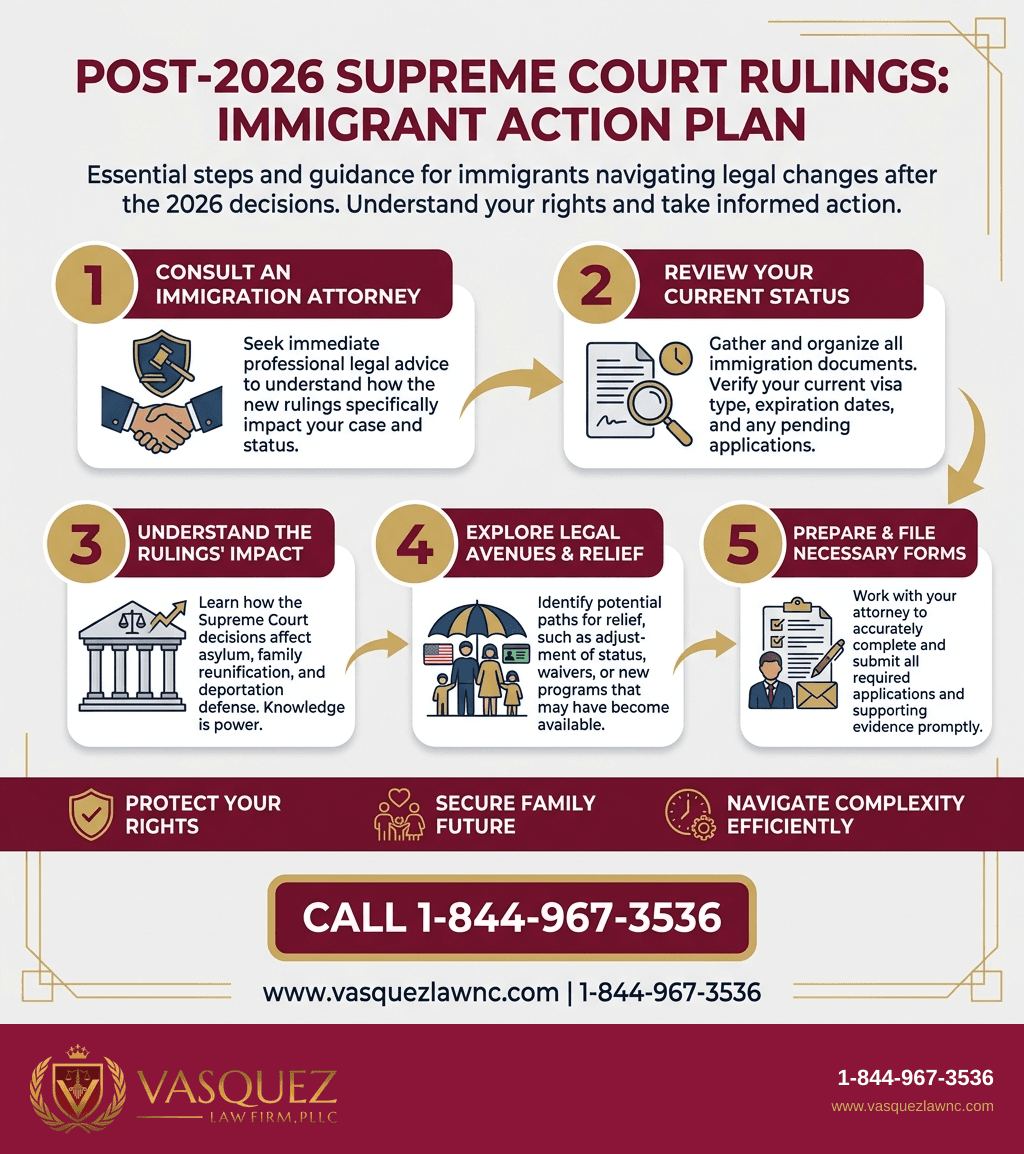
After a new Supreme Court ruling affects immigration law, you should act quickly. Here are recommended steps:
- Consult an immigration lawyer at Vasquez Law Firm in Raleigh, NC or Orlando, FL to assess how the ruling impacts your case.
- Review any notices or orders from immigration authorities carefully; these might change with new legal standards.
- File timely appeals or motions if your removal or visa denial was affected by the ruling.
- Gather supporting documents such as proof of residence, work history, or ties to your community.
- Stay informed through official sources like USCIS or the EOIR website to track changes in policy and timelines.
- Attend all scheduled hearings and meet deadlines for filings related to your case.
- Update your legal team on any changes in your personal situation or immigration status.
Following these steps helps ensure that you comply with new rules while protecting your rights effectively in a changing legal landscape.
Common Mistakes Immigrants Make Regarding Court Decisions
- Ignoring changes in immigration laws after Supreme Court rulings. Keep up to date.
- Missing deadlines for filing appeals or responding to notices.
- Failing to consult an attorney knowledgeable about current Supreme Court case impacts.
- Assuming past protections still apply despite new rulings.
- Not attending immigration hearings due to confusion or fear.
- Providing incomplete evidence that does not address new legal standards.
- Relying on incorrect information from unofficial sources or social media.
If you only remember one thing: Stay proactive and seek legal guidance immediately after a Supreme Court decision affects your immigration status.
Timeline: What to Expect After a Supreme Court Ruling
- Day 1: Supreme Court announces ruling publicly.
- Weeks 1-2: Immigration agencies and courts review and interpret the ruling.
- Weeks 3-6: Official policy updates and procedural changes are implemented.
- Month 2 and beyond: Cases affected by the ruling may be re-evaluated; appeals and motions start flowing.
- Ongoing: Continued adjustments by courts nationwide.
Understanding this timeline helps applicants in Raleigh, NC and Orlando, FL anticipate case progress and plan accordingly.
Costs and Fees: What Impacts the Price of Immigration Legal Help
- Complexity of your case, especially if Supreme Court rulings introduce new arguments or appeals.
- Urgency: expedited cases or deportation defense may require faster, more intensive work.
- Filing fees set by USCIS or immigration courts, which can vary depending on petitions or motions.
- Additional costs for document translation, expert witnesses, or travel to hearings.
- Location: services in Raleigh and Orlando may have varying legal fee structures.
- Experience of your attorney; Vasquez Law Firm leverages 15+ years of expertise to manage costs while advocating effectively.
Always ask for a detailed fee estimate during your free case evaluation to avoid surprises.
NC, FL, and Nationwide Notes on Supreme Court Immigration Impact
North Carolina Notes
In Raleigh and across North Carolina, immigration cases follow federal law but are heard at local EOIR immigration courts. Supreme Court rulings directly affect these courts, influencing how judges apply removal grounds or relief eligibility under 8 U.S.C. § 1229a.
Vasquez Law Firm’s Raleigh office supports immigrants navigating these changes with personalized strategies aligned with recent precedent.
Florida Notes
Orlando immigration courts also implement Supreme Court decisions swiftly. Local attorneys must remain up to date on rulings affecting green card holders and visa holders, particularly with decisions expanding expedited removal under INA sections.
Our Orlando team offers virtual consultations and guidance to prepare clients for evolving legal requirements.
Nationwide Concepts (General Only, Rules Vary)
Although immigration is federally governed, Supreme Court rulings impact policies nationally. However, practical application can differ by district. Always consult with local immigration lawyers in your jurisdiction to understand how rulings affect your case specifically.
When to Call a Lawyer Now
- After receiving a Notice to Appear (NTA) for removal proceedings.
- If you are a green card holder facing expedited deportation risks.
- If a recent Supreme Court ruling impacts your legal status or relief options.
- When you receive a denial of a visa or adjustment application with unclear reasons.
- If you missed or fear missing an immigration court hearing.
- When you are considering an appeal or motion to reopen after a court decision.
- If you want to understand how new laws affect your immigration benefits.
- When USCIS delays or changes your case processing after a Supreme Court ruling.
About Vasquez Law Firm
At Vasquez Law Firm, we combine compassion with aggressive representation. Our motto "Yo Peleo®" (I Fight) reflects our commitment to standing up for your rights.
- Bilingual Support: Se Habla Español — Spanish-speaking attorneys and staff available
- Service Areas: North Carolina, Florida, and nationwide immigration services
- Experience: Over 30 years helping clients navigate complex legal matters
- Results: Thousands of successful cases across multiple practice areas
Attorney Trust and Experience
William J. Vásquez is admitted to the North Carolina State Bar (2011). He is dedicated to immigration law, especially for residents in Raleigh, NC and Orlando, FL. His strategic approach helps clients respond successfully to changing legal circumstances, including Supreme Court rulings.
Don't wait to get the help you deserve. Call us now for immediate assistance. Se Habla Español.
Frequently Asked Questions
How does the Supreme Court affect immigration laws?
The Supreme Court interprets federal laws including immigration statutes, setting binding legal precedents nationwide. Its decisions affect how immigration laws are enforced in Raleigh, NC, Orlando, FL, and beyond.
What recent Supreme Court decisions impact green card holders?
Recent rulings have made it easier for border agents to deport green card holders, potentially limiting access to full hearings. This impacts lawful permanent residents in Raleigh and Orlando especially.
Who are the Supreme Court justices and how are they appointed?
There are nine justices appointed by the President and confirmed by the Senate. They serve lifetime terms, with decisions impacting immigration law nationwide.
Can the President fire a Supreme Court justice?
No, justices have lifetime appointments and can only be removed by Congress through impeachment to protect judicial independence.
How much do Supreme Court justices get paid?
In 2026, justices earn around $292,000 annually; the Chief Justice slightly more. This compensation maintains judicial independence.
What happens to immigration cases after a Supreme Court ruling?
Immigration courts and agencies must apply new legal standards from rulings immediately, potentially changing outcomes in ongoing cases.
Where is the Supreme Court located and can I attend a hearing?
It's located in Washington, D.C. The public may attend hearings with tickets, although seating is limited.
How can Vasquez Law Firm help after a Supreme Court decision affects my case?
Our immigration attorneys review rulings carefully, advise clients on impacts, and develop case strategies to protect rights in Raleigh and Orlando.
Sources and References
- U.S. Citizenship and Immigration Services
- Executive Office for Immigration Review
- Legal Information Institute
Take the first step toward justice today. Our team is standing by to help. Se Habla Español.
Start Your Free Evaluation Now
Call us: 1-844-967-3536
Se Habla Español - Estamos aquí para ayudarle.
If you need legal assistance, learn more about our immigration law practice, or call us at 1-844-967-3536 for a free evaluation.


William Vasquez
Founder & CEO, Vasquez Law Firm, PLLC
William Vasquez is the founder and CEO of Vasquez Law Firm, PLLC, a results-driven firm specializing in immigration, criminal defense, personal injury, and workers' compensation. A U.S. Air Force veteran and recipient of the Joint Service Achievement Medal, William is dedicated to fiercely fighting for his clients' rights.
Related Legal Services
Need legal help? Learn more about our immigration law practice, or contact us for a free evaluation.
You can also visit our NC immigration team for more information.