What Was the Bracero Program and Why It Matters in 2026
Learn what the Bracero Program was, its significance, and how it affects immigration today. Contact Vasquez Law for a free consultation in Raleigh or Orlando.
Published on June 15, 2026
Talk to an immigration attorney
Free call. A clear plan for your case.
Free & confidential · Se habla espanol · 24/7
Have questions? Talk to an attorney - free evaluation.
Call 1-844-967-3536Worried how the latest immigration news affects you?
Schedule a confidential case review with an immigration attorney - know exactly where you stand.
USCIS Case Status
Check your USCIS case status
Enter your receipt number and get the official status. Free, no registration.
What Was the Bracero Program and Why It Matters in 2026
The Bracero Program was a U.S.-Mexico labor agreement that brought millions of Mexican workers to the United States, including North Carolina and Florida, from 1942 until its end in 1964. Though it officially ended decades ago, its legacy impacts immigration policies and workers' rights today. This guide breaks down how the Bracero Program worked, why it mattered during WWII, and what it means for immigrant workers in Raleigh, NC, and Orlando, FL in 2026.
Need help with your case? Our experienced attorneys are ready to fight for you. Se Habla Español.
Or call us now: 1-844-967-3536
Quick Answer
The Bracero Program was a temporary labor agreement between the U.S. and Mexico from 1942 to 1964 to address workforce shortages during World War II. It allowed Mexican workers to legally work on U.S. farms and railroads. Although it ended decades ago, its impact still shapes immigration and labor discussions in Raleigh and Orlando today.
- Allowed millions of Mexican workers to work in the U.S.
- Started during World War II due to labor shortages
- Ended officially in 1964 under President Lyndon B. Johnson
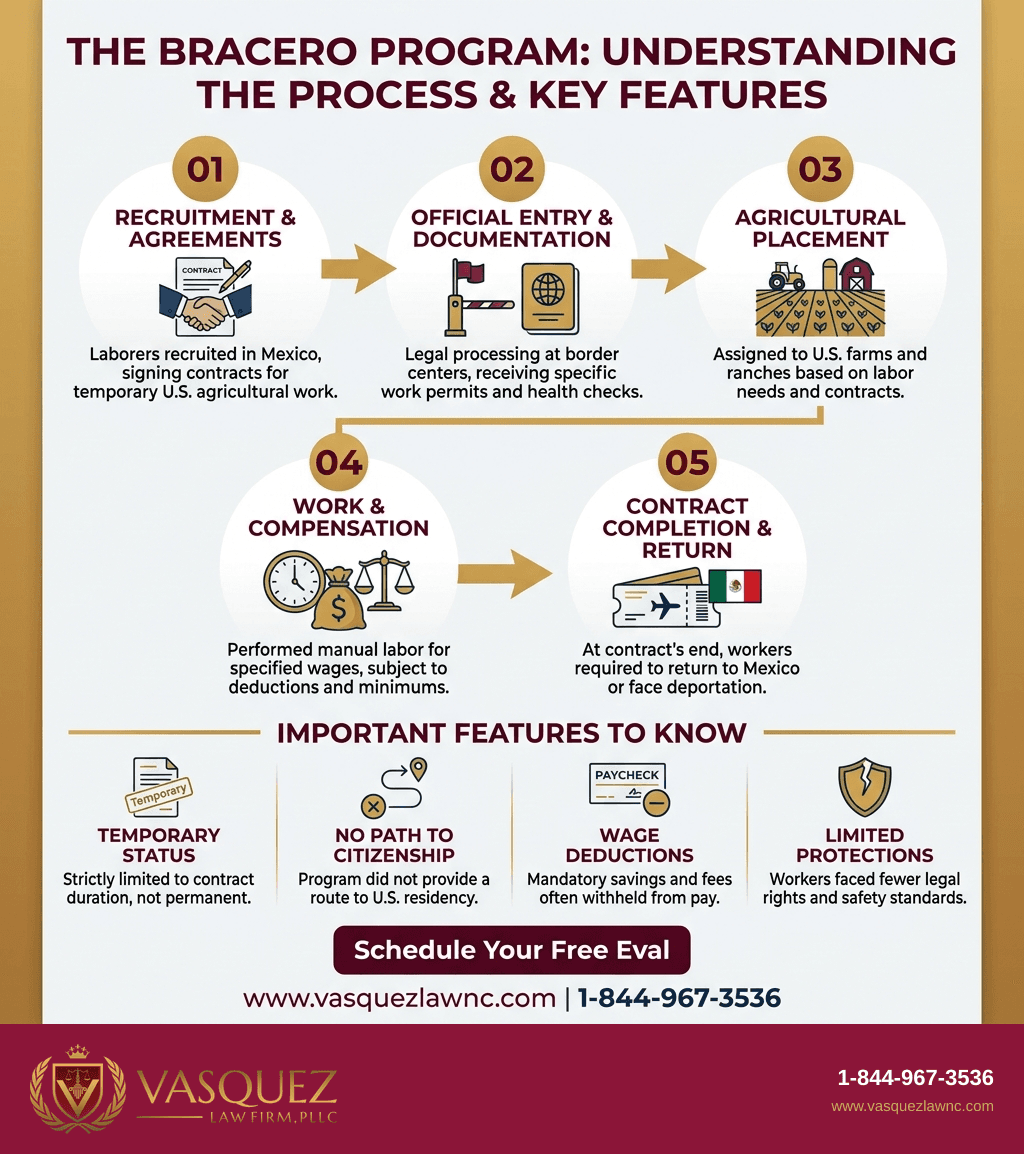
- Did not provide citizenship or permanent residency
- Influences modern immigration policy and labor rights
Understanding the Bracero Program
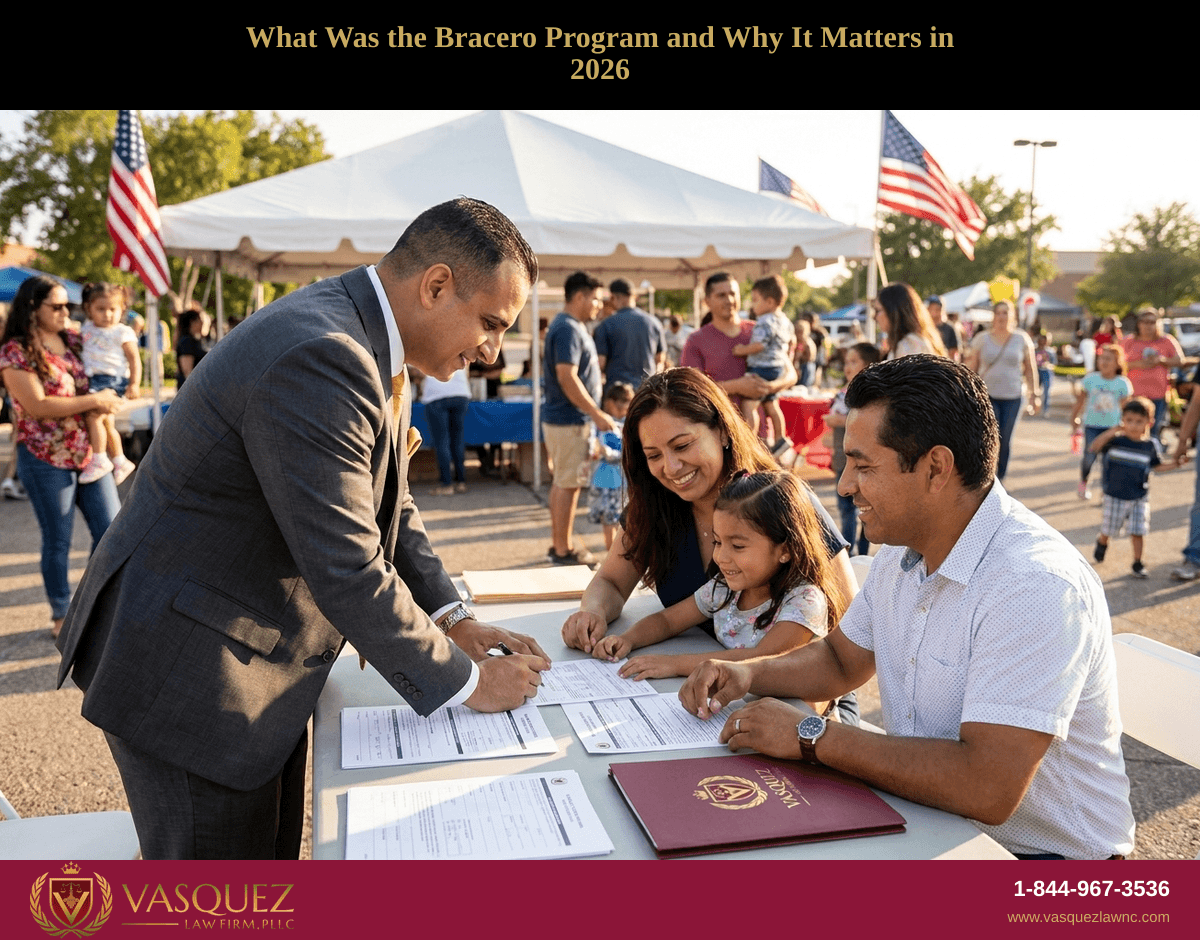
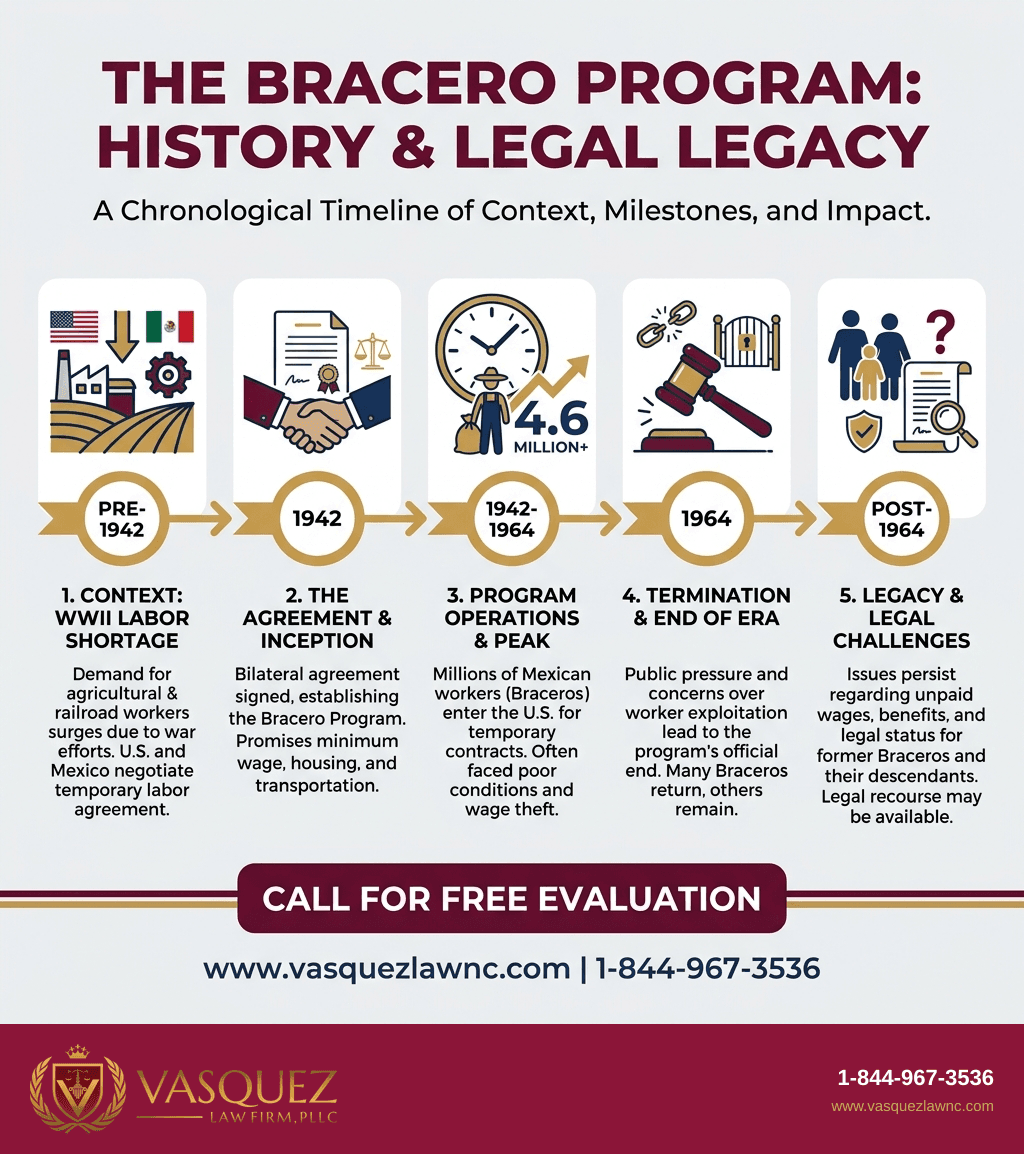
During World War II, the United States faced a serious labor shortage, especially in agriculture and railroad industries. To meet this need, the U.S. and Mexico signed the Mexican Farm Labor Agreement in 1942, commonly known as the Bracero Program. It was designed as a temporary solution to bring Mexican workers legally into the United States under controlled contracts.
The program’s name, "Bracero," comes from the Spanish word "brazo," meaning "arm," highlighting manual labor. Over 4.5 million Mexican workers participated between 1942 and 1964. These workers were contracted to work on farms, in railroads, and in other labor-intensive jobs.
While initially a wartime measure, the program lasted for 22 years, influencing U.S. labor and immigration policies. It required workers to have formal contracts outlining wages, working conditions, and housing. Nevertheless, enforcement and worker protections often fell short, leading to exploitation concerns.
This history is significant for understanding current immigration debates and labor rights discussions, particularly in Raleigh, NC, and Orlando, FL, where immigrant workers continue to contribute importantly to the economy.
Learn more about our immigration services if you or your family are navigating issues related to labor or immigration history.
How the Bracero Program Worked
The Bracero Program operated as a guest worker program based on bilateral agreements. Mexican laborers signed contracts before entering the U.S., which specified wages, work duration, and housing provisions. The contracts promised minimum wages and basic living standards, though reality often differed.
From arrival, Braceros were typically transported to farms or railroad sites requiring labor. The work often involved long hours of physical activity under challenging conditions. Mexican workers were provided housing, but it was often cramped and with inadequate sanitation.
Wages were usually at or slightly above minimum wage levels at the time, but many workers experienced wage deductions for housing and transport expenses. Labor unions criticized the program for undercutting domestic workers’ wages and failing to protect worker rights.
Despite its challenges, the program provided thousands of Mexican workers legal access to the U.S. labor market. It also set precedents for later temporary worker programs.
Attorney Vasquez and our team have experience advocating for immigrant workers' rights. Contact Attorney Vasquez if you need skilled legal advice about labor or immigration cases.
Key Features of the Program
- Temporary legal guest worker status
- Contracts specifying wages and work conditions
- Transportation and housing often supplied by employers
- Work focused on agriculture and railroads
- Worker protection enforcement was inconsistent
Bracero Program List Names and Records
Historically, the U.S. and Mexican governments kept records of participants, including names and contract details. The National Archives and Mexican agencies have preserved many of these lists. Families and researchers use these records today to trace lineage and understand labor migration patterns.
Bracero Program WW2 Context
World War II created massive labor shortages as U.S. men served overseas. The agriculture sector suffered from lack of workers, jeopardizing food production. The Bracero Program was an emergency response authorized by President Franklin D. Roosevelt to stabilize the labor supply.
Reasons the Bracero Program Ended
While initially effective, the Bracero Program faced increasing criticism over the years. Reports of exploitation, wage theft, and substandard housing conditions grew. Labor unions and advocacy groups pushed for stronger labor protections and an end to guest worker programs they believed depressed wages.
President Lyndon B. Johnson’s administration officially ended the program in 1964 amid shifts toward a more restrictive immigration policy and emphasis on domestic labor standards. This move reflected broader political, social, and economic changes during the civil rights era.
The formal end did not eliminate labor migration but shifted it toward unauthorized channels. This shift is significant in understanding today's immigration challenges.
Key Factors Leading to the End
- Widespread worker exploitation
- Lack of enforcement of contract provisions
- Pressure from U.S. labor unions
- Changing U.S. immigration laws
- Rise of civil rights and labor movements
What the End Meant for Mexican Workers
The program’s end did not provide a legal path to citizenship or permanent residency for Bracero workers. Many returned to Mexico, while others sought new ways to enter or stay in the U.S. The ending left a legacy of labor migration that continues today, especially in Raleigh and Orlando's immigrant communities.
Legacy and Significance Today
The Bracero Program's influence extends beyond its conclusion in 1964. It shaped U.S. immigration and labor policies, informing current guest worker programs and debates about temporary labor.
Immigrant workers like those from the Bracero era continue to play vital roles in agriculture and service industries across North Carolina and Florida. Understanding the program’s history helps frame current discussions about workers’ rights, immigration reform, and economic contributions.
As of 2026, Vasquez Law Firm helps immigrant workers understand their rights and legal options. Our immigration legal team in Raleigh and Orlando offers compassionate and aggressive representation grounded in a thorough understanding of immigration history and modern law.
Common Mistakes About the Bracero Program
- Assuming Bracero workers could gain U.S. citizenship through the program — they could not.
- Believing the program stopped all Mexican labor migration when unauthorized migration continued.
- Confusing the Bracero Program with current H-2A and H-2B visa programs — these have different rules.
- Underestimating how poor enforcement negatively affected workers’ rights.
- Ignoring how the program affected labor markets and union sentiments.
- Failing to recognize Bracero program records as valuable for family and research purposes.
- Overlooking the role of the Bracero Program in shaping modern immigration policy.
If you only remember one thing: The Bracero Program was a temporary, limited labor agreement with lasting immigration and labor impacts.
Bracero Program Impact in Raleigh and Orlando
Although primarily focused on agricultural states like California and Texas, the Bracero Program’s legacy touches immigrant communities in Raleigh, North Carolina, and Orlando, Florida. These cities have seen continuing migration patterns rooted in historic programs.
Immigrant workers in these regions face challenges similar to those Bracero workers endured such as labor rights, legal status, and access to services. Vasquez Law Firm’s attorneys understand these dynamics and are experienced in helping clients navigate related immigration and labor issues.
North Carolina Notes
North Carolina’s agricultural and construction sectors have historically relied on immigrant labor. The Bracero Program laid early groundwork for these labor trends. Today, immigrant workers in Raleigh and statewide face complex legal challenges related to visas and work authorization. Our team assists with these federal immigration matters consistently.
Florida Notes
Orlando hosts a large population of workers who descend from or are familiar with the legacies of programs like Bracero. Agricultural industries, hospitality, and service sectors depend on immigrant labor. Representation with knowledge of labor history and current immigration law is essential for worker protections.
Nationwide Concepts
The Bracero Program is part of a broader U.S. immigration history involving waves of temporary workers. Current laws around H visas and temporary worker protections reflect lessons learned. Legal support in Raleigh and Orlando helps clients understand how past policies affect present immigration opportunities and risks.
When to Call a Lawyer Now
- If you seek legal advice about immigrant worker rights or temporary visas
- If you need help understanding labor contracts or employer obligations
- If you suspect abuse or wage theft related to agricultural or manual labor
- If you want to explore visa options linked to guest worker programs
- If you or your family have heritage linked to past labor migration needing documentation
- If you face immigration enforcement actions connected to work authorization
About Vasquez Law Firm
At Vasquez Law Firm, we combine compassion with aggressive representation. Our motto "Yo Peleo®" (I Fight) reflects our commitment to standing up for your rights.
- Bilingual Support: Se Habla Español — Spanish-speaking attorneys and staff available
- Service Areas: North Carolina, Florida, and nationwide immigration services
- Experience: Over 30 years helping clients navigate complex legal matters
- Results: Thousands of successful cases across multiple practice areas
Attorney Trust and Experience
William J. Vásquez is admitted to the North Carolina State Bar (2011) and to the Florida Bar, providing trusted representation for immigrant workers and families. Our firm’s dedicated team in Raleigh, NC and Orlando, FL, has helped thousands understand their immigration options—including those affected by legacy programs like the Bracero Program.
Don't wait to get the help you deserve. Call us now for immediate assistance. Se Habla Español.
Frequently Asked Questions
What was the Bracero Program?
The Bracero Program was a bilateral labor agreement allowing Mexican workers to fill temporary jobs in the U.S. from 1942 until 1964. It addressed workforce shortages during WWII and shaped immigration history.
Why did the U.S. end the Bracero Program?
The program ended due to concerns about worker exploitation, insufficient enforcement, pressure from labor unions, and evolving immigration laws under President Lyndon B. Johnson.
Who stopped the Bracero Program?
President Lyndon B. Johnson officially ended the Bracero Program in 1964 as part of immigration reform and labor policy changes during his administration.
Did the Bracero Program grant U.S. citizenship?
No, it allowed temporary work authorization only. Bracero workers had no direct path to citizenship or permanent residency through this program.
How much did Bracero workers get paid?
Workers typically earned wages near the minimum wage of the era. Many experienced wage deductions, leading to criticism of poor compensation and unfair treatment.
What working conditions did Braceros face?
Many endured long hours, inadequate housing, and limited healthcare. Contracts promised standards, but enforcement was lax, leading to exploitation concerns.
Is the Bracero Program relevant today?
Yes, it informs current immigration policy discussions and labor rights debates. Its legacy affects migrant communities in Raleigh, NC, and Orlando, FL.
Where can I find a list of Bracero workers?
Lists are archived in U.S. National Archives and Mexican government records, useful for family research and understanding migration history.
Sources and References
- U.S. Citizenship and Immigration Services
- Executive Office for Immigration Review
- Legal Information Institute
Take the first step toward justice today. Our team is standing by to help. Se Habla Español.
Start Your Free Evaluation Now
Call us: 1-844-967-3536
Se Habla Español - Estamos aquí para ayudarle.


William Vasquez
Founder & CEO, Vasquez Law Firm, PLLC
William Vasquez is the founder and CEO of Vasquez Law Firm, PLLC, a results-driven firm specializing in immigration, criminal defense, personal injury, and workers' compensation. A U.S. Air Force veteran and recipient of the Joint Service Achievement Medal, William is dedicated to fiercely fighting for his clients' rights.
Related Legal Services
Need legal help? Learn more about experienced immigration attorneys in Charlotte, or contact us for a free evaluation.
You can also visit immigration legal services throughout NC for more information.