How New Supreme Court Asylum Rulings Affect You in 2026
Understand recent Supreme Court asylum decisions and their impact on your immigration case in 2026. Contact Vasquez Law for a free consultation.
Published on March 4, 2026
Talk to an immigration attorney
Free call. A clear plan for your case.
Free & confidential · Se habla espanol · Mon-Fri 8am-7pm, Sat 9am-2pm (ET)
Have questions? Talk to an attorney - free evaluation.
Call 1-844-967-3536Worried how the latest immigration news affects you?
Schedule a confidential case review with an immigration attorney - know exactly where you stand.
USCIS Case Status
Check your USCIS case status
Enter your receipt number and get the official status. Free, no registration.
How New Supreme Court Asylum Rulings Affect You in 2026
The landscape of immigration law is constantly shifting, with the Supreme Court often playing a pivotal role in shaping policies that directly affect asylum seekers. Understanding the latest Supreme Court asylum decisions is crucial for anyone navigating the complex U.S. immigration system in 2026. These rulings can determine eligibility, procedural requirements, and the overall path to protection for individuals seeking safety within the United States. Staying informed is the first step toward safeguarding your rights and ensuring you pursue the correct legal avenues for your case.
Need help with your asylum case? Our experienced attorneys are ready to fight for you. Se Habla Español.
Schedule Your Free Case Evaluation
Or call us now: 1-844-967-3536
Quick Answer: Understanding Supreme Court Asylum Rulings
Recent Supreme Court asylum decisions in 2026 have primarily focused on refining the standards for proving persecution and the procedural aspects of asylum claims. These rulings emphasize the need for robust, evidence-based applications and adherence to specific legal definitions. They aim to clarify ambiguities, potentially making the asylum process more stringent for some, while reinforcing protections for others.
- Decisions clarify 'particular social group' definitions.
- Rulings impact expedited removal processes.
- New precedents may affect burden of proof for asylum seekers.
- Emphasis on timely and comprehensive evidence submission.
- Judicial review limitations for certain asylum cases.
What New Supreme Court Asylum Rulings Mean for Asylum Seekers
The Supreme Court's involvement in asylum law often stems from appeals of lower court decisions, particularly those from federal circuit courts. In 2026, several key rulings have emerged, impacting various facets of the asylum process. For instance, a recent decision has clarified the interpretation of what constitutes a "particular social group" for asylum eligibility, a critical component for many claims. This clarification could either broaden or narrow the scope of who qualifies for asylum based on group affiliation, depending on the specific facts and legal arguments presented in individual cases. Asylum seekers must be aware of how these definitions are being applied by the courts.
Another significant area of impact involves procedural due process for individuals seeking asylum. The Court has addressed questions surrounding the rights of asylum seekers during expedited removal proceedings, particularly at the border. These rulings can dictate the level of review available to individuals claiming a fear of persecution upon entry to the U.S. Understanding these procedural nuances is vital, as they can significantly affect an individual's ability to present their case and avoid immediate deportation. The Supreme Court's decisions set precedents that all lower immigration courts and agencies, including USCIS and the Executive Office for Immigration Review (EOIR), must follow. Therefore, having legal counsel who is up-to-date on these developments is indispensable for a successful asylum claim.
Impact on Expedited Removal and Credible Fear Interviews
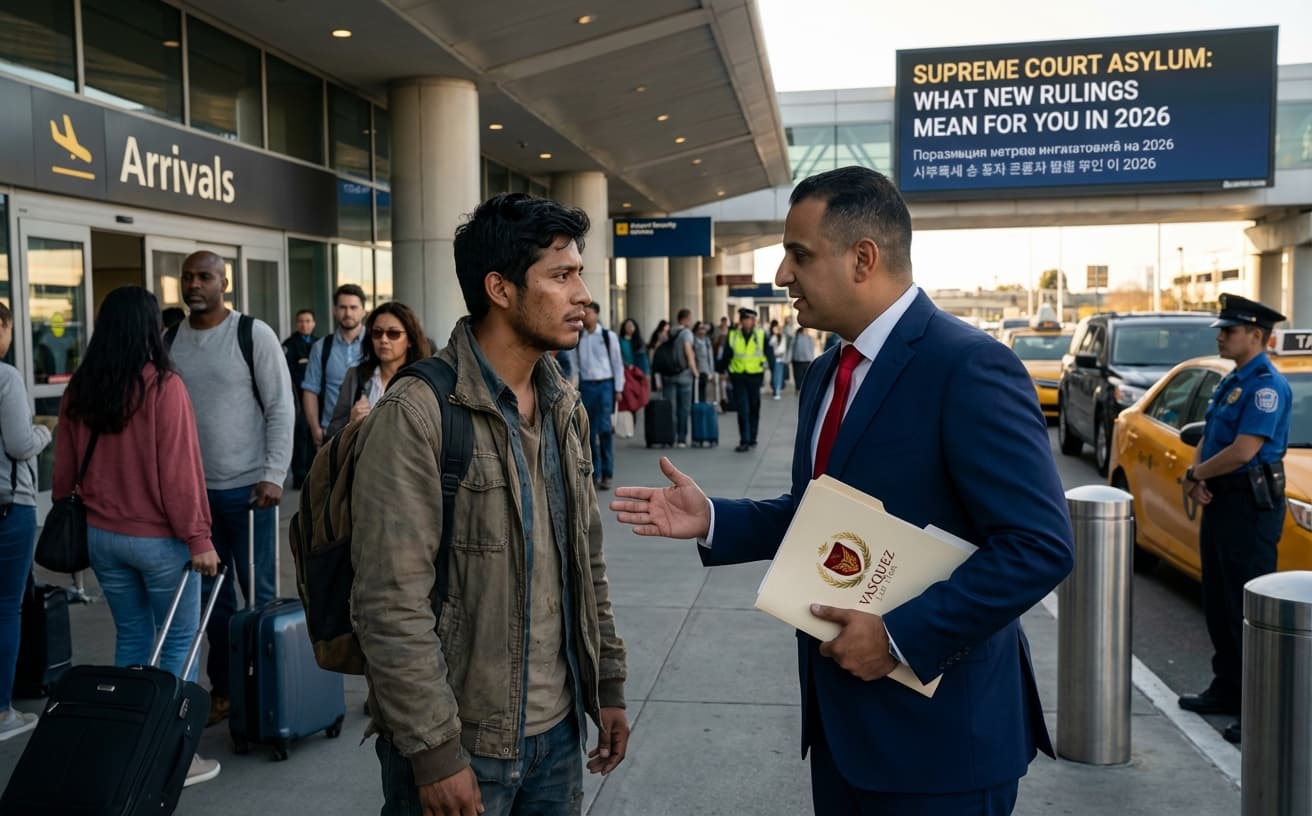
Expedited removal is a process that allows immigration officers to quickly remove certain non-citizens without a hearing before an immigration judge. However, if an individual expresses a fear of persecution or torture, they are referred for a credible fear interview. Recent Supreme Court asylum rulings have scrutinized the scope of judicial review for these expedited removal decisions. This means that while some rulings may limit the ability of federal courts to review certain aspects of credible fear determinations, others might reinforce the importance of a thorough and fair interview process. These decisions directly affect individuals encountered at the border or ports of entry, including those in Smithfield, North Carolina, and across Florida.
For asylum seekers, these changes mean that the initial credible fear interview becomes even more critical. Presenting a clear and consistent account of your fear and providing any available evidence at this early stage is paramount. Any inconsistencies or perceived lack of credibility can have severe, long-lasting consequences for your asylum claim. Attorney Vasquez and our team at Vasquez Law Firm understand the high stakes involved in these interviews and can provide essential guidance. We help prepare individuals thoroughly, ensuring they understand their rights and the gravity of their statements during these crucial proceedings. The goal is to establish a strong foundation for your asylum application from the very beginning.
Navigating Credible Fear Interviews
A credible fear interview is the first hurdle for many asylum seekers arriving at a U.S. port of entry or apprehended within the country. It is conducted by an Asylum Officer from USCIS. During this interview, you must establish a "significant possibility" that you could establish eligibility for asylum or withholding of removal. Recent Supreme Court asylum decisions often influence how these officers interpret the legal standards. Having an attorney present, or at least receiving thorough preparation, can make a monumental difference in the outcome. We provide detailed guidance on what to expect and how to articulate your fear effectively, ensuring your story is heard and understood in accordance with current legal requirements.
Judicial Review Limitations
The Supreme Court has, in some cases, limited the extent to which federal courts can review decisions made by immigration agencies, including those related to credible fear and expedited removal. This means that if an asylum seeker's credible fear claim is denied, their options for challenging that decision in federal court might be restricted. Such limitations underscore the importance of getting it right the first time during the administrative process. While these restrictions can be challenging, they do not eliminate all avenues for legal recourse. It becomes even more critical to work with an experienced immigration attorney who understands these complex procedural barriers and can explore every available option, including administrative appeals, to protect your rights.
Burden of Proof and Evidence Requirements for Asylum Claims
Securing asylum in the U.S. requires meeting a specific burden of proof: demonstrating a well-founded fear of persecution on account of race, religion, nationality, membership in a particular social group, or political opinion. The Supreme Court asylum rulings often fine-tune how this burden is interpreted and what kind of evidence is considered sufficient. In 2026, there is an increased emphasis on providing corroborating evidence whenever possible. This means that while your testimony is crucial, it should ideally be supported by documents, affidavits, country condition reports, or other forms of proof to strengthen your case. Failing to provide sufficient evidence can lead to a denial, even if your fear is genuine.
For example, if you claim persecution due to your political opinion, providing evidence such as news articles, social media posts, or arrest warrants from your home country can significantly bolster your credibility. Similarly, if your claim involves membership in a particular social group, expert testimony or reports detailing the persecution of that group can be invaluable. The legal team at Vasquez Law Firm has extensive experience in preparing comprehensive asylum applications. We meticulously gather and organize all necessary documentation, ensuring your application meets the heightened evidence requirements set forth by recent Supreme Court asylum decisions. Our goal is to present the strongest possible case on your behalf, anticipating and addressing potential challenges.
Gathering Corroborating Evidence
Corroborating evidence is often the cornerstone of a successful asylum claim, especially in light of recent Supreme Court asylum rulings. This can include police reports, medical records documenting injuries, witness statements from those who observed your persecution, and country condition reports from reputable human rights organizations. Even seemingly small details can be crucial. We help clients identify all potential sources of evidence, even if they are difficult to obtain from their home country. Our team understands the challenges involved and works diligently to compile a robust portfolio of evidence that strengthens your narrative and meets legal scrutiny.
Expert Testimony and Country Conditions
In complex asylum cases, particularly those involving persecution based on particular social groups or political opinions, expert testimony can be invaluable. Experts can provide insights into the political, social, or economic conditions in an applicant's home country, validating claims of persecution. Additionally, country condition reports from organizations like the U.S. Department of State or Amnesty International offer objective evidence of human rights abuses. These resources provide context and support to an asylum seeker's personal testimony, making the case more compelling. We leverage these resources to build a comprehensive and persuasive asylum application.
Common Mistakes in Asylum Applications and How to Avoid Them
Navigating the asylum process is fraught with potential pitfalls, and even minor errors can lead to significant delays or outright denial, especially with the evolving legal landscape shaped by Supreme Court asylum decisions. One of the most common mistakes is failing to file the asylum application within one year of arrival in the U.S. This "one-year filing deadline" has very limited exceptions, and missing it without a valid excuse can be fatal to a claim. Another frequent error is providing inconsistent or incomplete information, which can undermine credibility during interviews or hearings. Many applicants also struggle with articulating a clear nexus between their persecution and one of the five protected grounds.
- Missing the One-Year Filing Deadline: Unless you qualify for a specific exception (e.g., changed country conditions, extraordinary circumstances), you must file your asylum application within one year of your last arrival in the U.S. Seek legal counsel immediately upon arrival to assess your eligibility and file promptly.
- Inconsistent Testimony or Information: Any discrepancies between your initial statements, application, and testimony can be used against you. Be truthful and consistent throughout the process. An attorney can help you prepare and review your statements for accuracy.
- Lack of Corroborating Evidence: While your testimony is vital, immigration courts often require additional evidence. Gather all available documents, medical records, police reports, and country condition reports to support your claim.
- Failure to Establish a Nexus: You must clearly link your fear of persecution to one of the five protected grounds (race, religion, nationality, particular social group, or political opinion). Many applicants fail to articulate this connection effectively.
- Not Understanding the Legal Definitions: Terms like "persecution" and "particular social group" have specific legal meanings. Misinterpreting these can weaken your case. An attorney can explain these definitions and apply them to your unique situation.
- Underestimating the Importance of a Credible Fear Interview: For those in expedited removal, the credible fear interview is the first and often most critical step. Treat it with utmost seriousness and seek preparation.
- Attempting to Navigate the System Alone: The U.S. immigration system is incredibly complex. Trying to handle an asylum case without legal representation significantly reduces your chances of success.
If you only remember one thing: Always seek legal counsel from an experienced immigration attorney as early as possible in your asylum process. Their expertise is invaluable in avoiding critical errors and building a strong case.
Don't face your legal challenges alone. Our team is here to help you every step of the way.
Call today: 1-844-967-3536 | Se Habla Español
NC, FL, and Nationwide Notes on Asylum Law
Asylum law in the United States is primarily federal, meaning the core legal framework, including the Immigration and Nationality Act (INA) and regulations, applies nationwide. However, the practical application of these laws, especially concerning Supreme Court asylum decisions, can vary depending on the jurisdiction of the immigration court and the U.S. Circuit Court of Appeals that oversees it. For individuals in North Carolina and Florida, this means understanding the specific precedents and interpretations that apply in the Fourth Circuit (for NC) and the Eleventh Circuit (for FL).
North Carolina Asylum Cases
In North Carolina, asylum cases are heard by immigration judges primarily at the Charlotte Immigration Court. Appeals from this court fall under the jurisdiction of the Fourth Circuit Court of Appeals. The Fourth Circuit has its own body of case law that interprets federal immigration statutes and regulations, sometimes offering specific guidance on issues like the definition of "persecution" or "particular social group." Asylum seekers in Smithfield and across North Carolina should be aware of these regional interpretations, as they can influence the outcome of their cases. Vasquez Law Firm, with its strong presence in North Carolina, is intimately familiar with the nuances of asylum proceedings within this jurisdiction.
Florida Asylum Cases
Florida hosts several immigration courts, including those in Orlando, Miami, and Bradenton. Decisions from these courts are subject to review by the Eleventh Circuit Court of Appeals. The Eleventh Circuit, like the Fourth, has developed its own body of immigration case law that can impact asylum claims. For example, specific precedents regarding the credibility of asylum seekers or the types of evidence required might be unique to this circuit. Our firm also serves clients in Florida, offering comprehensive legal support for asylum seekers navigating the Eleventh Circuit's legal landscape. We ensure our clients receive up-to-date guidance tailored to their specific location and legal challenges.
Nationwide Asylum Trends
While circuit courts have regional influence, Supreme Court asylum decisions establish nationwide precedents that are binding on all federal courts and immigration agencies. These decisions often address fundamental questions of statutory interpretation or constitutional rights. In 2026, nationwide trends in asylum law include a continued focus on border enforcement, the treatment of unaccompanied minors, and the processing of asylum claims from various countries experiencing conflict or instability. These trends underscore the dynamic nature of immigration law and the constant need for expert legal advice to adapt to new policies and judicial interpretations. Vasquez Law Firm monitors these nationwide developments closely to provide cutting-edge representation.
When to Call a Lawyer Now for Supreme Court Asylum Impact
The complexities of Supreme Court asylum rulings demand immediate and expert legal attention. Delay can significantly jeopardize your case. If any of the following situations apply to you, it is crucial to contact an experienced immigration attorney at Vasquez Law Firm without delay:
- You have recently arrived in the U.S. and intend to seek asylum, especially if you have been placed in expedited removal proceedings.
- You have received a Notice to Appear (NTA) in immigration court.
- Your asylum application has been denied, and you are considering an appeal.
- You fear returning to your home country due to persecution or torture.
- You are preparing for a credible fear interview or a reasonable fear interview.
- Your existing asylum case is pending, and you are concerned about how recent Supreme Court asylum decisions might affect it.
- You need to gather additional evidence or documentation for your asylum claim.
- You are unsure if you meet the eligibility requirements for asylum under current law.
- You are considering applying for asylum but are unsure about the one-year filing deadline or potential exceptions.
- You are in immigration detention and need assistance with your asylum claim.
Our team at Vasquez Law Firm is dedicated to providing compassionate and aggressive representation for asylum seekers. We understand the urgency of your situation and are prepared to fight for your rights.
About Vasquez Law Firm
At Vasquez Law Firm, we combine compassion with aggressive representation. Our motto "Yo Peleo" (I Fight) reflects our commitment to standing up for your rights and protecting your future. We understand the profound challenges individuals and families face when navigating the U.S. immigration system, especially when their safety and future depend on a successful asylum claim. Our veteran-founded leadership brings a unique discipline and dedication to every case, ensuring that no stone is left unturned in our pursuit of justice for you.
- Bilingual Support: Se Habla Español - our team is fully bilingual, ensuring clear communication and understanding throughout your legal journey.
- Service Areas: We proudly serve clients across North Carolina and Florida, and provide comprehensive immigration services nationwide.
- Experience: With over 15 years of dedicated legal experience, Attorney Vasquez has a proven track record of helping clients navigate complex legal matters and achieve favorable outcomes.
- Results: Our firm has successfully handled thousands of cases across various practice areas, earning a reputation for effective and client-centered representation.
Attorney Trust and Experience
Attorney Vasquez holds a Juris Doctor degree and is admitted to practice in the North Carolina State Bar. With over 15 years of dedicated legal experience, he has built a reputation for providing personalized attention and achieving favorable outcomes for his clients. His deep understanding of immigration law, coupled with a commitment to continuous learning about evolving Supreme Court asylum decisions, ensures that clients receive the most current and effective legal strategies. When you choose Vasquez Law Firm, you are choosing a partner who will fight tirelessly for your rights and your future.
Don't face your legal challenges alone. Our team is here to help you every step of the way.
Call today: 1-844-967-3536 | Se Habla Español
Frequently Asked Questions About Supreme Court Asylum Rulings
What is the latest Supreme Court ruling on immigration in 2026?
As of 2026, one significant Supreme Court ruling has focused on the standard for proving "particular social group" membership in asylum claims. This decision provides clearer guidelines for what evidence is required and how such groups are defined, impacting many asylum applications. It aims to reduce ambiguity in lower court interpretations, potentially streamlining some aspects of the asylum process while increasing scrutiny on others. Consulting an attorney is vital to understand specific implications for your case.
How do Supreme Court asylum decisions affect border crossings?
Supreme Court asylum decisions often influence policies at the U.S. border, particularly regarding expedited removal and credible fear interviews. Recent rulings have addressed the extent of judicial review available to asylum seekers apprehended at the border, potentially affecting their ability to challenge initial negative determinations. These decisions can impact the speed and fairness of processing for individuals seeking asylum upon entry. It is crucial to have legal guidance from the moment you interact with border officials to protect your rights.
Is the U.S. suspending immigrant visas in 2026?
As of 2026, the U.S. is not broadly suspending immigrant visas. However, specific proclamations or policies can temporarily halt certain visa categories or restrict entry from particular countries due to public health concerns, national security, or other reasons. While these are typically executive actions rather than direct Supreme Court asylum rulings, the Court may review challenges to such policies. It is essential to check the latest U.S. Department of State advisories and consult an immigration attorney for current information regarding visa availability and travel restrictions.
What happens after 5 years of refugee status?
After one year of holding refugee status in the U.S., refugees are typically eligible to apply for lawful permanent resident (Green Card) status. There isn't a specific "5-year" status for refugees. The path is usually from refugee to Green Card holder. Once a Green Card is obtained, after five years of permanent residency, they may be eligible to apply for U.S. citizenship, provided they meet all other naturalization requirements. An attorney can help navigate this transition.
Can a Supreme Court ruling on asylum be retroactive?
Generally, Supreme Court rulings apply to cases currently pending before the courts and to future cases. Retroactivity can be a complex legal question and depends on the specific nature of the ruling and the legal principles involved. While a new interpretation of law might affect a case on appeal, it typically does not reopen already finalized cases. However, if a ruling establishes a new constitutional right, it might have broader retroactive implications. Consult an attorney to understand how a specific ruling affects your past or ongoing case.
How does the Supreme Court review asylum cases?
The Supreme Court typically reviews asylum cases when there is a significant legal question that has been decided differently by various federal circuit courts, or when a constitutional issue is at stake. The Court does not re-hear factual evidence but reviews the legal interpretations and procedures used by lower courts and immigration agencies. They issue opinions that set binding precedents for all other courts. This process ensures uniformity in the application of federal law across the nation.
What role does evidence play in asylum claims after new rulings?
Evidence plays an even more critical role in asylum claims following recent Supreme Court asylum rulings. There is a heightened emphasis on providing corroborating evidence to support an applicant's testimony, whenever possible. While testimony remains central, strong supporting documentation like police reports, medical records, witness affidavits, and country condition reports are increasingly vital. These rulings underscore the need for meticulous preparation and a comprehensive presentation of all available proof to meet the burden of proof effectively.
What is a "particular social group" in asylum law?
A "particular social group" is one of the five protected grounds for asylum. It refers to a group of individuals who share a common immutable characteristic that they cannot change or should not be required to change, and who are perceived as a group by society. Recent Supreme Court asylum decisions have sought to clarify the definition and criteria for establishing such a group, influencing how immigration judges and asylum officers evaluate claims based on this ground. Legal interpretation of this term is crucial for many asylum seekers.
How quickly are asylum cases processed in 2026?
The processing time for asylum cases in 2026 varies significantly depending on factors like the volume of applications, the specific immigration court's backlog, and the complexity of the individual case. While some cases may be resolved within a year, others can take several years, especially if appeals are involved. Expedited removal cases with credible fear findings might be processed faster to an initial hearing. Recent Supreme Court asylum rulings can affect procedural timelines, but generally, patience and consistent follow-up are required. An attorney can provide a more realistic timeline for your specific circumstances.
Can I work while my asylum case is pending?
Generally, asylum seekers can apply for work authorization (an Employment Authorization Document, or EAD) 150 days after filing their asylum application, provided their application is not denied before the 180-day mark. The waiting period for the EAD to be approved can vary. It's important to apply for work authorization promptly once eligible, as working without proper authorization can have negative immigration consequences. An attorney can guide you through the application process and help you understand the specific timing requirements.
Sources and References
- U.S. Citizenship and Immigration Services (USCIS) - Asylum
- Executive Office for Immigration Review (EOIR)
- U.S. Department of State - Visas
Need immigration help? Our immigration attorneys can review your case.
Ready to take the next step? Contact Vasquez Law Firm today for a free, confidential consultation. We're committed to fighting for your rights and achieving the best possible outcome for your case.
Start Your Free Case Evaluation Now
Call us: 1-844-967-3536
Se Habla Español - Estamos aquí para ayudarle.

William Vasquez
Founder & CEO, Vasquez Law Firm, PLLC
William Vasquez is the founder and CEO of Vasquez Law Firm, PLLC, a results-driven firm specializing in immigration, criminal defense, personal injury, and workers' compensation. A U.S. Air Force veteran and recipient of the Joint Service Achievement Medal, William is dedicated to fiercely fighting for his clients' rights.
Related Legal Services
Need legal help? Learn more about speak with an immigration lawyer, or contact us for a free evaluation.
You can also visit North Carolina immigration law firm for more information.