How Green Cards Work and What to Expect in 2026
Learn how green cards work in 2026. Understand application steps, requirements, and changes. Contact Vasquez Law for a free consultation today.
Published on June 2, 2026
Talk to an immigration attorney
Free call. A clear plan for your case.
Free & confidential · Se habla espanol · 24/7
Have questions? Talk to an attorney - free evaluation.
Call 1-844-967-3536Free Tool
Check Your USCIS Case Status Now
Enter your receipt number - get the official USCIS status in English or Spanish. No registration.
How Green Cards Work and What to Expect in 2026
Green cards, also known as permanent resident cards, allow foreign nationals to live and work legally in the U.S. In 2026, new rules and processes continue to affect applicants nationwide, including those in Orlando, FL, and Raleigh, NC. This article explains how green cards work, the application process, requirements, costs, timelines, and common mistakes to avoid. Whether you're applying through family, employment, asylum, or the green card lottery, understanding these details can help protect your rights and improve your chances of success. Learn how Vasquez Law Firm supports communities in North Carolina and Florida with immigration services.
Our team guides families through every permanent residence path, from family petitions to adjustment of status.
Need help with your case? Our experienced attorneys are ready to fight for you. Se Habla Español.
Or call us now: 1-844-967-3536
Quick Answer
Green cards grant you lawful permanent residency in the U.S. In 2026, applicants in Orlando and beyond should understand updated rules, apply through the right category, and file carefully. The process can take 8 to 14 months or longer depending on your case. Working with an immigration lawyer can improve your chances and protect your rights.
- Eligibility varies: family, work, asylum, lottery
- File Form I-485 or consular application
- Pass background, medical, and security checks
- Attend biometrics appointment and interview
- Follow new 2026 rules for documentation and fees
Understanding Green Cards and New Rules
In 2026, millions of immigrants across the U.S. are working to secure lawful permanent resident status through green cards. A green card is official evidence you may live and work permanently in the U.S. without additional visas. The rules for obtaining green cards are federal but also have specific local implications. For people in Orlando, FL, and Raleigh, NC, understanding the latest green card changes is essential for success.
Recent green card news indicates that a majority of new green cards in 2026 go to individuals already residing in the U.S. This often involves adjustment of status applications (Form I-485) rather than consular processing abroad. According to USCIS processing times, these applications take 8 to 14 months on average in 2026 (USCIS Processing Times).
New policies emphasize improved digital checks and revised public charge rules under INA § 212(a)(4), affecting applicants across all categories. Having a clear understanding of these rules helps applicants avoid mistakes that might delay or deny their green card.
If you want to explore how Vasquez Law Firm can assist with your green card application, visit our immigration services page. Attorney Vasquez and our team offer personalized help to clients in North Carolina and Florida.
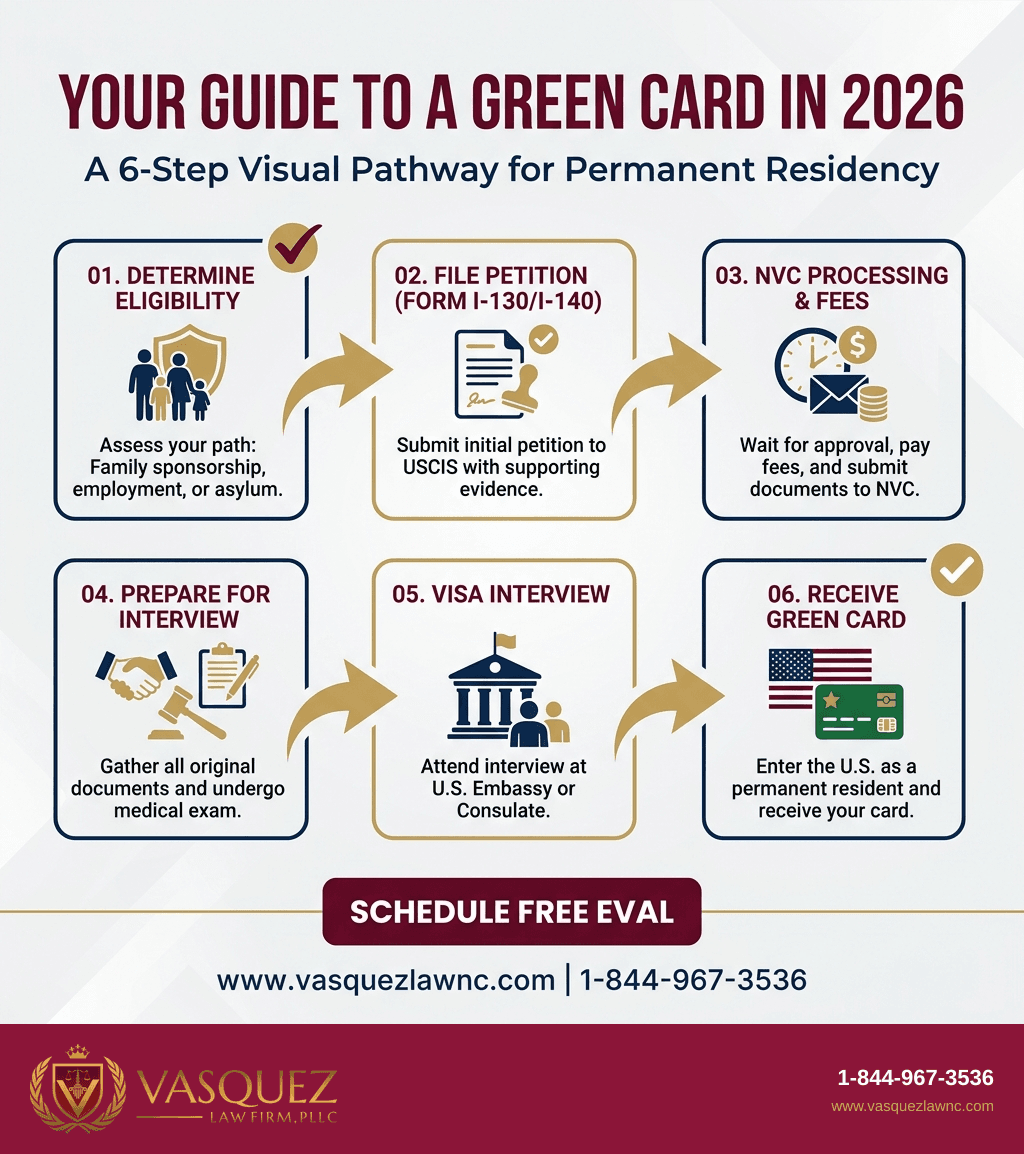
Step-by-Step Green Card Application Process
- Determine Eligibility: Identify your category: family-based, employment-based, asylum, or the green card lottery. Each category has distinct requirements and processes.
- File the Appropriate Petition: Family or employer usually files Form I-130 or I-140. Some categories allow self-petitioning (e.g., certain employment categories).
- Wait for Priority Date: If applicable, check the Visa Bulletin for your priority date to become current, especially for numerically limited categories.
- Submit Adjustment of Status Application: If you are in the U.S., file Form I-485 with USCIS once your priority date is current. Otherwise, apply through consular processing.
- Attend Biometrics Appointment: USCIS schedules your fingerprinting and photograph for background checks.
- Complete the Interview: Most applicants must attend an interview wherein an officer verifies your information.
- Receive Decision and Green Card: USCIS approves or denies your case. If approved, your physical green card is mailed to you.
During all stages, it is critical to comply with document requests and deadlines to avoid delays or denials.
Documents Checklist for Your Green Card
- Valid Passport(s)
- Birth Certificate
- Marriage Certificate (for family-based cases)
- Evidence of lawful entry (I-94 arrival form)
- Approved Petition Receipt Notices (Form I-130, I-140)
- Form I-485 Application and supporting documents
- Medical Examination Report (Form I-693)
- Fees payment receipts
- Proof of employment or financial support
- Criminal record and immigration history if applicable
Each case may require additional documents based on personal circumstances or category. Consult our immigration attorneys in Orlando for a tailored checklist.
Timeline for Green Card Processing in 2026
- Petition approval (I-130/I-140): 6 to 12 months depending on USCIS center
- Priority date wait: Varies widely; some categories current immediately, others wait years
- I-485 processing: 8 to 14 months average in 2026 (varies by workload)
- Biometrics appointment: Scheduled within 4 to 8 weeks after filing
- Interview notice: Typically 6 to 12 months after I-485 filing
- Final decision and card issuance: Usually within 30 days after approval
Timelines can fluctuate due to policy changes, USCIS staffing, and individual case complexity.
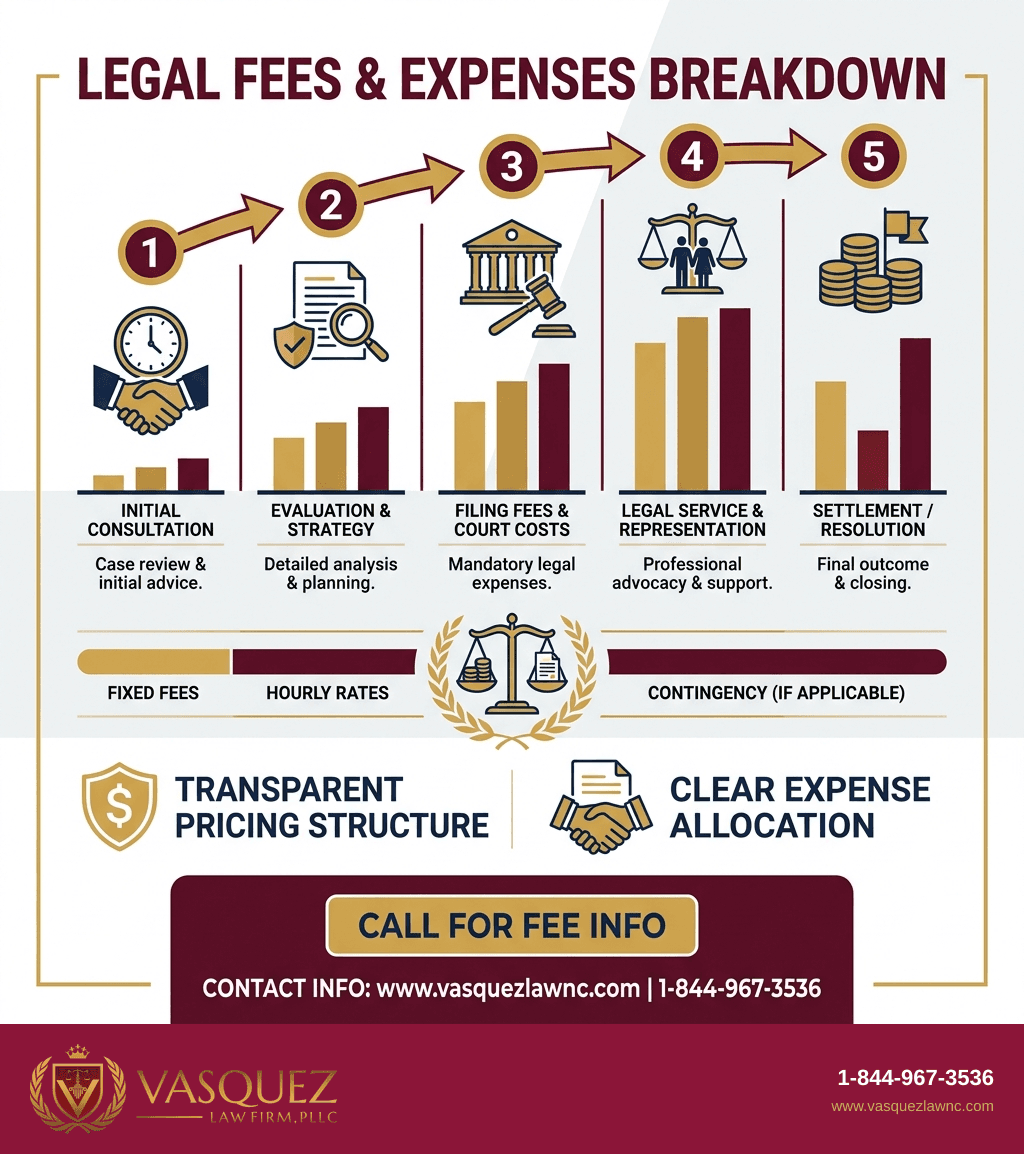
Costs and Fees To Expect
- Form I-130 Petition for Alien Relative: $535
- Form I-140 Immigrant Petition for Alien Worker: $700
- Form I-485 Adjustment of Status: $1,225 (including biometrics fee)
- Medical Examination: $200 to $500, varies by provider
- Attorney Fees: Vary, typically $2,000 to $5,000 depending on case complexity
- Other potential costs: Translations, document certifications, travel expenses for interviews
Planning finances and knowing fee waivers or reductions eligibility may help applicants manage costs.
Common Green Card Application Mistakes
- Incomplete or incorrect forms: Always double-check and follow instructions carefully.
- Missing deadlines: Late responses to USCIS Requests for Evidence (RFE) often cause delays or denials.
- Inadequate documentation: Submit all supporting evidence required for your category.
- Ignoring inadmissibility issues: Criminal records or previous immigration violations must be disclosed honestly.
- Failing to attend interviews or appointments: Missing biometrics or interviews can stop your application.
- Lack of legal advice: Navigating changing rules in 2026 may require expert help.
- Misunderstanding eligibility: Applying in the wrong category leads to denial or processing delays.
If you only remember one thing: Accurate, timely, and complete applications backed by legal guidance improve your chances significantly.
Green Card Rules in NC and FL
North Carolina Notes
North Carolina is governed by federal immigration laws but has local USCIS offices handling biometrics, interviews, and document drop-offs. Vasquez Law Firm's Raleigh office serves residents across the state, providing access to experienced immigration attorneys who understand local USCIS field office nuances and hearing schedules.
Florida Notes
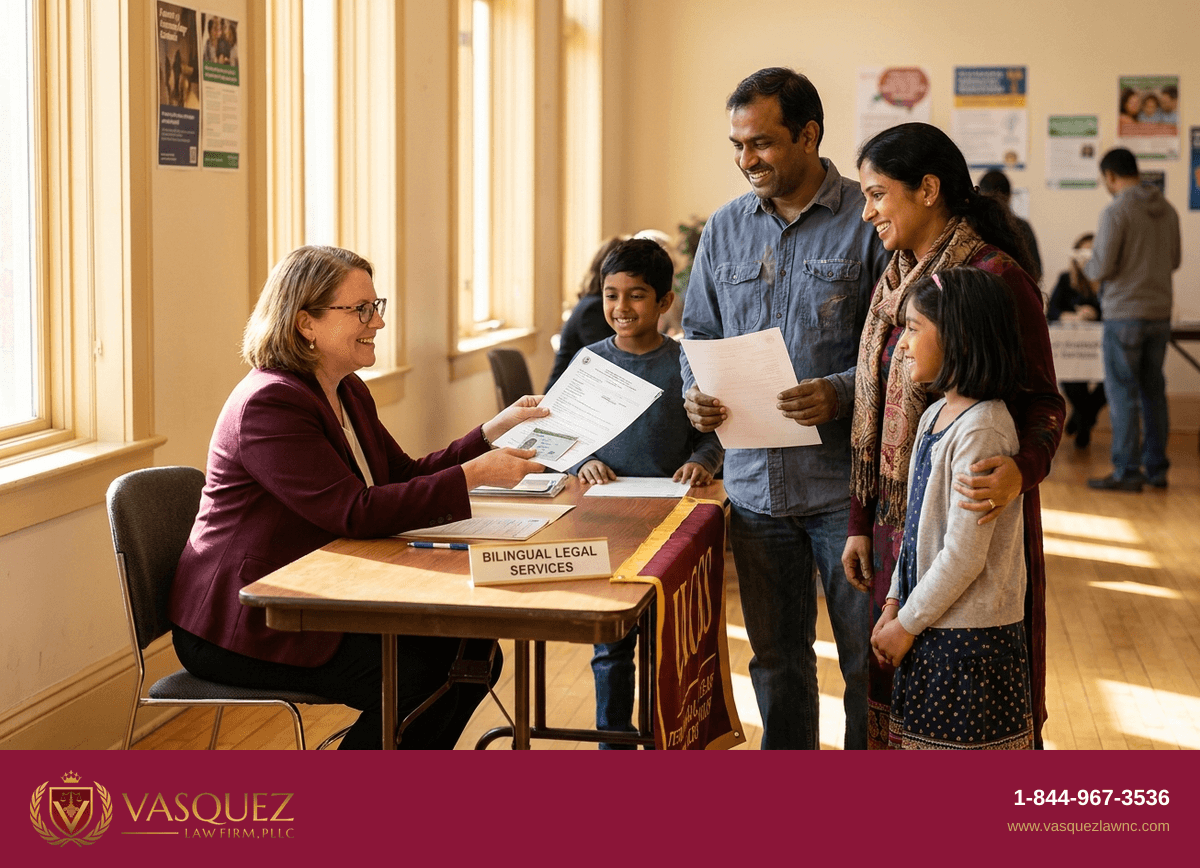
Florida, including Orlando, has a busy USCIS district office responsible for processing many adjustment of status applications. Delays are common due to high demand. Orlando applicants often benefit from early case reviews and personalized attorney representation. The Vasquez Law Firm office in Orlando offers bilingual staff and attorneys ready to guide you through the 2026 green card process changes.
Nationwide Concepts
All green card applicants nationwide must comply with federal statutes like INA § 245 for adjustment of status and INA § 212 regarding admissibility. National policies, including public charge and security checks, apply equally regardless of location. Tracking USCIS processing times via their official website is recommended for applicants everywhere.
When to Call an Immigration Lawyer
- If you receive a Request for Evidence (RFE) you do not understand
- If you miss deadlines or interview appointments
- If you have an inadmissibility issue or criminal history
- If your application is denied or delayed past normal timelines
- If you want help determining eligibility or the best application strategy
- If you need to appeal USCIS decisions or file motions to reopen
- If you are unsure about policy changes in 2026 affecting your case
- If English is not your first language and you need bilingual assistance
About Vasquez Law Firm
At Vasquez Law Firm, we combine compassion with aggressive representation. Our motto "Yo Peleo®" (I Fight) reflects our commitment to standing up for your rights.
- Bilingual Support: Se Habla Español — Spanish-speaking attorneys and staff available
- Service Areas: North Carolina, Florida, and nationwide immigration services
- Experience: Over 30 years helping clients navigate complex legal matters
- Results: Thousands of successful cases across multiple practice areas
Attorney Trust and Experience
William J. Vásquez is admitted to the North Carolina State Bar (2011) and to the U.S. Courts of Appeals for the 4th, 5th, and 11th Circuits. Florida-jurisdiction matters at the firm are handled by Florida Bar attorney Harold Estrada-Rodriguez (FL Bar No. 1041171). The firm has provided dedicated legal representation since 2011, with personalized attention to each client's case.
Don't wait to get the help you deserve. Call us now for immediate assistance. Se Habla Español.
Frequently Asked Questions
How many years do you have to be in the U.S. to get a green card?
The time you need to be in the U.S. before applying for a green card varies by your category. For family-based green cards, continuous presence requirements generally range from 3 to 5 years. For example, under INA § 245(a), certain applicants can adjust status after 3 years if married to a U.S. citizen. Employment-based applicants usually apply when eligible without minimum years physically present. Check specific rules or consult an immigration attorney for guidance.
Are people getting green cards right now in 2026?
Yes, immigrants continue to receive green cards in 2026 across various categories such as family, employment, asylum, and diversity lottery. However, processing times fluctuate depending on USCIS workload. According to https://egov.uscis.gov/processing-times/, some adjustment of status forms (I-485) take 8 to 14 months. Applicants in Orlando and Raleigh should file carefully to meet all requirements.
What is the new rule for green cards in 2026?
In 2026, USCIS implemented updates to streamline application procedures, including faster background checks and new digital tools for status checks. There are also tightened requirements for public charge evaluations as per INA § 212(a)(4). Applicants should stay updated on all changes, available through USCIS official channels. Working with a qualified immigration lawyer can help ensure compliance and timely applications.
What are the requirements for a green card?
Requirements vary by category but generally include eligibility through family, employment, or humanitarian reasons; admissibility under INA §§ 212 and 237; and passing security and medical checks. Applicants must also file the correct forms, such as Form I-485 for adjustment of status, and provide documentation that proves eligibility. Consulting with an immigration attorney can help clarify specific requirements based on your situation.
How can I check my green card application status?
You can check your green card application status online using your receipt number on the USCIS website at https://egov.uscis.gov/cases-status/. The system provides updates on processing stages. Staying informed helps avoid delays and be prepared for interviews or requests for evidence.
What is the green card lottery and who qualifies?
The Diversity Visa Lottery offers up to 55,000 green cards annually to individuals from countries with low U.S. immigration rates. Applicants must meet education or work experience requirements. The lottery opens yearly; winners can apply for permanent residence. Beware of scams and always verify official program details on https://www.uscis.gov.
How long does it take to get a green card in 2026?
Processing times vary widely by case type and USCIS workload. According to https://egov.uscis.gov/processing-times/, family-based adjustment of status typically takes 8 to 14 months, while employment-based can take longer. Applicants in Orlando, FL, and Raleigh, NC, should plan accordingly and consult with immigration lawyers to avoid delays.
Can a green card be denied and why?
Yes, green card applications can be denied for reasons like inadmissibility under INA § 212, missing documents, failure to attend interviews, or criminal records. Denial notices include reasons and appeal options. Consulting an immigration attorney can help identify issues and improve chances in future filings or appeals.
Sources and References
- U.S. Citizenship and Immigration Services
- Executive Office for Immigration Review
- Legal Information Institute
Take the first step toward justice today. Our team is standing by to help. Se Habla Español.
Start Your Free Evaluation Now
Call us: 1-844-967-3536
Se Habla Español - Estamos aquí para ayudarle.

William Vasquez
Founder & CEO, Vasquez Law Firm, PLLC
William Vasquez is the founder and CEO of Vasquez Law Firm, PLLC, a results-driven firm specializing in immigration, criminal defense, personal injury, and workers' compensation. A U.S. Air Force veteran and recipient of the Joint Service Achievement Medal, William is dedicated to fiercely fighting for his clients' rights.
Related Legal Services
Need legal help? Learn more about experienced immigration attorneys in Charlotte, or contact us for a free evaluation.
You can also visit statewide immigration attorneys for more information.