US Immigration Backlog Grows in 2026: What You Need to Know
Wondering about the US immigration backlog in 2026? Learn how it impacts processing times and your rights. Contact Vasquez Law for a free evaluation.
Published on May 19, 2026
Talk to an immigration attorney
Free call. A clear plan for your case.
Free & confidential · Se habla espanol · Mon-Fri 8am-7pm, Sat 9am-2pm (ET)
Have questions? Talk to an attorney - free evaluation.
Call 1-844-967-3536Worried how the latest immigration news affects you?
Schedule a confidential case review with an immigration attorney - know exactly where you stand.
USCIS Case Status
Check your USCIS case status
Enter your receipt number and get the official status. Free, no registration.
US Immigration Backlog Grows in 2026: What You Need to Know
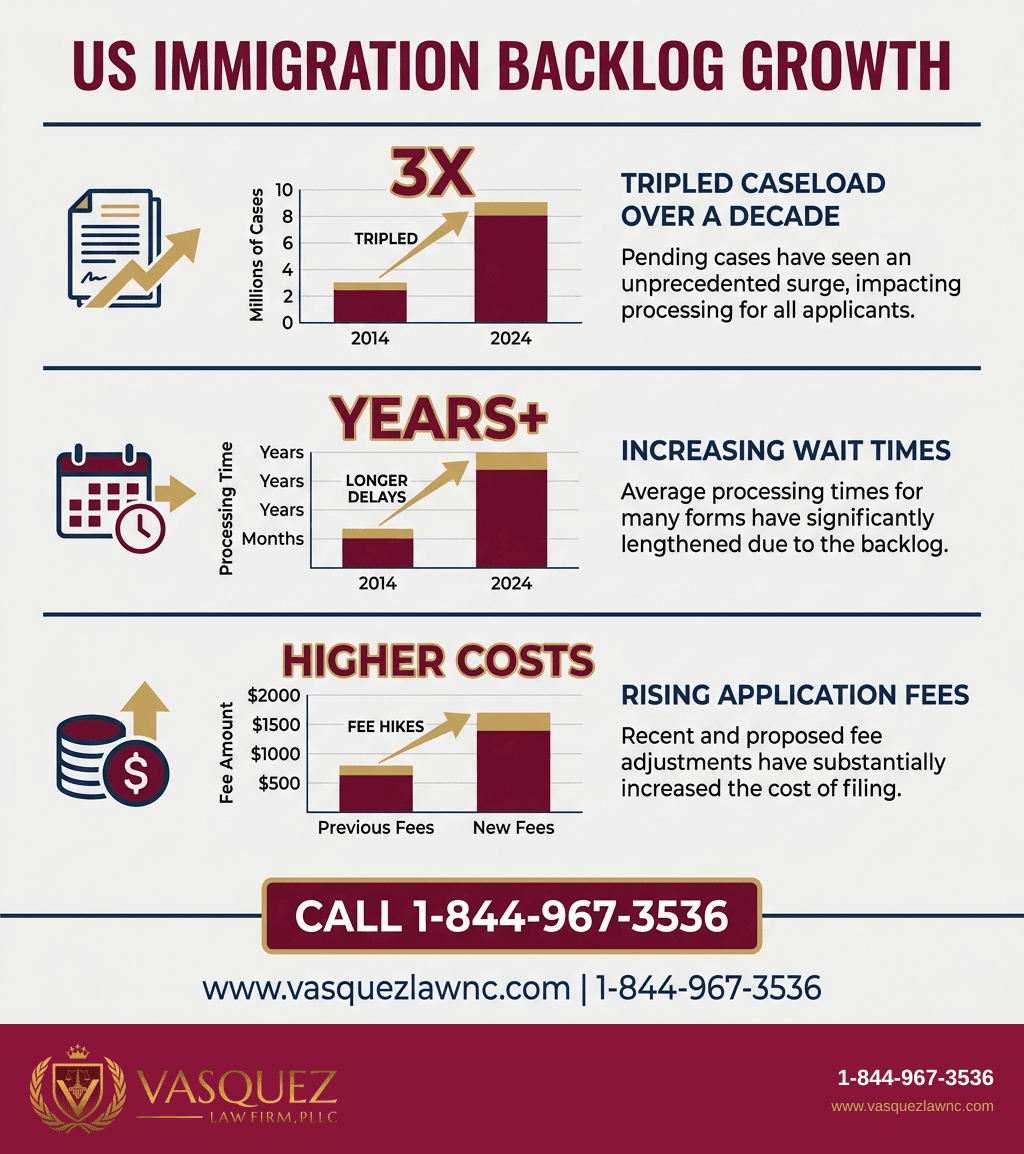
The US immigration backlog has surged to over 11.6 million pending cases as of 2026, impacting families nationwide including those in Orlando and Raleigh. This backlog delays critical processes such as adjustment of status, work permits, and visa applications. Understanding the causes and effects of this backlog helps immigrants protect their rights and plan for what lies ahead. Our guide explains the latest immigration news today and what North Carolina and Florida residents can expect in this challenging environment. Attorney Vasquez and our team at Vasquez Law Firm offer bilingual support to assist you throughout the complex immigration process.
Need help with your immigration case? Our experienced attorneys are ready to fight for you. Se Habla Español.
Or call us now: 1-844-967-3536
Quick Answer
The US immigration backlog has more than tripled over the last decade, reaching over 11.6 million pending cases in 2026. This causes significant delays in visa approvals, green card processing, and work authorizations, affecting immigrants in Orlando, Raleigh, and nationwide. Staying informed on USCIS backlog updates and consulting an attorney can help protect your legal rights.
- Backlog includes family, employment, and asylum cases
- Processing delays now commonly exceed two years
- USCIS resources strained by volume and staffing issues
- Applicants should prepare to provide thorough documentation
- Legal guidance helps navigate backlog challenges effectively
Understanding the US Immigration Backlog
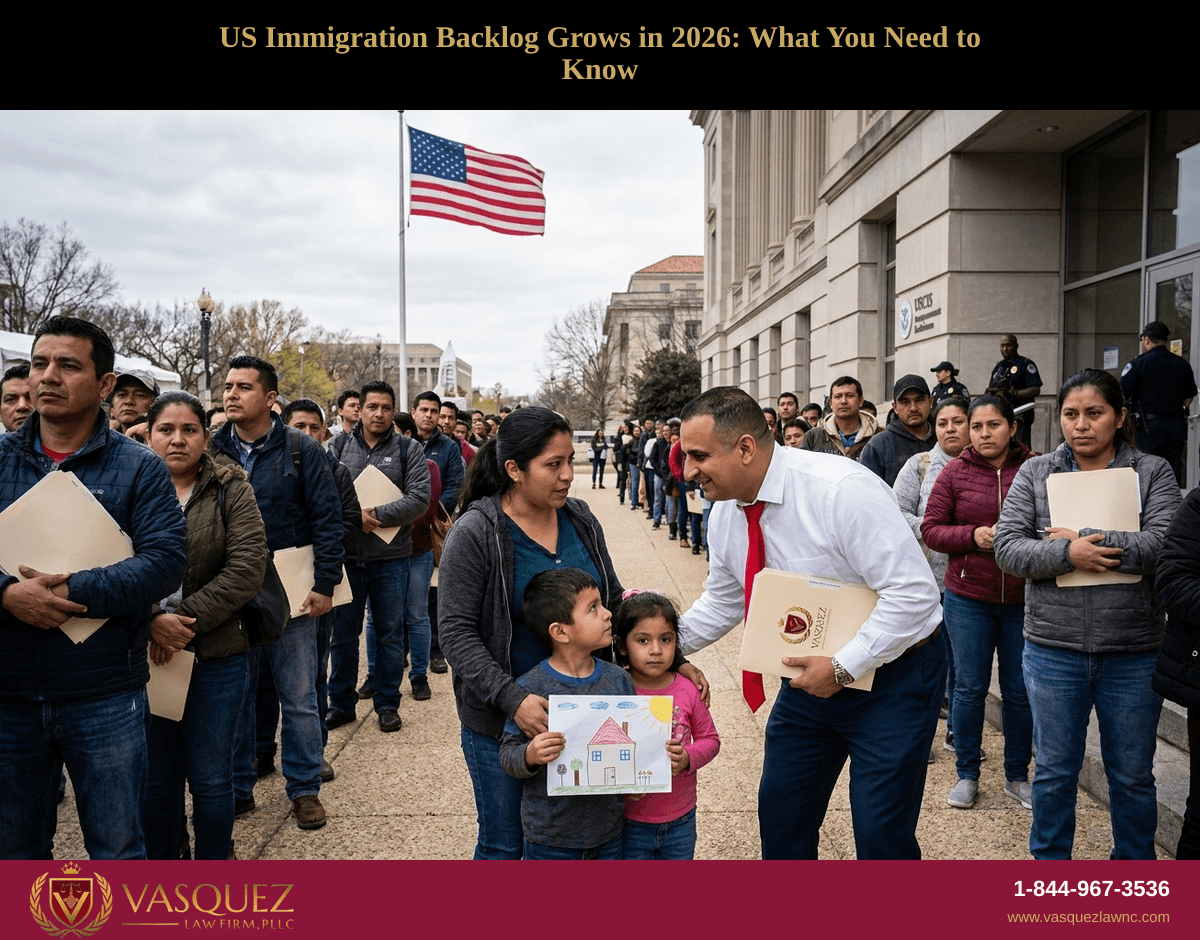
Picture waiting over two years for a visa or green card application to be processed. In 2026, the US immigration backlog stands at roughly 11.6 million cases, more than triple the number from a decade ago. USCIS data and government reports confirm that the backlog affects nearly every type of immigration benefit application — family petitions, employment visas, asylum cases, and naturalizations.
Many immigrants in Orlando, FL, and Raleigh, NC, personally experience these delays, which can disrupt lives and work permits. The backlog is caused by multiple factors: increased application filings, reduced staff capacity at USCIS, pandemic-related delays from 2020-2022, and complex adjudication processes.
For example, the number of pending green card applications jumped by over 70% since 2015, and asylum case backlogs have lengthened due to limited immigration court resources (Executive Office for Immigration Review). These effects ripple through the immigrant community with long wait times that test families and applicants.
Understanding this context helps applicants manage expectations and prepare for their immigration journey. Our immigration legal services team stays updated on these developments to guide clients in Orlando and Raleigh.
What Data Shows About Filing Volume
USCIS's monthly reports show that adjusted for policy shifts, the volume of applications, including Form I-485 (Adjustment of Status) and Form N-400 (Naturalization), steadily increased from 2010 through 2023. In 2026, the agency struggles to keep pace with these submissions amid staffing shortages. The result is longer queue times and more frequent requests for evidence.
Impact on Different Case Types
Family-based petitions have faced average waits up to 24 months, while employment-based cases can vary widely based on country-specific visa caps and quotas (see 8 U.S.C. § 1151). Asylum seekers face additional challenges due to delays in immigration courts operated by EOIR. This layered backlog impacts every step from initial filing to final approval.
Government Efforts to Address Backlog
USCIS has initiated procedural reforms and authorized hiring to reduce backlog volumes, but progress is gradual. Meanwhile, applicants must navigate longer wait times and occasional processing pauses.
Step-By-Step Guidance for Your Immigration Case
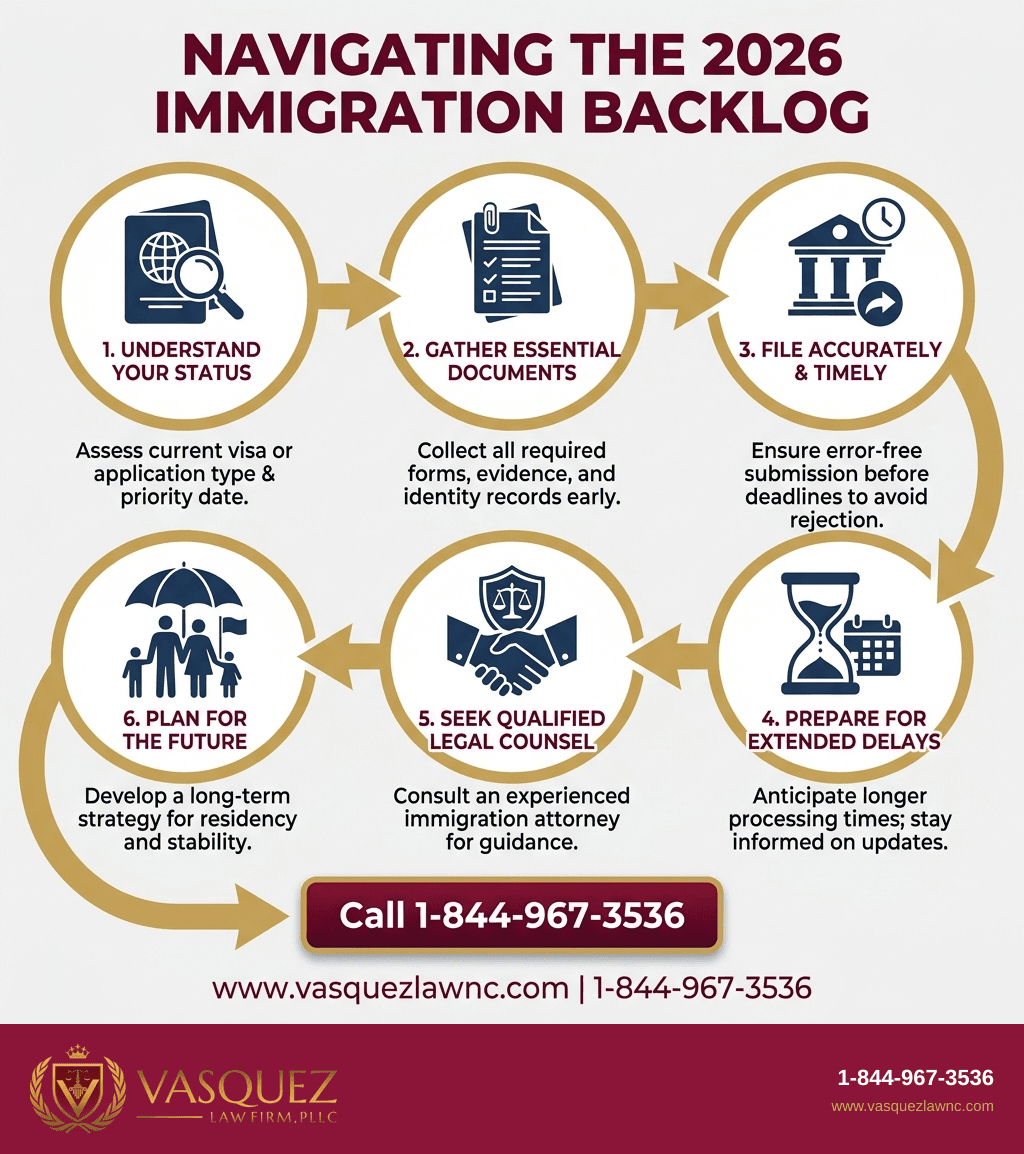
Understanding the backlog is only the first step. Preparing carefully can help minimize delays for your immigration case in 2026. Here is what you should do:
- Gather All Required Documents Early. USCIS requires extensive evidence including birth certificates, marriage licenses, and employment verification. Having everything ready prevents delays from additional requests.
- File Complete Applications. Missing information or errors trigger Requests for Evidence (RFEs), which add months of waiting time.
- Maintain Legal Status. Stay up to date on your visa or employment authorization status to avoid lapses that can complicate backlog situations.
- Monitor Your Case Status. Use the USCIS online system to check progress on Forms I-485, I-130, or asylum applications regularly. This helps respond promptly to issues.
- Renew Work Permits on Time. For example, DACA work authorization renewal now takes about 14 to 22 months (USCIS DACA). Timely filing prevents gaps.
- Seek Legal Assistance. An experienced immigration attorney can help avoid mistakes, submit proper evidence, and communicate with USCIS effectively.
How Vasquez Law Firm Supports Your Case
Our team in Orlando and Raleigh offers personalized legal advice and representation. We help you navigate forms, document collection, and case follow-up to align with current USCIS procedures and reduce backlog impact. Visit Attorney Vasquez bios to learn about our expertise.
Common Mistakes to Avoid in Backlog Cases
- Submitting Incomplete Applications: Leaving out key documents leads to RFEs and added delays. Double-check everything.
- Missing Deadlines: Late renewals for work permits or temporary status renewals create legal gaps.
- Ignoring Requests for Evidence: Failing to respond timely to USCIS notices results in case denials.
- Failing to Update Address: Losing USCIS correspondence often causes missed deadlines.
- Overlooking Visa Bulletin Dates: Not watching priority date movements delays adjustment of status filings.
- Attempting Unauthorized Work: Working without valid authorization can jeopardize applications.
- Delaying Legal Help: Waiting too long to consult a qualified attorney can cost valuable time and options.
If you only remember one thing: Double-check your documents, meet deadlines, and engage legal help early to manage backlog risks effectively.
Timeline: What to Expect for Processing Delays
- Initial USCIS Receipt: 1-3 months after filing you should receive a receipt notice.
- Biometrics Appointment: Scheduled 5-8 weeks after filing for fingerprinting.
- Request for Evidence (RFE): If issued, expect 3-6 months to respond and additional months for USCIS to review.
- Interview (if required): Currently, interviews may take place 12-24 months post-filing depending on location.
- Final Decision: Can take 14-36 months or longer due to backlog volume.
These timelines vary by case type and USCIS service center. Check official USCIS processing times at https://egov.uscis.gov/processing-times/ regularly.
Costs and Fees: What Impacts the Price
- Filing Fees: USCIS charges several fees ranging roughly from $50 for biometric services to over $1,000 for forms like I-485.
- Attorney Fees: Legal costs vary by complexity and services provided.
- Additional Evidence Costs: Translation, medical exams, and document retrieval add to expenses.
- Duplicate Filings Due to Mistakes: Incorrect or incomplete filings can lead to refiling costs and delays.
- Premium Processing: Limited availability for certain petitions can speed processing at an extra fee but is not always available.
NC, FL, and Nationwide Notes
North Carolina Notes
Immigrants living in North Carolina, including Raleigh, deal with local USCIS field offices that experience varied backlog impacts. Vasquez Law Firm in Raleigh provides in-person support and guidance for immigration cases during these delays.
Florida Notes
Orlando’s large immigrant population faces intense pressure from USCIS backlogs, especially in family reunification and employment cases. Our Orlando office specializes in assisting clients through extended wait times and procedural changes.
Nationwide Concepts
The backlog is a nationwide challenge caused by federal agency resource limits and legal complexities. Immigration laws such as 8 U.S.C. § 1255 (adjustment of status) govern application processes regardless of location, but local office processing times vary. Nationwide efforts to streamline USCIS function continue.
When to Call a Lawyer Now
- When you receive a Request for Evidence or Notice of Intent to Deny
- If your work permit or visa is about to expire
- Facing removal or deportation proceedings
- Experiencing a lengthy delay beyond published USCIS processing times
- If you are a Dreamer needing DACA renewal guidance
- Preparing to file complex petitions like asylum or adjustment of status
- Having trouble understanding USCIS notices or decisions
- Need help submitting complete applications to avoid backlog impact
About Vasquez Law Firm
At Vasquez Law Firm, we combine compassion with aggressive representation. Our motto "Yo Peleo®" (I Fight) reflects our commitment to standing up for your rights.
- Bilingual Support: Se Habla Español — Spanish-speaking attorneys and staff available
- Service Areas: North Carolina, Florida, and nationwide immigration services
- Experience: Over 30 years helping clients navigate complex legal matters
- Results: Thousands of successful cases across multiple practice areas
Attorney Trust and Experience
William J. Vásquez is admitted to the North Carolina State Bar (2011) and to the U.S. Courts of Appeals for the 4th, 5th, 6th, and 11th Circuits. Florida-jurisdiction matters at the firm are handled by Florida Bar attorney Alekssandra Lopez. The firm has provided dedicated legal representation since 2011, with personalized attention to each client's case.
Don't wait to get the help you deserve. Call us now for immediate assistance.
Se Habla Español
Frequently Asked Questions
Is there an immigration backlog in the US as of 2026?
Yes, the US is currently experiencing a significant immigration backlog with over 11.6 million pending cases. This results in application processing times stretching beyond two years for many forms, impacting applicants in Orlando, Raleigh, and across the country. Staying informed and seeking legal advice is important.
What causes the US immigration backlog?
The backlog stems from increased application volume, staffing shortages at USCIS, COVID-19 disruptions, and complex case requirements. These factors combined have slowed processing nationwide, including in Orlando and Raleigh, affecting various immigration benefits and visas.
How long is the current processing time for green cards in 2026?
Green card processing typically ranges from 12 to 36 months based on case and location. Family-based adjustments often take 14 to 20 months currently. Checking USCIS processing times online can give specific estimates for your case.
Who pays $100 for asylum in the US?
There is no $100 fee to apply for asylum (Form I-589) in the US. Asylum applications are free of charge, but other immigration benefits such as work permits do require fees. Always verify with USCIS or legal counsel.
Which country treats immigrants the best?
Immigrant treatment varies widely. The US offers many benefits but is challenged by processing backlogs. Countries like Canada and some in Europe provide extensive immigrant supports. Local policies also differ, so individual experiences vary widely.
Can the immigration backlog affect DACA renewal times?
Yes, DACA renewals now often take 14 to 22 months due to backlog challenges. Timely filing and proper documentation are essential to avoid gaps in protection and work authorization.
What steps can I take to prepare while waiting in the backlog?
Applicants should keep all documents organized, respond quickly to USCIS requests, maintain valid status, and consult an immigration attorney. These actions help avoid further delays or complications.
How can Vasquez Law Firm assist with immigration backlog cases?
Vasquez Law Firm provides bilingual legal assistance in Raleigh and Orlando to help clients manage complex backlog issues. We help with documentation, case follow-up, and advocacy to navigate delays effectively.
Sources and References
- U.S. Citizenship and Immigration Services
- Executive Office for Immigration Review
- Legal Information Institute
Take the first step toward justice today. Our team is standing by to help.
Start Your Free Evaluation Now
Call us: 1-844-967-3536
Se Habla Español - Estamos aquí para ayudarle.

William Vasquez
Founder & CEO, Vasquez Law Firm, PLLC
William Vasquez is the founder and CEO of Vasquez Law Firm, PLLC, a results-driven firm specializing in immigration, criminal defense, personal injury, and workers' compensation. A U.S. Air Force veteran and recipient of the Joint Service Achievement Medal, William is dedicated to fiercely fighting for his clients' rights.
Related Legal Services
Need legal help? Learn more about learn about our immigration practice, or contact us for a free evaluation.
You can also visit statewide immigration legal services for more information.