How Immigration Works: What You Need to Know in 2026
Learn how immigration works in 2026. Get clear immigration information and advice. Contact Vasquez Law for a free consultation in Raleigh or Orlando.
Published on May 28, 2026
Talk to an immigration attorney
Free call. A clear plan for your case.
Free & confidential · Se habla espanol · 24/7
Have questions? Talk to an attorney - free evaluation.
Call 1-844-967-3536Worried how the latest immigration news affects you?
Schedule a confidential case review with an immigration attorney - know exactly where you stand.
How Immigration Works: What You Need to Know in 2026
Immigration is a complex federal process governed by strict laws shaping who can enter, remain, or become a U.S. citizen. In 2026, understanding immigration means knowing changes in policy, critical legal steps, and how local offices in Raleigh, NC, and Orlando, FL, can support your journey. This article breaks down key immigration concepts, recent reform updates, and practical guidance to help Dreamers and other immigrants protect their rights and make informed decisions.
Need help with your case? Our experienced attorneys are ready to fight for you. Se Habla Español.
Or call us now: 1-844-967-3536
Quick Answer
The immigration process involves applying for authorized entry or status with USCIS, often requiring forms like I-485 or I-130, interviews, and sometimes court hearings. In 2026, policies continue evolving, making expert advice key to success. Dreamers and immigrants in Raleigh and Orlando can find localized support to navigate federal immigration laws efficiently.
- Immigration means legally entering or staying in the U.S.
- Processes include visas, green cards, and citizenship applications.
- Processing times vary by case and agency workload.
- Consulting an immigration lawyer helps avoid mistakes.
- Local office support is vital for Raleigh, NC, and Orlando, FL residents.
Understanding Immigration Definition and Process
Imagine applying for a green card to live permanently in the United States. Immigration is the federally regulated process that governs this, among other entry or status changes. The Immigration and Nationality Act (INA), under Title 8 of the U.S. Code, provides the legal framework.
At its core, immigration means moving to another country to live or work. Under U.S. law, this includes lawful permanent residents, nonimmigrant visa holders, refugees, asylees, and naturalized citizens. The key federal agencies involved include U.S. Citizenship and Immigration Services (USCIS), Immigration and Customs Enforcement (ICE), Customs and Border Protection (CBP), and the Executive Office for Immigration Review (EOIR), which oversees immigration courts.
What Does Immigration Mean Legally?
Legally, immigration defines the movement of foreign nationals to the U.S. with approval from federal statutes. According to 8 U.S.C. § 1101(a)(15), noncitizens are classified by immigrant or nonimmigrant status, depending on their purpose of visit and duration. The law defines the process for admission, removal, and adjustment of status.
How the Immigration Process Works
The immigration process generally starts with submitting the appropriate application or petition. Forms like I-130 (family-based petition), I-140 (employment-based petition), or I-485 (adjustment of status) initiate the process. USCIS reviews, may request more evidence, and schedules interviews. If issues arise, cases may escalate to immigration court adjudicated under INA § 240.
In Orlando, FL and Raleigh, NC, local USCIS offices process applications and hold interviews. Virtual services are offered for certain business immigration consultations, including H-1B and L-1 visas, where clients meet lawyers remotely via Zoom.
Trump Immigration and Recent Policy Shifts
The Trump administration introduced stricter immigration enforcement, travel bans, and limits on visas and asylum. Many policies have been modified or reversed, but some enforcement standards remain. Staying updated on immigration news is crucial as these changes can affect processing times and eligibility.
For more detailed immigration information and up-to-date news, always consult government sources like USCIS.
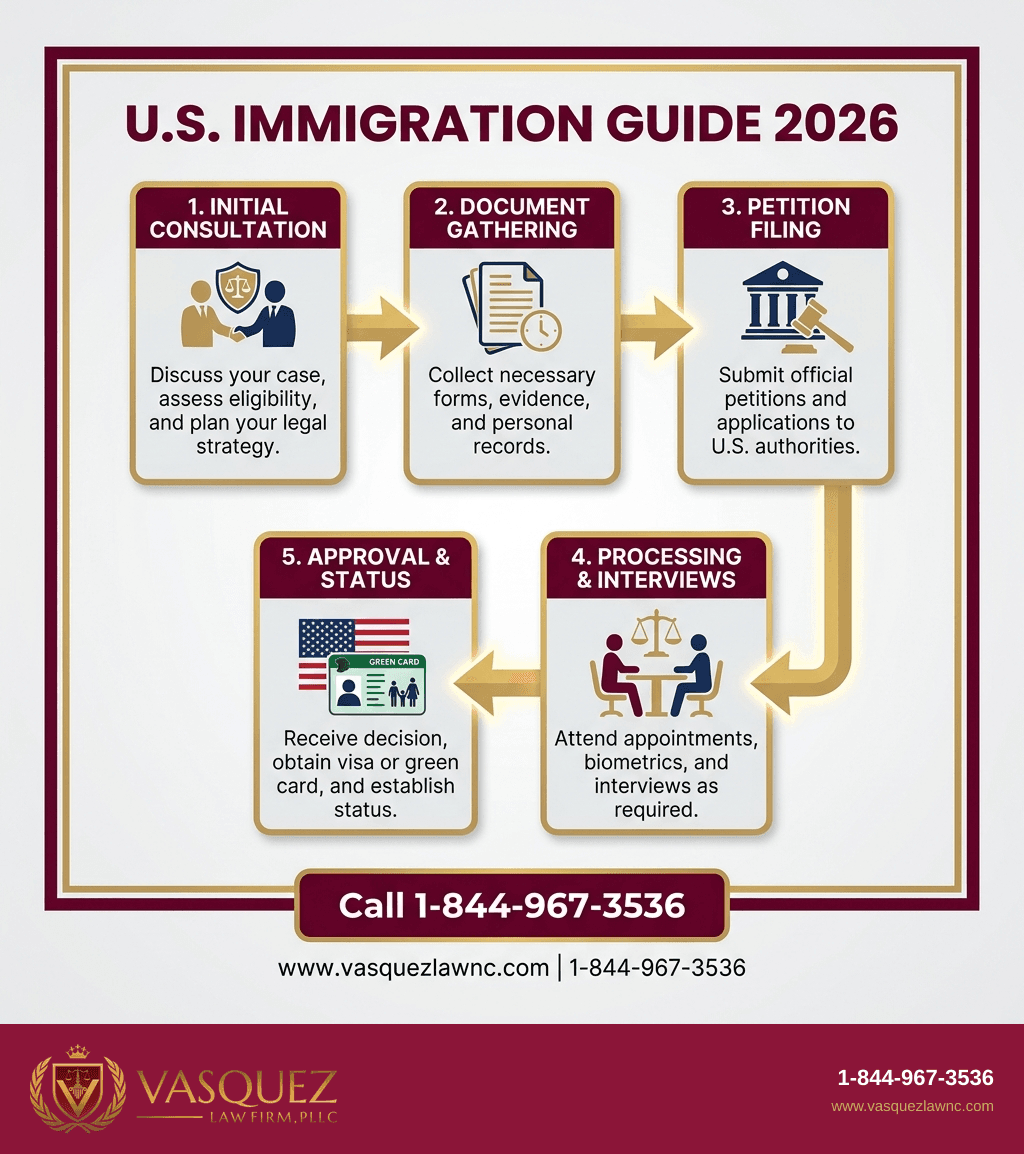
Key Steps to Take for Immigration in 2026
Consider Maria's experience, who applied for adjustment of status after her family petition was approved. Her journey involved multiple steps, deadlines, and interviews. Understanding these stages reduces delays and errors.
- Determine Eligibility: Identify which visa or immigration benefit you qualify for by reviewing USCIS criteria.
- Gather Documents: Collect passports, birth certificates, financial records, and any proof of relationship or employment.
- File Forms: Submit petitions like I-130 for family, or I-485 to adjust status, with accurate information.
- Respond to Requests: USCIS may issue a Request for Evidence (RFE). Respond promptly to avoid application denial.
- Attend Interviews: Appear at your USCIS or consular interview fully prepared with all requested documents.
- Receive Decision: Await the final notice for approval, denial, or referral to an immigration court.
- Appeal or File Motions: If denied, consider appeals or motions with legal assistance.
Immigration Lawyer’s Role in This Process
A skilled immigration lawyer reviews application materials, advises on eligibility, represents clients at interviews or hearings, and helps prepare appeals. This legal support can be the difference between success and costly denial.
Don't wait to get the help you deserve. Call us now for immediate assistance. Se Habla Español.
Common Mistakes to Avoid with Immigration
Many applicants lose valuable time or risk denial due to avoidable errors. Carlos in Raleigh missed submitting a required financial affidavit, which delayed his green card approval by months.
- Late Filing: Submitting applications past deadlines can cause case denial.
- Incomplete Documentation: Missing proof of identity or relationship weakens the case.
- Ignoring Requests for Evidence: Not responding to USCIS RFEs often leads to denials.
- Incorrect Form Completion: Errors in forms like I-485 may trigger requests or rejection.
- Lack of Legal Guidance: Navigating immigration law alone risks missing subtle eligibility requirements.
- Failure to Maintain Status: Overstaying visas or otherwise violating terms can result in removal proceedings.
- Misunderstanding Eligibility: Applying under the wrong category wastes time and resources.
If you only remember one thing: Accurate paperwork and timely filings, combined with expert legal advice, greatly increase success chances.
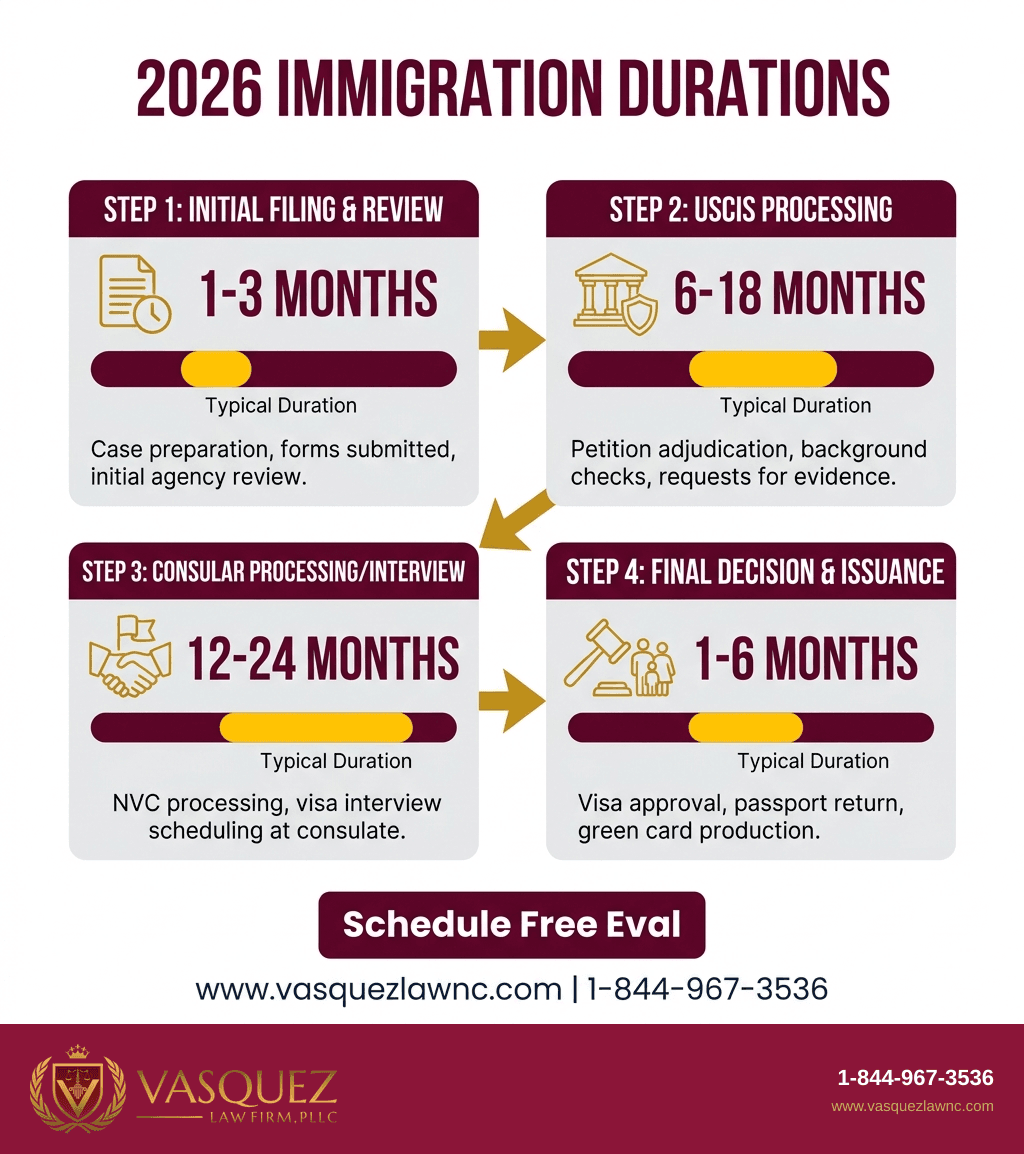
Timeline and What to Expect in Immigration Cases
The immigration timeline varies with case type, from months to years. For example, DACA renewal (Form I-821D) typically takes 14 to 22 months per USCIS processing times (source: USCIS processing times).
- Family-Based Green Cards: 10 to 24 months depending on category and country of origin.
- Adjustment of Status: Often 8 to 14 months in 2026.
- Employment-Based Visas: 6 to 12 months usually, with cap limits applied.
- Naturalization Process: Takes about 8 to 12 months, including interview and test.
- Removal Proceedings: Can be months to years depending on court backlog and case complexity.
Each phase requires patience and timely responses. Vasquez Law Firm keeps clients informed and proactive throughout this timeline.
NC, FL, and Nationwide Immigration Notes
North Carolina Notes
In Raleigh, NC, USCIS field offices provide naturalization and adjustment interviews. The local federal courts handle immigration appeals and enforcement issues. Vasquez Law Firm assists North Carolina immigrants with federal procedures and navigates state-specific nuances like local support resources.
Florida Notes
In Orlando, FL, local USCIS offices offer case processing and interviews. Given Florida's immigrant population, there are extensive community resources alongside legal help. Business immigration clients use virtual consultations with Vasquez Law Firm for specialized visa types.
Nationwide Concepts
Federal immigration law applies across all states, but processing centers may differ. National policies affect visa caps, enforcement priorities, and eligibility rules. Applicants nationwide must comply with USCIS statutes such as INA § 240A(b)(1) for cancellation of removal, available after 10 years of residence.
When to Call a Lawyer Now
- Your immigration status is at risk of removal or deportation.
- You have received a Request for Evidence (RFE) or Notice of Intent to Deny (NOID).
- You have been arrested or charged with a crime affecting immigration status.
- You need help with green card or citizenship applications.
- You want to contest a visa denial or deportation order.
- You are a Dreamer (DACA recipient) facing renewal delays or complications.
- You are applying for work visas like H-1B or L-1 and need assistance understanding eligibility.
- You want to ensure your paperwork is complete and case strategy is sound.
About Vasquez Law Firm
At Vasquez Law Firm, we combine compassion with aggressive representation. Our motto "Yo Peleo®" (I Fight) reflects our commitment to standing up for your rights.
- Bilingual Support: Se Habla Español — Spanish-speaking attorneys and staff available
- Service Areas: North Carolina, Florida, and nationwide immigration services
- Experience: Over 30 years helping clients navigate complex legal matters
- Results: Thousands of successful cases across multiple practice areas
Attorney Trust and Experience
William J. Vásquez is admitted to the North Carolina State Bar (2011) and to the U.S. Courts of Appeals for the 4th, 5th, and 11th Circuits. Florida-jurisdiction matters at the firm are handled by Florida Bar attorney Harold Estrada-Rodriguez (FL Bar No. 1041171). The firm has provided dedicated legal representation since 2011, with personalized attention to each client's case.
Don't wait to get the help you deserve. Call us now for immediate assistance. Se Habla Español.
Frequently Asked Questions
What does immigration mean under U.S. law?
Immigration means the process by which non-citizens enter, stay, or become citizens in the United States under federal law. It involves legal steps such as visas, green cards, and citizenship. 8 U.S.C. § 1101(a)(15) defines different immigrant classifications. Immigration covers lawful entries and removals handled by USCIS and EOIR.
What is the hardest U.S. citizenship to obtain?
There is no single 'hardest' citizenship, but certain pathways—such as naturalization for individuals with criminal histories or extended unlawful presence—can be more challenging. The naturalization interview and civics test administered by USCIS require preparation. Legal counsel helps navigate these complexities for applicants.
Can ICE legally ask for identification in public places?
ICE agents can ask for ID during immigration enforcement if they have reasonable suspicion of unlawful presence; however, they must follow Fourth Amendment protections against unreasonable searches. Knowing your rights is crucial. Consult an immigration lawyer if questioned.
What is the new rule for green card holders in 2026?
In 2026, updated federal policies stress maintaining continuous residency for green card holders to avoid abandonment. New guidelines also clarify how time outside the U.S. can affect permanent resident status. Check USCIS updates regularly to stay compliant.
How long does the immigration process usually take in 2026?
Processing times vary by application type, form, and location. For example, adjustment of status (Form I-485) averages 8 to 14 months per USCIS data (2026). Some family or employment visas may take longer. Checking USCIS processing times provides the most current estimates.
What role does an immigration lawyer play in my case?
An immigration lawyer advises on eligibility, completes paperwork accurately, represents clients in court or meetings, and helps avoid common mistakes. Legal representation is especially critical in complex cases with potential deportation or denial risks.
What recent changes has the Trump immigration policy introduced?
Trump-era policies included stricter enforcement and limits on visas and asylum. Though some policies have been rolled back or revised under current administration, certain enforcement practices and travel restrictions remain impacting immigration cases nationwide, including in NC and FL.
What documents are typically required to apply for immigration benefits?
Applicants usually provide proof of identity, relationship (if family-based), financial support, and status. Documents like passports, birth certificates, I-94 travel records, and employment letters are commonly required. A checklist from USCIS helps ensure completeness.
Sources and References
- U.S. Citizenship and Immigration Services
- Executive Office for Immigration Review
- Legal Information Institute
Take the first step toward justice today. Our team is standing by to help. Se Habla Español.
Start Your Free Evaluation Now
Call us: 1-844-967-3536
Se Habla Español - Estamos aquí para ayudarle.
If you need legal assistance, learn more about learn about our immigration practice, or call us at 1-844-967-3536 for a free evaluation.


William Vasquez
Founder & CEO, Vasquez Law Firm, PLLC
William Vasquez is the founder and CEO of Vasquez Law Firm, PLLC, a results-driven firm specializing in immigration, criminal defense, personal injury, and workers' compensation. A U.S. Air Force veteran and recipient of the Joint Service Achievement Medal, William is dedicated to fiercely fighting for his clients' rights.
Related Legal Services
Need legal help? Learn more about learn about our immigration practice, or contact us for a free evaluation.
You can also visit immigration attorneys across North Carolina for more information.
![USCIS Questions on Consular Processing: Complete Guide [2026]](/_next/image?url=https%3A%2F%2Fvuuyorlsmhunqektprqy.supabase.co%2Fstorage%2Fv1%2Fobject%2Fpublic%2Fblogs%2Fimmigration-header-1782501291161.png&w=1920&q=75)