What the PROTECT Act Means for Immigration Cases in 2026
Learn how the PROTECT Act affects immigration enforcement in 2026. Understand your rights and options. Contact Vasquez Law for a free evaluation.
Published on September 8, 2026
Talk to an immigration attorney
Free call. A clear plan for your case.
Free & confidential · Se habla espanol · 24/7
Have questions? Talk to an attorney - free evaluation.
Call 1-844-967-3536Worried how the latest immigration news affects you?
Schedule a confidential case review with an immigration attorney - know exactly where you stand.
USCIS Case Status
Check your USCIS case status
Enter your receipt number and get the official status. Free, no registration.
What the PROTECT Act Means for Immigration Cases in 2026
The PROTECT Act, passed in 2003, still affects federal immigration enforcement, especially for people living in Orlando and Raleigh in 2026. It is important for immigrants to understand its rules and recent court decisions. This article explains what the PROTECT Act is, how it affects immigration cases, recent legal challenges, and practical advice from Vasquez Law Firm's immigration lawyers in Orlando, FL and Raleigh, NC. Stay informed and protect your rights.
Need help with your case? Our experienced lawyers are ready to fight for you. Se Habla Español.
Or call us now: 1-844-967-3536
Quick Answer
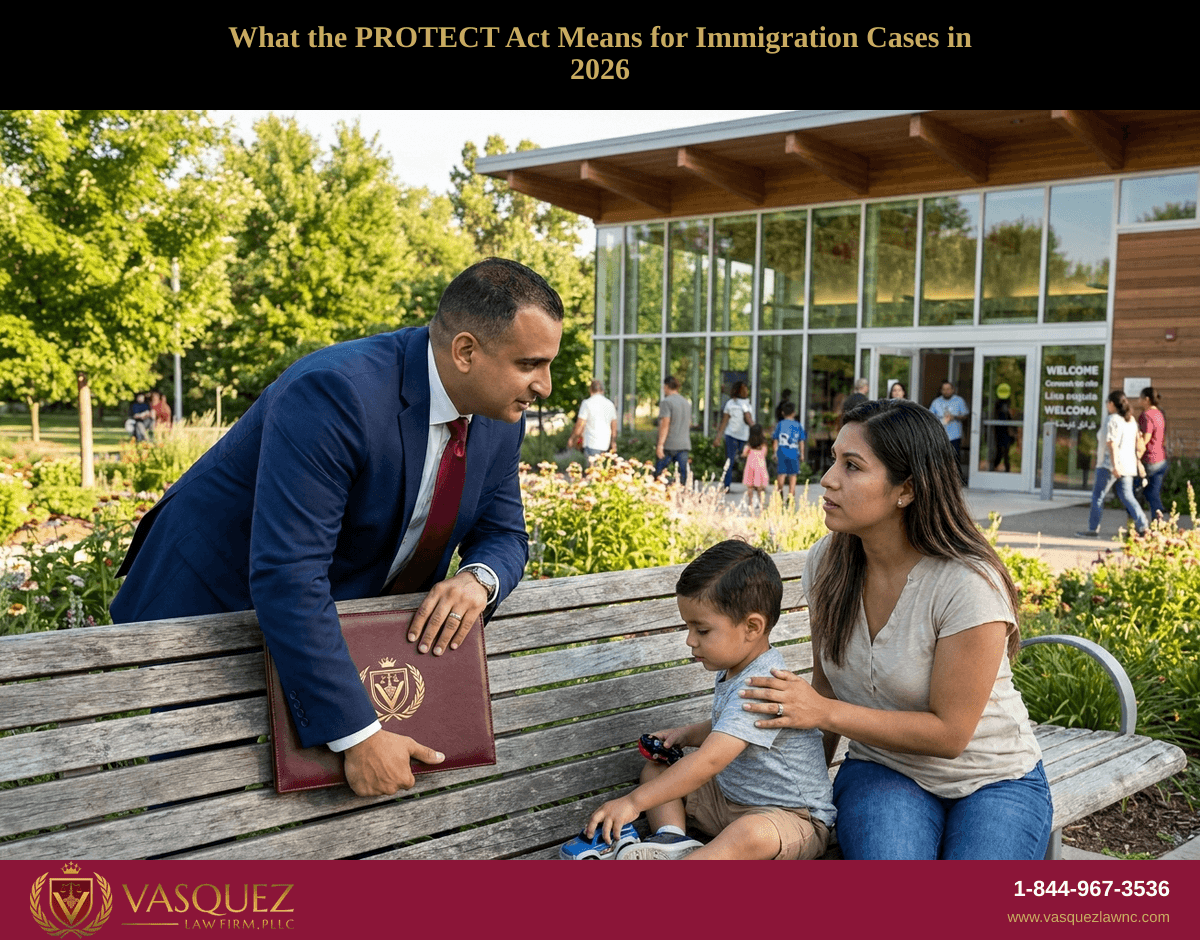
The PROTECT Act of 2003 is a federal law that affects immigration enforcement. It requires agencies to work together and sets rules for detention penalties. It is still in effect in 2026 and affects immigrants in Orlando and Raleigh under federal immigration law. Know your rights and get professional advice quickly to handle complex enforcement actions.
- Created to stop crimes and improve federal immigration enforcement
- Still active despite some legal challenges
- Includes rules about detention and deportation
- Protects rights during immigration enforcement
- Applies across the country, including Florida and North Carolina
Understanding the PROTECT Act and Its Role in Immigration
Imagine immigration officers detaining you without clear reasons or fair process. Federal laws like the PROTECT Act control these actions. Passed in 2003, the PROTECT (Prosecutorial Remedies and Other Tools to End the Exploitation of Children Today) Act was mainly made to fight child exploitation. But it also gave immigration officials more power.
The Act lets federal immigration officers detain and remove noncitizens accused of certain crimes. It requires agencies like ICE and local police to work closely. While it focuses on protecting children, some parts affect immigration enforcement across the country, including Orlando and Raleigh.
For immigrants in Florida and North Carolina, this means federal rules guide how detentions, deportations, and hearings happen. The law requires quick action on removals in some cases. This can make defending against removal harder if someone faces orders under the PROTECT Act.
Knowing the details of this law helps immigrants protect their legal rights and get ready for enforcement encounters. Federal courts have reviewed parts of the PROTECT Act. They confirmed its validity and reach in many cases through 2026. It still plays a role in immigration enforcement.
Federal Immigration Agencies and the PROTECT Act
U.S. Citizenship and Immigration Services (USCIS) and Immigration and Customs Enforcement (ICE) follow rules like the PROTECT Act. USCIS handles immigration paperwork like applications and status changes. ICE handles enforcement actions like detention and deportation.
The PROTECT Act requires these agencies and law enforcement to work together to make federal immigration removals more effective. This is important in places with many immigrants, like Orlando, FL and Raleigh, NC, where enforcement happens often.
Legal Challenges and Ongoing Debates
Since 2003, courts have looked closely at some PROTECT Act rules, especially about fair process and constitutional rights. But the Act is mostly still in effect in 2026. Questions about its constitutionality or reach have come up but have not canceled the law. This shows it still impacts federal immigration law.
Key Steps to Take If Affected by the PROTECT Act
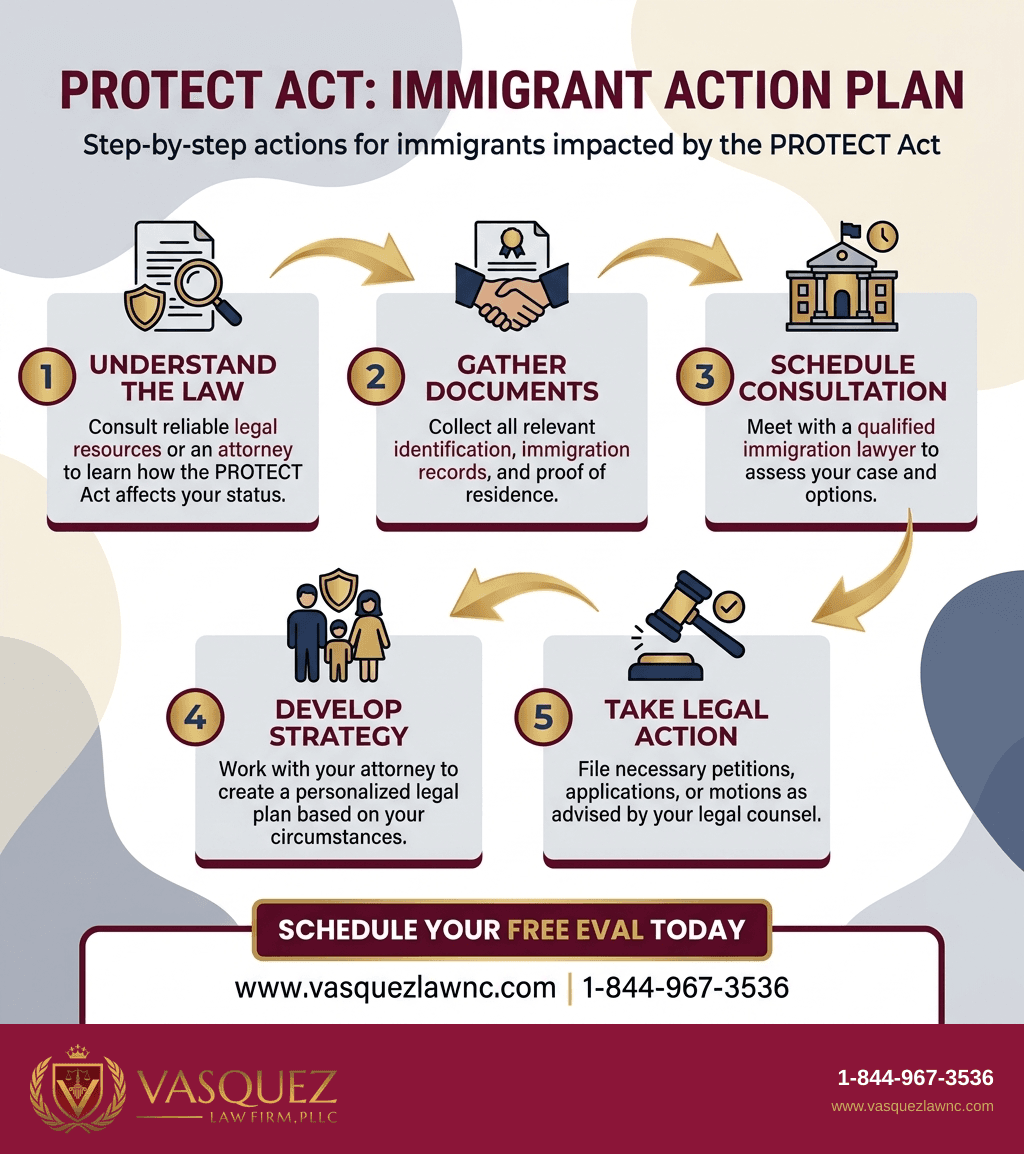
You might get a notice or face detention under federal immigration enforcement using the PROTECT Act quickly. Knowing what to do can help your case and protect your rights. Here are clear steps for immigrants in Orlando or Raleigh if affected.
- Get Legal Help Right Away: Contact an experienced immigration lawyer who knows federal laws like the PROTECT Act. Early advice helps you understand why you were detained and plan your defense.
- Keep Your Documents: Save papers about your immigration status, any notices you get, and ID. This helps your case and your lawyer prepare your defense.
- Know Your Rights: Federal laws protect your right to hearings and a lawyer. You can refuse to say things that might hurt you and ask for bond hearings when allowed.
- Respond Quickly: File motions or applications on time under immigration law. Missing deadlines can limit your options.
- Stay Updated: Immigration policies and enforcement can change. Keep in touch with legal resources and your lawyer to stay informed.
How Vasquez Law Firm Assists You
Our immigration lawyers in Raleigh, NC and Orlando, FL know the PROTECT Act and federal enforcement well. We offer free consultations to review your case, explain your rights, and help protect your immigration status. Visit our immigration legal services page to learn more.
Don't wait to get the help you deserve. Call us now for immediate assistance.
Se Habla Español
Common Mistakes Immigrants Make Regarding the PROTECT Act
- Not Getting a Lawyer Early: Trying to handle detention or removal alone often means missing legal options. Early help is very important.
- Ignoring Notices or Deadlines: Missing deadlines for appeals or hearings can lead to removal orders you cannot change.
- Talking Without a Lawyer: Saying things without knowing your rights can hurt your case.
- Not Keeping Important Documents: Without proof of your status or identity, your defense is weaker.
- Thinking State Laws Beat Federal Enforcement: The PROTECT Act is federal law. Some state laws offer protections but cannot cancel federal removal orders.
- Waiting Because of Fear: Fear of detention or deportation should make you get legal help quickly, not delay it.
If you remember only one thing: Contact a skilled immigration lawyer right away if you face enforcement under the PROTECT Act.
Timeline and What to Expect Under the PROTECT Act
Immigration enforcement under the PROTECT Act usually follows certain steps. Knowing these helps you prepare for legal actions.
- Detention or Notice: ICE may detain you or notify you about removal proceedings. This can happen in days.
- Filing Notices and Responses: You usually get a notice to appear in immigration court soon. You must respond quickly, often within 7 to 14 days.
- Immigration Hearings: Hearings to fight removal or ask for relief happen on different schedules. They can take weeks or months depending on court delays.
- Appeals and Motions: After decisions, you can file appeals or ask to reopen cases. Deadlines are usually 30 days from a decision.
- Final Orders and Enforcement: Removal orders may be enforced unless canceled or delayed.
Federal policy often focuses on quick removals for some crimes under the PROTECT Act. So timely legal action is very important. USCIS processing times for related status changes can vary. Check USCIS Processing Times for updates.
Frequently Asked Questions About the PROTECT Act
What does the PROTECT Act do?
The PROTECT Act of 2003 aims to stop child exploitation and give federal agencies, including immigration authorities, stronger enforcement tools. It affects immigration by setting detention rules, cooperation requirements, and removal priorities for noncitizens accused of serious crimes. This impacts enforcement nationwide, including Orlando and Raleigh.
Is the PROTECT Act still in effect?
Yes. Despite legal challenges, the PROTECT Act is still a key federal law in 2026. Courts have supported its main parts, enforcing immigration detention and cooperation rules.
Was the PROTECT Act overturned?
No, the PROTECT Act has not been fully canceled or declared unconstitutional. Some parts were reviewed by courts, but the law remains an important tool in federal immigration enforcement.
Can Congress pass a law without the President’s signature?
Yes. If the President does not sign or veto a bill within 10 days while Congress is meeting, it becomes law automatically. This rule affects how immigration laws, including enforcement rules, take effect.
What rights do immigrants have under the PROTECT Act?
Immigrants keep rights to fair process, a lawyer, and protection against illegal detention. The Act strengthens enforcement but does not replace constitutional protections.
How do state laws like MIRA interact with the PROTECT Act?
MIRA laws give state-level worker protections and limit local immigration cooperation. But they cannot replace federal laws like the PROTECT Act. They may help if constitutional rights are violated during enforcement.
When should I contact a lawyer regarding the PROTECT Act?
Contact an immigration lawyer right away if you face federal detention, questioning, or removal under the PROTECT Act to protect your rights well.
Can the PROTECT Act affect family-based immigration cases?
Yes. While the Act mostly covers enforcement, detention, and removals, any criminal charges under it can affect eligibility for family-based petitions processed in Orlando or Raleigh.
Jurisdiction Notes
The PROTECT Act is a federal law that applies across the country. It controls immigration enforcement in states like North Carolina and Florida. Some state programs like MIRA laws offer extra protections or limit local cooperation. But federal law is stronger than state rules in immigration. For immigrants in Orlando, FL, and Raleigh, NC, it is important to know that federal law has the final say.
North Carolina Notes
In North Carolina, immigration enforcement under the PROTECT Act follows federal rules. State laws like MIRA try to control local police roles in immigration but do not affect federal authority. People should get legal advice from lawyers who know North Carolina immigration enforcement details.
The Vasquez Law Firm Raleigh office helps clients across North Carolina. We offer trusted guidance on federal immigration issues, including PROTECT Act enforcement.
When to Call a Lawyer Now
- You got a notice to appear in immigration court about a PROTECT Act enforcement action.
- You or a family member is detained by ICE with criminal charges.
- Immigration officers approached you without clear reasons for detention.
- You fear deportation because of past criminal convictions that may trigger PROTECT Act rules.
- You want to know how this law affects your family-based immigration petition.
- You don’t understand your rights during federal immigration enforcement.
- Your employer or community group told you to get legal help after an ICE raid in Orlando or Raleigh.
- You need help filing motions to reopen or appeal removal orders affected by federal law.
About Vasquez Law Firm
At Vasquez Law Firm, we combine care with strong representation. Our motto "Yo Peleo®" (I Fight) shows our promise to stand up for your rights.
- Bilingual Support: Se Habla Español — Spanish-speaking lawyers and staff available
- Service Areas: North Carolina, Florida, and nationwide for immigration
- Experience: Over 30 years helping clients with complex legal matters
- Results: Thousands of successful cases in many practice areas
Attorney Trust and Experience
William J. Vásquez is licensed in North Carolina and Florida. He has over 15 years handling complex immigration cases in Raleigh and Orlando. The firm offers personal, strategic legal help for clients affected by federal immigration laws.
Take the first step toward justice today. Our team is ready to help. Se Habla Español.
Start Your Free Evaluation Now
Call us: 1-844-967-3536
Sources and References


William Vasquez
Founder & CEO, Vasquez Law Firm, PLLC
William Vasquez is the founder and CEO of Vasquez Law Firm, PLLC, a results-driven firm specializing in immigration, criminal defense, personal injury, and workers' compensation. A U.S. Air Force veteran and recipient of the Joint Service Achievement Medal, William is dedicated to fiercely fighting for his clients' rights.
Related Legal Services
Need legal help? Learn more about how our immigration attorneys can help, or contact us for a free evaluation.
You can also visit immigration lawyers serving all of North Carolina for more information.