DOJ Immigration Policy Changes in 2026: What You Must Know
Learn about DOJ immigration policy changes in 2026 and how they impact your case. Get expert insights from Vasquez Law Firm. Schedule a free consult today.
Published on September 3, 2026
Talk to an immigration attorney
Free call. A clear plan for your case.
Free & confidential · Se habla espanol · 24/7
Have questions? Talk to an attorney - free evaluation.
Call 1-844-967-3536Worried how the latest immigration news affects you?
Schedule a confidential case review with an immigration attorney - know exactly where you stand.
DOJ Immigration Policy Changes in 2026: What You Must Know
The Department of Justice (DOJ) immigration policy guides federal immigration enforcement and legal proceedings nationwide. In 2026, significant shifts in policies affect visa eligibility, removal proceedings, and welfare funding in states like North Carolina and Orlando, FL. Understanding these developments is crucial for immigrants and families navigating the complex U.S. immigration system. Vasquez Law Firm provides expert guidance tailored to Raleigh and Orlando clients to protect your rights under evolving DOJ immigration policies.
Need help with your case? Our experienced attorneys are ready to fight for you. Se Habla Español.
Or call us now: 1-844-967-3536
Quick Answer
The DOJ immigration policy in 2026 shapes how immigration enforcement and courts operate across the U.S. including Raleigh, NC and Orlando, FL. It includes new rules on visa eligibility, public benefits, and state cooperation. Understanding these changes can protect your rights and prevent unintended consequences.
- DOJ policies influence visa and removal cases nationwide.
- Changes include stricter enforcement and welfare funding conditions.
- States like North Carolina and Florida face funding risks over compliance.
- New rules affect asylum, visa processing, and deportation priorities.
- Legal help is crucial to adapt to these policy shifts in 2026.
Understanding DOJ Immigration Policy
Imagine a Raleigh family facing deportation due to recent policy updates. This example highlights how critical it is to understand the Department of Justice (DOJ) immigration policy. This policy governs how immigration laws are enforced and how immigration courts operate nationwide. It directly controls removal proceedings, visa adjudications, and cooperation between states and federal agencies.
The DOJ oversees the Executive Office for Immigration Review (EOIR), which manages immigration courts where removal (deportation) cases are heard. These courts apply policies set by the DOJ that impact thousands of immigrants annually. As of 2026, DOJ immigration policy also connects to how states cooperate with federal authorities, affecting state welfare funding and immigrant access to public benefits.
For those living in Raleigh, NC, or Orlando, FL, knowing current DOJ immigration policy affects your case and your family’s future. Our immigration legal services help clients understand these complex rules to avoid costly mistakes. The DOJ’s powers derive from federal statutes such as the Immigration and Nationality Act (INA) and regulations contained in the Code of Federal Regulations (C.F.R.).
How DOJ Policy Influences Immigration Enforcement
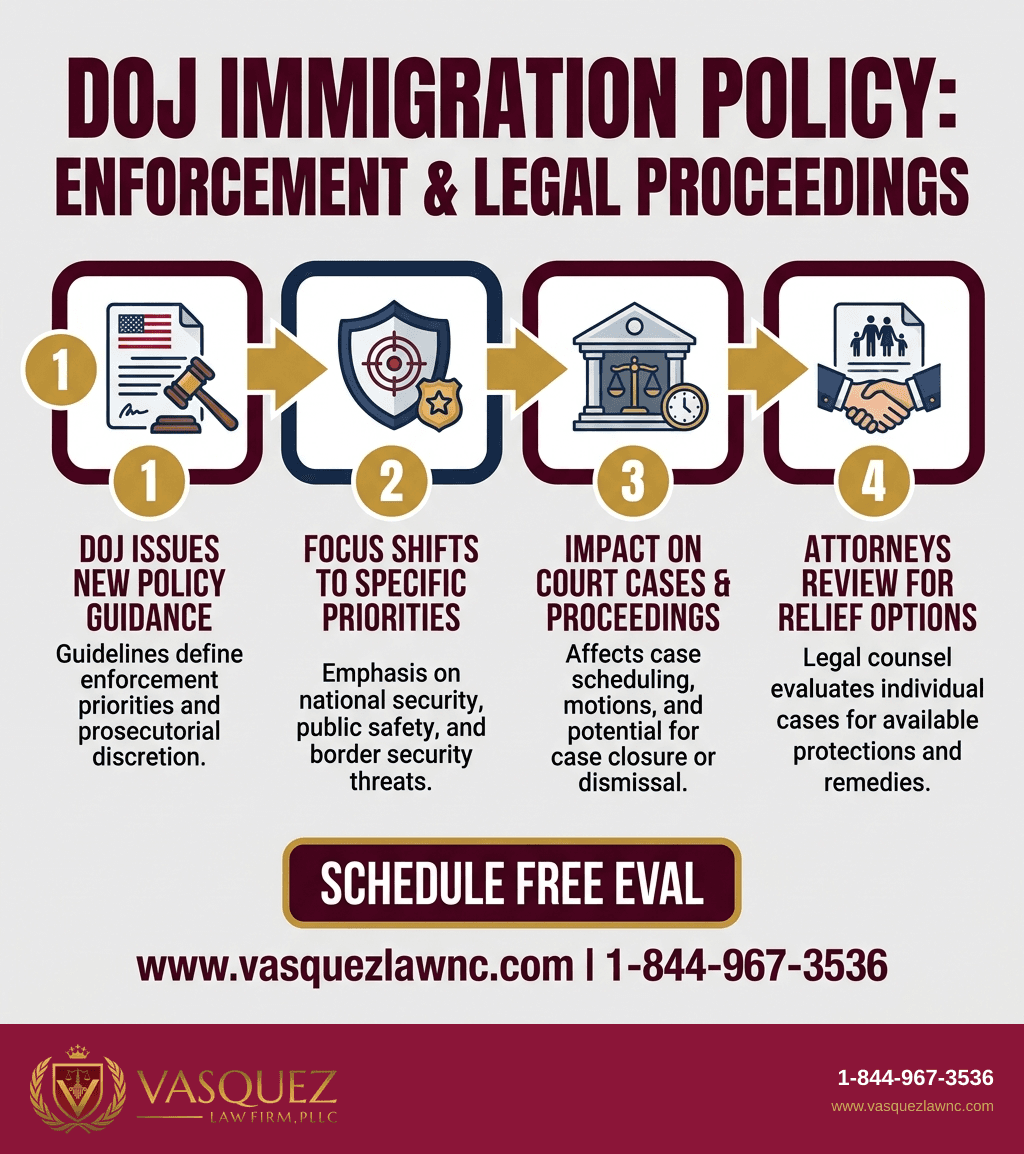
DOJ immigration policy sets priorities on who to detain or deport and guidelines for adjudicating immigration benefits. It also determines how aggressively immigration courts enforce removal orders. When policies change, processing times and outcomes can shift suddenly, creating challenges.
State and Local Cooperation Mandates
One major DOJ policy area is mandates for state and local governments to cooperate with immigration enforcement. This cooperation affects eligibility for federal welfare funding. For example, recent DOJ rules threaten states with withholding billions in welfare funds if they are deemed non-cooperative. North Carolina and Florida authorities must understand these standards to maintain funding and avoid negative impacts on immigrant communities.
Federal Agencies and Legal Framework
The DOJ works alongside agencies like USCIS for visa processing and ICE for enforcement actions. Together, they implement immigration laws within a framework defined by federal statutes. Our office in Raleigh and Orlando stays current on these regulations, such as those codified in 8 U.S.C. and 8 C.F.R., to provide up-to-date advice.
Key Changes in Immigration Policies 2026
In 2026, several key DOJ immigration policy changes impact immigrants and states. For example, the revised public charge rule restricts access to certain welfare benefits to prevent denial of residency. Another update tightens asylum filing deadlines, requiring applicants to act faster. Additionally, visa eligibility criteria for certain categories now have more stringent requirements.
These changes echo priorities set during previous administrations but include new enforcement and funding conditions. North Carolina and Orlando, FL face particular scrutiny regarding welfare cooperation. For immigrants, these policies require updated legal strategies to protect status and benefits.
Visa and Asylum Rule Updates
New rules shorten allowable periods for asylum applications and impose stricter evidence requirements. Visa categories, such as H-1B and family-based visas, see updated screening processes to reduce fraud. These affect processing times at USCIS offices serving Raleigh and Orlando residents.
Enforcement and Removal Priorities
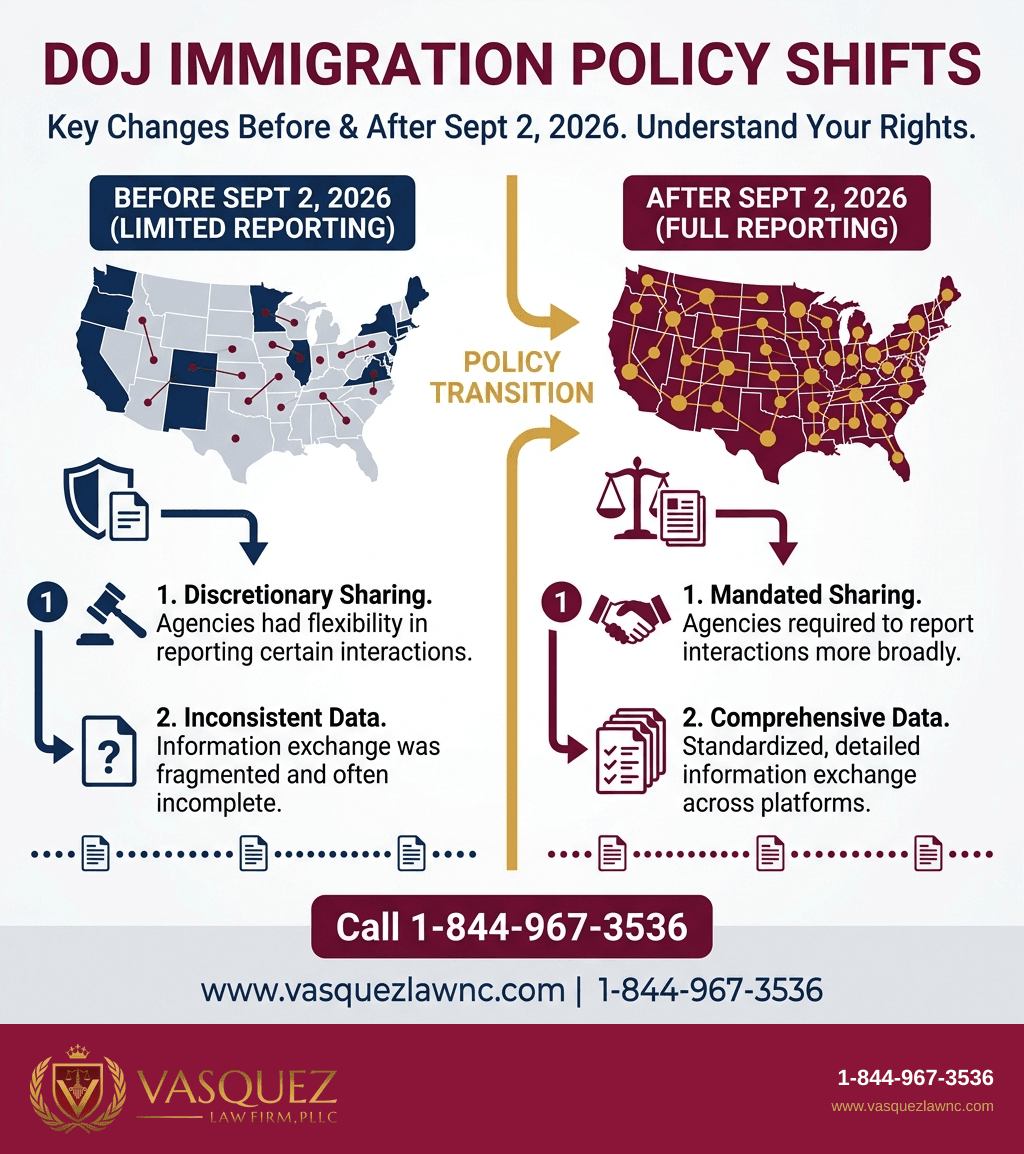
The DOJ adjusts priorities annually, focusing on criminal and recent arrivals. Increased local law enforcement cooperation means states must meet federal standards or risk funding cuts. This reality influences state policies in North Carolina and Florida.
Welfare Funding Linked to Immigration Compliance
New DOJ policies tie federal welfare money to immigration enforcement cooperation. States failing to comply risk losing billions, which could reduce immigrant access to crucial health and social services. This policy drives local debates and impacts community resources.
Step-by-Step Guide to Protect Your Rights
- Review Your Immigration Status: Understand your current visa or residency category and any pending applications.
- Gather Relevant Documents: Collect immigration documents, work permits, and proof of residence in Raleigh or Orlando.
- Consult an Experienced Attorney: Seek advice on how DOJ policy changes affect your case. Vasquez Law Firm offers consultations in Raleigh and Orlando.
- File Applications Promptly: Meet all deadlines for visa renewals, asylum claims, or adjustment of status.
- Stay Updated: Monitor DOJ announcements and USCIS processing times at USCIS processing times.
- Prepare for Possible Removal Proceedings: Know your rights and defenses if you are placed in immigration court.
- Comply with Local and State Requirements: Understand how your state’s cooperation with immigration enforcement affects benefits.
Common Mistakes to Avoid with DOJ Policies
- Missing Deadlines: Failing to act quickly on applications under new rules can cause denied benefits or removal.
- Ignoring State Cooperation Rules: Assuming local benefits remain unchanged despite DOJ funding threats can hurt families.
- Relying on Outdated Information: Immigration policies evolve frequently; legal advice must be current.
- Inadequate Documentation: Not collecting full evidence can delay or derail applications.
- Not Seeking Legal Help Early: Waiting too long increases risks in complex cases, especially with new enforcement priorities.
- Misunderstanding Public Charge Rules: Improper use or denial of welfare can affect immigration status.
- Failing to Appeal or Refile: Missing opportunities to challenge denials under updated DOJ policies.
If you only remember one thing: Stay informed and act proactively with legal guidance to protect your immigration status amid 2026 DOJ policy changes.
Timeline and What to Expect in 2026
- Q1 2026: Policy revisions announced; initial implementation of funding conditions begins.
- Q2 2026: USCIS updates visa application procedures; asylum deadlines shortened.
- Q3 2026: Increased immigration court case prioritization and faster adjudication timelines.
- Q4 2026: State funding reviews; potential welfare funding adjustments based on compliance.
- Ongoing: Regular USCIS processing time fluctuations; cases in Raleigh and Orlando processed as per new rules.
Costs and Factors Affecting Your Case
- Application fees for visa petitions or adjustment can range from $300 to $1,500 depending on category.
- Legal fees vary based on complexity; cases involving removal defense or asylum typically cost more.
- Delays or requests for evidence may increase costs due to time and document requirements.
- Costs may be higher if cases involve multiple jurisdictions, such as Raleigh, NC and Orlando, FL.
- Consultations with experienced attorneys can clarify fees and expected expenses upfront.
Jurisdiction Notes for NC and Orlando
North Carolina Notes
North Carolina must comply with DOJ immigration cooperation mandates to maintain eligibility for federal welfare funds. Raleigh-based immigrants often interact with USCIS offices subject to federal policy changes. Vasquez Law Firm has offices in Raleigh to serve these clients locally with expertise tuned to North Carolina's specific immigration environment.
Orlando, Florida Notes
In Orlando, DOJ immigration policy updates similarly affect immigrant access to state services and visa processes. Local enforcement has increased coordination with ICE. Our Orlando office supports clients navigating these changes via consultations and virtual services.
Nationwide Immigration Policy Environment
While policies apply federally, practical effects vary by location. Both Raleigh and Orlando see evolving enforcement priorities. Nationwide, the DOJ sets overarching rules influencing immigration courts, federal agencies, and state cooperation commitments.
When to Call a Lawyer Now
- If you receive a Notice to Appear in immigration court.
- If your visa renewal or application is denied unexpectedly.
- If you are placed in removal proceedings under new DOJ enforcement policies.
- If you receive communication threatening loss of public benefits.
- If new state cooperation rules may affect your access to welfare funding.
- If you are unsure about public charge impacts on your application.
- If you need to file asylum or other immigration relief under shortened deadlines.
- If you have immigration violations under updated enforcement priorities.
- If you want to update or adjust your immigration case strategy in 2026.
About Vasquez Law Firm
At Vasquez Law Firm, we combine compassion with aggressive representation. Our motto "Yo Peleo®" (I Fight) reflects our commitment to standing up for your rights.
- Bilingual Support: Se Habla Español — Spanish-speaking attorneys and staff available
- Service Areas: North Carolina, plus Florida and nationwide for immigration
- Experience: Over 30 years helping clients navigate complex legal matters
- Results: Thousands of successful cases across multiple practice areas
Attorney Trust and Experience
William J. Vásquez is admitted to the North Carolina State Bar (2011) and to the U.S. Courts of Appeals for the 4th, 5th, and 11th Circuits. The firm has provided dedicated legal representation since 2011, with personalized attention to each client's case.
Don't wait to get the help you deserve. Call us now for immediate assistance.
Se Habla Español — Serving Raleigh and Orlando clients
Frequently Asked Questions
What is the DOJ immigration policy?
The DOJ immigration policy directs how federal immigration laws are enforced and how immigration courts administer justice. It governs removal proceedings and immigration case priorities nationwide, including Raleigh, NC and Orlando, FL. The policy is updated frequently and impacts visa processing and enforcement actions.
What recent immigration laws have been passed?
In 2026, laws passed emphasize stricter visa screening, faster asylum deadlines, and increased cooperation mandates for states. These changes reflect shifts in federal immigration priorities impacting immigrants in North Carolina and Florida.
How does the DOJ immigration policy affect welfare funding?
The 2026 DOJ immigration policy links federal welfare funding to state and local cooperation with immigration enforcement. States not demonstrating sufficient cooperation risk reduced funding, affecting immigrant access to public services.
What is the 7 year rule for immigrants?
This rule relates to the minimum continuous presence some immigrants must prove to qualify for relief from removal. Although the cancellation of removal typically requires 10 years under INA § 240A(b), some programs reference a 7-year period for eligibility conditions.
Are there new immigration rules for 2026?
Yes. New rules include more rigorous visa application processes, tighter asylum filing deadlines, and federal-state cooperation mandates affecting benefit eligibility. These changes require immigrants to act promptly and seek legal guidance.
Can former Trump immigration policies still affect cases?
Several Trump-era policies remain effective in 2026 unless reverted. These include public charge provisions and deportation focus areas. Staying informed about which policies remain active is important for your case.
What steps should I take if impacted by new DOJ policies?
Immediately consult with an experienced immigration attorney. Gather important documents, understand your deadlines, and follow legal advice to adjust your applications or defenses accordingly.
Where can I find official U.S. immigration policy documents?
Official documents are available at USCIS (uscis.gov) and the Executive Office for Immigration Review (justice.gov/eoir).
Sources and References
- U.S. Citizenship and Immigration Services
- Executive Office for Immigration Review
- Legal Information Institute
Take the first step toward justice today. Our team is standing by to help.
Start Your Free Evaluation Now
Call us: 1-844-967-3536
Se Habla Español - Estamos aquí para ayudarle.


William Vasquez
Founder & CEO, Vasquez Law Firm, PLLC
William Vasquez is the founder and CEO of Vasquez Law Firm, PLLC, a results-driven firm specializing in immigration, criminal defense, personal injury, and workers' compensation. A U.S. Air Force veteran and recipient of the Joint Service Achievement Medal, William is dedicated to fiercely fighting for his clients' rights.
Related Legal Services
Need legal help? Learn more about immigration case consultation, or contact us for a free evaluation.
You can also visit statewide immigration legal services for more information.