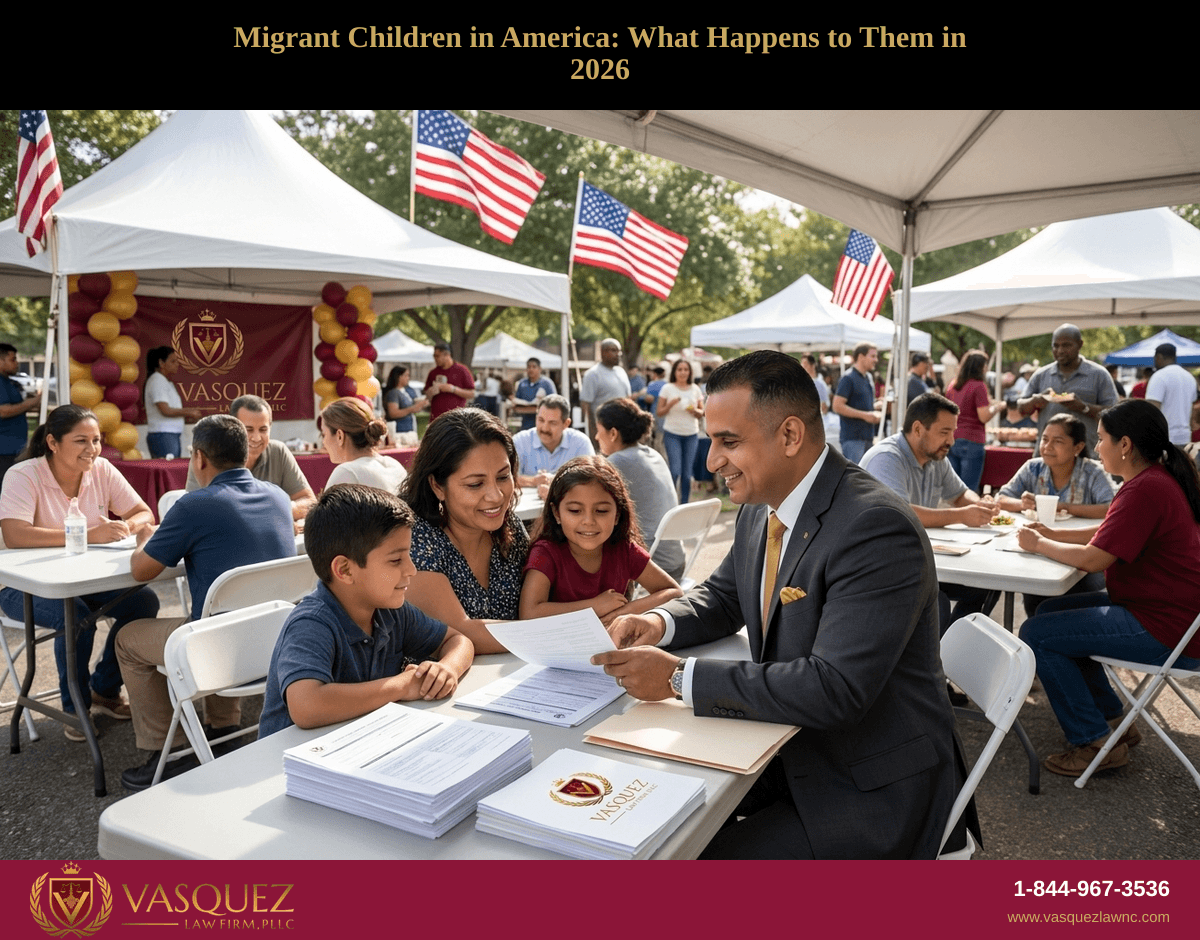
Migrant Children in America: What Happens to Them in 2026
Wondering what happens to migrant children in America? Learn their rights, common legal steps, and how to protect them. Contact Vasquez Law for help.
Published on June 12, 2026
Have questions? Talk to an attorney - free evaluation.
Call 1-844-967-3536Worried how the latest immigration news affects you?
Get a free, confidential case review with an immigration attorney - know exactly where you stand.
Migrant Children in America: What Happens to Them in 2026
Over 146,000 unaccompanied migrant children have entered the United States as of recent years. Understanding the meaning and legal status of these migrant children is vital. This guide explains what migrant children in America face today, focusing on federal laws, court processes, and guardianship challenges, especially for families in Raleigh, NC, and Orlando, FL. We also clarify what unaccompanied minors can expect in 2026 and how immigration law protections apply to them.
Need help with your case? Our experienced attorneys are ready to fight for you. Se Habla Español.
Or call us now: 1-844-967-3536
Quick Answer
Migrant children—especially unaccompanied ones—experience a specific federal process in the U.S. This involves initial screening, placement in shelters, legal hearings, and possible guardianship. While awaiting immigration decisions, they receive protections under federal laws designed to safeguard their safety and rights. Families in Raleigh and Orlando should understand these steps to help protect their children.
- Unaccompanied migrant children enter federal custody for care and screening
- Children often face immigration court hearings alone but can have legal help
- Guardianship and sponsorship are key for their safety during immigration process
- Laws such as 8 U.S.C. § 1232 provide protections for migrant children
- Legal aid and expert advice improve outcomes for migrant children and families
Understanding Migrant Children and Their Legal Meaning
In 2026, migrant children continue to arrive in the United States, many without parents or legal guardians. The term 'migrant children' broadly includes minors who relocate across borders, but legal distinctions matter. For example, 'unaccompanied migrant children' are those who arrive without an adult caretaker. This classification affects their care and immigration procedures under laws such as 8 U.S.C. § 1232 governing Unaccompanied Alien Children (UAC).
Migrant children often flee violence, persecution, or seek reunification with family in America. Their journey is perilous, and upon arrival, federal agencies like Customs and Border Protection (CBP) initially detain them. Immigration authorities must ensure these minors' safety while navigating complex immigration regulations.
While 'immigrant' implies intent to settle permanently, 'migrant' includes temporary or seasonal movements. Many children in immigration court may be migrants seeking legal relief to adjust their status, which involves applying under statutes like 8 U.S.C. § 1255 for adjustment of status.
Understanding the meaning of migrant children and their classification helps families in Raleigh and Orlando prepare for the legal process. Our immigration legal services offer tailored guidance on federal protections and court proceedings.
Who Qualifies as an Unaccompanied Migrant Child?
An unaccompanied migrant child is under 18 and lacking a parent or legal guardian in the U.S. This triggers special procedures under 8 C.F.R. § 236.3, which requires the Department of Health and Human Services (HHS) to assume custody and placement responsibilities. This ensures children receive care, shelter, and proper legal hearings.
Statistics on Migrant Children Today
As of early 2026, U.S. border authorities report over 146,000 unaccompanied migrant children encountered since 2022. Tracking these statistics is critical to understanding demand for foster care, legal representation, and support services. In Raleigh and Orlando, local offices coordinate with federal agencies to assist families navigating these challenges.
Legal Terms Defined
- Unaccompanied Minor: Child under 18 with no parent or guardian in the U.S.
- Special Immigrant Juvenile Status (SIJS): A form of immigration relief protecting abused or abandoned children
- Trafficking Victim Protection Act (TVPA): Federal law offering protection and visas to trafficking victims and minors
For families seeking answers, contacting Attorney Vasquez based in Raleigh and Orlando is a key step for personalized support.
Key Steps for Migrant Children in America
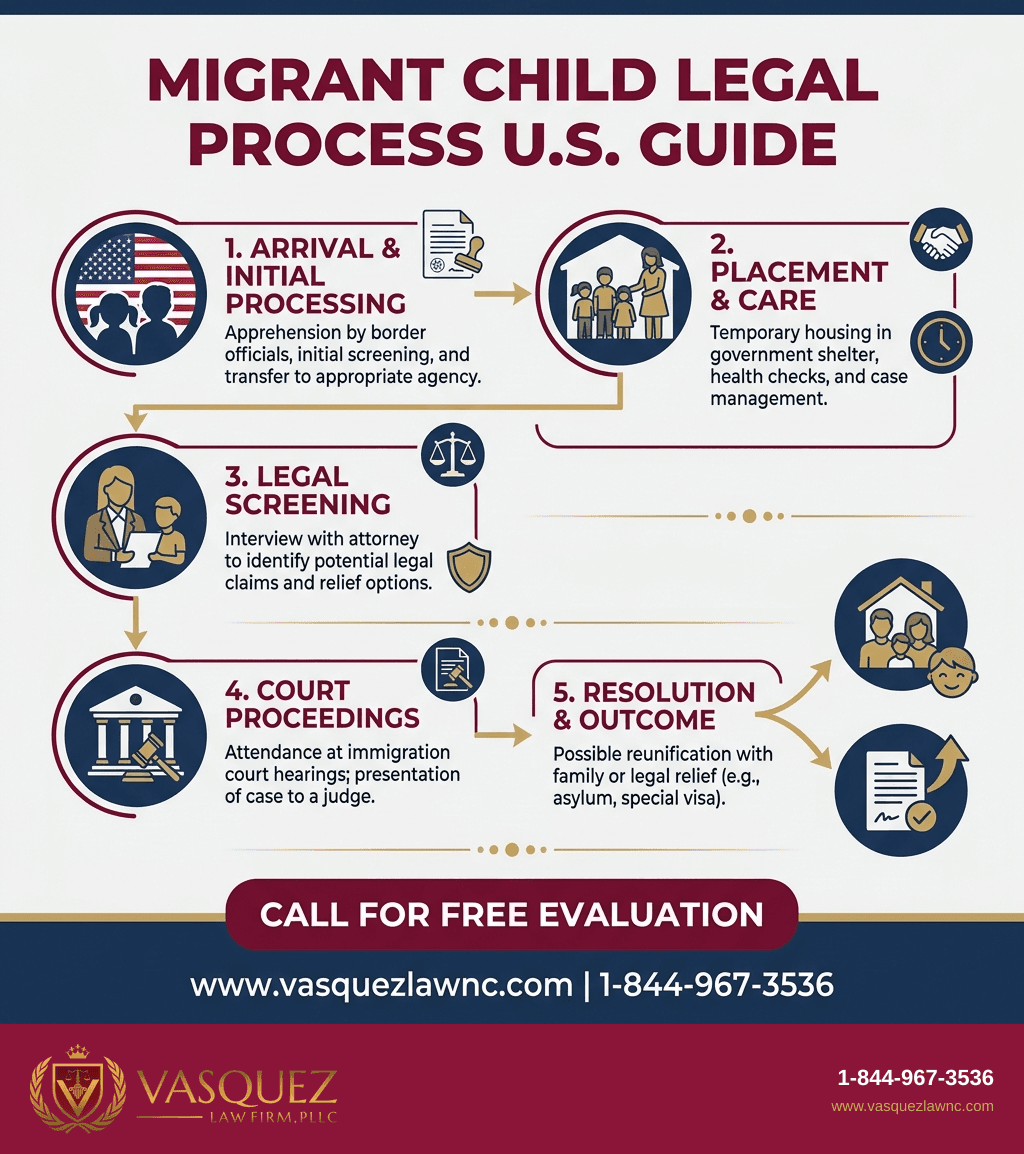
Migrant children undergoing immigration processes face critical steps in the U.S. These steps help protect their rights and provide legal avenues for relief. Below is an overview of what typically happens:
- Entry and Initial Screening: Customs and Border Protection conducts health and safety screenings upon arrival.
- Placement with Office of Refugee Resettlement (ORR): Unaccompanied children are placed in shelters while awaiting placement.
- Release to Sponsors or Guardians: Children may be released to vetted family or guardians.
- Immigration Court Hearings: Children attend court hearings for asylum, SIJS, or other relief.
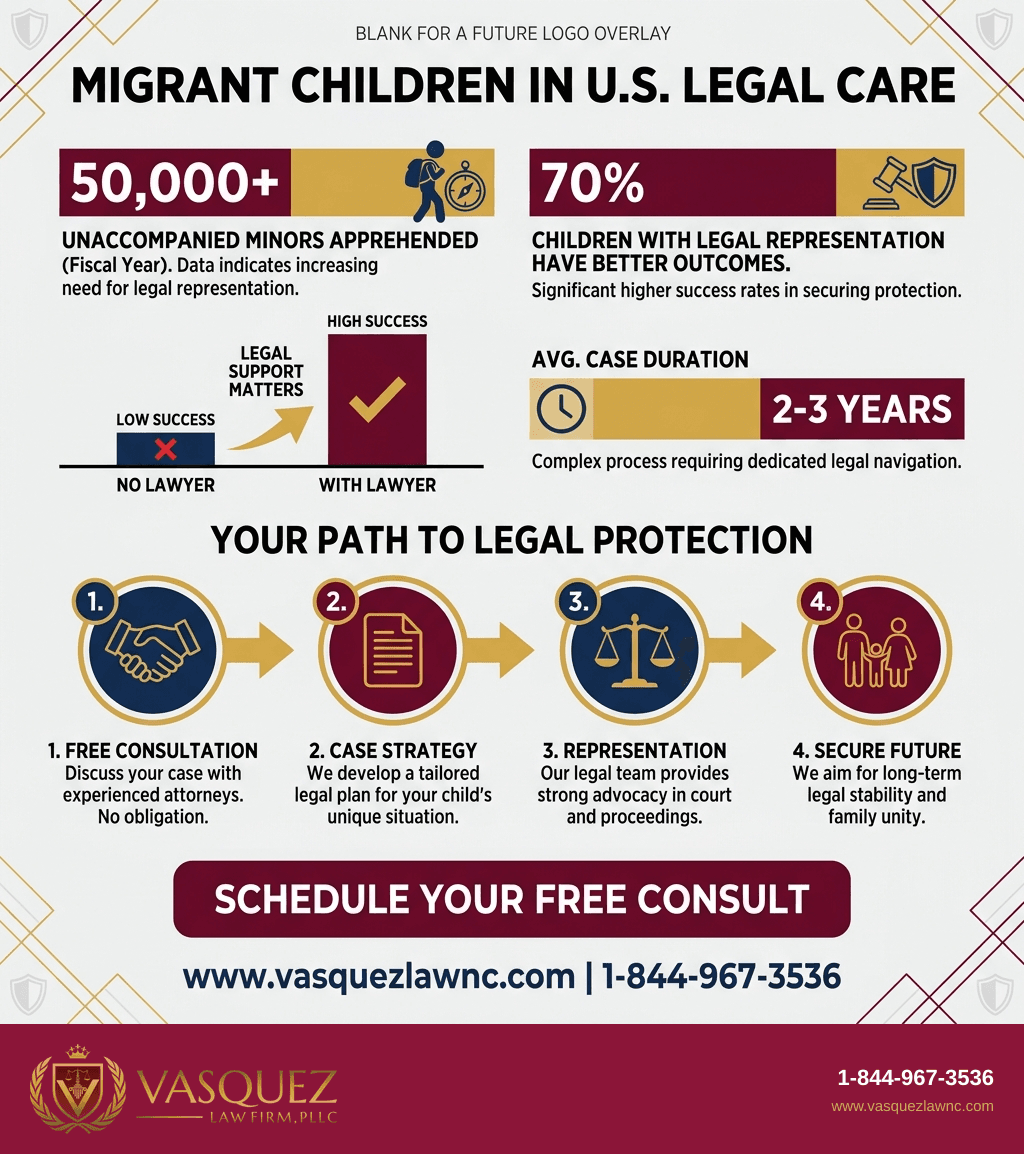
- Legal Representation: Access to immigration counsel increases chances for successful outcomes.
These steps form the basis for many migrant children’s cases in Raleigh and Orlando. Vasquez Law Firm’s immigration attorneys in Raleigh help guide families through these stages.
Step 1: Screening and Custody
The first hours after entry involve Federal Customs screening and possible detention. Children receive a medical evaluation and placement in licensed ORR care facilities. This part can last on average 20-40 days before transfer or release (per USCIS and HHS data).
Step 2: Release and Guardianship
Guardians, often family members, complete background checks and home studies to be approved sponsors. Guardianship protects children during immigration proceedings. Guardians must report changes to authorities and support the child’s hearings.
Step 3: Immigration Hearings
Children attend hearings where judges evaluate eligibility for relief such as asylum or SIJS under INA § 240A(b). Legal counsel can represent the minor, improving access to protections.
Don't wait to get the help you deserve. Call us now for immediate assistance.
Common Mistakes to Avoid for Migrant Children Cases
- Delaying Legal Representation: Waiting too long to get an attorney limits options and risks case dismissal.
- Failing to Attend Hearings: Missing court dates can lead to removal orders in absentia.
- Not Maintaining Contact with Guardians: Losing touch with guardians risks disrupted care and delays.
- Misunderstanding Rights to Benefits: Many children lose access to support by not knowing eligibility.
- Inadequate Documentation: Lacking proper evidence can weaken applications for relief.
- Ignoring Mental Health Needs: Trauma from migration must be addressed for hearings and stability.
- Speaking Without Legal Counsel: Statements to authorities can harm cases if unadvised.
If you only remember one thing: Early involvement of skilled immigration counsel makes the biggest difference in migrant children's cases.
Timeline and What to Expect for Migrant Children Cases
- Day 1-7: Customs screening and shelter placement by ORR.
- Week 2-6: Release to guardian or family sponsor after background checks.
- Month 2-6: Initial immigration court hearings start – scheduling varies by region.
- 6-12 Months: Hearings may continue; preparation of relief petitions like asylum or SIJS.
- 12+ Months: Final court decisions or appeals, depending on case complexity.
This timeline is approximate and varies, especially between Raleigh and Orlando immigration courts. Updates from USCIS may modify processing times: see USCIS processing times.
Frequently Asked Questions
What is the meaning of migrant children?
Migrant children are minors who cross borders often seeking safety or family. Legally, their classification impacts protections. Unaccompanied children without guardians receive special care and legal status under federal law 8 U.S.C. § 1232.
What happens to unaccompanied migrant children in the U.S.?
They enter the Office of Refugee Resettlement care system, get placed in licensed shelters, and attend immigration court hearings to determine their status or relief eligibility.
What is the difference between immigrant and migrant?
A migrant moves temporarily or seasonally; an immigrant intends permanent residence. The term impacts eligibility for immigration benefits.
Are undocumented children entitled to legal protections?
Yes. They may apply for asylum, Special Immigrant Juvenile Status, and protections under the Trafficking Victims Protection Act to safeguard their rights.
How many migrant children are in U.S. foster care?
Thousands of unaccompanied children enter foster care annually while awaiting court decisions and reunification efforts across states including North Carolina and Florida.
Who can be a guardian of migrant children?
Caregivers or sponsors who pass federal background checks and home visits may be appointed legal guardians responsible for child welfare during immigration proceedings.
Can migrant children attend court hearings alone?
Yes, unaccompanied minors often attend alone but may have appointed guardians or legal representatives to assist and protect their interests.
What are common challenges for migrant children in immigration court?
Language barriers, trauma, lack of counsel, and complex laws can impede their case. Skilled attorneys in Raleigh and Orlando improve chances of success.
About Vasquez Law Firm
At Vasquez Law Firm, we combine compassion with aggressive representation. Our motto "Yo Peleo®" (I Fight) reflects our commitment to standing up for your rights.
- Bilingual Support: Se Habla Español — Spanish-speaking attorneys and staff available
- Service Areas: North Carolina, Florida, and nationwide immigration services
- Experience: Over 30 years helping clients navigate complex legal matters
- Results: Thousands of successful cases across multiple practice areas
Attorney Trust and Experience
William J. Vásquez is admitted to the North Carolina State Bar (2011) and to the U.S. Courts of Appeals for the 4th, 5th, and 11th Circuits. Florida-jurisdiction matters at the firm are handled by Florida Bar attorney Harold Estrada-Rodriguez (FL Bar No. 1041171). The firm has provided dedicated legal representation since 2011, with personalized attention to each client's case.
Take the first step toward justice today. Our team is standing by to help.
Start Your Free Evaluation Now
Call us: 1-844-967-3536
Se Habla Español - Estamos aquí para ayudarle.
Sources and References


William Vasquez
Founder & CEO, Vasquez Law Firm, PLLC
William Vasquez is the founder and CEO of Vasquez Law Firm, PLLC, a results-driven firm specializing in immigration, criminal defense, personal injury, and workers' compensation. A U.S. Air Force veteran and recipient of the Joint Service Achievement Medal, William is dedicated to fiercely fighting for his clients' rights.
Related Legal Services
Need legal help? Learn more about learn about our immigration practice, or contact us for a free evaluation.
You can also visit immigration legal services throughout NC for more information.
![Houston Federal Lawsuit Accuses Meneses Law of Coaching Immigrants [2026]](/_next/image?url=https%3A%2F%2Fvuuyorlsmhunqektprqy.supabase.co%2Fstorage%2Fv1%2Fobject%2Fpublic%2Fblogs%2Fimmigration-header-1782500614693.png&w=1920&q=75)