What Happened in the Latest USCIS Visa Fraud Sentencing?
The USCIS visa fraud sentencing announced on June 29, 2026, involves an 82-year-old man in the Northern Mariana Islands who forced workers from the Philippines to labor without pay and lied about their visas. This article explains what happened, who was affected, the relevant laws, and what steps visa applicants and employers should take in light of this case.
Published on June 29, 2026
Talk to an immigration attorney
Free call. A clear plan for your case.
Free & confidential · Se habla espanol · 24/7
Have questions? Talk to an attorney - free evaluation.
Call 1-844-967-3536Free Tool
Check Your USCIS Case Status Now
Enter your receipt number - get the official USCIS status in English or Spanish. No registration.
This article provides general legal information, not individualized legal advice. Reading does not create an attorney-client relationship. For advice specific to your situation, contact Vasquez Law Firm.
What happened in the latest USCIS visa fraud sentencing?
Need a Work Visa or Permit?
H-1B, TN, L-1, and more. We help workers and employers navigate the visa process.
The latest USCIS visa fraud sentencing involved Angel Paras Cruz Jr., an 82-year-old man from the Commonwealth of the Northern Mariana Islands (CNMI), who was sentenced on June 29, 2026, to one year of home detention for visa fraud. Cruz forced six Filipino workers to labor under abusive conditions without pay and lied to the U.S. government about their visa status to conceal his actions. He was also ordered to pay restitution and fines as part of his sentence.
From August 2023 to January 2024, Cruz brought six workers from the Philippines under the CNMI-Only Transitional Worker (CW-1) Visa Program. Instead of complying with the visa terms, he forced the workers to work overtime without pay, confiscated their passports, and subjected them to degrading living conditions. USCIS, along with other federal law enforcement agencies, investigated Cruz’s fraudulent conduct for over a year.
The U.S. Attorney’s Office in the District of the Northern Mariana Islands prosecuted the case, with assistance from the U.S. Department of State Diplomatic Security Service, U.S. Immigration and Customs Enforcement Homeland Security Investigations, and USCIS Fraud Detection and National Security Directorate. The sentencing included a $15,000 fine, a $300 special assessment fee, and $28,273.31 in restitution to the victims, plus three years probation.
This case highlights USCIS’s commitment to combating visa fraud and protecting workers from abuse. USCIS spokesman Zach Kahler stated,
“This case serves as a prime example of the strong relationship USCIS maintains with our law enforcement partners. Through ongoing interagency cooperation and coordination, we were able to bring this case to a successful conclusion and hold this bad actor responsible for visa fraud. This outcome underscores our unwavering commitment to strengthening the American immigration system.” (Source: USCIS, https://www.uscis.gov/newsroom/news-releases/man-sentenced-to-one-year-home-detention-for-visa-fraud)
For residents of Raleigh, NC and Orlando, FL (where our offices are located), this case serves as a reminder of the serious consequences of visa fraud and worker exploitation under U.S. immigration law.
Who is affected by the USCIS visa fraud sentencing and how?
The primary victims in this USCIS visa fraud sentencing were six Filipino workers brought to the CNMI under the CW-1 visa program. These workers were forced to work excessive overtime without pay, live in degrading conditions, and had their passports confiscated. The fraudulent scheme directly harmed these individuals’ labor rights and immigration status.
While the case occurred in the Northern Mariana Islands, it has broader implications for immigrant workers and employers in U.S. territories and states, including North Carolina. The CW-1 visa is specific to the CNMI, but visa fraud and labor exploitation can occur in many contexts. Employers who abuse visa programs risk criminal prosecution, fines, and restitution payments.
In Raleigh, NC, and Orlando, FL, where our offices are located, immigrant workers often rely on employer-sponsored visas for lawful employment. Cases like this underscore the importance of verifying employer compliance with visa terms and reporting suspected abuse. According to USCIS data, thousands of workers in the U.S. hold various temporary work visas, including H-1B, H-2B, and CW-1 in the CNMI. Abuse of these programs can affect entire communities by undermining trust and worker protections.
Employers who commit visa fraud may face penalties under federal immigration law, including criminal charges and civil fines. Workers subjected to fraud or abuse may have legal options to seek relief, including reporting to USCIS or law enforcement. The case also highlights the role of interagency cooperation in protecting vulnerable workers.
For reference, the CW-1 visa is a special nonimmigrant visa under 8 U.S.C. § 1101(a)(15), limited to the CNMI. However, visa fraud statutes apply nationwide, including in North Carolina under federal jurisdiction. The case demonstrates the importance of vigilance by employers and employees alike.
What does the law say about visa fraud and worker exploitation?
Visa fraud is a serious federal offense under U.S. immigration law. It involves knowingly providing false information or concealing material facts to obtain immigration benefits. Under 8 U.S.C. § 1101(a)(15), visa classifications require truthful applications and compliance with terms. Fraudulent misrepresentation can lead to criminal charges, fines, and deportation.
In this case, Angel Paras Cruz Jr. violated the terms of the CNMI-Only Transitional Worker (CW-1) Visa Program by submitting false information about wages, work hours, and job duties. He also abused his employees by forcing unpaid overtime and confiscating passports, which violates labor laws and visa conditions.
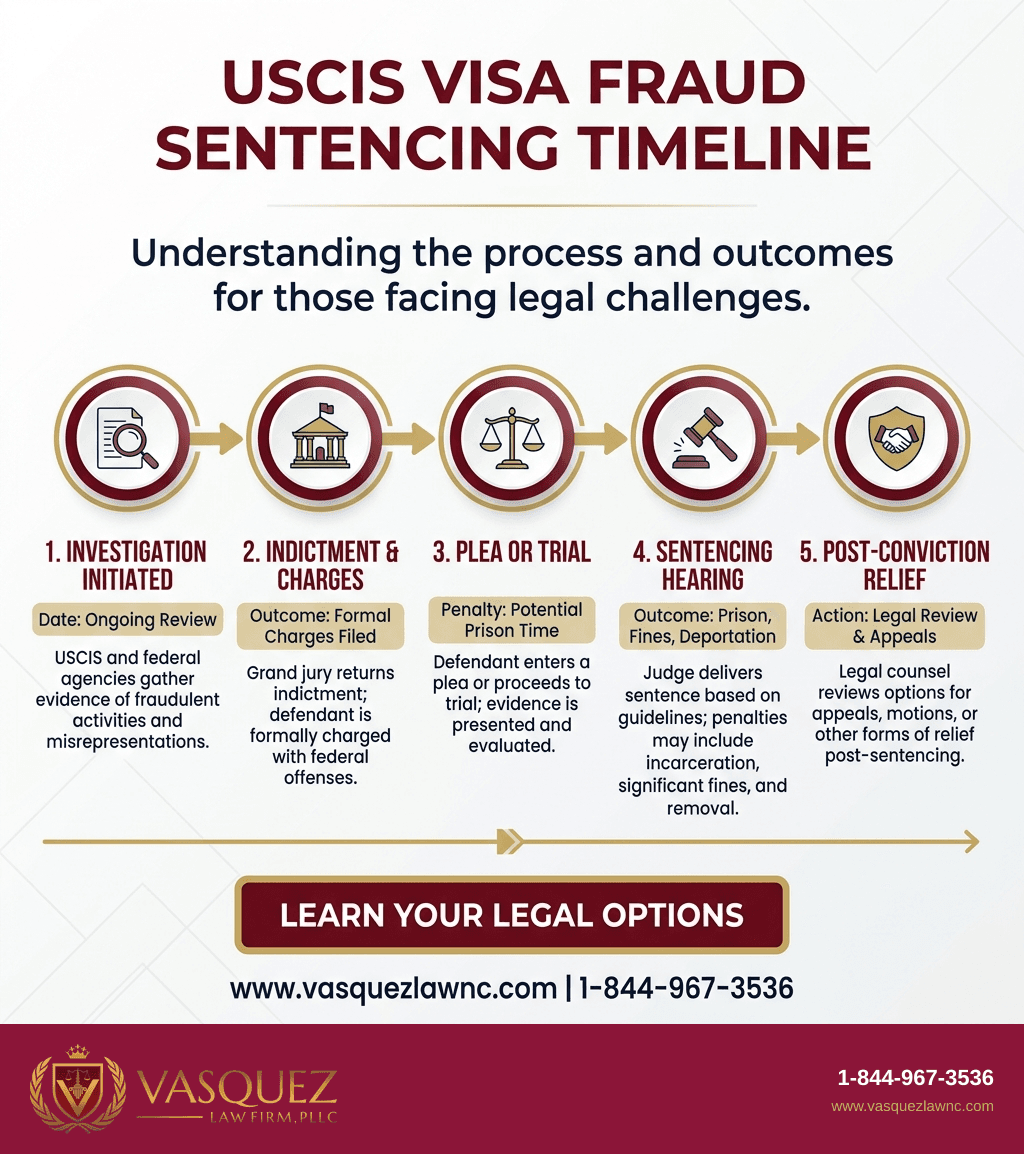
The Immigration and Nationality Act (INA) provides mechanisms to prosecute visa fraud and protect workers. For example, 8 U.S.C. § 1255 governs adjustment of status but requires lawful entry and compliance with visa terms. Fraudulent conduct can bar adjustment and lead to removal under 8 U.S.C. § 1227.
The USCIS Fraud Detection and National Security Directorate investigates such cases to uphold the integrity of the immigration system. The law also mandates restitution to victims and penalties for offenders. As stated in the primary source,
"Cruz provided the applicants, USCIS, and U.S. Department of Labor false information related to the applicants’ wages, work hours, compensation, and job duties. Instead of following the terms of his employees’ contracts, Cruz used fear and intimidation to force them to work overtime, including nights and weekends, without pay; required them to live in degrading conditions; and confiscated their passports." (Source: USCIS, https://www.uscis.gov/newsroom/news-releases/man-sentenced-to-one-year-home-detention-for-visa-fraud)
This conduct violates multiple provisions of immigration and labor law. Employers must comply with 8 CFR § 274a.12, which defines authorized employment classes and prohibits unauthorized work. Failure to comply risks criminal and civil penalties.
In summary, visa fraud and worker exploitation are illegal under U.S. law, with strict penalties designed to protect workers and maintain immigration system integrity.
What should visa applicants and employers do in light of this case?
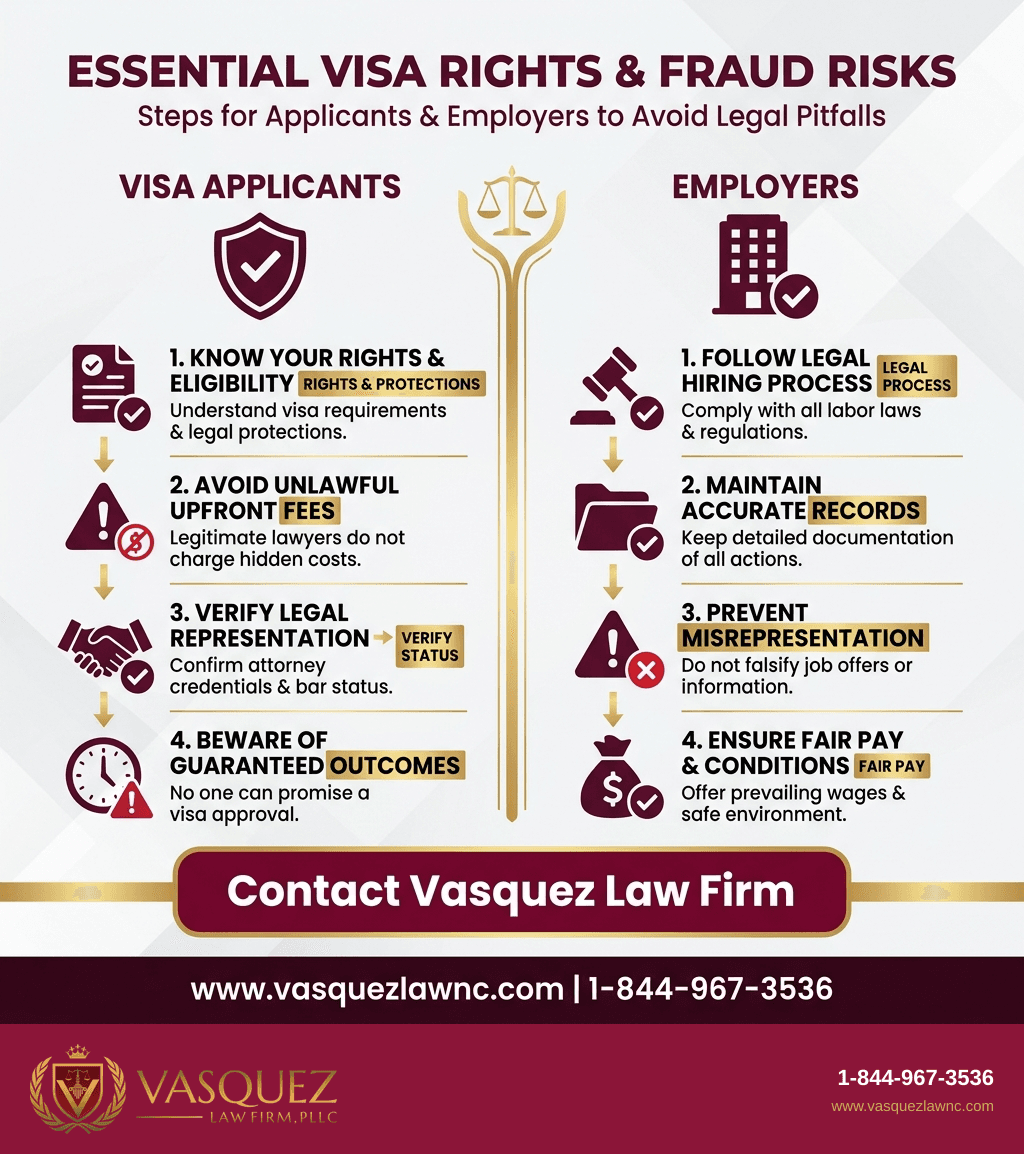
Visa applicants and employers should take proactive steps to avoid fraud and abuse. Applicants must provide truthful information on visa applications and report any employer misconduct to USCIS or law enforcement. Employers must comply fully with visa program requirements, including wage, hour, and living condition standards.
At our Raleigh, NC and Orlando, FL offices, we typically see that the most common mistake is failing to verify employer compliance with visa terms before accepting a job offer. Many workers do not realize their rights under visa programs or how to report abuse. Employers sometimes misunderstand or ignore their legal obligations, risking serious penalties.
Here are practical steps for applicants and employers:
- Verify the employer’s legitimacy and visa sponsorship status before accepting employment.
- Keep copies of all contracts, pay stubs, and correspondence related to employment and visas.
- Report suspected visa fraud or labor abuse promptly using the USCIS Tip Form.
- Consult an experienced immigration attorney if you suspect fraud or need help with visa compliance.
- Employers should maintain accurate records of wages, hours, and working conditions and comply with all visa program rules.
Below is a comparison table summarizing key employer obligations under common visa types versus the CW-1 visa involved in this case:
| Visa Type | Employer Obligations | Common Violations | Penalties |
|---|---|---|---|
| CW-1 (CNMI Only) | Pay agreed wages, provide safe housing, comply with contract terms | Unpaid overtime, confiscation of passports, false wage reports | Home detention, fines, restitution, probation |
| H-1B | Pay prevailing wage, proper job duties, maintain records | Wage underpayment, misclassification, false attestations | Fines, debarment, visa revocation |
| H-2B | Provide fair wages, safe conditions, comply with labor laws | Wage theft, poor housing, false recruitment | Fines, criminal charges |
Applicants in Raleigh, NC and Orlando, FL should seek legal advice if they encounter employer misconduct. Employers must train staff on compliance and document all employment terms carefully.
What happens next after the USCIS visa fraud sentencing?
Following the sentencing of Angel Paras Cruz Jr., the case serves as a precedent for continued enforcement against visa fraud and worker exploitation. Cruz will serve one year of home detention, three years probation, pay fines and restitution, and face ongoing monitoring.
USCIS and partner agencies will likely increase investigations into visa fraud, particularly in vulnerable programs like the CW-1 visa. The case demonstrates the effectiveness of interagency cooperation, which USCIS spokesman Zach Kahler emphasized:
"Through ongoing interagency cooperation and coordination, we were able to bring this case to a successful conclusion and hold this bad actor responsible for visa fraud." (Source: USCIS, https://www.uscis.gov/newsroom/news-releases/man-sentenced-to-one-year-home-detention-for-visa-fraud)
For workers and employers in Raleigh, NC and Orlando, FL, this means heightened scrutiny of visa compliance and more resources to report suspected fraud. USCIS encourages the public to use the USCIS Tip Form to report suspected immigration benefit fraud or abuse.
What's Your Immigration Situation?
Answer 3 questions - we'll tell you your options
Question 1 / 3
What best describes your situation?
Keep Reading
The case also signals that federal prosecutors will pursue visa fraud aggressively, including restitution to victims. Employers should review their practices to avoid violations. Workers should understand their rights and seek legal help if abused.
The USCIS website and policy manual will likely update guidance on visa fraud enforcement. Our Raleigh, NC and Orlando, FL offices continue to monitor developments and assist clients affected by visa fraud or labor exploitation.
Frequently Asked Questions about USCIS Visa Fraud Sentencing
What is visa fraud under U.S. immigration law?
Visa fraud occurs when an individual knowingly provides false information or conceals facts to obtain immigration benefits. This includes lying on visa applications, misrepresenting job duties, or abusing visa programs. Visa fraud is a federal crime with serious penalties.
Who was sentenced in the latest USCIS visa fraud case?
Angel Paras Cruz Jr., an 82-year-old man from the Northern Mariana Islands, was sentenced to one year home detention, probation, fines, and restitution for forcing workers to labor without pay and lying about their visas.
What visa program was involved in this case?
The case involved the CNMI-Only Transitional Worker (CW-1) Visa Program, which allows employers in the Northern Mariana Islands to bring foreign workers temporarily under specific terms.
How can workers report suspected visa fraud or abuse?
Workers can report suspected visa fraud or abuse using the USCIS Tip Form available on the USCIS website. Prompt reporting helps law enforcement investigate and protect victims.
What penalties can employers face for visa fraud?
Employers convicted of visa fraud may face criminal charges, fines, home detention, probation, restitution to victims, and potential debarment from sponsoring visas in the future.
This article provides general legal information, not individualized legal advice. Reading does not create an attorney-client relationship. For advice specific to your situation, contact Vasquez Law Firm.
Reviewed by William Vasquez, Founder & CEO, Vasquez Law Firm, PLLC.
If you need legal assistance, learn more about get immigration legal help today, or call us at 1-844-967-3536 for a free evaluation.
Related Topics

William Vasquez
Founder & CEO, Vasquez Law Firm, PLLC
William Vasquez is the founder and CEO of Vasquez Law Firm, PLLC, a results-driven firm specializing in immigration, criminal defense, personal injury, and workers' compensation. A U.S. Air Force veteran and recipient of the Joint Service Achievement Medal, William is dedicated to fiercely fighting for his clients' rights.
Related Legal Services
Need legal help? Learn more about get immigration legal help today, or contact us for a free evaluation.
You can also visit our NC immigration team for more information.