How Law Enforcement Diversion Programs Work in North Carolina 2026
What is a law enforcement diversion program and how can it help your case in 2026? Learn eligibility, process, and benefits. Call for a free evaluation.
Published on September 12, 2026
Protect your record and your freedom
Free, confidential review. 24/7.
Free & confidential · Se habla espanol · 24/7
Have questions? Talk to an attorney - free evaluation.
Call 1-844-967-3536Protect Your Record and Your Freedom
A confidential case review - available 24/7 for emergencies.
How Law Enforcement Diversion Programs Work in North Carolina 2026
Law enforcement diversion programs offer alternatives to traditional criminal prosecution for low-level offenses. In Smithfield, North Carolina, such programs aim to reduce court burdens and provide individuals a path to avoid conviction records by completing specific requirements. This article explains how law enforcement diversion programs work in 2026, their benefits, eligibility criteria, and how a skilled criminal defense attorney can help you navigate these options.
Need help with your case? Our experienced attorneys are ready to fight for you. Se Habla Español.
Or call us now: 1-844-967-3536
Quick Answer
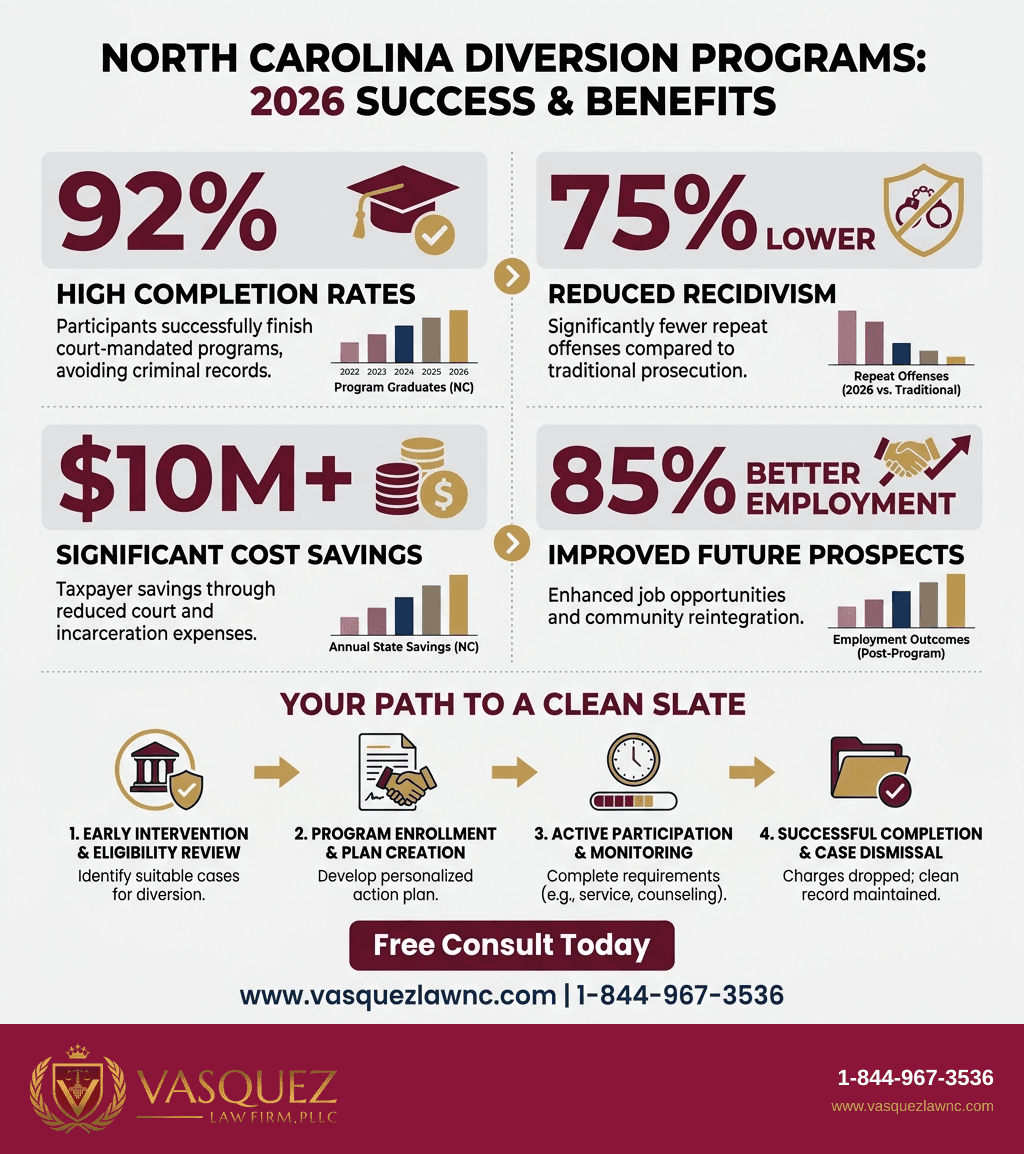
Law enforcement diversion programs in Smithfield, North Carolina, offer a chance to avoid criminal prosecution for low-level offenses by completing program requirements such as counseling or community service. Successful participation can lead to dismissal or non-filing of charges, keeping your record clean.
- Often targets low-level and first-time offenses
- Typically involves community service, counseling, or restitution
- Charges dismissed upon successful completion
- Helps reduce court overload and prevents criminal records
- Available in Smithfield and surrounding North Carolina counties
Understanding Law Enforcement Diversion Programs
A law enforcement diversion program is designed to offer people charged with minor crimes an alternative to traditional prosecution. Rather than facing a long court process, certain offenders can opt for a program combining rehabilitation and accountability measures. These programs are intended to reduce incarceration rates, limit criminal records, and alleviate court system burdens.
North Carolina has been expanding diversion options, with counties like Harnett launching specific initiatives recently. For example, a diversion program may be available to someone charged with a first-time possession offense in Smithfield. Instead of proceeding directly to court, local police might refer eligible individuals to a diversion program emphasizing treatment or community restitution.
While diversion reduces the chance of a conviction, it depends on timely enrollment and meeting strict program terms. Programs vary by county and offense type but aim for consistent goals. As of 2026, new pilot projects inspired by national models like the Law Enforcement Assisted Diversion (LEAD) program show promising outcomes in reducing recidivism and improving community relations.
These programs often involve police cooperation, prosecutors' approval, and court oversight. Eligible offenses usually include minor drug-related crimes, misdemeanors, or low-level property offenses. Understanding whether you qualify requires legal guidance, especially in Smithfield's judicial system.
If you're facing charges, a knowledgeable criminal defense attorney can explain options and advocate for diversion participation when appropriate. For detailed information about our criminal defense services, visit our criminal defense services page.
How LEAD Program Police Work
The LEAD (Law Enforcement Assisted Diversion) program allows police officers to divert individuals involved in low-level drug offenses or behavioral health crises away from jail and into community programs. It emphasizes harm reduction and social support rather than punishment. While LEAD began in places like Seattle and Longmont, Colorado, North Carolina counties, including Harnett, have started similar programs reflecting LEAD's principles.
Law Enforcement Against Drugs and Diversion
Programs branded Law Enforcement Against Drugs (LEAD) focus on partnership between police, social services, and community organizations. They address drug-related charges by offering treatment paths instead of prosecution. Such approaches help reduce overcrowding in courts and jails, fostering better outcomes for offenders and public safety.
Diversion Programs in Schools
Some communities include L.E.A.D. programs in schools, aiming to intervene early with youth exhibiting problematic behavior. These school diversion efforts connect students to counseling and support, preventing further legal trouble. Although different from adult law enforcement diversion, these programs share the goal of rehabilitation over punishment.
Step-by-step: Navigating the Diversion Process
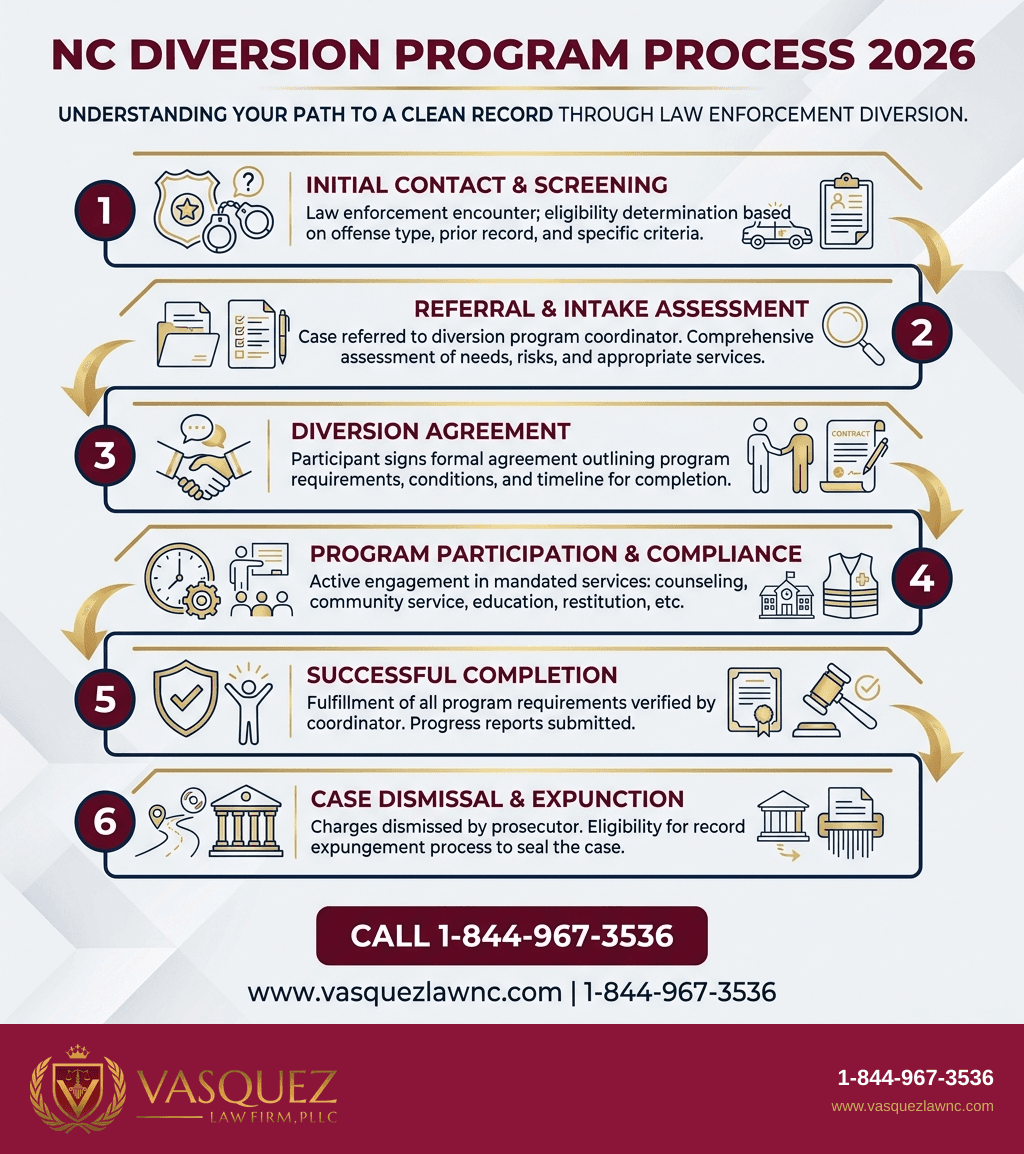
- Charge and Eligibility: When arrested or cited for a low-level offense in Smithfield, an officer or prosecutor assesses whether diversion is an option based on offense type, past record, and local program rules.
- Referral or Offer: If eligible, you're offered the chance to participate. This might be by a police officer before formal charges or early through the prosecutor’s office.
- Application and Agreement: You must agree to comply with program terms, which could include signing a diversion agreement outlining expectations and consequences of failure.
- Program Requirements: Complete assigned tasks such as community service, counseling sessions, drug testing, restitution payments, or educational workshops.
- Monitoring and Reporting: Stay in regular contact with program coordinators and submit documentation as required to demonstrate compliance.
- Successful Completion: After finishing all conditions, the prosecutor typically dismisses or declines to file charges. Your record remains free of convictions related to that case.
- Non-Completion Consequences: Failure to meet requirements can lead to revocation of diversion status and resumption of criminal prosecution.
Learn more about your defense options by contacting our attorneys.
Checklist: Documents You May Need
- Copy of citation or arrest report
- Proof of residence within jurisdiction
- Identification documents (ID, driver’s license)
- Records of prior offenses if any
- Medical or psychological evaluations (if applicable)
- Contact information for treatment providers
Common Mistakes in Diversion Programs
- Failing to Respond Promptly: Missing deadlines to enroll or communicate can disqualify you quickly. Fix: Respond as soon as possible after being offered diversion.
- Ignoring Requirements: Skipping counseling, service hours, or failing drug tests often leads to program termination. Fix: Prioritize all program obligations carefully.
- Uninformed Consent: Accepting diversion without understanding terms risks surprise consequences. Fix: Consult a lawyer before agreeing.
- Assuming Automatic Record Clearing: Diversion dismisses charges but may not erase arrest records. Fix: Request expungement if applicable.
- Not Seeking Legal Help: Going it alone can lead to missed opportunities and mistakes. Fix: Contact an experienced criminal defense attorney early.
- Committing New Offenses During Program: New arrests usually void diversion eligibility. Fix: Avoid any unlawful conduct.
- Misperceptions about Eligibility: Incorrect assumptions about qualifying offenses confuse defendants. Fix: Get legal advice to confirm.
If you only remember one thing: Diversion requires active participation, legal guidance, and strict compliance to avoid prosecution.
Timeline: What to Expect in Your Case
- Week 1-2: Initial eligibility review and offer by police or prosecutor.
- Week 3-4: Application completion and diversion agreement signed.
- Month 1-6: Fulfill program requirements – service, counseling, restitution.
- Month 6-12: Final compliance reporting and review.
- Post-completion: Charges dismissed, possible expungement pursued.
Costs and Fees Involved
- Program Fees: Many diversion programs require administrative fees ranging from $100 to $500.
- Restitution Payments: You might need to compensate victims directly, depending on the offense.
- Counseling or Treatment Costs: If mandated to attend counseling, some costs may be out-of-pocket.
- Legal Fees: Hiring a criminal defense attorney increases your chances of successful diversion but adds legal expenses.
- Failure Costs: Not completing the program can result in higher fines and penalties from prosecution.
- Transportation or Time Off: Consider costs of travel and time lost from work due to program obligations.
Jurisdiction Notes: Smithfield and North Carolina
North Carolina Notes
Diversion programs in North Carolina are governed by statutes such as N.C. Gen. Stat. § 15A-1341(b) and § 7A-790. Counties like Harnett and Johnston have structured local diversion initiatives. In Smithfield, these programs are carefully coordinated with local law enforcement and prosecutors, emphasizing rehabilitation over punishment for qualifying offenders.
It is important to note that participation requirements, eligibility, and program availability vary by county. For example, a diversion program for drug possession in Harnett may differ slightly from one in Johnston County. Always verify specific rules with local courts or your attorney.
Learn more about how the North Carolina courts operate diversion programs through North Carolina Courts.
When to Call a Lawyer Immediately
- If you are arrested or cited for any criminal charge in Smithfield.
- If you are unsure about your eligibility for a diversion program.
- If you received a diversion offer but do not understand the terms.
- If you have previous criminal convictions that might affect eligibility.
- If the prosecution threatens to revoke your diversion agreement.
- If you are accused of failing program requirements such as drug tests or community service.
- If new charges are filed while you are in a diversion program.
- If you want help negotiating diversion options or alternative sentencing.
About Vasquez Law Firm
At Vasquez Law Firm, we combine compassion with aggressive representation. Our motto "Yo Peleo®" (I Fight) reflects our commitment to standing up for your rights.
- Bilingual Support: Se Habla Español — Spanish-speaking attorneys and staff available
- Service Areas: North Carolina, including Smithfield and surrounding counties
- Experience: 15+ years helping clients navigate complex criminal defense matters
- Results: Thousands of handled cases across multiple practice areas
Attorney Trust and Experience
William J. Vásquez is admitted to the North Carolina State Bar (2011) and to the U.S. Courts of Appeals for the 4th, 5th, and 11th Circuits. The firm has provided dedicated legal representation since 2011, with personalized attention to each client's case.
Don't wait to get the help you deserve. Call us now for immediate assistance.
Se Habla Español
Frequently Asked Questions
What is a law enforcement diversion program?
A law enforcement diversion program allows eligible individuals charged with low-level offenses to avoid traditional court prosecutions by completing specific conditions such as counseling or community service. Successful completion often results in dismissal or non-filing of charges.
Are diversion programs available in Smithfield, North Carolina?
Yes, Smithfield and surrounding counties in North Carolina offer various diversion programs targeting low-level offenses. Programs aim to reduce court load and provide alternatives to prosecution under local and state guidelines.
What offenses qualify for a diversion program?
Typically, minor drug offenses, first-time misdemeanors, and certain non-violent crimes may qualify. Eligibility varies by jurisdiction and specific program rules in Smithfield and North Carolina.
Does a diversion program clear your criminal record?
Successful completion often leads to dismissal or non-filing of charges, which helps avoid a criminal conviction on your record. However, the underlying arrest may still be recorded unless expunged separately.
How does the diversion program work in North Carolina?
In North Carolina, diversion programs offer a chance to complete court-ordered terms such as education, treatment, or restitution. On completion, prosecutors may dismiss charges. Each county, including Johnston and Harnett, has specific programs.
Can the police offer diversion instead of arrest?
In some places, including pilot programs like LEAD, officers can direct eligible individuals to diversion programs instead of making an arrest, especially for drug or mental health related issues.
What are common requirements in a diversion program?
Common requirements include community service, counseling or drug treatment, restitution payments, and regular check-ins with a program coordinator. Compliance is necessary to successfully complete and dismiss charges.
What happens if I fail a diversion program?
Failure to complete the program terms may result in the prosecutor moving forward with criminal charges. This could lead to court hearings and potential conviction, making legal advice crucial early.
Sources and References
Take the first step toward justice today. Our team is standing by to help.
Start Your Free Evaluation Now
Call us: 1-844-967-3536
Se Habla Español - Estamos aquí para ayudarle.


William Vasquez
Founder & CEO, Vasquez Law Firm, PLLC
William Vasquez is the founder and CEO of Vasquez Law Firm, PLLC, a results-driven firm specializing in immigration, criminal defense, personal injury, and workers' compensation. A U.S. Air Force veteran and recipient of the Joint Service Achievement Medal, William is dedicated to fiercely fighting for his clients' rights.
Related Legal Services
Need legal help? Learn more about speak with a criminal defense lawyer, or contact us for a free evaluation.
You can also visit our North Carolina defense practice for more information.