Immigration Offenses and Their Impact on Your Case in 2026
Facing immigration offenses in Orlando? Learn what crimes count, penalties, and how to protect your rights. Contact Vasquez Law for a free case review.
Published on June 18, 2026
Talk to an immigration attorney
Free call. A clear plan for your case.
Free & confidential · Se habla espanol · 24/7
Have questions? Talk to an attorney - free evaluation.
Call 1-844-967-3536Worried how the latest immigration news affects you?
Schedule a confidential case review with an immigration attorney - know exactly where you stand.
USCIS Case Status
Check your USCIS case status
Enter your receipt number and get the official status. Free, no registration.
Immigration Offenses and Their Impact on Your Case in 2026
Immigration offenses include violations like illegal entry and re-entry that can carry severe legal consequences. In 2026, understanding which acts qualify as an immigration offense is critical for anyone navigating the U.S. immigration system. This guide explains the common immigration-related offenses under 8 U.S.C. 1325 and others, clarifies when these violations become criminal, and outlines what immigrant residents in Orlando, FL, and Raleigh, NC should know to protect their rights under current federal law.
Need help with your case? Our experienced attorneys are ready to fight for you. Se Habla Español.
Or call us now: 1-844-967-3536
Quick Answer
Immigration offenses include unlawful entry, illegal re-entry, visa overstays, and failure to depart. These violations can be civil or criminal under federal law, primarily 8 U.S.C. 1325. Penalties vary from deportation to fines and imprisonment. Knowing your rights and options early, especially in Orlando or Raleigh, is vital to protect your immigration status.
- Unlawful entry can be a misdemeanor under 8 U.S.C. 1325
- Repeat illegal re-entry may be a felony
- Overstaying a visa is a civil violation
- Deportation may follow many immigration offenses
- Legal representation improves case outcomes
Understanding Immigration Offenses
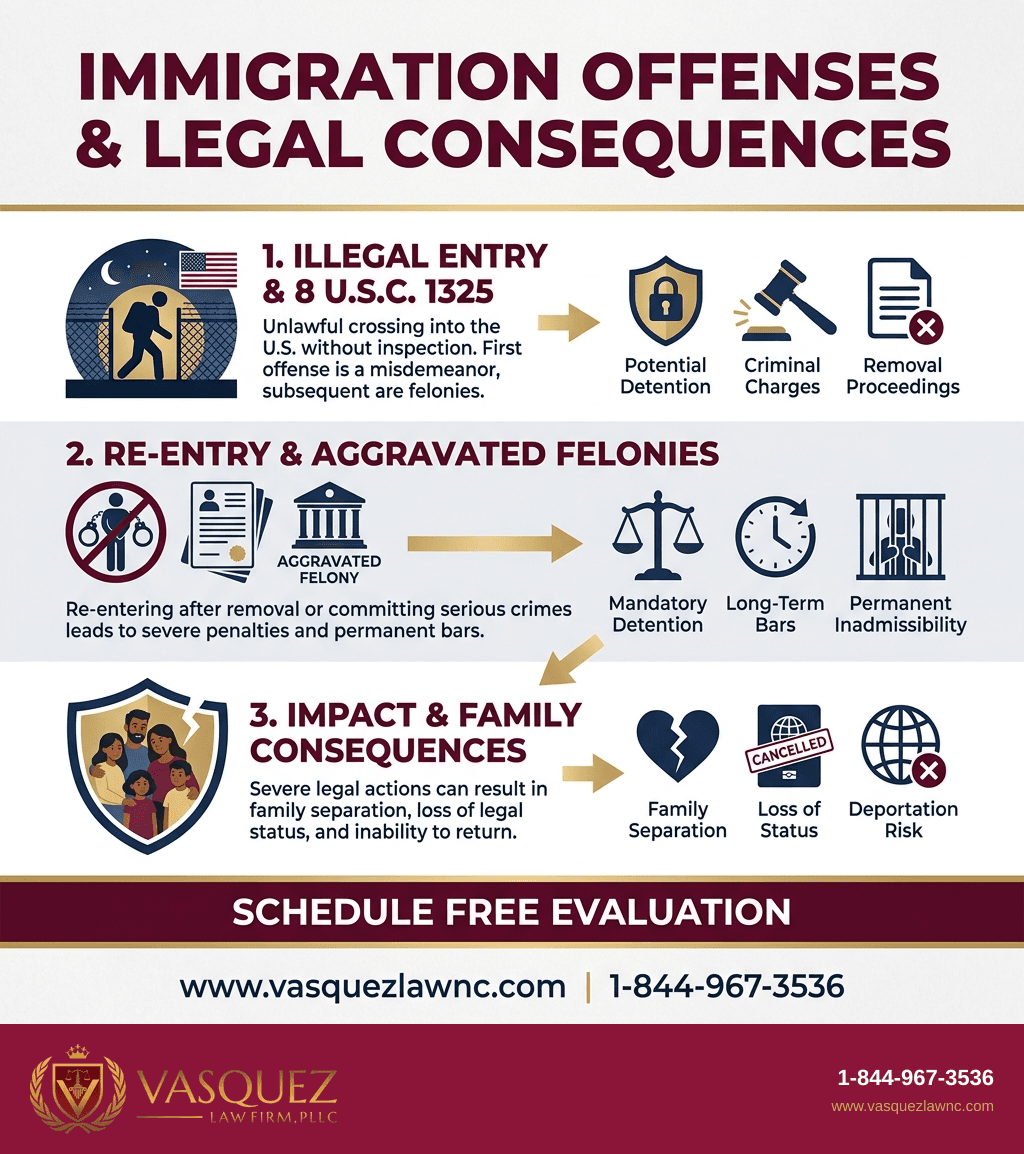
In 2026, knowing what counts as immigration offenses is crucial for anyone dealing with U.S. immigration law. Immigration offenses are violations of federal immigration statutes, including unauthorized border crossings, failure to comply with departure orders, visa violations, and illegal re-entry after deportation. A key statute, 8 U.S.C. 1325, criminalizes unauthorized entry between immigration checkpoints and failure to report to immigration officials.
For example, in Orlando and Raleigh, many individuals face charges under 8 U.S.C. 1325 for crossing the border without inspection. This offense usually carries misdemeanor penalties: fines and possible jail time up to six months. However, if an individual has previous convictions related to immigration offenses, the charge can escalate to a felony with harsher penalties.
Besides 8 U.S.C. 1325, immigration offenses also include failure to depart under a removal order, which can lead to civil and criminal consequences. Visa overstays are generally civil violations but can influence future immigration benefits negatively. In some cases, violations trigger removal proceedings via INA § 237(a) based on deportable offenses.
Understanding the criminal and civil nature of immigration-related offenses helps clarify the possible legal outcomes. Civil offenses can result in removal without criminal penalties. Criminal offenses may include fines, imprisonment, or both, and often require strong legal defense to protect immigrant rights.
Our immigration legal services in Orlando and Raleigh ensure clients understand these distinctions. Whether facing charges or wanting to avoid violations, early legal guidance is essential.
Common Immigration Offenses in Detail
- Unauthorized Entry (8 U.S.C. 1325): Entering the U.S. between designated ports of entry without inspection.
- Illegal Re-entry: Returning to the U.S. after removal or deportation without authorization.
- Visa Overstay: Remaining past the authorized period granted by a U.S. visa, a civil violation.
- Failure to Depart: Ignoring a legal removal or deportation order, potentially criminal in nature.
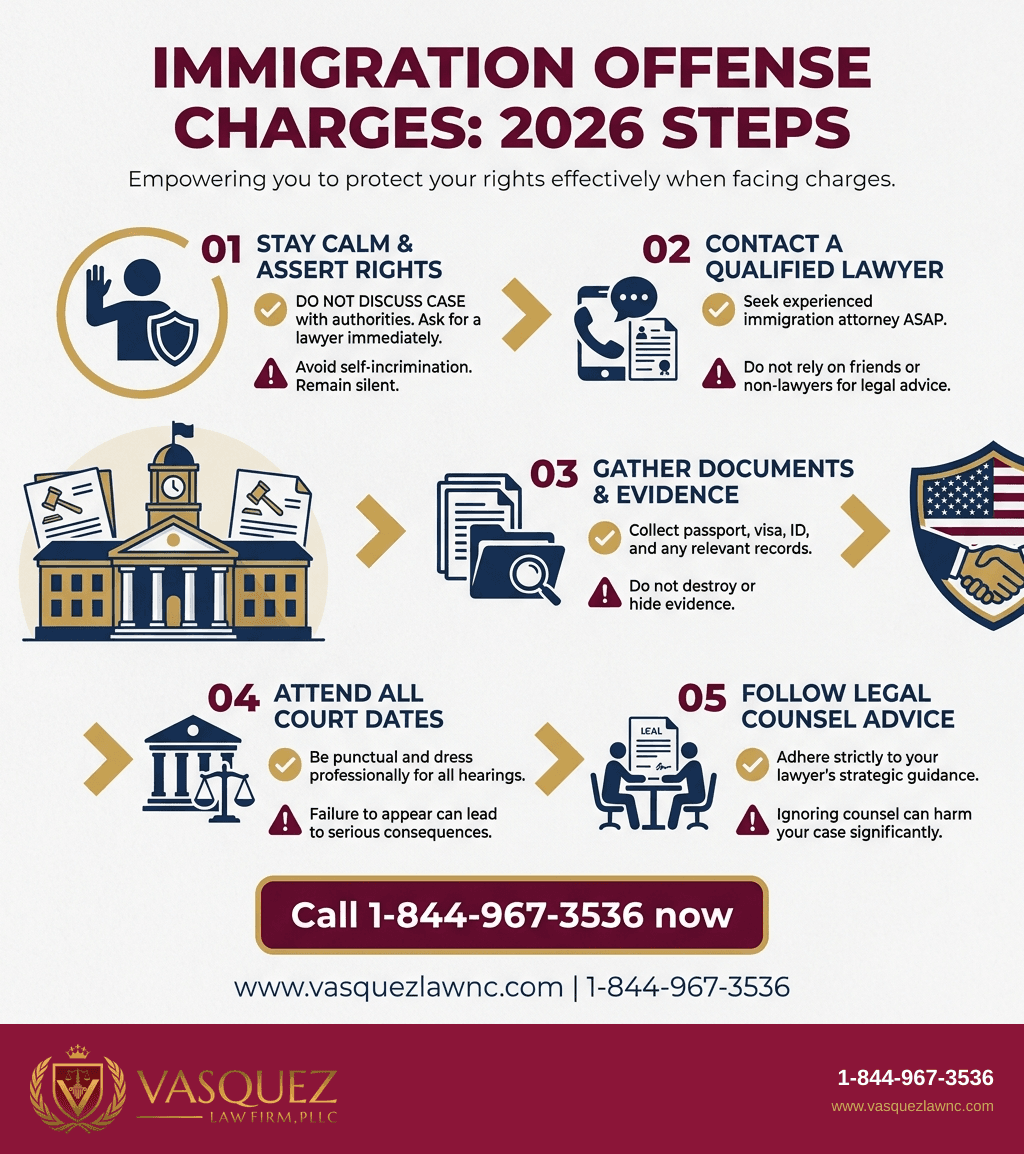
Step-by-Step: How to Respond to Charges
Facing immigration offenses requires prompt and informed action. Early steps influence your immigration status and legal outcomes in court. Below is a step-by-step approach tailored for Orlando and Raleigh residents charged with immigration offenses.
- Contact an Experienced Immigration Attorney: Reach out immediately to legal counsel knowledgeable in immigration offenses to protect your rights and explore defense options.
- Gather Documentation: Collect all relevant immigration paperwork, court notices, and evidence of lawful entry or residency.
- Avoid Speaking to Authorities Without Counsel: Do not provide statements or sign documents without attorney advice to avoid self-incrimination or waiver of rights.
- Attend All Hearings and Meetings: Comply with immigration court dates and requests to avoid defaults that could result in removal orders.
- Explore Relief and Defenses: Your attorney will assess eligibility for forms of relief, such as asylum, cancellation of removal, or deferred action under INA § 240A(b).
- Prepare for Immigration Court Proceedings: Collaborate with your lawyer to compile evidence, witnesses, and arguments supporting your case.
- File Motions and Appeals If Needed: Legal challenges to adverse rulings can protect your rights and delay removal while exploring alternatives.
Following these steps with expert legal support from Vasquez Law Firm in Orlando and Raleigh maximizes your chances of a favorable outcome and safeguards your immigration status.
Legal Support for Immigration Offenses
Attorney Vasquez and our immigration team specialize in responding to immigration offenses. We assist with filings, motions, and court representation. Our bilingual staff ensures you understand every step clearly and know your rights, with a focus on compassionate, aggressive defense.
Common Mistakes to Avoid with Immigration Violations
Many immigrants face serious consequences because of avoidable errors when dealing with immigration offenses. In Orlando and Raleigh, these mistakes can delay or damage your case.
- Not Hiring a Lawyer Early: Waiting to consult a lawyer can result in missed deadlines or lost defenses.
- Talking to Immigration Authorities Without Counsel: Statements can be misinterpreted or used against you.
- Ignoring Court Notices or Deadlines: Failure to appear often leads to removal orders by default.
- Using Unverified Legal Help: Relying on non-attorneys or scammers can harm your chances.
- Failing to Know Your Rights: Lack of knowledge about defenses and relief options puts you at a disadvantage.
- Assuming All Offenses Are Criminal: Misunderstanding the civil-criminal distinction may cause inappropriate responses.
- Not Keeping Proper Records: Missing immigration documents or evidence weakens your case.
- Overlooking Potential Relief: Many qualify for forms of relief under INA § 240A or other statutes.
If you only remember one thing: Get legal help immediately from attorneys familiar with immigration offenses in North Carolina and Florida.
Timeline: What to Expect During Proceedings
Immigration offense cases follow a federal timeline that varies but generally includes several key stages. In Orlando and Raleigh, the process typically spans several months to over a year.
- Day 1 - Arrest or Notice to Appear (NTA): Initiates removal proceedings and informs the individual of charges.
- Weeks 1 to 4 - Initial Hearing and Bond Hearing: Review of case details and possible release on bond.
- Months 2 to 6 - Immigration Court Hearings: Evidence presented, witnesses testify, and legal arguments made.
- Months 6+ - Final Orders and Appeals: Decision issued; appeals can extend the process and offer additional protections.
Processing times depend on court backlogs and complexity. USCIS processing times for various applications impacted by offenses can be found at USCIS Processing Times.
Costs and Fees: What Impacts the Price
Legal fees for immigration offense cases vary by complexity. Factors affecting cost include:
- Type of offense and criminal or civil nature
- Number of hearings and court appearances
- Need for filing motions or appeals
- Geographic location such as Orlando or Raleigh offices
- Urgency and availability of evidence
- Possibility of applying for relief or waivers
Many law firms offer free case evaluations to assess cases and provide fee estimates. Vasquez Law Firm can assist you through every step with transparent pricing and strong advocacy.
NC, FL, and Nationwide Notes
North Carolina Notes
North Carolina residents should be aware that immigration offenses are federally prosecuted but local offices in Raleigh provide critical legal help. Federal immigration courts under the EOIR handle removal cases. Local factors like community relations impact enforcement trends.
Florida Notes
In Orlando, Florida, immigration enforcement remains active with recent indictments in 2026 highlighting immigration offense prosecutions. Vasquez Law Firm maintains a strong presence here, ensuring clients receive bilingual support and know their rights during investigations or court proceedings.
Nationwide Concepts
U.S. immigration offenses are governed by federal statutes and regulations like 8 U.S.C. 1325 and INA § 237(a). While local enforcement varies, laws are consistent nationally. Removal orders, misdemeanor and felony charges, and deportation processes remain primarily federal matters handled by agencies such as USCIS and EOIR.
When to Call a Lawyer Now
- If you are arrested or charged with an immigration offense
- Upon receiving an immigration court Notice to Appear (NTA)
- If immigration agents visit without a warrant
- If you fear imminent deportation or detention
- When accused of illegal re-entry after removal
- If your visa status is threatened due to criminal charges
- Before signing any immigration-related documents
- If you want to apply for relief such as asylum or cancellation
- If you are unsure if your offense is civil or criminal
- If you need help understanding your immigration rights
About Vasquez Law Firm
At Vasquez Law Firm, we combine compassion with aggressive representation. Our motto "Yo Peleo®" (I Fight) reflects our commitment to standing up for your rights.
- Bilingual Support: Se Habla Español — Spanish-speaking attorneys and staff available
- Service Areas: North Carolina, Florida, and nationwide immigration services
- Experience: Over 30 years helping clients navigate complex legal matters
- Results: Thousands of successful cases across multiple practice areas
Attorney Trust and Experience
William J. Vásquez is admitted to the North Carolina State Bar (2011) and to the U.S. Courts of Appeals for the 4th, 5th, 6th, and 11th Circuits. Florida-jurisdiction matters at the firm are handled by Florida Bar attorney Alekssandra Lopez. The firm has provided dedicated legal representation since 2011, with personalized attention to each client's case.
Don't wait to get the help you deserve. Call us now for immediate assistance.
Se Habla Español
Frequently Asked Questions
What are immigration offenses?
Immigration offenses refer to violations of U.S. immigration laws, including unauthorized entry (crossing the border illegally), failure to depart, and re-entry without permission. These offenses can be civil or criminal and may lead to removal proceedings, fines, or even imprisonment under federal law, such as 8 U.S.C. 1325.
Is crossing the border illegally a felony or misdemeanor?
Crossing the border illegally is typically charged as a misdemeanor under 8 U.S.C. 1325 but can become a felony in cases of repeat offenses or aggravated circumstances. The law distinguishes between unauthorized entry as a civil violation or criminal offense depending on the facts.
What crimes can lead to immigration deportation?
Certain criminal convictions, including aggravated felonies, domestic violence, drug offenses, and some immigration offenses like illegal re-entry after removal, can result in deportation. Immigration judges review these cases under INA § 237(a), and legal defense is critical to understand possible relief.
Are immigration offenses always criminal?
No. Some immigration offenses, like unlawful presence or overstaying a visa, are civil violations subject to deportation but not criminal penalties. Others, such as illegal entry or re-entry, carry criminal charges. The differentiation depends on the statute and case specifics.
What does 8 U.S.C. 1325 cover?
8 U.S.C. 1325 criminalizes unlawful entry into the U.S. without proper inspection. It applies to individuals crossing between ports of entry or failing to report to immigration officials. Violations can lead to misdemeanor charges, fines, and removal proceedings.
Can immigration offenses affect other immigration benefits?
Yes. Having an immigration offense, especially a criminal conviction, may disqualify a person from visas, green cards, DACA, or naturalization. USCIS reviews any criminal or immigration-related violations during applications and background checks.
What defenses exist against immigration offense charges?
Defenses vary by case but include proving lawful entry, challenging procedural errors, or eligibility for relief like asylum or cancellation. Effective legal representation is key to explore defenses and minimize penalties.
How can I protect my rights if charged with an immigration offense?
Contact an experienced immigration lawyer immediately. Do not speak to authorities without counsel. Keep records and comply with court orders. Early legal advice assists in navigating consequences and immigration court proceedings.
Sources and References
- U.S. Citizenship and Immigration Services
- Executive Office for Immigration Review
- Legal Information Institute
Take the first step toward justice today. Our team is standing by to help. Se Habla Español.
Start Your Free Evaluation Now
Call us: 1-844-967-3536
Se Habla Español - Estamos aquí para ayudarle.


William Vasquez
Founder & CEO, Vasquez Law Firm, PLLC
William Vasquez is the founder and CEO of Vasquez Law Firm, PLLC, a results-driven firm specializing in immigration, criminal defense, personal injury, and workers' compensation. A U.S. Air Force veteran and recipient of the Joint Service Achievement Medal, William is dedicated to fiercely fighting for his clients' rights.
Related Legal Services
Need legal help? Learn more about our immigration legal services, or contact us for a free evaluation.
You can also visit North Carolina immigration lawyers for more information.