How Immigration Restrictions Shape Your Case in 2026
Learn how immigration restrictions affect your status in 2026. Understand key laws and protect your rights. Contact Vasquez Law for a free evaluation.
Published on June 5, 2026
Talk to an immigration attorney
Free call. A clear plan for your case.
Free & confidential · Se habla espanol · 24/7
Have questions? Talk to an attorney - free evaluation.
Call 1-844-967-3536Worried how the latest immigration news affects you?
Schedule a confidential case review with an immigration attorney - know exactly where you stand.
How Immigration Restrictions Shape Your Case in 2026
Immigration restrictions continue to impact families and individuals across the United States in 2026. Whether you are a Dreamer seeking relief under DACA, a green card holder, or facing recent changes in immigration policies, understanding the current immigration restrictions is essential. This guide explains how new laws and court rulings in NC and Orlando affect you, what you should expect when dealing with immigration officials, and how to protect your rights.
Need help with your case? Our experienced attorneys are ready to fight for you. Se Habla Español.
Or call us now: 1-844-967-3536
Quick Answer
Immigration restrictions in 2026 affect entry, status, and work authorization for many individuals. Recent court decisions have overturned some policies but new rules still apply. Green card holders and DACA recipients should stay informed to protect their rights.
- Restrictions can limit entry based on nationality and other factors
- Recent NC and Orlando policies adjust application processing
- Legal challenges continue to shape enforcement
- Green card holders face new requirements
- Unauthorized presence has consequences but relief may be possible
Understanding Immigration Restrictions
In 2026, immigration restrictions reflect a complicated history of laws and policies designed to regulate who enters and remains in the United States. For example, the Immigration Act of 1924 established national origins quotas that drastically limited immigration from certain countries. Today, although the quotas no longer exist, restrictions still apply based on security, health, and legal compliance concerns.
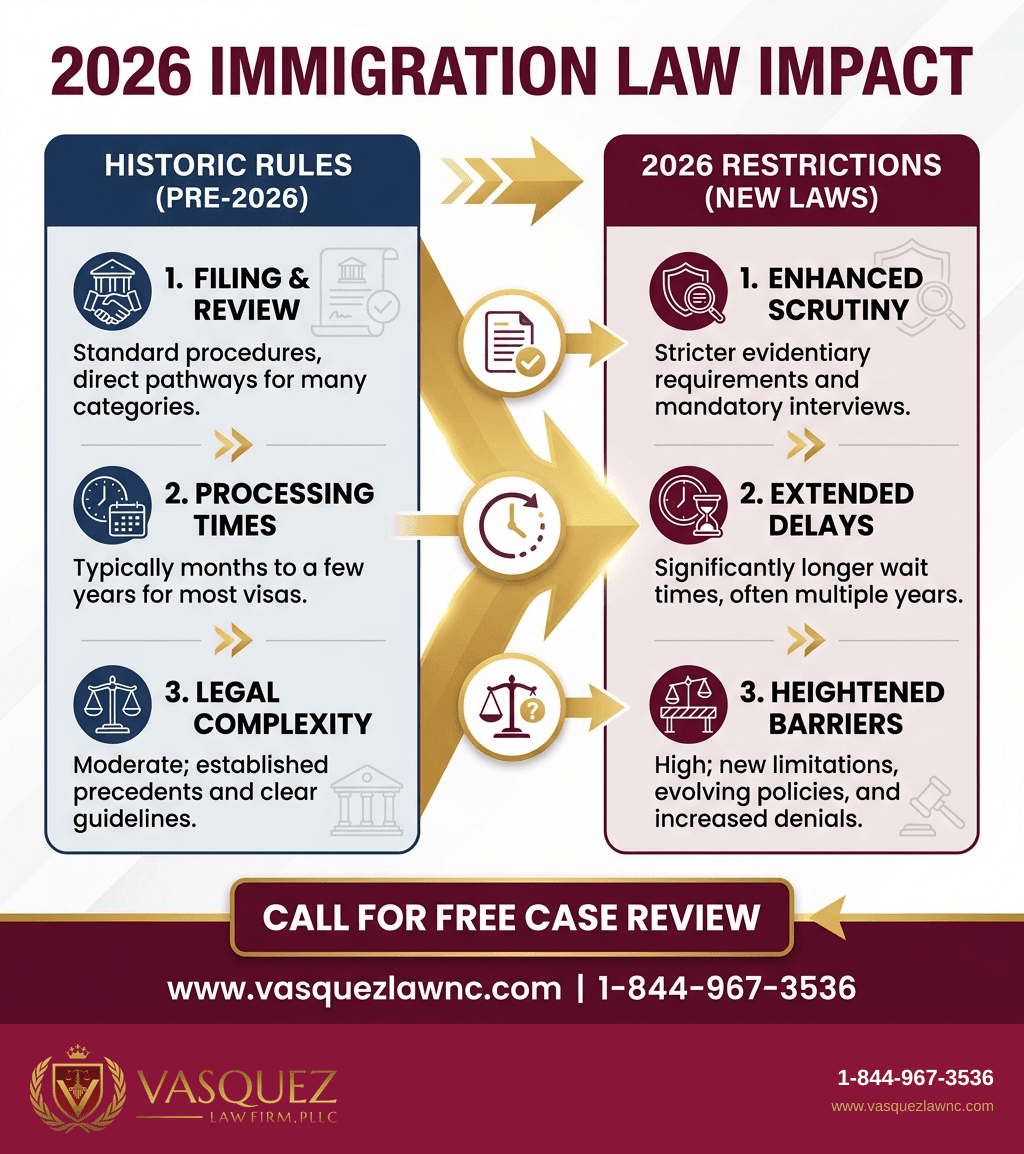
Federal laws, including 8 U.S.C. § 1182, govern inadmissibility grounds such as criminal records, visa violations, or health issues. Immigration policies issued by the Biden administration and implemented locally in North Carolina and Orlando affect processing times, eligibility, and enforcement practices. For instance, in 2026, the U.S. Citizenship and Immigration Services (USCIS) reports application processing for adjustment of status can range from 10 to 20 months depending on the form ([USCIS Processing Times](https://egov.uscis.gov/processing-times/)).
Recent court rulings, including a notable 2026 decision overturning some immigration restrictions, have left thousands in legal limbo but also opened pathways for relief. Understanding these changes is especially critical for Dreamers under DACA and green card holders. Our immigration services help clients navigate these evolving federal and state policies.
Immigration Restrictions 1920s vs. Now
The immigration restrictions enacted in the 1920s, such as the Immigration Act of 1924, were based heavily on national origins quotas aimed at limiting immigrants from Southern and Eastern Europe and Asia. These restrictions had a profound impact on immigrant demographics for decades.
Modern immigration laws focus less on nationality-based quotas but more on security requirements, health checks, including vaccination proof, and legal employment status. While the 1920s laws were strictly exclusionary, current policies balance enforcement with humanitarian relief avenues, although recent restrictions still pose challenges.
Immigration Policies in North Carolina and Orlando
North Carolina and Orlando-based policies often reflect federal immigration guidelines but include local adaptations. For example, Raleigh USCIS offices often have slightly faster case adjudications than the national average. In Orlando, outreach programs help immigrants understand their rights under the latest policies.
Having local legal representation empowers immigrants to respond properly to enforcement actions and stay compliant with state rules. Our team in Raleigh, NC and Orlando, FL specializes in navigating these regulations for the best possible outcomes.
Step-by-Step: How to Respond to Restrictions
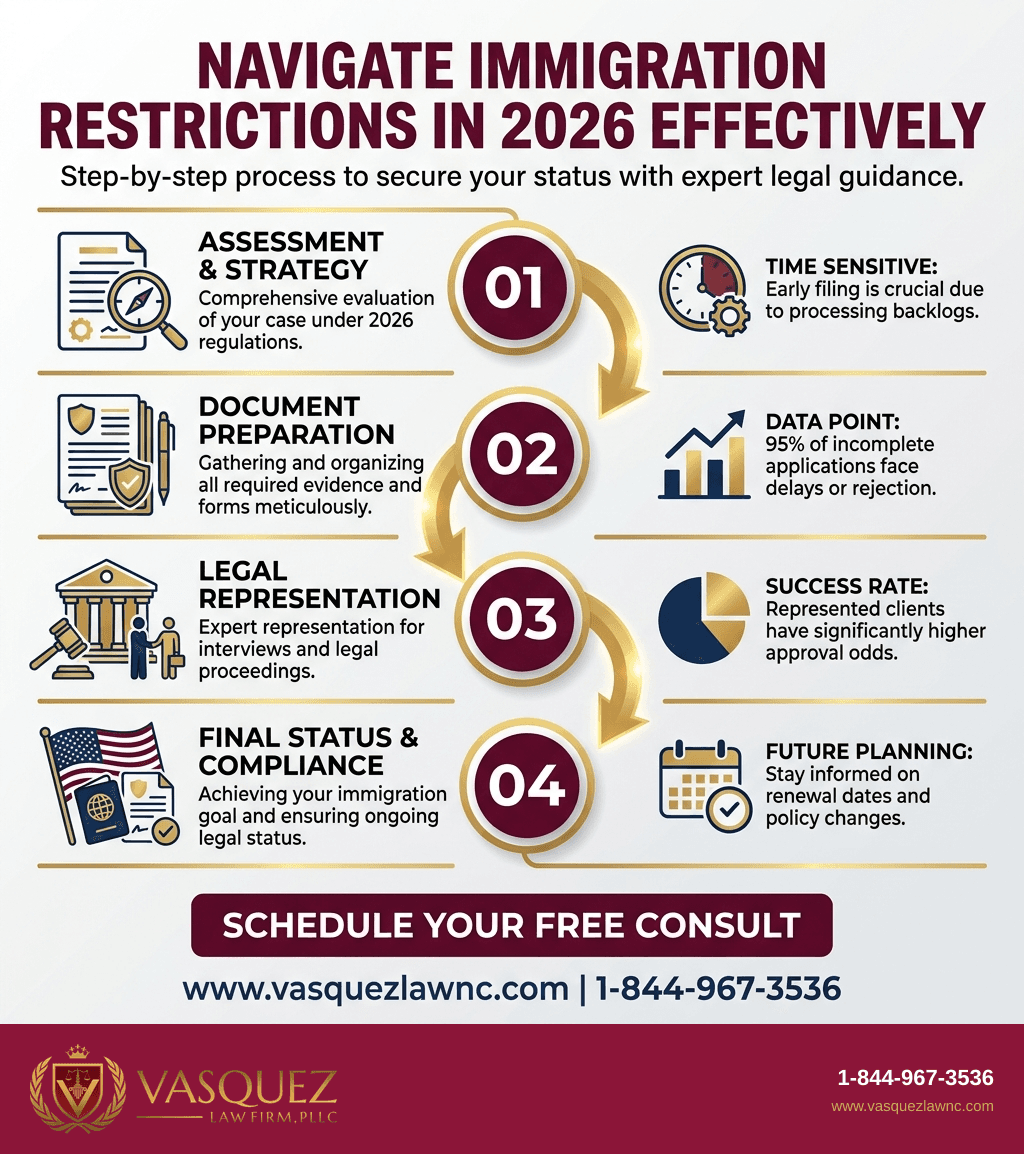
- Identify Your Immigration Status: Know if you are a visa holder, green card holder, DACA recipient, or undocumented. Your rights and restrictions will vary drastically based on status.
- Gather Relevant Documents: Passport, visa, I-94, green card, employment authorization, and any notices received from immigration authorities.
- Monitor Recent Policy Changes: Check official USCIS updates and local news sources regularly to stay ahead of new restrictions or relief programs.
- Consult an Immigration Lawyer: Early legal help can prevent mistakes that jeopardize your case. Contact our office for a free evaluation.
- Prepare for Possible Interviews or Notices: Attend all scheduled USCIS appointments and respond timely to notices to avoid negative outcomes.
Common Documents Checklist
- Valid passport or national ID
- Current and expired visas or green cards
- Proof of residence in North Carolina or Orlando, such as utility bills or leases
- Employment verification documents like pay stubs or employer letters
- Notices from immigration authorities or legal representatives
Timeline: What to Expect in 2026
- Application Submission: Confirm all forms and fees are submitted correctly to USCIS.
- Initial Processing (1-3 months): USCIS processes receipts and sends notices.
- Biometrics Appointment (Within 2-4 months): Fingerprinting and background checks occur.
- Interview Scheduling (6-18 months): USCIS schedules interviews depending on case complexity.
- Decision and Possible Appeals (6-20 months): USCIS issues approvals, denials, or requests for more information.
Check the most current processing times for forms like I-485 or I-765 at USCIS Processing Times.
Costs and Fees Affecting Your Immigration Case
- Application fees vary by form. For example, the I-485 adjustment of status fee is $1,140 as of 2026.
- Legal fees can range based on case complexity and services provided.
- Additional costs may include medical exams and document translations.
- Avoid late filings or incomplete forms to prevent extra charges or denials.
- Financial constraints might qualify you for fee waivers in limited cases.
Common Mistakes and How to Avoid Them
- Missing Deadlines: Always respond promptly to USCIS notices. Late responses often lead to denials.
- Incomplete Applications: Double-check forms and supporting documents before submission.
- Incorrect Legal Status Classification: Misidentifying your status can cause delays. Seek legal help for clarification.
- Failing to Attend Appointments: Skip no scheduled interviews or biometrics appointments.
- Not Staying Informed: Immigration laws change frequently. Use trusted sources to stay updated.
- Ignoring Local Laws: North Carolina and Orlando have specific immigration policies. Consult local experts.
- Poor Communication with Your Attorney: Keep your legal counsel informed about any changes or issues.
If you only remember one thing: Timely and complete responses to immigration authorities greatly improve your chances for success.
North Carolina, Florida, and Nationwide Notes
North Carolina Notes
Raleigh, NC, hosts several USCIS offices that handle immigration services including naturalization and work permits. Local law enforcement in North Carolina follows federal guidelines on immigration enforcement but generally requires warrants or ICE detainers for arrests. Many immigrants benefit from local outreach services and legal aid.
Florida Notes
In Orlando, immigration enforcement may be more aggressive due to its large immigrant population. Recent Florida state laws have added restrictions on sanctuary policies. Knowing how these local regulations interact with federal immigration policies is essential. Our attorneys at the Orlando office provide specialized support for these regional nuances.
Nationwide Concepts
Federal immigration laws apply uniformly across all states. However, USCIS processing times can vary by office location. Nationwide, certain laws under INA § 240A(b) allow some non-LPRs to apply for cancellation of removal after 10 years of continuous presence. Enforcement can differ based on local priorities and judicial interpretations.
When to Call a Lawyer Now
- If you receive a notice of removal or deportation proceedings
- If you are detained by immigration agents
- Facing a denial or Request for Evidence (RFE) from USCIS
- If you believe your green card or work authorization is at risk
- Need help with DACA renewal or initial application
- Concerns about local state immigration laws affecting your case
- If you have a criminal charge with possible immigration consequences
- Unsure about your eligibility for relief or adjustment of status
- When applying for family-based immigration benefits
About Vasquez Law Firm
At Vasquez Law Firm, we combine compassion with aggressive representation. Our motto "Yo Peleo®" (I Fight) reflects our commitment to standing up for your rights.
- Bilingual Support: Se Habla Español — Spanish-speaking attorneys and staff available
- Service Areas: North Carolina, Florida, and nationwide immigration services
- Experience: Over 30 years helping clients navigate complex legal matters
- Results: Thousands of successful cases across multiple practice areas
Attorney Trust and Experience
William J. Vásquez is admitted to the North Carolina State Bar (2011) and to the U.S. Courts of Appeals for the 4th, 5th, and 11th Circuits. Florida-jurisdiction matters at the firm are handled by Florida Bar attorney Harold Estrada-Rodriguez (FL Bar No. 1041171). The firm has provided dedicated legal representation since 2011, with personalized attention to each client's case.
Don't wait to get the help you deserve. Call us now for immediate assistance.
Se Habla Español
Frequently Asked Questions
What are the restrictions on immigration in 2026?
In 2026, restrictions mainly focus on inadmissibility grounds such as criminal records, visa violations, and health issues under 8 U.S.C. § 1182. Recent court rulings have adjusted these rules, but various policies still affect entry, adjustment, and work authorization. Understanding your status helps in navigating these restrictions.
What are the new restrictions for green card holders?
New restrictions may include stricter requirements for maintaining permanent residence, such as continuous physical presence and reporting obligations. Green card holders must avoid extended absences and criminal offenses that could jeopardize their status. Legal advice is recommended upon any changes or challenges.
Can ICE legally ask for ID?
ICE agents can ask for identification in certain situations, especially if they suspect someone is unlawfully present. However, refusing to provide ID does not authorize arrest unless there is probable cause. Knowing your rights during encounters with ICE is crucial to avoid unwarranted detention.
What are the new immigration rules in the USA?
New rules in 2026 reflect updated security screening, application processing, and relief eligibility standards. Some policies have been reversed from prior years, creating a dynamic legal environment. Staying informed through official sources like USCIS and consulting attorneys improves your chances of compliance.
How long do immigration applications take in 2026?
Processing times vary widely by form and location. For instance, adjustment of status (I-485) can take 10 to 20 months. DACA renewals (I-821D) average 14 to 22 months. USCIS updates processing times on their website regularly.
What happens if my immigration application is denied?
If your application is denied, you can often file an appeal or motion to reopen within strict deadlines. Understanding your options quickly and seeking legal assistance is important to avoid losing legal status or facing removal proceedings.
How do recent court decisions affect immigration restrictions?
Recent 2026 court decisions have overturned some restrictive policies, opening relief avenues for many immigrants. However, legal uncertainty persists, and each case may be affected differently. Consult our Raleigh or Orlando attorneys to understand implications for your situation.
What documents do I need to prepare for my immigration case?
Key documents include passports, visas, green cards, proof of residence, employment verification, and any USCIS correspondence. Keeping these organized and updated helps avoid delays and strengthens your legal position.
Sources and References
- U.S. Citizenship and Immigration Services
- Executive Office for Immigration Review
- Legal Information Institute
Take the first step toward justice today. Our team is standing by to help.
Start Your Free Evaluation Now
Call us: 1-844-967-3536
Se Habla Español - Estamos aquí para ayudarle.


William Vasquez
Founder & CEO, Vasquez Law Firm, PLLC
William Vasquez is the founder and CEO of Vasquez Law Firm, PLLC, a results-driven firm specializing in immigration, criminal defense, personal injury, and workers' compensation. A U.S. Air Force veteran and recipient of the Joint Service Achievement Medal, William is dedicated to fiercely fighting for his clients' rights.
Related Legal Services
Need legal help? Learn more about get immigration legal help today, or contact us for a free evaluation.
You can also visit our North Carolina immigration practice for more information.