How Immigration Strategy Works in Raleigh in 2026
Understand immigration strategy in Raleigh in 2026. Learn key steps and how to protect your rights. Contact Vasquez Law for a free evaluation.
Published on May 29, 2026
Talk to an immigration attorney
Free call. A clear plan for your case.
Free & confidential · Se habla espanol · 24/7

Have questions? Talk to an attorney - free evaluation.
Call 1-844-967-3536Worried how the latest immigration news affects you?
Schedule a confidential case review with an immigration attorney - know exactly where you stand.
How Immigration Strategy Works in Raleigh in 2026
Crafting the right immigration strategy is vital in 2026, especially for residents in Raleigh, NC, and Orlando, FL. This guide explains key steps, documents, and timelines involved in federal immigration processes. Whether pursuing green card applications or defending against deportation, understanding current policies including Trump immigration policy updates can shape your success. Vasquez Law Firm helps you navigate complex federal laws with a focus on compassionate, bilingual service.
Need help with your case? Our experienced attorneys are ready to fight for you. Se Habla Español.
Or call us now: 1-844-967-3536
Quick Answer
An immigration strategy is a tailored plan to meet your goals under current U.S. immigration laws. In 2026, this means understanding federal policies such as Trump immigration policy updates, complying with USCIS processes, and preparing evidence carefully. It increases success chances for green card holders, permanent residents, or citizenship applicants in Raleigh and Orlando.
- Identify your immigration category early
- Collect and organize all required documents
- Meet strict filing deadlines
- Keep current on policy changes
- Seek skilled legal help promptly
Understanding Immigration Strategy
Imagine a Raleigh resident applying for a green card in 2026. A strong immigration strategy means choosing the proper filing form, understanding eligibility rules, and timing the application correctly. It involves anticipating delays or possible requests for evidence (RFEs) from USCIS, which currently averages 10 to 23 months for adjustment of status applications (Form I-485). Knowing these factors helps you avoid costly mistakes and plan your life accordingly.
What Is Immigration Strategy?
Immigration strategy includes legal, procedural, and practical steps designed to navigate complex federal rules that govern visas, green cards, and citizenship. This approach requires knowledge of laws such as the Immigration and Nationality Act (INA) 8 U.S.C. §§ 1151–1381, related executive orders including those enacted under Trump immigration policy 2016, and agency policies in effect as of 2026.
Developing an immigration strategy also means assessing your personal circumstances, such as family ties, employment status, and any potential inadmissibility issues. For example, a person with a criminal record may need a waiver strategy, while an employment-based applicant must consider labor certification requirements. This personalized approach ensures that every step is legally sound and aligned with your long-term immigration goals.
Moreover, an effective immigration strategy often involves contingency planning. For example, if a green card application is delayed, applicants may need to explore temporary work permits or travel authorizations to maintain lawful status. Understanding when and how to use these supplementary options can make a significant difference in your immigration journey.
Impact of Trump Immigration Policy Updates
Though many Trump-era executive orders remain, some have been revised or rescinded. For example, policies on deportation priorities and documentation standards affect current cases. USCIS updates and notices must be followed closely to ensure compliance and optimize your application’s chance of approval. Our Raleigh immigration attorneys monitor these changes closely to advise clients effectively.
One practical example includes heightened scrutiny in asylum applications introduced during the Trump administration, some of which still influence adjudication standards in 2026. For instance, applicants must provide more detailed evidence demonstrating persecution to meet current thresholds. Awareness of these policy nuances helps applicants prepare stronger cases.
Additionally, changes to public charge rules implemented under the Trump administration have ongoing effects. Applicants need to carefully document financial resources and avoid reliance on certain public benefits to prevent inadmissibility. Legal counsel can assist in navigating these complicated policy layers that differ from previous administrations.
Federal Immigration Laws in Focus
Federal statutes like INA § 245 give authority for adjustment of status while INA § 240 governs removal proceedings. Executive orders also shape enforcement and eligibility. Understanding these laws and agency guidelines is essential for an effective immigration strategy in both Raleigh and Orlando locations.
For instance, INA § 245 allows eligible applicants already present in the U.S. to adjust their status to lawful permanent resident without leaving the country, but only if they meet certain criteria such as lawful entry and visa availability. Knowing these statutory requirements helps applicants determine the best pathway and avoid pitfalls like unlawful presence bars.
In removal proceedings governed by INA § 240, the stakes are high. An effective immigration strategy involves preparing for hearings before immigration judges, presenting evidence for relief such as cancellation of removal or asylum, and timely filing appeals if necessary. Our attorneys help clients navigate these proceedings with an emphasis on procedural compliance and persuasive advocacy.
Key Steps to Take in Your Immigration Case
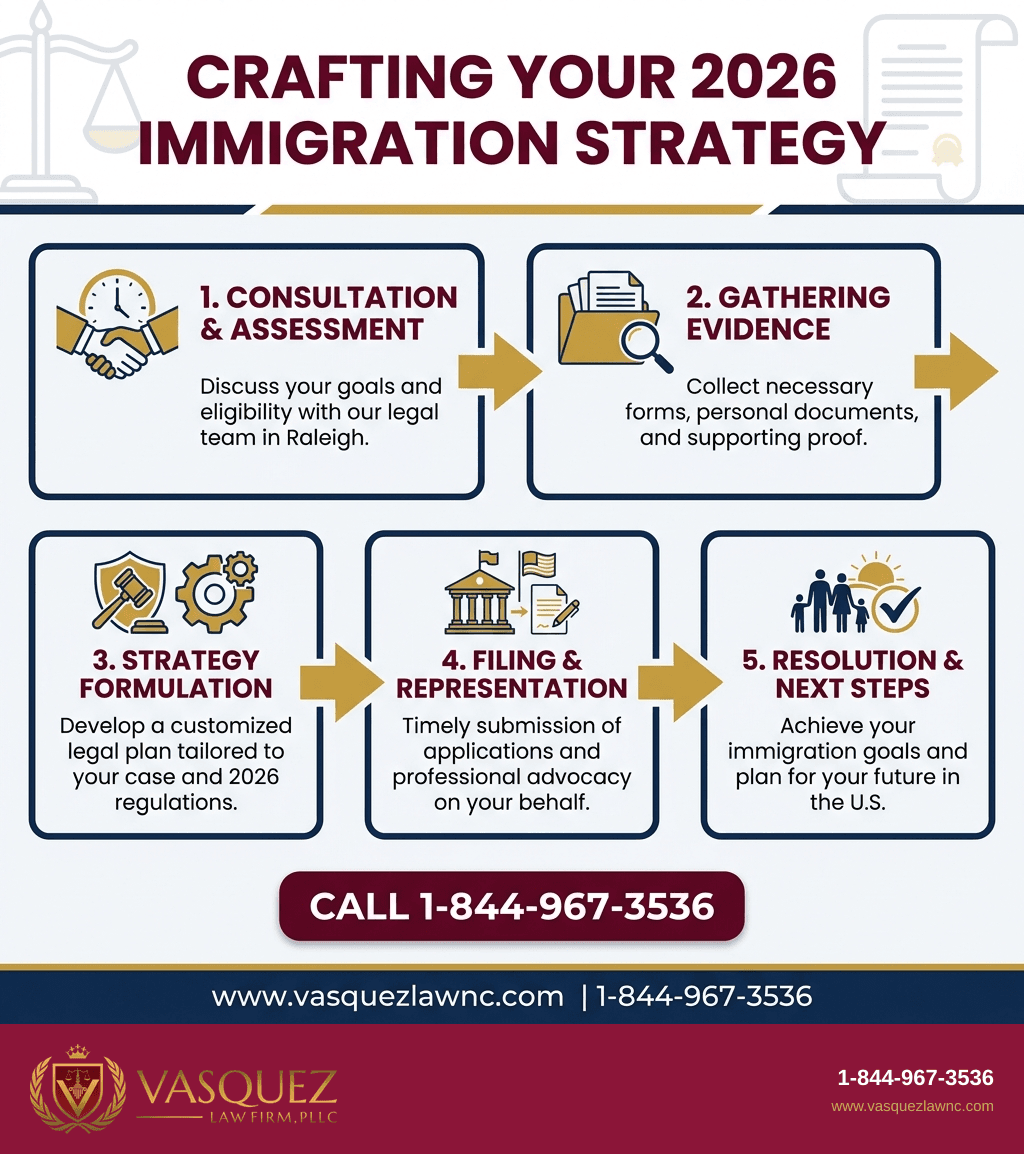
Every immigration case requires a series of clear, actionable steps. For example, clients applying for permanent residency must first determine the correct application type—family-based, employment-based, or humanitarian pathways like asylum.
Step 1: Initial Consultation and Case Assessment
Meet with an immigration attorney in Raleigh or Orlando to review your facts and documents. This assessment identifies obstacles such as criminal history or inadmissibility issues and recommends the appropriate legal path.
During this consultation, attorneys will also evaluate eligibility for waivers or special programs such as Temporary Protected Status (TPS) or Deferred Action for Childhood Arrivals (DACA). This early diagnosis is critical in complex cases where straightforward applications may not be viable.
For example, if a client has accrued unlawful presence, the attorney might recommend consular processing abroad combined with waiver applications rather than adjustment of status in the U.S. This tailored advice prevents costly errors and long delays.
Step 2: Document Gathering and Preparation
Essential documents include passports, birth certificates, police records, and proof of lawful status. These must be carefully reviewed and organized. Missing or inaccurate evidence can cause delays or denials.
Practical examples include ensuring that all foreign documents are translated by certified translators and properly notarized. Additionally, gathering affidavits from employers, family members, or community leaders can strengthen cases, especially in asylum or hardship waiver petitions.
Clients should also keep track of all previous immigration filings and receipts, as these inform the current case and help demonstrate continuous lawful presence or eligibility. A common scenario involves applicants who have previously filed petitions that were denied but may still provide useful supporting evidence.
Step 3: Filing Your Application
Submit the correct forms like Form I-485 for adjustment of status or Form N-400 for naturalization. Timely filing with complete information avoids application rejection. Processing times for immigration forms vary; USCIS reports I-130 family petitions average 12 to 24 months in 2026.
For instance, an employment-based applicant should file the I-140 petition through the employer before submitting adjustment of status. Coordinating these filings efficiently can reduce waiting periods and prevent status gaps. Similarly, naturalization applicants must ensure they meet residency and physical presence requirements before filing.
Filing fees and biometric appointments are also critical steps. Applicants should plan for these costs and prepare for biometric data collection, which includes fingerprinting and photographs. Missing biometric appointments can result in application denials, so reminders and timely responses are essential.
Step 4: Responding to USCIS Requests
If USCIS issues a Request for Evidence (RFE), respond carefully within the deadline. Failure to respond or inadequate responses cause automatic denials.
For example, if USCIS requests additional proof of a bona fide marriage in a family-based petition, submitting clear evidence such as joint bank account statements, photos, and affidavits can satisfy the requirement. Ignoring or submitting incomplete responses risks rejection.
Additionally, applicants should consult with their attorney before responding to RFEs to ensure that the response fully addresses USCIS concerns and avoids unnecessary delays. Timely and thorough replies improve approval chances significantly.
Step 5: USCIS Interview and Final Adjudication
Applicants often appear for interviews at local field offices in Raleigh or Orlando. Being prepared with originals of all documents and honest responses is vital for success.
During the interview, USCIS officers assess eligibility and verify information. For example, in naturalization interviews, applicants must demonstrate English proficiency and knowledge of U.S. history and government. Practice interviews and study materials can greatly enhance performance.
In some cases, applicants may face additional scrutiny due to prior immigration violations or criminal records. Having an attorney present or available for consultation during the interview can provide critical support and help clarify complex issues.
Common Mistakes to Avoid
A Raleigh resident once submitted an incomplete green card application missing key income proof, resulting in a lengthy delay. Avoid such common errors by following these tips:
- Missing deadlines: Keep a calendar for all immigration milestones.
- Incomplete or incorrect forms: Double-check all information for accuracy.
- Failure to disclose criminal or immigration history: Lying or withholding can cause denials or removal orders.
- Ignoring USCIS notices or deadlines: A late response often leads to denial.
- Poor legal advice or no representation: Self-filing is risky for complex cases.
- Not understanding the impact of Trump immigration executive orders still in effect in 2026.
- Failing to update USCIS with address changes: This disrupts communications.
If you only remember one thing: Consult an expert early to tailor your immigration strategy and avoid these costly mistakes.
Another frequent mistake involves not maintaining lawful status during application processing. For example, overstaying a visa or working without authorization can jeopardize your case. Planning your filings to prevent gaps and knowing when to apply for extensions or work permits is critical.
Additionally, some applicants underestimate the importance of truthful and consistent information. Discrepancies between applications and interviews can raise red flags, delay processing, or even trigger removal proceedings. Careful review and honest disclosure are key to avoiding these pitfalls.
Timeline and What to Expect
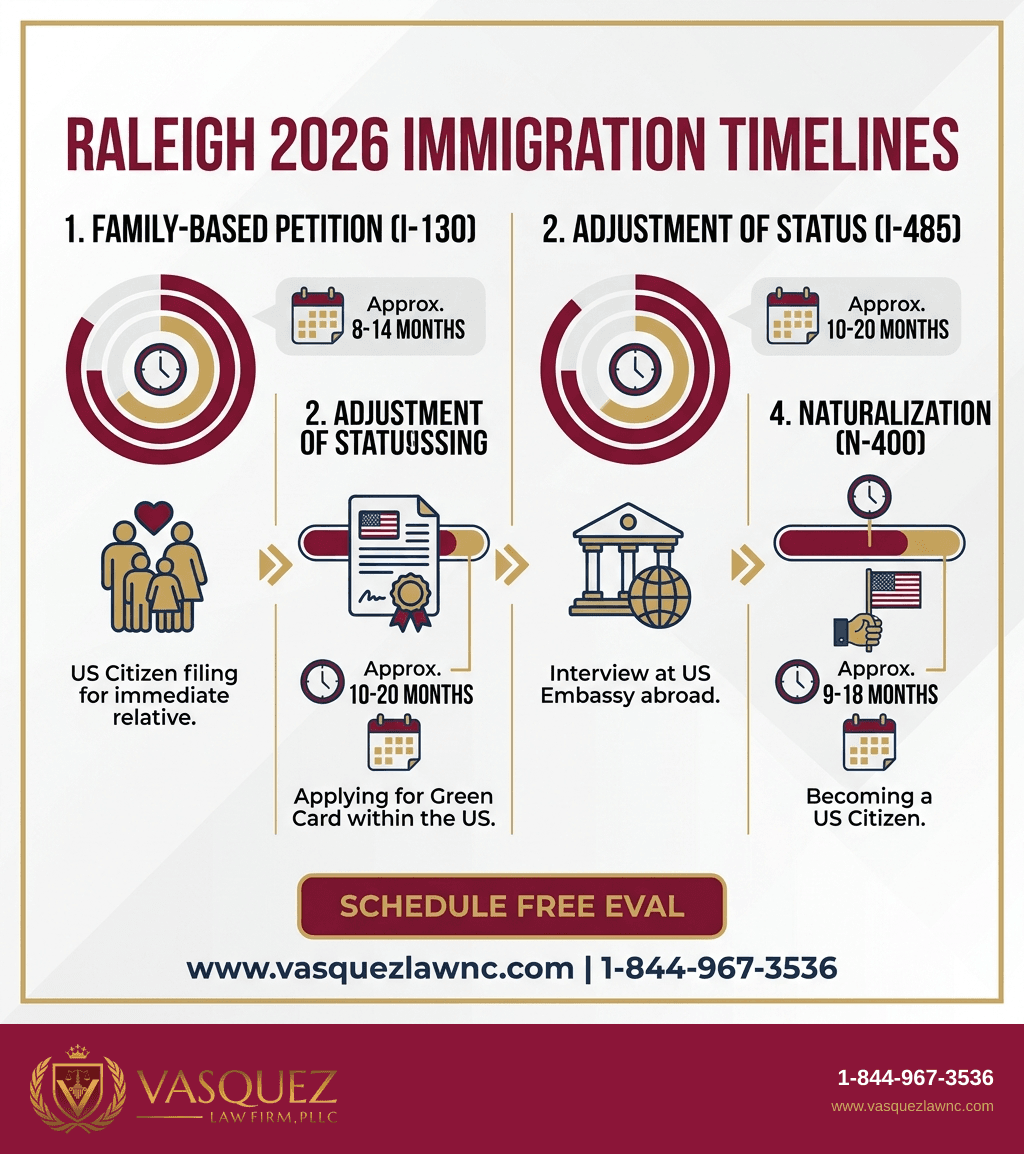
Timelines vary based on application type and USCIS workload. For example, DACA renewals (Form I-821D) currently average 14 to 22 months processing time (source: USCIS Processing Times 2026). Understanding expected durations helps clients plan travel, work permits, and family arrangements.
Typical Timeline Examples
- Family-based green card: 10 to 24 months
- Employment-based green card: 12 to 30 months
- Naturalization applications (Form N-400): 10 to 18 months
- Deportation defense hearings: varies widely, often 6 to 24 months or more
For example, a family-sponsored green card applicant from Raleigh should expect over a year before receiving approval, during which time they must maintain lawful status and avoid travel restrictions. Similarly, an employment-based applicant should plan for potential delays due to visa backlogs in certain categories.
What Affects Processing Times?
- USCIS workload and staffing
- Completeness and accuracy of your application
- Requests for additional evidence or interviews
- Changes in immigration policy and enforcement
Seasonal factors and government shutdowns can also impact processing. For instance, delays in background checks or security clearances may extend timelines unexpectedly. Applicants should remain patient but proactive in following up with USCIS when appropriate.
Moreover, the COVID-19 pandemic has had lingering effects on immigration services, including temporary office closures and appointment cancellations. Being aware of these developments and consulting your attorney about updated timelines can ease uncertainty.
FAQs About Immigration Strategy
What is an immigration strategy?
An immigration strategy is a planned approach to achieving your immigration goals. It involves choosing the right visa type, preparing paperwork carefully, understanding deadlines, and anticipating obstacles. A strong strategy increases your chances of success with USCIS or immigration courts. It also includes contingency planning for potential issues such as requests for evidence or changes in law, ensuring you remain compliant and can adapt as needed.
How do Trump immigration policies affect cases in 2026?
Trump immigration policy updates continue to influence enforcement and application procedures. Some executive orders remain in effect, impacting USCIS processes and ICE deportations. Staying informed helps tailor your strategy to current priorities. For example, policies regarding public charge and asylum eligibility introduced during the Trump years still affect adjudications. Understanding these lingering effects is essential to prepare strong, compliant applications and avoid unexpected denials.
Can permanent residents be deported?
Yes, under 8 U.S.C. § 1227 certain crimes and violations can lead to deportation of permanent residents. Strategic defense is crucial to protect status if removal proceedings begin. For instance, aggravated felonies or crimes involving moral turpitude may trigger removal. However, some relief options like cancellation of removal or waivers may be available. Consulting an attorney early can help identify defenses and prevent loss of lawful status.
What documents are essential for immigration cases?
Important documents include passports, birth certificates, proof of residence, employment records, and previous immigration paperwork. Proper organization avoids delays and denials. Additionally, supporting evidence such as marriage certificates, tax returns, and affidavits strengthens your case. Make sure all foreign documents are translated and certified. Keeping multiple copies and digital backups also facilitates timely responses to USCIS requests.
What mistakes should I avoid in my immigration strategy?
Common issues include missing deadlines, incomplete forms, non-disclosure of criminal history, and ignoring USCIS requests. Avoid these by careful preparation and legal consultation. Other frequent errors include failing to maintain lawful status during processing, providing inconsistent information, and neglecting to update USCIS with address changes. Working with experienced attorneys minimizes these risks and improves your chances of a successful outcome.
How long does it take to complete immigration applications?
Processing times vary; Form I-485 adjustment averages 10-23 months in 2026. Knowing timelines helps manage expectations and plan accordingly. For example, naturalization applications may take 10 to 18 months, while employment-based petitions can extend beyond two years due to visa backlogs. Timelines depend on application completeness, USCIS workload, and any requests for evidence or interviews. Staying informed allows you to prepare for delays and maintain compliance.
Is legal representation necessary for immigration strategy?
While not mandatory, legal representation improves outcomes by navigating complex rules, deadlines, and challenges. Attorneys in Raleigh or Orlando offer tailored strategies. Legal counsel helps avoid common mistakes, prepares strong applications, and responds effectively to USCIS requests or denials. For complicated cases involving criminal history, inadmissibility, or removal proceedings, representation is especially critical to protect your rights and immigration benefits.
What happens if my immigration application is denied?
Options include appeal, motion to reopen, or refiling with new evidence. Acting quickly and consulting an attorney protects your status and opportunities. For example, you may file a Form I-290B to appeal USCIS decisions or request reconsideration. In some cases, alternative immigration pathways may be available. Prompt legal advice ensures you understand your options and deadlines to prevent loss of lawful status or deportation.
About Vasquez Law Firm
At Vasquez Law Firm, we combine compassion with aggressive representation. Our motto "Yo Peleo®" reflects our commitment to standing up for your rights. We serve clients in Raleigh, NC, and Orlando, FL, with personalized immigration legal services tailored to your needs.
- Bilingual Support: Se Habla Español — compassionate Spanish-speaking attorneys and staff
- Service Areas: Focused on Raleigh and Orlando with nationwide immigration coverage
- Experience: Over 30 years combined experience helping thousands of clients successfully navigate immigration law
- Results: Dedicated legal guidance to achieve the best possible outcome for your case
Attorney Trust and Experience
Attorney Vasquez, JD, has 15 years of immigration law experience and is admitted to the North Carolina State Bar and Florida Bar. His legal skill and bilingual support create an advantage in handling complex cases across federal immigration law.
His experience includes successful defense of clients in removal proceedings, securing waivers for inadmissible applicants, and guiding families through complex consular processing. Attorney Vasquez’s commitment to personalized service ensures that every client receives a clear, strategic plan tailored to their unique circumstances.
Clients appreciate his bilingual communication and cultural sensitivity, which foster trust and understanding throughout the immigration process. This dedication has earned Vasquez Law Firm a reputation for excellence in the Raleigh and Orlando immigrant communities.
Don't wait to get the help you deserve. Call us now for immediate assistance.
Se Habla Español
Sources and References
- U.S. Citizenship and Immigration Services
- Executive Office for Immigration Review
- Legal Information Institute
Take the first step toward justice today. Our team is standing by to help.
Start Your Free Evaluation Now
Call us: 1-844-967-3536
Se Habla Español - Estamos aquí para ayudarle.
If you need legal assistance, learn more about get immigration legal help today, or call us at 1-844-967-3536 for a free evaluation.


William Vasquez
Founder & CEO, Vasquez Law Firm, PLLC
William Vasquez is the founder and CEO of Vasquez Law Firm, PLLC, a results-driven firm specializing in immigration, criminal defense, personal injury, and workers' compensation. A U.S. Air Force veteran and recipient of the Joint Service Achievement Medal, William is dedicated to fiercely fighting for his clients' rights.
Related Legal Services
Need legal help? Learn more about get immigration legal help today, or contact us for a free evaluation.
You can also visit our North Carolina immigration practice for more information.
![Gov. Ron DeSantis Announces 25,000+ Immigration Arrests [2026]](/_next/image?url=https%3A%2F%2Fvuuyorlsmhunqektprqy.supabase.co%2Fstorage%2Fv1%2Fobject%2Fpublic%2Fblogs%2Fimmigration-header-1782501143091.png&w=1920&q=75)