How ICE Funding Works in 2026: What You Should Know
Wondering how ICE funding works in 2026? Learn about the budget, bills, and what impacts your case. Contact Vasquez Law for a free consultation today.
Published on April 18, 2026
Talk to an immigration attorney
Free call. A clear plan for your case.
Free & confidential · Se habla espanol · 24/7

Have questions? Talk to an attorney - free evaluation.
Call 1-844-967-3536Worried how the latest immigration news affects you?
Schedule a confidential case review with an immigration attorney - know exactly where you stand.
How ICE Funding Works in 2026: What You Should Know
ICE funding affects many immigrants and families across North Carolina and Florida. In 2026, understanding the ICE funding bill, the budget, and how funding decisions are made is crucial. This guide explains how ICE funding works, key timelines, common issues, and what Dreamers and immigrants in Smithfield and beyond should know. Vasquez Law Firm’s immigration attorneys provide care and clarity on this complex topic to help you protect your rights.
Need help with your case? Our experienced attorneys are ready to fight for you. Se Habla Español.
Or call us now: 1-844-967-3536
Family member just detained by ICE? ICE funding policy matters less than the next 48 hours. Skip to the action checklist below — or call our 24/7 emergency line now: 1-844-967-3536. Yo Peleo® Por Ti.
Quick Answer
ICE funding in 2026 is set at about $9 billion, supporting enforcement, detention, and administration. The funding affects immigration enforcement in North Carolina and Florida, impacting detentions and legal rights.
- ICE funding bill 2026 allocates funds yearly
- Budget impacts enforcement activities in Smithfield and beyond
- Detention costs approximate $1500 per person
- Congress controls funding and priorities
- Delays or failures in funding bills can disrupt operations
What This Means If Your Family Member Is in ICE Custody
Federal funding numbers are abstract. The reality for your family is concrete: when ICE detains someone, what happens in the next 48 hours often decides whether that person is released on bond, transferred out of state, or pushed toward a fast removal order. Below is the action checklist we walk every panicked family through when they call us.
First 48 Hours: Action Checklist
- Locate them in ICE custody. Use the ICE Online Detainee Locator with their nine-digit A-number, or full name plus country of birth. Many North Carolina detainees are transferred within 24–72 hours to the Stewart Detention Center in Lumpkin, Georgia.
- Get the A-number. The alien number (printed on any prior immigration paperwork or on the Notice to Appear) is the key to everything — bond hearings, court status lookups, attorney access.
- Do not sign anything. ICE will pressure detainees to sign voluntary departure or waiver forms. Signing those documents can permanently bar return to the United States for 5 to 10 years.
- Check EOIR case status immediately. Use the EOIR Automated Case Information portal or call 1-800-898-7180 (24/7, English and Spanish). Find out the next hearing date and which court has the case.
- Move for a bond hearing. Most detainees are bond-eligible. Bond ranges from $1,500 to $25,000+ in NC immigration courts. Bond hearings explained →
- Respond to the Notice to Appear (NTA). Missing the first court date triggers an in-absentia removal order — almost impossible to reopen. NTA response strategy →
- Hire counsel before the master calendar hearing. The first court appearance happens fast in detained cases. Pleadings made pro se can foreclose forms of relief that an experienced attorney would preserve.
Yo Peleo® Por Ti. If your family member is in ICE custody right now, our 24/7 line connects you with a deportation-defense attorney who can act today.
Call 1-844-967-3536 — 24/7 Emergency
Or message us: Free Case Review
Which Court Will Your Family Member Appear In?
Where the case is heard depends on detention status and where ICE is processing it. North Carolina and Florida residents typically end up in one of four immigration courts:
- Charlotte Immigration Court — non-detained NC cases. 5701 Executive Center Drive, Suite 400, Charlotte, NC 28212.
- Atlanta Immigration Court — many transferred NC cases, plus detained-docket Webex hearings from Stewart, Folkston, and Irwin. 401 W Peachtree St NW, Suite 2400, Atlanta, GA 30308.
- Stewart Detention Center (Lumpkin, GA) — most detained NC cases land here. Detained docket means hearings move in weeks, not years.
- Orlando Immigration Court — Central Florida non-detained cases. 3535 Lawton Rd, Orlando, FL 32803.
Full court info, addresses & what to bring →
Related EOIR Resources
- Find your EOIR case status — portal + 24/7 hotline + how we can pull the case for you
- Bond hearings & ICE detention — what we present to the immigration judge
- BIA appeals & motions to reopen — 30-day deadline, strict procedure
- Full deportation defense overview — relief from removal, prosecutorial discretion, federal circuit appeals
Understanding ICE Funding and the 2026 Budget
Imagine Congress approving billions to support the U.S. Immigration and Customs Enforcement (ICE) agency annually. In 2026, ICE’s funding is roughly $9 billion. This money covers operations like immigration enforcement, detention centers, and administrative costs nationwide, affecting immigrants in states like North Carolina and Florida, including cities such as Smithfield.
The ICE funding bill 2026 defines how much money agency programs receive. Congress debates to set priorities — balancing enforcement efforts against humanitarian concerns. For example, decisions on detention facility budgets affect how many detainees ICE can accommodate.
This funding is critical because it impacts ICE's capacity to detain, deport, and enforce immigration laws. Understanding the ICE funding graph, which shows year-by-year funding changes, helps explain policy shifts. Under prior administrations, such as Obama’s, funding was generally lower, focused on deporting criminals. Recent years show increased budgets for wider enforcement, reflected in the current 2026 figures.
To understand the financial picture in detail, consider these budget categories under the 2026 ICE appropriation:
- Enforcement and removal operations
- Detention and removal management
- Administrative support services
Allocations impact how aggressively ICE can conduct immigration enforcement, especially in North Carolina and Florida. Our immigration legal services team helps clients navigate uncertainties related to these funding-driven enforcement changes.
ICE Funding Allocation Breakdown
The 2026 budget treats enforcement as a priority. Enforcement funds pay for personnel, field operations, and arrests. Detention funds cover holding centers where detainees, including Dreamers, might be held during removal proceedings. Administrative costs pay for management and support staff.
Knowing these distinctions helps immigrants and advocates understand where taxpayer funds go and how this influences the immigration system and their cases.
Who Decides ICE Funding?
The U.S. Congress has final say over ICE’s annual budget. Appropriations committees negotiate the numbers each year. The president’s administration submits a budget request, but Congress can increase, decrease, or add conditions. This process creates political debate and impacts immigrant communities in Smithfield and nationwide.
Historical Funding Trends
Since 2010, ICE funding fluctuated based on political priorities. Funding under President Obama was lower compared to recent years, including 2026, where budgets are higher and enforcement broader. Tracking these trends in ICE funding graphs reveals shifts in immigration policies over time.
Key Steps to Take If You Encounter ICE Detention
Picture yourself or a loved one facing ICE detention in Smithfield. Understanding ICE funding is important, but knowing what steps to take can protect your rights and future.
When ICE funding supports increased arrests and detentions, risks rise for undocumented immigrants and Dreamers. Here are immediate steps to follow if ICE detains you or your family member:
- Remain calm and do not resist arrest: Resisting can worsen your situation.
- Ask for your immigration lawyer immediately: Having legal representation protects your rights.
- Provide only your name and basic info: Avoid volunteering extra details without advice.
- Request a bond hearing if eligible: Funding cuts or increases can affect bond options and availability.
- Document ICE agents’ actions if safely possible: This can be part of your defense later on.
- Contact your immigration lawyer in North Carolina or Florida as soon as possible to schedule a consultation.
Attorney Vasquez understands how funding changes can lead to sudden increases in detentions in Smithfield and elsewhere. We help clients respond to these challenges with aggressive legal strategies.
Know Your Rights in Detention
Every detainee has rights regardless of ICE's funding. These include the right to an immigration hearing and legal representation. However, funding shortages can affect detainees’ ability to attend hearings or access legal counsel, which is why timely legal help matters.
How ICE Funding Affects Detention Conditions
When Congress allocates more money to detention facilities, ICE can maintain better conditions, but with low funding, overcrowding or resource shortages may occur. Staying informed about the ICE funding bill 2026 helps detainees and families understand the bigger picture impacting their situation.
Common Mistakes to Avoid With ICE Funding Issues
When ICE funding fluctuates, many immigrants and families make avoidable mistakes influenced by confusion or fear. Here are common errors and how to fix them:
- Ignoring funding news: Not following ICE funding changes prevents understanding enforcement trends. Fix: Regularly check reliable sources or consult an immigration lawyer.
- Delaying legal contact: Waiting too long to hire an attorney risks missing critical deadlines. Fix: Contact our office for a consultation promptly.
- Sharing too much with ICE agents: Volunteering unnecessary information can harm your case. Fix: Provide only name and basic details; consult a lawyer.
- Using outdated information: Relying on pre-2026 ICE practices causes missteps. Fix: Understand updated 2026 policies and funding impacts.
- Believing misinformation about costs: For example, the $1500 per person figure varies widely. Fix: Ask your lawyer for current verified data.
- Not preparing for detention: Many don't have emergency plans in funded or low-budget periods. Fix: Have a legal and family plan in place.
- Failing to understand local differences: ICE enforcement varies between Smithfield, NC, and cities in Florida. Fix: Get advice tailored to your location.
- Assuming ICE can detain U.S. citizens without cause: This is illegal. If mistaken detention occurs, act immediately. Fix: Contact an attorney right away.
If you only remember one thing: Stay informed about ICE funding updates and maintain close contact with your immigration attorney for proper guidance every year, especially in 2026.
Timeline and What to Expect From ICE Funding Bills
Every year, ICE funding follows a federal appropriations timeline affecting immigration enforcement scheduling and resources.
- January to February: The president submits the proposed budget for ICE and homeland security.
- March to June: Congressional committees review and draft the ICE funding bill for the fiscal year starting October 1.
- July to September: Congress debates and finalizes the funding bill. Delays can lead to continuing resolutions or shutdowns.
- October 1: New fiscal year begins. Approved budgets go into effect.
- Post-approval: ICE updates enforcement practices based on funding limits.
The 2026 ICE funding bill followed this timeline, with Congressional divisions causing some delays but ultimately passing substantial funding.
What Happens if the ICE Funding Bill Fails?
If the funding bill fails, ICE operates under a continuing resolution at prior funding levels, leading to uncertainty. This can impact enforcement operations and delay detainee processing. Smithfield and Floridian communities may notice changes during these periods.
Impact on Detentions and Legal Proceedings
Changes in ICE funding influence detention capacity and legal hearing schedules. When budgets expand, ICE can increase detentions and deportations. When budgets tighten, resource strains can cause delays in hearings or reduce detention space.
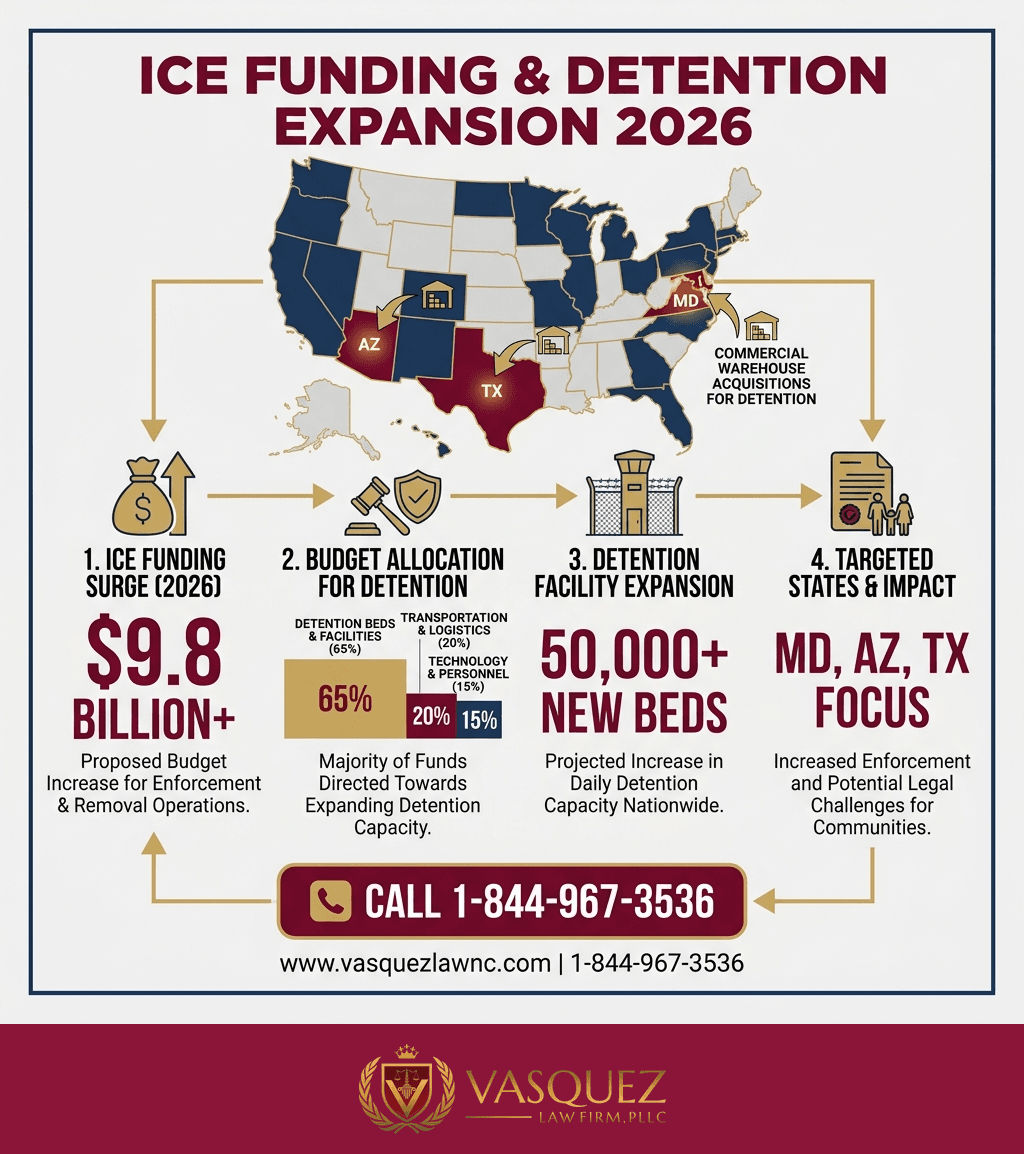
Infographic: ICE Budget Breakdown 2026
Frequently Asked Questions
Who funds ICE and how is the budget determined?
ICE is funded through federal appropriations passed by Congress annually. The budget reflects political priorities and covers enforcement, detention, and support services. Congress debates and approves the ICE funding bill, which governs how much money the agency receives each year.
What is the ICE funding bill 2026 amount?
In 2026, Congress allocated around $9 billion to ICE. This amount funds enforcement activities, detention center operations, and administrative costs. The ICE funding bill may adjust each year based on Congressional negotiations and priorities.
Has the ICE funding bill ever failed to pass?
Yes, there have been years when ICE funding bills delayed or failed to pass on time, causing government shutdowns or temporary funding. These delays impact ICE operations and detainee processing but generally funding continues through temporary measures.
How does ICE funding in 2026 compare to previous years?
ICE funding has generally increased since the Obama administration. The 2026 budget is higher, reflecting expanded enforcement and detention capacity. Historical graphs show fluctuating ICE budgets over the past decade influenced by shifting immigration policies.
Is ICE $1500 funding per person true?
The $1500 figure is an approximate average cost per detainee for detention. Actual costs vary by facility and include broader operational expenses. This number gives perspective on how ICE resources are used on detaining individuals.
Can I sue ICE for detaining a U.S. citizen by mistake?
If ICE detains a U.S. citizen in error, you may have legal options to challenge the detention and seek remedies, including lawsuits. It is important to contact an immigration attorney immediately for help in such cases.
Who decides ICE’s funding priorities each year?
Congressional appropriations committees set ICE’s funding priorities, influenced by the president’s budget request and political negotiations. These decisions affect enforcement strategies and resource allocations annually.
How does ICE funding impact immigrants in Smithfield, NC and Florida?
Funding affects how actively ICE enforces immigration laws locally. Increased budgets can lead to more arrests and detentions in Smithfield and Florida communities. Understanding funding trends helps immigrants prepare and seek legal support effectively.
About Vasquez Law Firm
At Vasquez Law Firm, we combine compassion with aggressive representation. Our motto "Yo Peleo" (I Fight) reflects our commitment to standing up for your rights.
- Bilingual Support: Se Habla Español - our team is fully bilingual
- Service Areas: North Carolina, Florida, and nationwide immigration services
- Experience: Over 30 years helping clients navigate complex legal matters
- Results: Thousands of successful cases across multiple practice areas
Attorney Trust and Experience
Attorney Vasquez holds a Juris Doctor degree and is admitted to practice in both the North Carolina State Bar and Florida Bar. With over 30 years of dedicated legal experience, he has built a reputation for providing personalized attention and achieving favorable outcomes for his clients.
Don't wait to get the help you deserve. Call us now for immediate assistance.
Se Habla Español
Sources and References
- U.S. Citizenship and Immigration Services (USCIS)
- Executive Office for Immigration Review
- Legal Information Institute
Take the first step toward justice today. Our team is standing by to help. Se Habla Español.
Start Your Free Evaluation Now
Call us: 1-844-967-3536


William Vasquez
Founder & CEO, Vasquez Law Firm, PLLC
William Vasquez is the founder and CEO of Vasquez Law Firm, PLLC, a results-driven firm specializing in immigration, criminal defense, personal injury, and workers' compensation. A U.S. Air Force veteran and recipient of the Joint Service Achievement Medal, William is dedicated to fiercely fighting for his clients' rights.
Related Legal Services
Need legal help? Learn more about NC immigration legal team, or contact us for a free evaluation.
You can also visit NC immigration legal help for more information.