How ICE Spending Affects Immigrants in Raleigh in 2026
Curious about ICE spending in 2026 and what it means for immigrants? Learn key facts and protect your rights with Vasquez Law. Call for a free consult.
Published on April 13, 2026
Talk to an immigration attorney
Free call. A clear plan for your case.
Free & confidential · Se habla espanol · 24/7

Have questions? Talk to an attorney - free evaluation.
Call 1-844-967-3536Worried how the latest immigration news affects you?
Schedule a confidential case review with an immigration attorney - know exactly where you stand.
How ICE Spending Affects Immigrants in Raleigh in 2026
ICE spending continues to shape immigration enforcement, especially in Raleigh, NC, and Florida in 2026. Understanding the ICE budget, funding sources, and how money is allocated helps Dreamers and other immigrants prepare for possible detentions or legal actions. This article explains ICE’s 2026 spending, the impact of ICE budget bills, and what you should know to protect your rights. Vasquez Law Firm, serving Raleigh and beyond, provides expert immigration legal support to help you navigate ICE actions with confidence.
Need help with your case? Our experienced attorneys are ready to fight for you. Se Habla Español.
Or call us now: 1-844-967-3536
Quick Answer
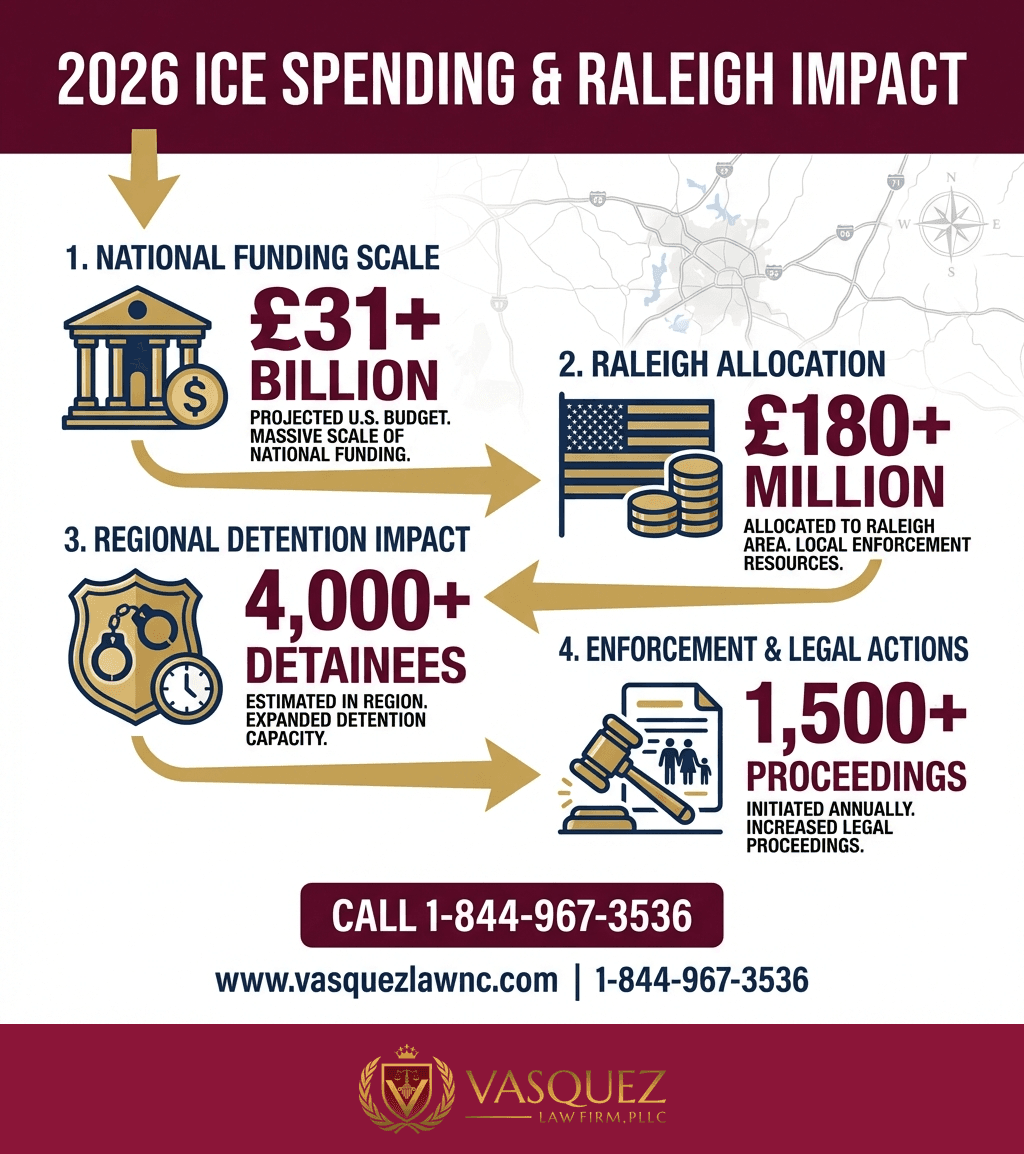
ICE spending in 2026 totals about $11.3 billion, funding detention, deportation, and enforcement. This budget affects immigrant communities in Raleigh and Florida by prioritizing immigration enforcement programs and detention capacities.
- 2026 ICE budget reflects an increase from previous years
- Funds cover detention centers, enforcement, and investigations
- Costs roughly $1500 per detainee per day
- Congress annually approves ICE spending bills
- Legal representation can protect those detained
What Is ICE Spending?
ICE (Immigration and Customs Enforcement) receives federal government funds to enforce immigration laws. Their spending covers everything from apprehending unauthorized immigrants to operating detention centers. In 2026, ICE’s budget is approximately $11.3 billion. This includes funding for approximately 25,000 detention beds nationwide, enforcement activities, and investigative work related to immigration crime.
Understanding this budget is crucial for immigrants and advocates because it determines how ICE prioritizes resources. For instance, more funding often translates to increased detentions and removals, particularly in vulnerable communities like Dreamers in cities such as Raleigh, North Carolina.
Our immigration services at Vasquez Law Firm include helping clients understand the practical effects of ICE’s spending in their local area.
Moreover, ICE spending impacts the availability and quality of detention facilities. Increased funds may result in the opening of new detention centers or expansion of existing ones, which directly affects how many individuals can be held and for how long. This can lead to longer detention times and greater challenges for detainees seeking release or bond.
For example, in Raleigh, expanded ICE spending has led to increased presence of enforcement officers and the potential for more local detentions, which in turn raises awareness and concern among immigrant communities. Local nonprofit organizations often observe a correlation between ICE budget increases and heightened enforcement activities, influencing community responses and legal aid demand.
Additionally, ICE’s spending supports specialized programs such as workplace enforcement and criminal investigations related to immigration violations. These programs, funded through the budget, can lead to targeted raids or investigations in industries where unauthorized workers are employed, further impacting immigrant families economically and socially.
ICE Funding Sources and Appropriations
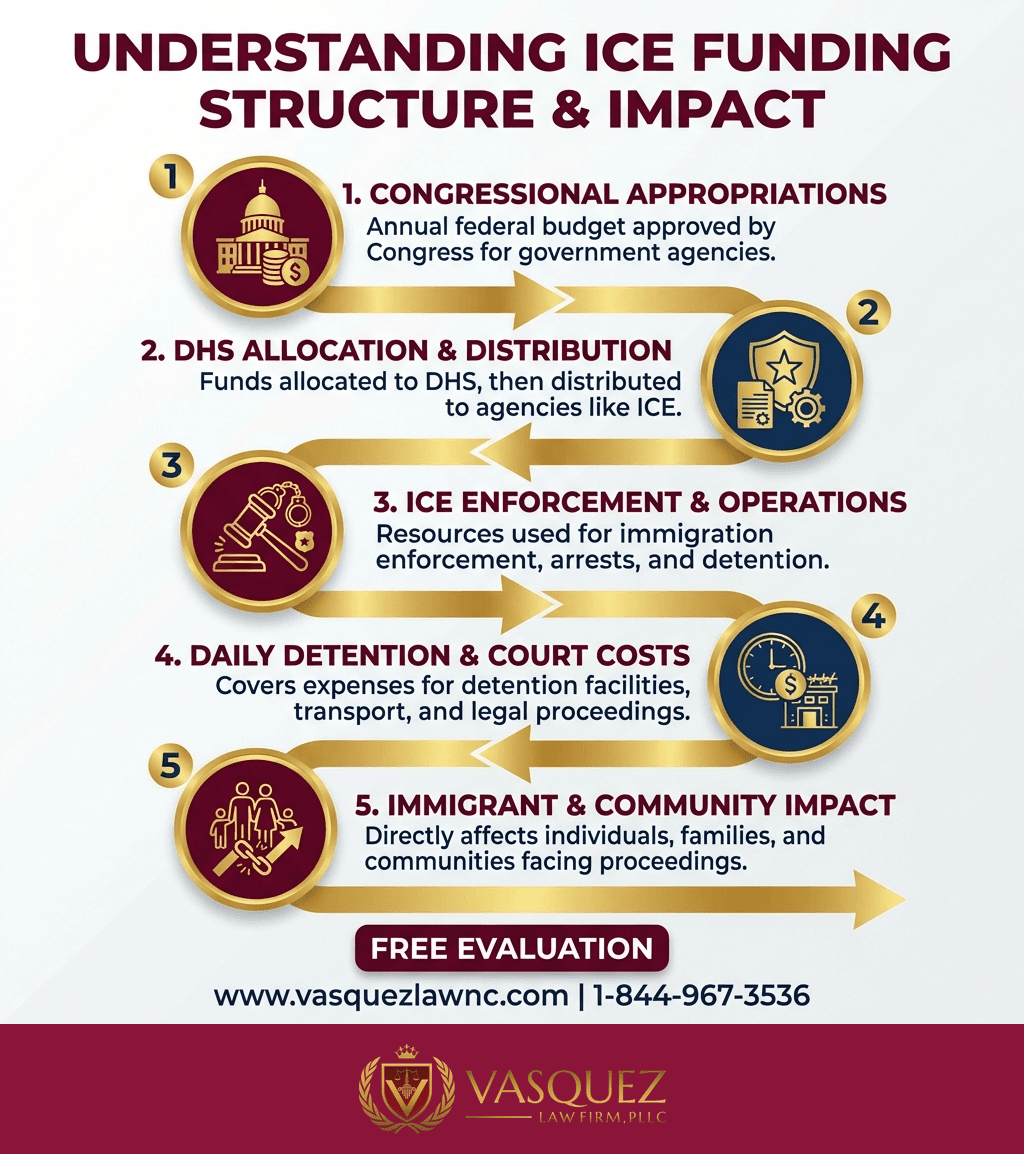
Congress allocates ICE funding through annual appropriations bills as part of the Department of Homeland Security budget. These appropriations specify how much money ICE can use for detention, supervision, investigations, and other enforcement activities.
Each year, the ICE spending bill is negotiated, with debates often focusing on bed space funding, oversight, and protections for detained immigrants. As of 2026, ICE continues to receive robust funding despite some political challenges around immigration policy.
Funding is typically divided into key categories, including detention and removal operations, enforcement and removal operations (ERO), homeland security investigations (HSI), and management and administration. Each category has a defined portion of the total budget, ensuring that ICE’s diverse functions are financially supported.
For example, in 2026, a significant portion of the budget is designated for detention and removal operations, reflecting a continued emphasis on physical custody and deportation efforts. Meanwhile, homeland security investigations fund efforts to combat immigration fraud, human trafficking, and other crimes that intersect with immigration enforcement.
Congressional committees and subcommittees involved in appropriations often hold hearings where ICE officials testify about their funding needs and usage. These sessions provide transparency and allow lawmakers to question ICE about spending priorities, detainee treatment, and operational effectiveness.
How Spending Has Changed Over Time
Comparing budgets, ICE spending under President Obama peaked around $6 billion per year, while in 2026 it has nearly doubled. This increase reflects broad policy shifts toward stricter immigration enforcement under more recent administrations.
The expansion of ICE’s budget has led to increased enforcement actions, including more frequent workplace raids and broader geographical reach for deportations. For instance, in earlier years, ICE enforcement was often concentrated along border states, but with increased funding, operations have expanded to interior cities like Raleigh and Miami.
The rise in spending also corresponds with a greater number of detention beds funded nationwide, which affects the length and conditions of detention. For example, prior to 2010, the daily detainee count was significantly lower, but subsequent funding increases allowed ICE to expand detention capacity, contributing to higher detention rates for immigrants.
Additionally, shifts in policy priorities, such as the introduction of programs like Secure Communities and the Priority Enforcement Program, have influenced how ICE allocates its budget. These programs require resources for data sharing, coordination with local law enforcement, and targeted enforcement, all of which are reflected in the evolving spending patterns.
Practical examples include the impact of budget increases on legal aid funding. While enforcement budgets have grown, funding for legal services has not kept pace, creating challenges for detainees who require representation to navigate complex immigration proceedings. This has prompted advocacy groups to push for reallocations and increased support for legal assistance.
How Does ICE Budget Affect Immigrants?
A larger ICE budget impacts immigrant communities by increasing the capacity for interceptions and detentions. In Raleigh and across Florida, higher funding means more enforcement agents in the field and expanded detention centers.
This increase affects Dreamers and others alike because it shapes the likelihood of being detained or placed into removal proceedings. Understanding ICE’s budget priorities can help you recognize warning signs and prepare your legal strategy.
Higher ICE funding also means increased surveillance and data collection in immigrant communities. For example, ICE may deploy more advanced technologies such as facial recognition and data analytics to identify and track individuals, which raises concerns about privacy and potential profiling.
Immigrant families in Raleigh may experience heightened anxiety due to increased enforcement visibility, with more ICE agents conducting workplace audits or community outreach that can lead to detentions. These activities often disrupt family stability and economic security, especially for noncitizen workers.
Community organizations and legal clinics often notice that when ICE budgets expand, there is a corresponding rise in detentions, which strains local resources for legal defense and social services. This creates a pressing need for proactive legal planning, such as preparing Know Your Rights materials and encouraging early contact with immigration attorneys.
Daily Costs Per Person Detained
ICE’s detention costs are high, often cited as approximately $1500 per person per day. These costs cover housing, food, healthcare, and security. The exact amount varies by facility but highlights the significant government investment in detention.
For example, detention centers in more urban areas such as Florida may incur higher operational costs due to facility maintenance and staffing needs. Remote detention centers might have different cost structures but generally maintain similar daily expenditures per detainee.
Despite the high costs, many detention facilities face criticism for inadequate medical care and poor living conditions. The daily rate includes basic necessities, but detainees and advocacy groups report that expenses do not always translate into quality services.
Practical scenarios include detainees with chronic health issues who require special medical attention, increasing the actual cost per detainee beyond the average. Additionally, legal visits and transportation for court appearances are factored into overall detention expenses, contributing to the high per-person cost.
Impact on Legal Representation
With more spending on enforcement, fewer funds go toward legal aid services for detained immigrants, making it essential to secure trusted legal assistance early. Our Raleigh immigration lawyers at Vasquez Law Firm help clients through this process.
Because ICE prioritizes detention and removal, the legal landscape becomes more challenging for immigrants who often face court proceedings without representation. In fact, studies show that individuals with legal counsel have significantly better outcomes in immigration court.
For practical example, a detained immigrant in Raleigh may be held for weeks or months before their case is reviewed. Without legal help, they risk missing critical deadlines or failing to present defenses that could prevent deportation. Our firm emphasizes early engagement to reduce these risks.
Furthermore, funding imbalances have led to increased reliance on pro bono services and community legal clinics, which are often stretched thin. This scarcity makes it all the more important for affected individuals to contact experienced private attorneys who can provide personalized and effective representation.
2026 ICE Spending Bill Explained
The 2026 ICE spending bill continues prioritizing detention capacity and border security. This bill authorizes the nearly $11.3 billion budget, which includes specific funding for:
- Detention centers and facilities
- Field operations for removal and enforcement officers
- Investigative programs against immigration-related crime
- Technology upgrades for border surveillance
This bill also specifies limits on contracting and requirements for reporting on detainee treatment. It plays a critical role in shaping how ICE operates in Raleigh and Florida.
Notably, the bill received bipartisan support while facing criticism from immigrant rights groups who argue it expands detention unnecessarily. Knowing about this legislation arms immigrants and advocates with context for current enforcement trends.
The bill further includes provisions aimed at increasing transparency, such as mandatory reporting on the use of solitary confinement and improvements in detainee healthcare. However, many advocates argue these measures do not go far enough to address systemic issues.
In Raleigh, the local ICE field office receives directives based on this spending bill, influencing how many agents are assigned and which enforcement priorities are emphasized. For example, increased funding for border surveillance technology indirectly affects interior enforcement by reallocating resources through ICE’s national strategy.
Additionally, the bill impacts contracting with private detention centers, which house a significant portion of detainees. Debates continue over the ethics and efficacy of privatized detention, with some lawmakers pushing for reforms or reductions in private contracts included in the 2026 bill.
Comparison with Military Spending
The ICE budget is much smaller than the U.S. military budget, which was about $750 billion in 2026. This puts ICE’s $11.3 billion in perspective as a focused, specialized enforcement budget rather than a broad security expenditure.
While ICE spending may seem large in isolation, it represents only a fraction of total federal security and enforcement spending. This comparison highlights that immigration enforcement, though significant, operates on a much smaller scale than national defense.
For example, the military budget funds a vast array of operations worldwide, including personnel, equipment, research, and infrastructure. In contrast, ICE’s funding is narrowly targeted toward immigration enforcement, detention, and investigations within the U.S.
This distinction is important for understanding political debates around budget allocations. Advocates often argue for reallocating some ICE funds toward social services or immigration reform, pointing to the relatively modest size of its budget compared to other agencies.
How This Affects Raleigh Immigrant Communities
Raleigh is home to a growing immigrant population. The ICE spending bill directly influences local enforcement practices, detention options, and deportation priorities in the region, affecting families and individuals daily.
Increased funding means more ICE resources are available to conduct interior enforcement in Raleigh, including workplace raids and community arrests. This creates an environment of heightened surveillance and fear among undocumented immigrants and mixed-status families.
For instance, local schools and employers may see increased cooperation requests from ICE, leading to concerns about privacy and the potential for detentions stemming from everyday interactions. Families may hesitate to report crimes or access services due to fear of ICE involvement.
Moreover, the presence of detention facilities near Raleigh means that individuals arrested locally are more likely to be detained nearby, which can facilitate family visitation and legal representation but also prolong detention due to facility capacity and policies.
Community groups in Raleigh respond to these enforcement trends by providing “Know Your Rights” workshops, legal clinics, and assistance with bond hearings, helping immigrants navigate the challenges posed by increased ICE activities funded through the 2026 bill.
Common Mistakes About ICE Funding
- Mistake: Believing ICE spending means ICE can detain anyone anytime.
Fix: ICE must follow legal limits, and wrongful detentions can be challenged with proper legal help. - Mistake: Thinking ICE detains U.S. citizens.
Fix: ICE primarily detains noncitizens; citizens detained by mistake should seek immediate legal assistance. - Mistake: Assuming the $1500 per detainee cost means guaranteed services.
Fix: Costs vary widely; facilities may deliver varying care levels. - Mistake: Assuming ICE funding stops during government shutdowns.
Fix: ICE generally receives mandatory funding even in shutdowns, but operations may slow.
If you only remember one thing: ICE spending controls the scope of immigration enforcement, but your legal rights always remain, and you should have a trusted lawyer to protect them.
Another common misconception is that increased ICE spending automatically improves detainee conditions. In reality, higher budgets do not always translate into better treatment or faster case resolutions. Immigrants and advocates should remain vigilant and informed about facility conditions and detainee rights regardless of budget size.
Some believe that only undocumented immigrants are affected by ICE funding. However, family members, U.S. citizens, and lawful permanent residents can also experience consequences indirectly, such as through family separation or mistaken identity detentions. Understanding ICE’s budget helps these communities prepare and respond appropriately.
When to Contact an Immigration Lawyer
- If ICE has detained you or a loved one
- If you receive a notice to appear in immigration court
- If you face removal or deportation proceedings
- If you want to understand how ICE’s budget may impact your case
- If you live in Raleigh or Florida and fear ICE enforcement is increasing
- If mistaken identity causes detainment or questioning
- If you want help navigating immigration benefits amid enforcement changes
Our team at Vasquez Law Firm in Raleigh offers bilingual, compassionate assistance. Contact us promptly so we can evaluate your situation and help you protect your rights.
For example, if you or a family member receives a Notice to Appear, immediate legal consultation can help clarify your options and build a defense. Delaying contact with an attorney can lead to missed deadlines and fewer chances for relief.
Similarly, in situations of mistaken identity or wrongful detention, rapid legal intervention can prevent prolonged detention and help correct errors efficiently. We encourage clients to reach out as soon as possible to maximize legal protections.
Furthermore, understanding how ICE’s budget impacts enforcement priorities in your area allows you to anticipate potential risks and prepare accordingly. Our attorneys provide guidance on proactive steps, such as securing documentation, preparing affidavits, and knowing your rights during interactions with ICE agents.
About Vasquez Law Firm
At Vasquez Law Firm, we combine compassion with aggressive representation. Our motto "Yo Peleo" (I Fight) reflects our commitment to standing up for your rights.
- Bilingual Support: Se Habla Español - our team is fully bilingual
- Service Areas: North Carolina, Florida, and nationwide immigration services
- Experience: Over 30 years helping clients navigate complex legal matters
- Results: Thousands of successful cases across multiple practice areas
Attorney Trust and Experience
Attorney Vasquez holds a Juris Doctor degree and is admitted to practice in both the North Carolina State Bar and Florida Bar. With over 30 years of dedicated legal experience, he has built a reputation for providing personalized attention and achieving favorable outcomes for his clients.
His extensive background includes handling complex immigration cases such as asylum petitions, deportation defense, and family-based immigration. He is known for his strategic approach and compassionate client communication, ensuring that each case receives dedicated focus.
Clients appreciate Vasquez’s ability to navigate evolving immigration laws and ICE policies, particularly in challenging enforcement climates like those influenced by the 2026 ICE budget changes. His bilingual skills also help bridge communication gaps, making legal processes more accessible to Spanish-speaking clients.
Don't wait to get the help you deserve. Call us now for immediate assistance.
Se Habla Español
Frequently Asked Questions
What is the ICE budget for 2026?
The ICE budget for 2026 is approximately $11.3 billion, funding operations like detention, deportation, and border enforcement. This funding increase supports expanded enforcement nationwide, including Raleigh and Florida. The budget also covers investigative programs and technological advancements to enhance ICE's operational efficiency.
Is ICE spending $1500 per person detained?
The $1500 figure refers to approximate daily costs for detaining one person. Costs vary by detention center and include housing, healthcare, and security for detainees. This amount covers basic necessities but does not guarantee uniform quality of care across facilities, as conditions may differ significantly.
Who funds ICE?
ICE is funded through federal appropriations passed by Congress annually. The Department of Homeland Security allocates this funding as part of the federal budget. These funds support ICE’s detention operations, enforcement activities, investigations, and administrative functions essential to immigration law enforcement.
Can ICE detain a U.S. citizen?
ICE generally cannot lawfully detain U.S. citizens. However, mistaken detentions due to identity errors occur, and those affected should seek immediate legal assistance. Prompt action is crucial to correct wrongful detention and prevent unnecessary legal complications or prolonged custody.
How does the ICE budget compare to the military budget?
ICE’s budget of $11.3 billion is much smaller than the U.S. military budget, which exceeds $700 billion annually, showing ICE’s focus on specialized immigration enforcement. This contrast highlights the narrower scope of ICE operations compared to the broad defense responsibilities of the military.
Is ICE funded during a government shutdown?
ICE funding usually continues during government shutdowns because it is mandatory spending, though some operations might experience delays. Essential enforcement and detention activities typically proceed, but administrative functions and non-essential programs may be temporarily impacted.
What was ICE’s budget under Obama compared to now?
ICE’s budget under Obama was about $5.8 billion in 2016. It has nearly doubled in 2026, reflecting expanded enforcement priorities. This growth has led to increased detention capacity and enforcement actions nationwide, influencing immigrant communities significantly.
What is the ICE spending bill?
The ICE spending bill is federal legislation that allocates specific funds to ICE each year for detention, enforcement, and investigations. It sets operational limits and priorities, including funding levels, reporting requirements, and conditions for detainee treatment, shaping how ICE conducts its activities.
Sources and References
- U.S. Citizenship and Immigration Services
- Executive Office for Immigration Review
- Legal Information Institute
Take the first step toward justice today. Our team is standing by to help. Se Habla Español.
Start Your Free Evaluation Now
Call us: 1-844-967-3536
Se Habla Español - Estamos aquí para ayudarle.


William Vasquez
Founder & CEO, Vasquez Law Firm, PLLC
William Vasquez is the founder and CEO of Vasquez Law Firm, PLLC, a results-driven firm specializing in immigration, criminal defense, personal injury, and workers' compensation. A U.S. Air Force veteran and recipient of the Joint Service Achievement Medal, William is dedicated to fiercely fighting for his clients' rights.
Related Legal Services
Need legal help? Learn more about our immigration law practice, or contact us for a free evaluation.
You can also visit our NC immigration team for more information.