What ICE Enforcement Means for Immigrants in 2026
Learn what ICE enforcement means in 2026 and how it affects immigrant rights. Get trusted legal insights and free case evaluation from Vasquez Law.
Published on September 16, 2026
Talk to an immigration attorney
Free call. A clear plan for your case.
Free & confidential · Se habla espanol · 24/7
Have questions? Talk to an attorney - free evaluation.
Call 1-844-967-3536Worried how the latest immigration news affects you?
Schedule a confidential case review with an immigration attorney - know exactly where you stand.
USCIS Case Status
Check your USCIS case status
Enter your receipt number and get the official status. Free, no registration.
What ICE Enforcement Means for Immigrants in 2026
ICE enforcement affects many immigrants in Raleigh, NC, and Orlando, FL in 2026. Knowing how ICE works, what powers it has, and what immigrants should do can help avoid serious legal problems. This article explains ICE enforcement, its legal authority, common situations, and trusted steps to protect your rights under U.S. immigration law. Keep reading to learn your options if you face ICE enforcement actions, including how the Vasquez Law Firm supports you during these important times.
Need help with your case? Attorney William J. Vasquez is ready to fight for you. Se Habla Español.
Or call us now: 1-844-967-3536
Quick Answer
ICE enforcement means federal actions to arrest and remove immigrants who break immigration laws. Knowing your rights and how ICE works in Raleigh and Orlando can protect you. Getting legal help right away is very important if ICE contacts you.
- ICE arrests and holds immigrants without legal permission.
- Enforcement follows federal laws like 8 U.S.C. §§ 1101 et seq.
- ICE can ask local authorities to hold people and start removal hearings.
- ICE cannot legally hold U.S. citizens for immigration reasons.
- Your rights include asking for a warrant and talking to a lawyer.
Understanding ICE Enforcement
In 2026, ICE enforcement is still a big concern for immigrant communities in Raleigh, North Carolina, and Orlando, Florida. ICE stands for U.S. Immigration and Customs Enforcement. It is a federal agency under the Department of Homeland Security. ICE enforces immigration laws. It mainly focuses on holding and removing people in the U.S. without legal permission.
ICE’s enforcement includes finding immigrants who might be held, doing raids, carrying out removal orders, and investigating immigration crimes. The agency’s duties come from federal laws, including 8 U.S.C. § 1226, which covers holding people during removal cases, and 8 U.S.C. § 1227, which lists reasons for deportation.
Key Powers of ICE
ICE officers can arrest people suspected of breaking immigration laws. They can ask local police to hold people by issuing immigration detainers. They can start removal cases before immigration courts run by the Executive Office for Immigration Review (EOIR). But their power is not unlimited. They cannot hold U.S. citizens for immigration reasons.
Common ICE Enforcement Actions
- Worksite raids: targeting employers and workers suspected of immigration fraud.
- Home raids: holding immigrants at their homes with proper warrants.
- Transportation checkpoints: stopping vehicles to check immigration status.
- Detentions: holding immigrants for bond hearings or removal cases.
Knowing these actions helps you respond wisely and protect your legal rights.
ICE Enforcement Controversy and Community Impact
ICE enforcement has caused debate because of worries about civil rights violations, racial profiling, and family separations. People in Raleigh and Orlando are concerned about ICE’s methods. They want more openness and fair treatment for immigrants.
Even with these concerns, ICE enforcement is active. Agencies report more enforcement in 2026. Staying informed about ICE’s role and methods is very important for immigrant families and supporters.
For current ICE immigration reports, visit official government sites or talk to immigration legal teams that watch enforcement trends closely.
Step-by-Step Actions if ICE Contacts You
Facing ICE enforcement can be scary. Here are clear steps to protect yourself and your family if ICE officers come to your home, work, or other places in Raleigh or Orlando.
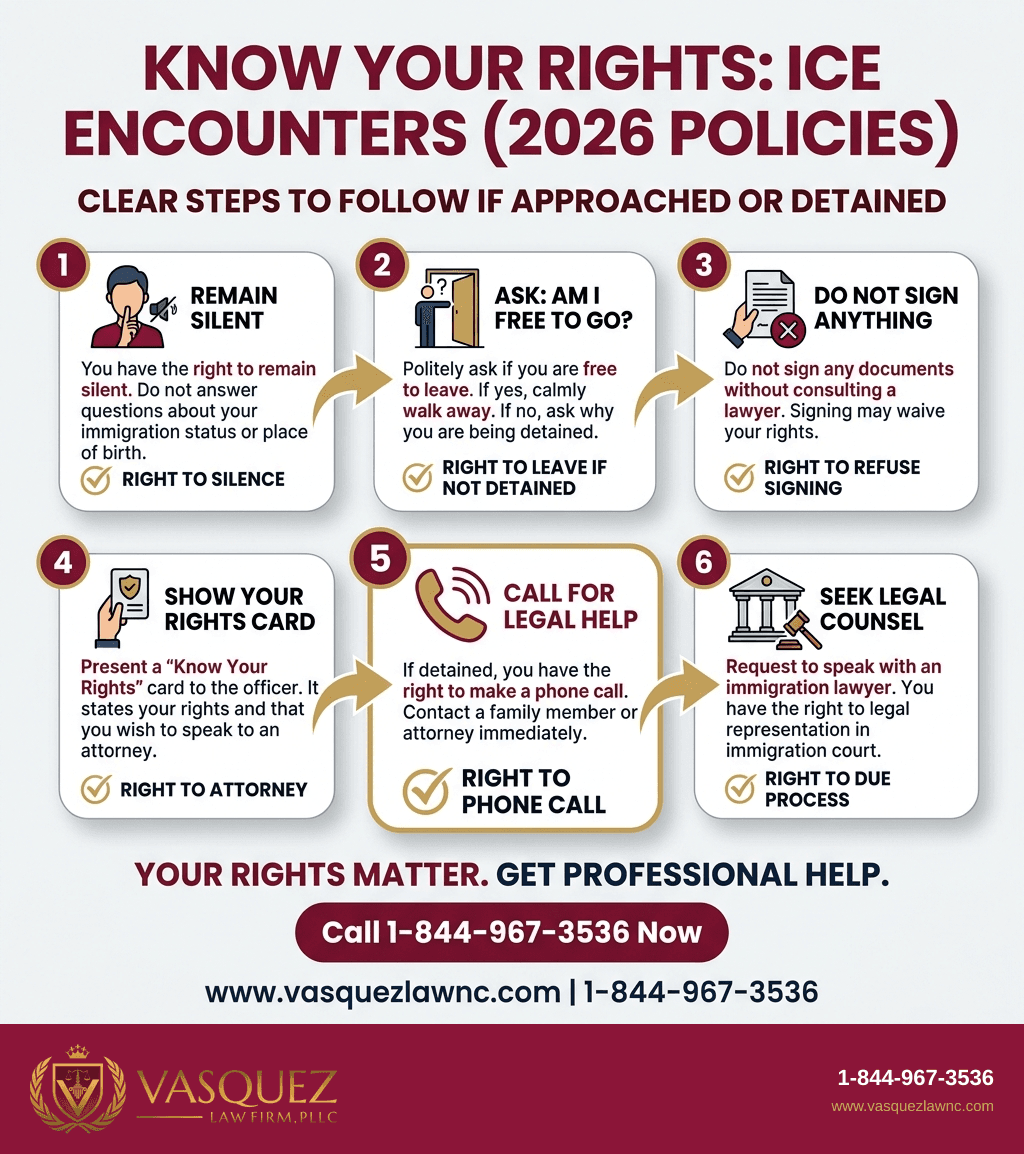
- Do not panic: Stay calm and keep control. Panic can cause mistakes.
- Ask for identification and a warrant: ICE agents must show valid ID and a court warrant to enter your home. Administrative warrants do not allow home entry.
- Check the warrant: Look closely at the warrant to make sure it names you and is still valid.
- Do not agree to a search: You can refuse a search if ICE does not have a valid warrant.
- Protect what you say: You do not have to answer questions without your lawyer present.
- Contact an immigration lawyer right away: Call a qualified immigration firm like the Vasquez Law Firm for advice for your case.
- Gather documents: Keep important ID and immigration papers in one safe place for your lawyer.
- Tell trusted family or friends: Make sure someone knows where you are and what is happening.
Following these steps can lower risks during ICE encounters and help keep your rights safe.
What to Expect if Detained
If you are taken into custody, you will go through intake processing. This includes fingerprinting and background checks. You may have a bond hearing or be placed in removal cases, depending on your situation. The process can take a long time. Having a lawyer is very important to argue for relief options or bond.
Common Mistakes During ICE Enforcement
Many immigrants facing ICE enforcement make mistakes that hurt their chances to stay in the U.S. or get relief. Avoid these errors:
- Opening your door without checking a valid warrant: Always ask to see the warrant before letting anyone in; administrative warrants do not allow home entry.
- Signing papers without a lawyer: Do not sign deportation orders or waivers without lawyer advice.
- Talking without a lawyer: Anything you say can be used against you; use your right to stay silent.
- Ignoring notices or hearing requests: Missing hearings can lead to automatic removal orders.
- Not having important immigration papers ready: Having documents ready helps lawyers prepare your defense fast.
- Not telling family or support people: Being alone can make handling your case and asking for bond harder.
- Thinking ICE cannot hold lawful residents: Even lawful permanent residents must watch for enforcement and possible problems.
If you remember only one thing: Never give up your rights without a lawyer present.
Timeline: What to Expect During ICE Actions
ICE enforcement has many steps that can take weeks or months. Knowing the usual timeline helps you get ready.
- Identification period: ICE collects information on people, often from tips or databases.
- Detainer issuance: ICE may ask local jails to hold people suspected of immigration violations.
- Arrest and detention: Arrest happens with a warrant or probable cause; then initial detention.
- Initial removal hearing: About 7 days after detention, an immigration judge holds a first hearing to plan next steps.
- Bond hearing: Depending on the case, a bond hearing may be held to allow release during the case.
- Merits hearing: The judge looks at whether the person can get relief like cancellation of removal or asylum over later hearings.
- Final order: The judge issues a decision for removal or relief.
- Appeals: Either side can appeal to the Board of Immigration Appeals or federal courts.
The total time depends on case details and court delays. Getting a lawyer quickly can speed up bond hearings and filings.
Frequently Asked Questions
What does ICE enforcement mean?
ICE enforcement means federal actions to hold and remove people who break U.S. immigration laws. This can include home raids, workplace operations, and transportation stops. Knowing ICE enforcement helps immigrants protect themselves and use their rights under the law.
What powers does ICE have?
ICE has power under federal laws like 8 U.S.C. §§ 1101 £ 1537 to arrest, hold, and start removal hearings for immigrants without permission. They can investigate, issue detainers, and work with local police. Their power is limited by constitutional rules, including needing court warrants for home entries.
Can ICE legally detain a U.S. citizen?
No. ICE cannot legally hold a U.S. citizen for immigration enforcement. Citizens have constitutional protections against illegal holding. Mistakes happen rarely but need quick legal help to prove citizenship rights.
Is ICE technically law enforcement?
Yes. ICE is a federal law enforcement agency under the Department of Homeland Security. It can make arrests and enforce immigration laws. This law enforcement role makes ICE different from other immigration services that mainly handle benefits and applications.
What should I do if ICE comes to my home?
Always ask to see a valid court warrant before letting them in. Do not agree to a search without one. Stay silent and call an immigration lawyer right away. Never sign papers or answer questions without legal advice. Knowing your rights helps stop illegal enforcement.
How can I check the status of an ICE immigration case?
You can use the EOIR automated phone line or online case status website to check hearing dates and case progress. Keep your Alien Registration Number ready when checking. Staying updated helps you respond on time and get ready for hearings or bond requests.
What common mistakes should be avoided during ICE enforcement?
Do not open your door without checking warrants, sign papers without a lawyer, talk without a lawyer, or ignore court notices. Prepare documents ahead and tell trusted people. These steps lower risks and protect your chance to fight removal.
Where can I get legal help if facing ICE enforcement in Raleigh or Orlando?
Vasquez Law Firm offers experienced immigration legal help in Raleigh, NC, and Orlando, FL. Call us or visit for a free consultation to learn your rights and options under ICE enforcement.
About Vasquez Law Firm
At Vasquez Law Firm, we mix care with strong representation. Our motto "Yo Peleo®" (I Fight) shows our promise to stand up for your rights.
- Bilingual Support: Se Habla Español fully bilingual staff available
- Service Areas: North Carolina, plus Florida and nationwide for immigration
- Experience: 15+ years helping clients with complex legal issues
- Focus Areas: Immigration, personal injury, workers' compensation, criminal defense, and traffic violations
Attorney Trust and Experience
William J. Vásquez joined the North Carolina State Bar in 2011. He is also admitted to the U.S. Courts of Appeals for the 4th, 5th, and 11th Circuits. The firm has given dedicated legal help since 2011, giving personal attention to each client.
Don't wait to get the help you need. Call us now for quick assistance.
Se Habla Español
Sources and References
- U.S. Citizenship and Immigration Services
- Executive Office for Immigration Review
- Legal Information Institute
Take the first step toward justice today. Our team is ready to help.
Start Your Free Evaluation Now
Call us: 1-844-967-3536
Se Habla Español - We are here to help you.
If you need legal assistance, learn more about our immigration law practice, or call us at 1-844-967-3536 for a free evaluation.

William Vasquez
Founder & CEO, Vasquez Law Firm, PLLC
William Vasquez is the founder and CEO of Vasquez Law Firm, PLLC, a results-driven firm specializing in immigration, criminal defense, personal injury, and workers' compensation. A U.S. Air Force veteran and recipient of the Joint Service Achievement Medal, William is dedicated to fiercely fighting for his clients' rights.
Related Legal Services
Need legal help? Learn more about our immigration law practice, or contact us for a free evaluation.
You can also visit North Carolina immigration law firm for more information.