What Happens When ICE Deportation Happens in Charlotte in 2026
Learn what ICE deportation means and how it works in Charlotte in 2026. Get help from Vasquez Law for a free consultation today.
Published on March 17, 2026
Talk to an immigration attorney
Free call. A clear plan for your case.
Free & confidential · Se habla espanol · 24/7

Have questions? Talk to an attorney - free evaluation.
Call 1-844-967-3536Check your case status now
Look up your immigration case below, then talk to an attorney about what it means — free.
Questions about your result?
Talk to an attorney about your case — free, no obligation.
What Happens When ICE Deportation Happens in Charlotte in 2026
Facing ICE deportation can be overwhelming, especially in Charlotte where immigration laws intersect with federal enforcement. ICE deportation involves government actions to remove noncitizens, but understanding the process and your rights is crucial. This article offers an updated 2026 overview of ICE deportation, explaining key steps, timelines, common mistakes, and when to seek legal help. Whether you are a Dreamer or immigrant facing this situation, Vasquez Law Firm in Charlotte is here to guide you every step with bilingual, experienced support.
Need help with your case? Our experienced attorneys are ready to fight for you. Se Habla Español.
Schedule Your Free Case Evaluation
Or call us now: 1-844-967-3536
Quick Answer
ICE deportation is the federal government's process of removing noncitizens who violate immigration laws. It involves arrest, detention, a legal hearing, and a removal order. In Charlotte, North Carolina, as of 2026, individuals still have rights including legal counsel and court hearings before deportation.
- ICE officers carry out removal orders
- Individuals can attend hearings before immigration judges
- Legal defenses may prevent or delay deportation
- Immediate deportation is rare and requires legal assessment
- Experienced attorneys help protect rights during deportation
Understanding ICE Deportation
In 2026, ICE deportation remains a critical issue for immigrants in Charlotte and across the United States. ICE, or U.S. Immigration and Customs Enforcement, was established in 2003 under the Department of Homeland Security to enforce immigration laws. Their responsibilities include identifying unauthorized immigrants, detaining them, and removing individuals with deportation orders.
Deportation is a civil procedure governed by federal immigration law. It follows a process that starts with an arrest or a notice to appear in immigration court. Most individuals facing deportation will receive a hearing date where they can present defenses against removal. However, ICE officers have authority to detain individuals during the process.
Understanding the role of ICE deportation officers is essential. These officers conduct arrests, monitor detainees, and coordinate removals. Knowing what ICE can and cannot do protects immigrants against potential rights violations.
For a Dreamer or other immigrants in Charlotte, deportation is stressful but not an automatic outcome. Knowing your rights and legal options gives you a chance to challenge removal and remain in the U.S. legally.
Learn about Dreamers' rights and ICE enforcement in Raleigh.
Key Steps to Take
When facing ICE deportation, certain actions can improve your chances of a positive outcome. First, it is critical to obtain legal representation immediately. Immigration laws are complex, and an experienced lawyer can help you understand the charges, deadlines, and possible defenses.
Second, always attend your immigration court hearings. Failing to appear can lead to automatic deportation orders. Third, gather and prepare documents that prove your legal status, family connections, or eligibility for relief programs such as asylum or temporary protected status.
Fourth, do not speak voluntarily to ICE officers without your lawyer present. Anything you say can influence your case. Fifth, know that you have a right to a bond hearing to request release from detention while your case is pending.
The next subsection shows a detailed step-by-step guide to help you through this process efficiently and confidently.
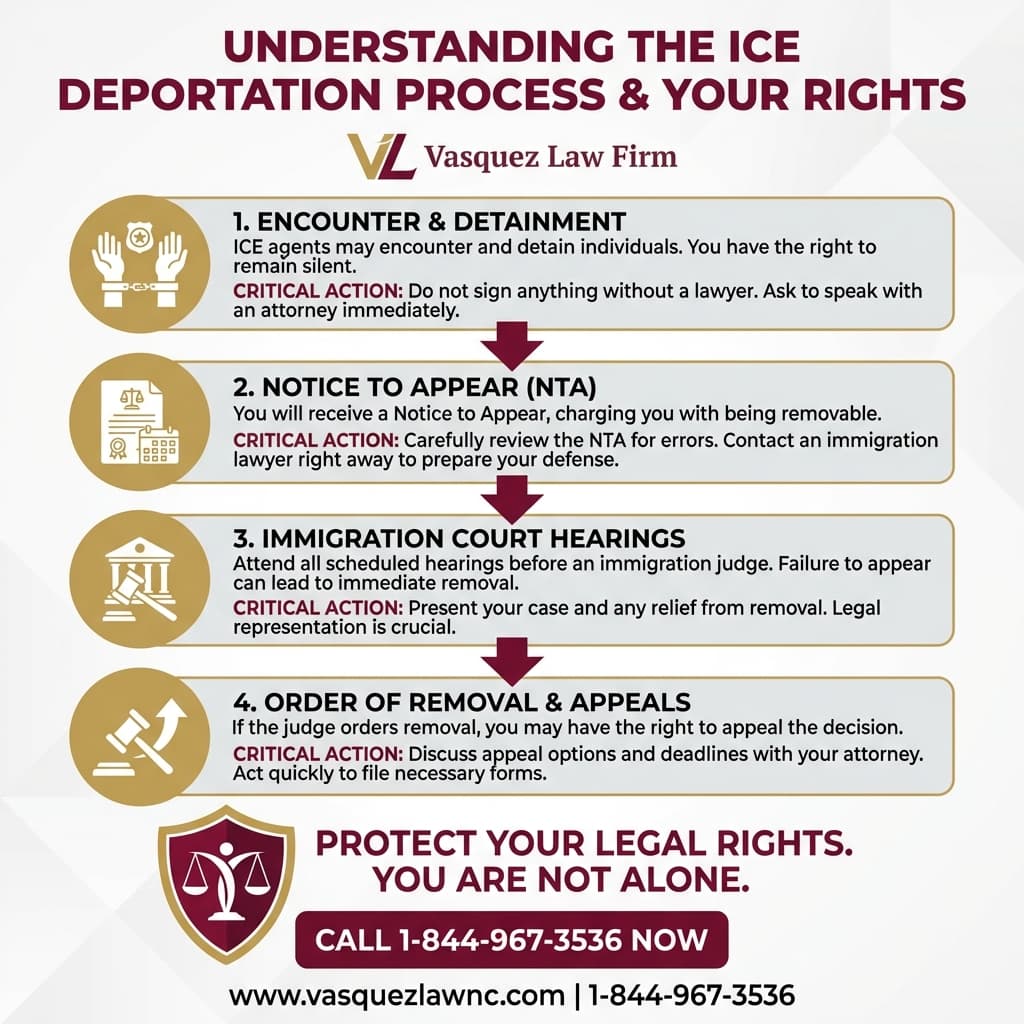
Step 1: Receive Notice or Arrest
ICE may arrest you or issue a Notice to Appear (NTA) in immigration court.
Step 2: Attorney Consultation
Contact an immigration lawyer immediately to review your case and plan defenses.
Step 3: Attend Immigration Hearings
Prepare for and appear at all scheduled court hearings to contest removal.
Step 4: Appeal or Apply for Relief
If ordered removed, you may appeal or apply for legal protections like Cancellation of Removal.
Documents and Evidence Checklist
- Government-issued identification (passport, ID cards)
- Immigration paperwork (visa, work permits, I-94)
- Proof of residency or continuous presence in the U.S.
- Marriage certificates, birth certificates of family members
- Criminal records or court documents if applicable
- Evidence supporting asylum or humanitarian claims
- Any prior correspondence or notices from ICE or USCIS
Collecting these items early ensures your lawyer can build a strong defense and meet court deadlines.
Timeline and What to Expect
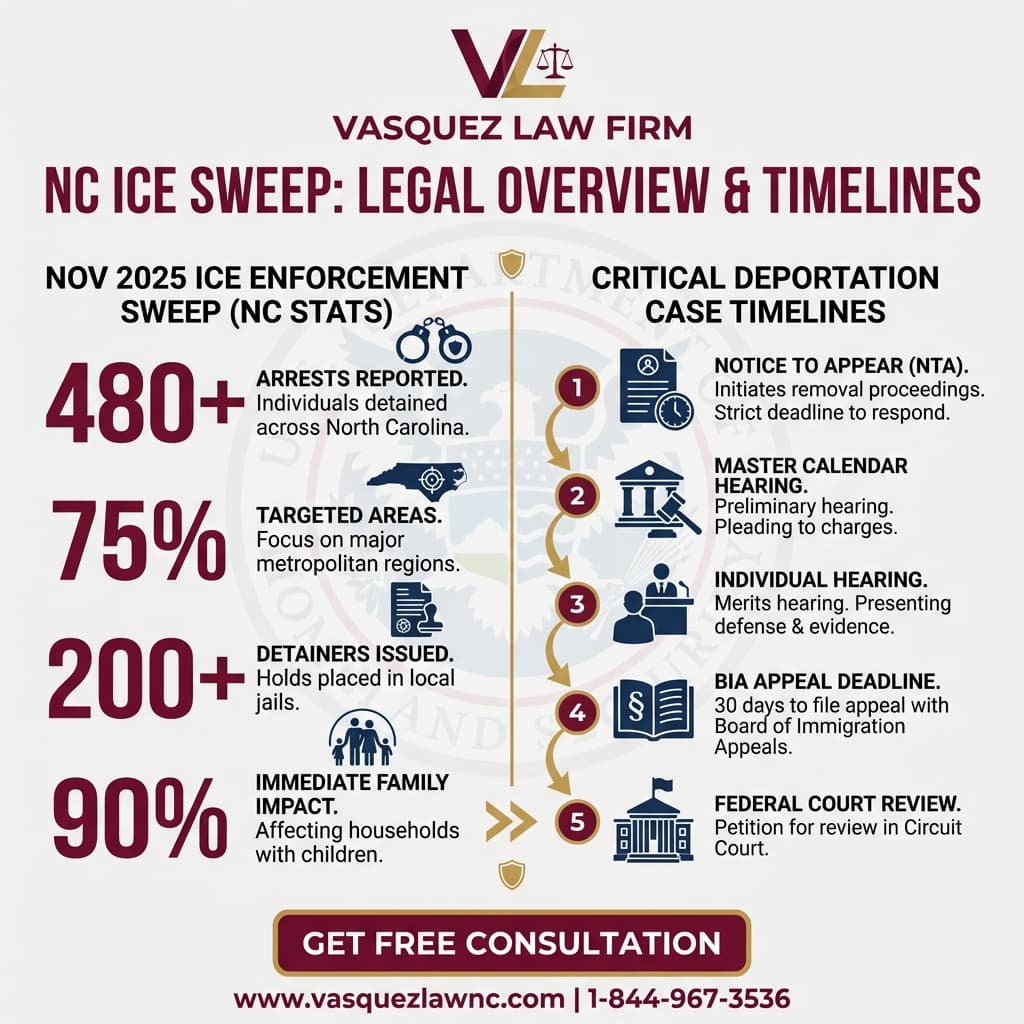
From arrest or notice, ICE deportation generally unfolds over several months. Typically, an individual receives a Notice to Appear within days to weeks, scheduling an initial court date within 30 to 60 days.
The first hearing is usually a master calendar hearing where basic procedural matters are addressed. Subsequent hearings involve presenting evidence and legal arguments. Cases can take months or years depending on complexity.
If the immigration judge orders removal, there may be an option to appeal to the Board of Immigration Appeals (BIA). Appeals add more months to the timeline. During this entire period, staying informed and attending hearings is vital.
- 0-30 days: Arrest or Notice to Appear
- 30-60 days: Master calendar hearing
- 3-12 months: Individual hearings and evidence presentation
- Up to several years: Appeals and final removal orders
Costs and Fees Explained
ICE deportation cases can involve several costs. Attorneys typically charge fees depending on case complexity, starting around a few thousand dollars but can vary greatly.
Other fees may include filing fees for applications to immigration benefits or appeals, sometimes several hundred dollars per application. Some immigrants qualify for fee waivers based on income.
Detention costs and bond amounts (if granted) also vary. An experienced lawyer from Vasquez Law can help estimate your case costs and discuss possible payment plans.
Common Mistakes to Avoid
- Not hiring an attorney early: Early legal help improves case chances
- Missing court dates: Ignoring hearings often leads to automatic deportation
- Providing false information: Lying harms credibility and legal standing
- Ignoring legal notices: Always read and respond promptly
- Failing to gather evidence: Weak evidence weakens defenses
- Accepting deportation without review: Always seek legal advice first
- Talking to ICE without lawyer: Protect your rights and statements
If you only remember one thing: Get a qualified immigration lawyer immediately to help protect your rights and avoid costly mistakes.
Jurisdiction Notes for NC and FL
North Carolina Notes
Charlotte, NC, immigrants face ICE deportation under federal law but benefit from local legal resources. North Carolina courts do not handle immigration cases but can assist on related matters like criminal charges affecting immigration status. Vasquez Law has many years experience navigating NC’s specific environment.
Florida Notes
In Florida, ICE has increased presence and recent policy changes affect immigrants differently. Charlotte-based firms like Vasquez Law provide statewide consultations to support clients living or detained in Florida.
Nationwide Concepts
ICE deportation is governed by federal immigration law nationwide, including the Immigration and Nationality Act and Executive Office for Immigration Review rules. Individual state differences mainly affect access to local legal aid and related criminal processes.
When to Call a Lawyer Now
- You receive an ICE notice or arrest
- You miss any immigration court dates
- You face criminal charges linked to immigration status
- You are detained by ICE and need bond support
- You have prior deportation orders but want legal review
- You believe your rights were violated during detention
- You want to apply for relief such as asylum or TPS
- You need help preparing for hearings or appeals
About Vasquez Law Firm
At Vasquez Law Firm, we combine compassion with aggressive representation. Our motto "Yo Peleo" (I Fight) reflects our commitment to standing up for your rights.
- Bilingual Support: Se Habla Español - our team is fully bilingual
- Service Areas: North Carolina, Florida, and nationwide immigration services
- Experience: Over 15 years helping clients navigate complex legal matters
- Results: Thousands of successful cases across multiple practice areas
Attorney Trust and Experience
Attorney Vasquez holds a Juris Doctor degree and is admitted to practice in both the North Carolina State Bar and Florida Bar. With over 15 years of dedicated legal experience, he has built a reputation for providing personalized attention and achieving favorable outcomes for his clients.
Don't wait to get the help you deserve. Call us now for immediate assistance.
Se Habla Español
Frequently Asked Questions
What does ICE mean in deportation?
ICE stands for U.S. Immigration and Customs Enforcement. It is the federal agency responsible for enforcing immigration laws, arresting unauthorized immigrants, and carrying out deportation orders after legal hearings.
Can ICE immediately deport you?
Generally, ICE cannot deport you immediately without a hearing. Some exceptions apply, like expedited removal for recent border crossers, but most deportations require a court process where you can present your case.
How do I know if someone was deported by ICE?
You can check ICE detainee locator tools or contact ICE FOIA offices. An immigration lawyer can also help find this information and explain next steps for family members.
Can I sue ICE for detaining me as a citizen?
If ICE detains you wrongfully and you are a U.S. citizen, you may have grounds to sue for damages. Consult an experienced attorney quickly as these cases are complex.
What is an ICE deportation order?
An ICE deportation order is a legal mandate from an immigration judge or DHS directing that a noncitizen be removed from the U.S. ICE enforces the order through detention and removal.
Who created ICE immigration?
ICE was created in 2003 as part of Homeland Security efforts to consolidate immigration enforcement and enhance border security within the United States.
Where is ICE immigration located right now in Charlotte?
ICE has offices and detention centers near Charlotte, but specific locations may not be publicly disclosed. Local attorneys can provide updated information relevant to your case.
What does ICE do to immigrants?
ICE enforces immigration laws by arresting, detaining, and deporting unauthorized immigrants, but must follow legal procedures including hearings before deportation.
Sources and References
- U.S. Citizenship and Immigration Services (USCIS)
- Executive Office for Immigration Review
- North Carolina Courts
Facing immigration issues in Charlotte? Our Charlotte immigration lawyers can review your case.
Take the first step toward justice today. Our team is standing by to help. Se Habla Español.
Start Your Free Case Evaluation Now
Call us: 1-844-967-3536
Se Habla Español - Estamos aquí para ayudarle.


William Vasquez
Founder & CEO, Vasquez Law Firm, PLLC
William Vasquez is the founder and CEO of Vasquez Law Firm, PLLC, a results-driven firm specializing in immigration, criminal defense, personal injury, and workers' compensation. A U.S. Air Force veteran and recipient of the Joint Service Achievement Medal, William is dedicated to fiercely fighting for his clients' rights.
Related Legal Services
Need legal help? Learn more about get immigration legal help today, or contact us for a free evaluation.
You can also visit our NC immigration team for more information.