What Is a Drug Operation and How It Works in 2026
Learn what a drug operation is and how legal defenses work in 2026. Protect your rights with Vasquez Law’s free evaluation.
Published on June 13, 2026
Have questions? Talk to an attorney - free evaluation.
Call 1-844-967-3536Protect Your Record and Your Freedom
A free, confidential case review - available 24/7 for emergencies.
What Is a Drug Operation and How It Works in 2026
Drug operations often involve coordinated efforts to manufacture, distribute, or traffic controlled substances. In Smithfield, NC, and across North Carolina, such cases can carry serious criminal charges. Understanding the meaning of drug operation and what to expect if charged can help you protect your rights. This article explains the types of drug operations, legal procedures, common pitfalls, and when to call a criminal defense attorney in 2026.
Need help with your case? Our experienced attorneys are ready to fight for you. Se Habla Español.
Or call us now: 1-844-967-3536
Quick Answer
A drug operation involves illegal coordination of controlled substances for sale or distribution. Charges carry serious penalties in Smithfield, NC. Acting quickly with a criminal defense attorney can protect your rights.
- Drug operations include manufacture, trafficking, and distribution
- Penalties vary by drug type and scale of operation
- Federal and state laws both apply, with distinct processes
- Legal defense requires timely attorney involvement
- Understanding procedures helps avoid critical mistakes
Understanding Drug Operations
In Smithfield and throughout North Carolina, law enforcement focuses on drug operations because these crimes can involve multiple illegal activities such as producing, transporting, and selling drugs. For example, a recent multi-county investigation uncovered a drug operation linked to a serious criminal case. Drug operations differ from simple possession in scope and severity.
Drug operations often involve networks of individuals working collaboratively to facilitate the illegal drug trade. These networks can include manufacturers who produce illicit substances, distributors who handle the logistics of moving drugs, and street-level dealers who sell directly to consumers. Understanding this hierarchy can be crucial when facing charges, as involvement at any level may expose an individual to serious legal consequences. For instance, someone caught delivering a single package may be charged similarly to those higher up the chain if prosecutors can prove involvement in a broader operation.
Additionally, law enforcement agencies may use advanced investigative techniques such as undercover operations, wiretaps, and surveillance to dismantle these operations. This multi-layered approach reflects the complexity and seriousness with which authorities treat drug operations. Cases often involve extensive evidence gathering, making defense strategies equally complex and necessitating experienced legal counsel to navigate the process.
What Is Drug Trafficking?
Drug trafficking is the sale, transport, or distribution of prohibited substances. Federal law classifies trafficking differently based on drug type and weight. North Carolina imposes criminal charges for similar offenses under state laws.
Drug trafficking offenses can range from small-scale local distribution to large international smuggling operations. For example, an individual caught transporting a few ounces of marijuana across state lines might face different charges than a person involved in a multi-kilogram shipment of cocaine. The penalties are often more severe for trafficking substances like heroin or fentanyl due to their high potential for harm.
In practical scenarios, trafficking charges may arise from activities such as delivering drugs to customers, coordinating shipments via vehicles or mail, or even managing communications within the network. Law enforcement often targets not only those physically handling the drugs but also those facilitating financial transactions or providing logistical support. This broad scope underscores the importance of understanding the full context of the charges and obtaining skilled legal representation.
Types of Drugs Commonly Involved
The most frequently involved drugs in operations include cocaine, heroin, methamphetamine, and marijuana. Prescription medications like opioids and fentanyl are also part of many cases today. Each category may incur different penalties depending on federal or state statutes.
Marijuana remains one of the most commonly seized drugs in North Carolina drug operations, especially in cases involving cultivation and distribution. However, the rise of synthetic drugs and potent opioids like fentanyl has increased the complexity and danger of drug operations. For example, fentanyl-related cases often result in enhanced penalties due to the drug’s lethality, even when small quantities are involved.
Prescription drug diversion is another growing issue, where medications such as oxycodone or hydrocodone are illegally distributed. These operations may involve forged prescriptions, theft from pharmacies, or illicit sales by healthcare professionals. Courts treat these cases seriously because they contribute to the broader opioid crisis, and defendants may require specialized defense strategies tailored to prescription drug laws.
Federal vs. State Drug Operation Charges
Federal drug busts often address large-scale operations crossing state boundaries, while state-level enforcement focuses on localized trafficking. Federal convictions can lead to longer sentences. It is critical to know which jurisdiction is handling your case.
Federal cases typically involve agencies such as the DEA (Drug Enforcement Administration) and FBI, and prosecutions follow federal statutes like the Controlled Substances Act. These cases often include enhanced penalties for large quantities or involvement in drug kingpin activities. For example, a person caught trafficking large amounts of methamphetamine across multiple states is likely to face federal charges with mandatory minimum sentences.
On the other hand, state charges in North Carolina may focus on offenses limited to the state’s boundaries and include distinctions based on local laws. A person arrested for selling heroin in Smithfield, for instance, may face state drug trafficking charges with penalties aligned to North Carolina statutes. The distinction affects not only sentencing but also procedural rights, bail conditions, and potential plea agreements. Understanding whether your case is federal or state is essential for crafting an effective defense.
Learn about our criminal defense services to understand how drug operation charges are handled differently depending on jurisdiction.
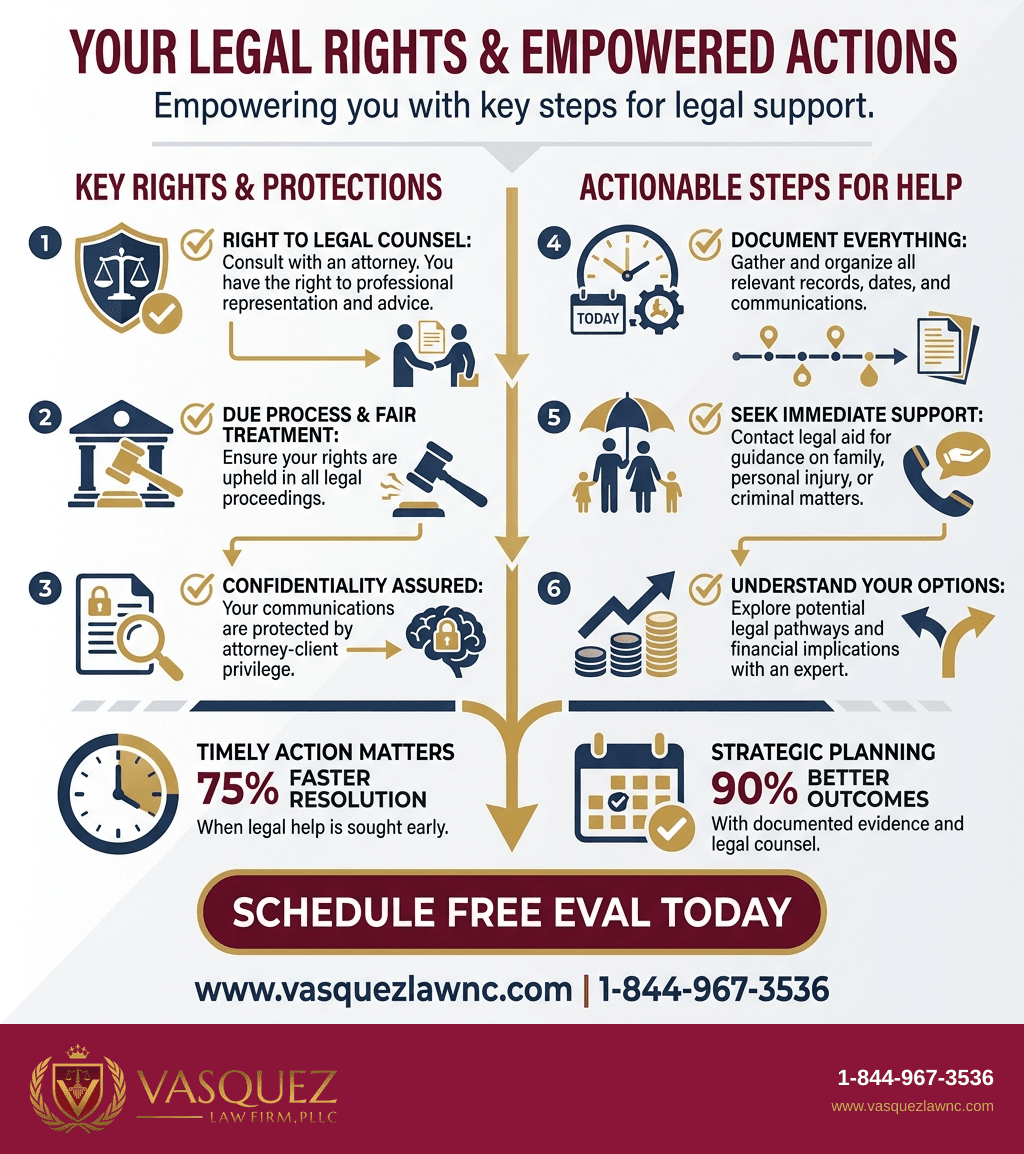
Key Steps to Take If Charged
Being charged with participating in a drug operation can have serious consequences. Taking the right steps immediately is essential to protect your rights.
Step 1: Stay Silent and Request an Attorney
Do not answer questions or discuss the case without an attorney present. Anything you say can be used against you.
It is important to remember that even casual remarks or attempts to explain your situation to law enforcement can be misconstrued and used as evidence against you. For example, during a roadside stop, volunteering information about your activities or contacts can lead to self-incrimination. Remaining silent until your lawyer arrives ensures that your rights are preserved and that you do not inadvertently harm your defense.
Furthermore, requesting an attorney promptly can help your defense team begin investigating the circumstances of your arrest, including whether proper legal procedures were followed. An experienced attorney can also advise you on how to interact with law enforcement and what information to provide, if any, to avoid damaging your case.
Step 2: Avoid Consent to Searches
Do not consent to searches without a warrant. Illegal searches violate your Fourth Amendment rights.
Law enforcement officers may request permission to search your vehicle, home, or personal belongings. While it may seem cooperative to agree, such consent can waive your constitutional protections. For example, if officers ask to search your phone or backpack without a warrant, refusing consent can prevent the introduction of unlawfully obtained evidence in court.
In some cases, officers may attempt to pressure or coerce consent. Knowing your rights and politely declining without confrontation is the best approach. If a warrant is presented, compliance is generally required, but even then, an attorney should review the warrant’s validity. Protecting your Fourth Amendment rights is a fundamental part of building a strong defense.
Step 3: Gather and Preserve Evidence
Write down details of the arrest, names of officers, and witnesses who were present. This information is important for your defense.
Keeping a detailed record of the events surrounding your arrest can uncover inconsistencies or procedural errors. For example, noting the time, location, and exact statements made by law enforcement can help your attorney identify any violations of your rights. Witnesses may also provide crucial testimony if they observed your interactions with officers or the circumstances of the arrest.
Additionally, preserving any physical evidence such as receipts, communication records, or video footage related to your case can be invaluable. For instance, a store receipt showing your location at the time of alleged drug trafficking can support an alibi. Early evidence preservation prevents loss or tampering and strengthens your defense position.
Consult with Attorney Vasquez, who specializes in drug operation defense cases, to plan your next moves carefully.
Common Mistakes to Avoid
- Speaking with police without legal representation — always consult a lawyer before answering questions.
- Missing court dates — failing to appear may result in a warrant and additional charges.
- Agreeing to search without a warrant — this may violate your constitutional rights.
- Failing to disclose key information to your attorney — be honest to build a strong defense.
- Ignoring bail or bond requirements — prompt action helps maintain your freedom.
- Posting on social media about your case — prosecutors may use posts as evidence.
- Attempting to represent yourself — drug operation charges are complex and require professional defense.
If you only remember one thing: Contact a qualified criminal defense attorney immediately after any drug operation charge.
Another frequent mistake is trusting acquaintances or co-defendants with sensitive information about your case. Sharing details with others, even those you consider close, can lead to leaks that prosecutors may exploit. For example, a co-defendant might cooperate with law enforcement and provide damaging statements based on what they have heard.
Failing to understand the gravity of the charges and the evidence against you also undermines defense strategies. It is critical to avoid assumptions about leniency or easy plea deals. A proactive, knowledgeable attorney can help you navigate plea negotiations and trial preparations effectively.
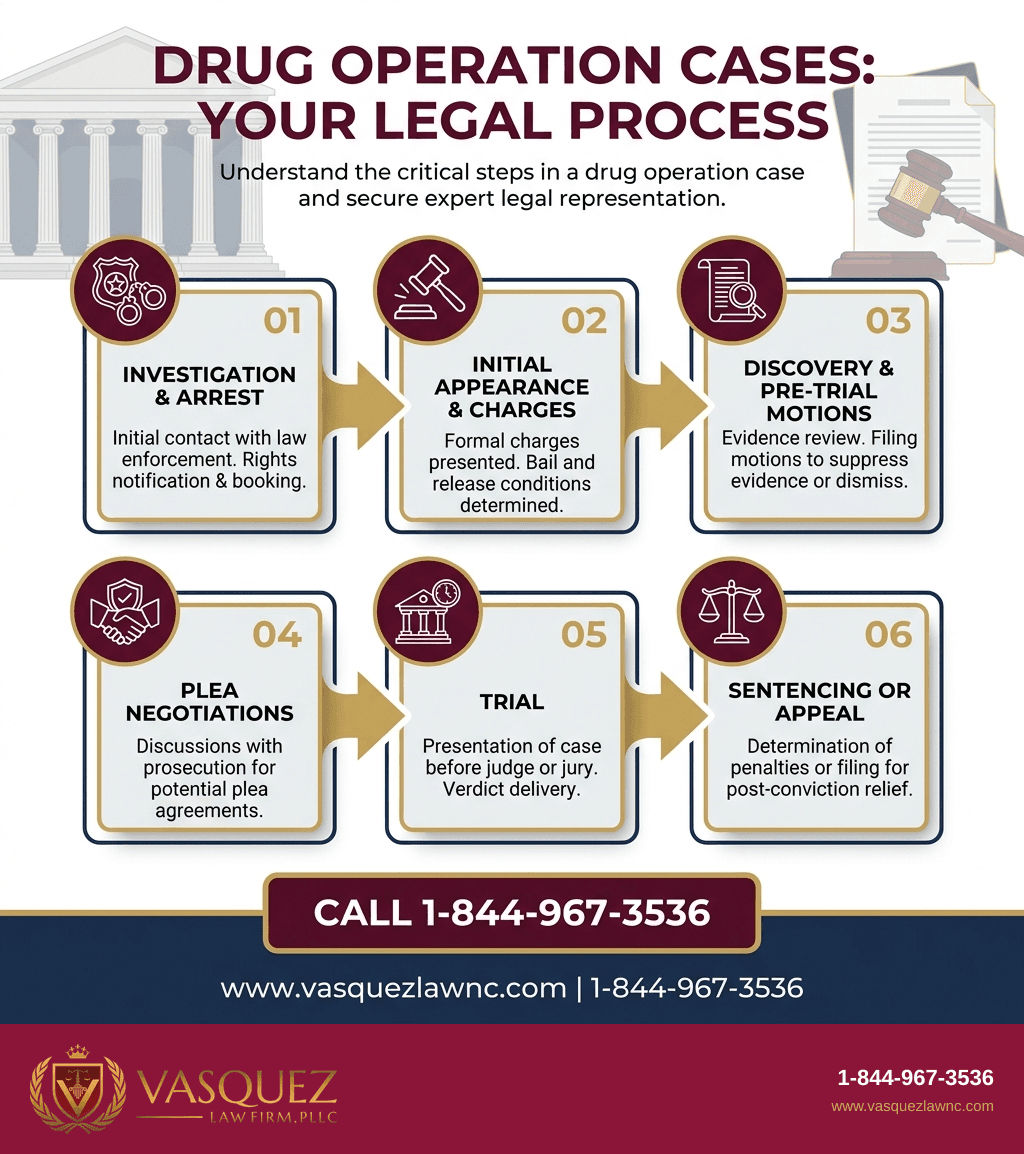
Timeline and What to Expect
- Investigation Phase: Police surveillance and evidence collection may take weeks or months.
- Arrest: Detainment often follows when probable cause is found.
- Initial Hearing: Usually within 48-72 hours after arrest to address bail and charges.
- Preliminary Hearing or Grand Jury: Judge or jury decides if case proceeds based on evidence.
- Trial Preparation: Defense and prosecution exchange evidence and file motions.
- Trial or Plea Bargain: Case resolves through court or negotiated agreement.
Duration varies, but many drug operation cases take several months to resolve in North Carolina courts (North Carolina Courts).
During the investigation phase, law enforcement may conduct controlled purchases or undercover operations to gather evidence. For instance, an undercover agent might buy drugs from a suspect to establish probable cause. This phase is critical because evidence collected here can make or break the prosecution’s case.
Following the arrest, the initial hearing sets the tone for the case. Bail conditions are often established here, which can affect your ability to remain free during the trial process. Each subsequent phase allows both sides to prepare thoroughly. Pretrial motions may challenge evidence admissibility or seek case dismissal.
Ultimately, many cases conclude with plea bargains, which can reduce sentences or penalties. However, if the case proceeds to trial, expect a detailed examination of evidence, witness testimonies, and legal arguments. Understanding this timeline helps defendants and families prepare mentally and financially for the process.
Frequently Asked Questions
What is the meaning of drug operation?
A drug operation involves illegal activities coordinating the manufacture, sale, or distribution of controlled substances. The scope may range from small networks to large multistate operations affecting community safety significantly. These operations typically involve multiple participants engaged in organized efforts to supply illicit drugs, often attracting serious criminal penalties and extensive law enforcement scrutiny due to their impact on public health and safety.
What are the common types of drugs involved in operations?
Commonly involved drugs include cocaine, heroin, methamphetamine, marijuana, and prescription opioids. Legal penalties depend on the drug type and quantity involved under both federal and state law. Additionally, synthetic drugs and fentanyl have become increasingly prevalent in recent years, contributing to heightened risks and stricter sentencing guidelines. The specific drug involved can significantly influence the nature of charges and potential defenses.
How do federal drug busts differ from state cases?
Federal drug cases usually involve larger trafficking networks across state lines with harsher penalties, while state cases typically address local drug crimes. Jurisdiction impacts procedure and sentencing. Federal cases often involve specialized agencies and follow federal statutes with mandatory minimum sentences for certain offenses, whereas state cases may offer different plea options and sentencing ranges. Knowing which jurisdiction handles your case is crucial for effective legal representation.
What should I do if arrested during a drug operation investigation?
Immediately request an attorney and remain silent. Do not consent to searches without a warrant. Early legal advice is vital to protect your rights throughout the process. Avoid discussing the case with anyone other than your lawyer, and document details of your arrest to assist in your defense. Promptly contacting a criminal defense attorney can help you navigate bail, charges, and potential plea negotiations.
Can a drug operation charge affect my immigration status?
Yes. Under federal immigration law (INA § 237(a)(2)), drug offenses can lead to detention, denial of benefits, or deportation. Even a single conviction can have serious immigration consequences, including removal from the United States or being barred from re-entry. Individuals with immigration concerns should seek counsel from attorneys experienced in both criminal and immigration law to understand risks and explore defenses.
What evidence do prosecutors use in drug operation cases?
Evidence includes surveillance, wiretaps, controlled buys, witness testimony, and physical items like drugs or money. Prosecutors build cases by linking defendants to the illegal activities through electronic communications, financial records, and informant statements. Defenses often focus on challenging the legality of evidence collection or the credibility of witnesses. Your attorney’s ability to scrutinize these elements is key to mounting an effective defense.
What are common mistakes that hurt drug operation defenses?
Talking to police without a lawyer, missing court dates, and not contesting illegal searches are frequent errors that weaken defenses. Additionally, failing to provide your attorney with complete information or attempting to handle the case alone can be detrimental. Avoiding these mistakes by promptly engaging qualified counsel and adhering to legal advice improves the chances of a favorable outcome.
Is the movie Brokedown Palace based on a true story involving drugs?
Brokedown Palace is fictional but reflects the severe consequences faced by those charged with drug trafficking abroad, including harsh legal penalties and incarceration. While not based on a specific true story, it highlights the risks of involvement in drug offenses internationally, where legal systems and punishments can be much stricter than in the United States.
About Vasquez Law Firm
At Vasquez Law Firm, we combine compassion with aggressive representation. Our motto "Yo Peleo®" (I Fight) reflects our commitment to standing up for your rights.
- Bilingual Support: Se Habla Español — Spanish-speaking attorneys and staff available
- Service Areas: North Carolina (including Smithfield) criminal defense practice focused on drug-related charges
- Experience: Over 15 years defending clients in challenging criminal cases
- Results: Thousands of successful outcomes helping clients avoid harsh penalties
Attorney Trust and Experience
Attorney Vasquez holds a Juris Doctor and is licensed by the North Carolina State Bar. With 15 years of experience defending drug operation cases, they have a deep understanding of local and federal criminal laws and procedure.
The firm’s approach emphasizes personalized strategy tailored to each client’s unique circumstances. This includes thorough investigation, aggressive motion practice, and skilled negotiation with prosecutors. Our team stays current on evolving drug laws and legal precedents to provide cutting-edge defense techniques. Clients benefit from a trusted advocate who prioritizes their rights and works tirelessly to achieve the best possible result.
Beyond courtroom advocacy, Vasquez Law Firm is committed to educating clients about their rights and the legal process. We ensure transparent communication and empower clients to make informed decisions throughout their cases.
Don't wait to get the help you deserve. Call us now for immediate assistance.
Or schedule your free evaluation today. Se Habla Español.
Sources and References
Take the first step toward justice today. Our team is standing by to help.
Start Your Free Evaluation Now
Call us: 1-844-967-3536
Se Habla Español - Estamos aquí para ayudarle.


William Vasquez
Founder & CEO, Vasquez Law Firm, PLLC
William Vasquez is the founder and CEO of Vasquez Law Firm, PLLC, a results-driven firm specializing in immigration, criminal defense, personal injury, and workers' compensation. A U.S. Air Force veteran and recipient of the Joint Service Achievement Medal, William is dedicated to fiercely fighting for his clients' rights.
Related Legal Services
Need legal help? Learn more about our criminal defense legal services, or contact us for a free evaluation.
You can also visit our North Carolina defense practice for more information.
![What Families Should Do When Loved One is Arrested by ICE [2026]](/_next/image?url=https%3A%2F%2Fvuuyorlsmhunqektprqy.supabase.co%2Fstorage%2Fv1%2Fobject%2Fpublic%2Fblogs%2Fcriminal-defense-header-1781038758390.png&w=1920&q=75)
